2025 Outlook: New Federal EV Charging Standards & US Infrastructure
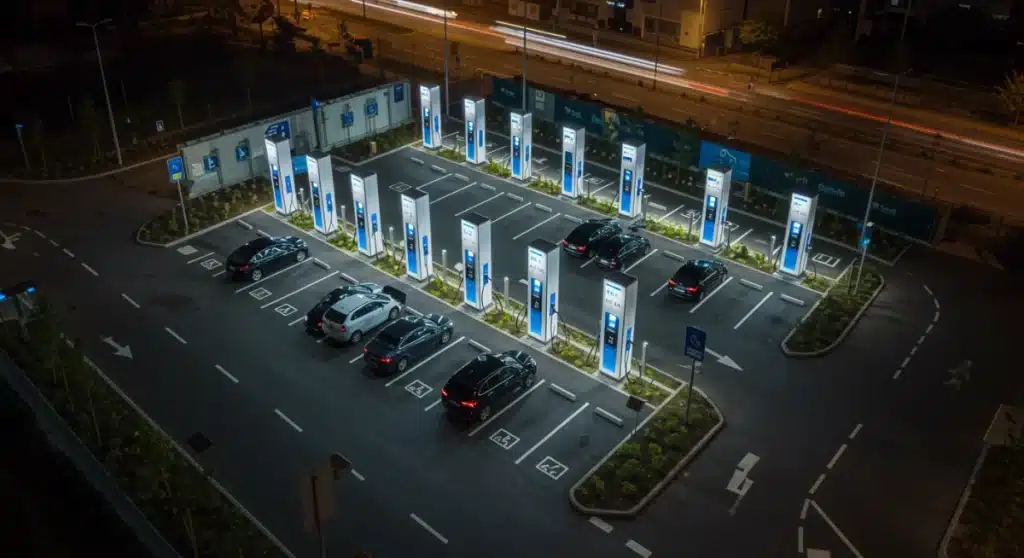
The 2025 Outlook: How New Federal EV Charging Standards Will Impact US Infrastructure Development by 15% is projected to significantly accelerate the rollout of reliable and accessible charging networks, fostering greater electric vehicle adoption across the nation.
As the United States accelerates its transition to electric vehicles (EVs), understanding the 2025 outlook: how new federal EV charging standards will impact US infrastructure development by 15% becomes crucial. This shift isn’t just about cleaner air; it’s about a fundamental re-imagining of our transportation backbone. The impending federal standards are set to standardize a currently fragmented landscape, promising a more cohesive and efficient charging experience for all EV owners and a significant boost to infrastructure growth.
The imperative for federal EV charging standards
The rapid growth of electric vehicle sales in the US has brought into sharp focus the urgent need for a robust and standardized charging infrastructure. Without clear guidelines, the expansion of charging networks risks becoming a patchwork of incompatible systems, deterring potential EV buyers and hindering the overall transition to sustainable transportation. Federal intervention aims to address these critical challenges head-on.
Historically, the EV charging ecosystem has been characterized by a variety of connector types and communication protocols. This lack of uniformity often led to ‘charger anxiety’ among consumers, who worried about finding compatible stations. The introduction of federal standards seeks to eliminate this uncertainty, ensuring that any EV can charge at any compliant public station, regardless of the vehicle’s manufacturer or the charging network operator.
Addressing interoperability and reliability
One of the primary goals of the new federal standards is to mandate interoperability across all federally funded charging stations. This means that chargers must be able to communicate effectively with all types of EVs, ensuring a seamless charging experience. Reliability is another key focus, with stringent uptime requirements being implemented to minimize out-of-service chargers, a common frustration for EV drivers.
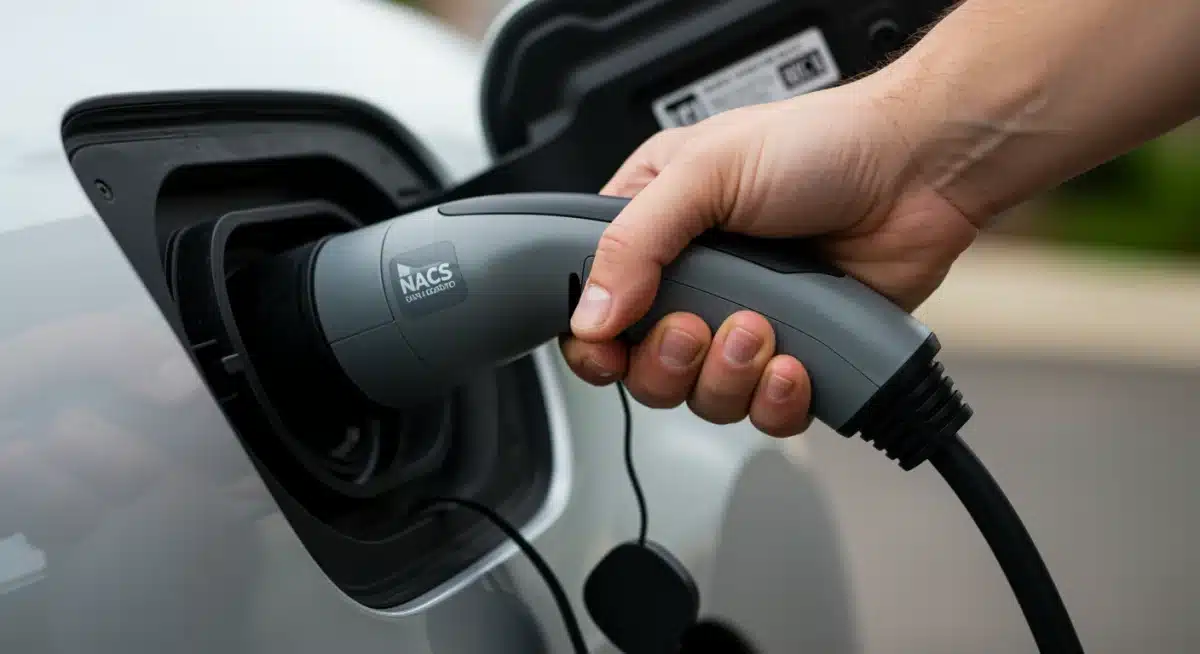
- Universal connector adoption: Promoting widely accepted connectors like NACS (North American Charging Standard) for broader compatibility.
- Minimum uptime requirements: Ensuring chargers are operational at least 97% of the time to build consumer confidence.
- Standardized payment systems: Simplifying the payment process across different networks, making charging as easy as fueling a gasoline car.
By establishing these foundational requirements, the federal government is laying the groundwork for an EV charging network that is not only expansive but also consistently reliable and user-friendly. This predictability is essential for encouraging mass EV adoption and ensuring that infrastructure keeps pace with demand.
Projected 15% impact on US infrastructure development
The introduction of new federal EV charging standards is not merely a regulatory adjustment; it is a catalyst expected to drive a substantial 15% increase in US infrastructure development related to EV charging by 2025. This projection reflects a surge in both the quantity and quality of charging installations, spurred by clearer investment pathways and reduced technological risks.
This anticipated growth isn’t limited to the number of charging ports. It encompasses a broader expansion of the entire supporting ecosystem, from grid upgrades and energy storage solutions to the deployment of advanced software for network management and smart charging. The clarity provided by federal standards makes it easier for private companies and local governments to invest, knowing their infrastructure will be future-proof and widely accessible.
Stimulating private and public investment
With a unified standard, private companies are more likely to invest heavily in charging infrastructure, as the risk of building incompatible or underutilized stations decreases significantly. Federal funding programs, such as those under the Bipartisan Infrastructure Law, are also tied to these new standards, directing billions of dollars towards compliant projects. This combination of public and private capital creates a powerful incentive for rapid development.
- Streamlined permitting processes: Federal guidance can encourage states and localities to simplify approvals for charging station installations.
- Economic development: Job creation in manufacturing, installation, and maintenance of charging equipment.
- Grid modernization: Investments in smart grid technologies to handle increased electricity demand from EVs.
The 15% growth figure represents a conservative estimate, considering the compounding effects of increased consumer confidence, technological advancements, and a more predictable regulatory environment. This growth will be visible in urban centers, rural communities, and along major transportation corridors, ensuring equitable access to charging.
Key components of the new federal standards
The new federal EV charging standards encompass several critical components designed to create a cohesive, reliable, and user-friendly charging experience across the United States. These elements go beyond mere connector types, addressing the broader operational and accessibility aspects of the charging network.
At the heart of these standards is the push for interoperability and universal access. This means not only technical compatibility but also ensuring that charging stations are accessible to all drivers, regardless of their payment method or specific vehicle model. The goal is to make public EV charging as straightforward and ubiquitous as traditional gasoline stations.
Technical specifications and data sharing
The standards mandate specific technical requirements for charging hardware, including power levels, safety features, and, crucially, the adoption of universal connectors. Furthermore, they emphasize the importance of open data protocols, allowing charging network operators to share real-time information on charger availability and pricing with third-party apps and navigation systems, improving the user experience.
- NACS adoption: The North American Charging Standard is being heavily encouraged for all new federally funded installations.
- Open Charge Point Protocol (OCPP): Mandating OCPP for communication between chargers and network management systems.
- Accessibility requirements: Ensuring chargers are compliant with Americans with Disabilities Act (ADA) standards.
These technical and operational mandates are vital for building a seamless network. By standardizing communication and data sharing, the federal government aims to reduce friction for consumers and foster innovation in charging services. This comprehensive approach ensures that the infrastructure development is not just about quantity but also about quality and user convenience.
Impact on charging network accessibility and equity
Beyond technical specifications, a significant focus of the new federal EV charging standards is to enhance accessibility and promote equity in the distribution of charging infrastructure. The goal is to prevent the emergence of charging deserts, particularly in underserved communities, and ensure that all Americans have reliable access to EV charging, regardless of their location or socioeconomic status.
Historically, EV charging stations have often been concentrated in wealthier urban areas, leaving rural communities and lower-income neighborhoods with limited options. The federal standards aim to rectify this imbalance by incorporating provisions that incentivize the deployment of chargers in these critical, often overlooked, areas, fostering a more equitable transition to electric mobility.
Targeted deployment and community engagement
Federal funding programs tied to these standards explicitly prioritize projects that address charging gaps in disadvantaged communities. This includes requirements for a certain percentage of chargers to be installed in these areas, along with community engagement initiatives to ensure that the infrastructure meets local needs. This targeted approach is crucial for broader EV adoption.
- Rural charging initiatives: Dedicated funding and incentives for installing chargers in rural and remote locations.
- Equitable access criteria: Mandates to consider socioeconomic factors when planning new charging deployments.
- Public land utilization: Leveraging federal and state lands for strategic charging hub development.
By focusing on accessibility and equity, the federal standards aim to create a truly inclusive EV ecosystem. This ensures that the benefits of electric vehicles, such as cleaner air and reduced fuel costs, are available to all, not just a select few. The deliberate distribution of charging infrastructure will be a cornerstone of this equitable transition.
Challenges and opportunities in implementation
Implementing new federal EV charging standards across a diverse and geographically expansive nation like the US presents both significant challenges and unparalleled opportunities. Navigating these complexities will be crucial for realizing the projected 15% infrastructure growth and ensuring the long-term success of the EV transition.
One of the primary challenges lies in coordinating efforts across various stakeholders, including federal agencies, state and local governments, private utility companies, and charging network operators. Each entity has its own priorities and operational procedures, requiring robust communication and flexible frameworks to ensure alignment and efficient deployment of new infrastructure.
Overcoming grid limitations and supply chain issues
The existing electrical grid, in many areas, may not be immediately equipped to handle the increased demand from a rapidly expanding EV charging network. Upgrades to transformers, substations, and local distribution lines are necessary, which can be time-consuming and costly. Additionally, global supply chain disruptions for critical components like semiconductors and power electronics could impact the speed of charger manufacturing and deployment.
- Grid modernization investments: Prioritizing upgrades to support high-power charging demands.
- Domestic manufacturing incentives: Encouraging US-based production of charging equipment to mitigate supply chain risks.
- Workforce development: Training skilled technicians for installation, maintenance, and repair of EV charging infrastructure.
Despite these hurdles, the opportunities are immense. The push for standardization and expanded infrastructure creates a fertile ground for innovation in smart charging solutions, renewable energy integration, and battery storage technologies. This comprehensive approach to implementation will not only build out charging stations but also modernize the entire energy ecosystem.
The long-term vision: beyond 2025
While the 2025 outlook for new federal EV charging standards projects a significant 15% impact on US infrastructure development, the vision extends far beyond this immediate horizon. The current initiatives are foundational steps towards a future where electric mobility is seamless, sustainable, and integral to daily life, driving continuous innovation and growth in the decades to come.
The long-term goal is to create a fully interconnected and intelligent charging network that can adapt to changing energy demands, integrate with renewable sources, and support a diverse fleet of electric vehicles, from passenger cars to heavy-duty trucks. This future infrastructure will be resilient, efficient, and capable of supporting the widespread electrification of transportation across the nation.
Future-proofing the EV ecosystem
Anticipating technological advancements and evolving consumer needs, the federal standards are designed to be adaptable. This includes provisions for future upgrades, such as higher power charging capabilities, vehicle-to-grid (V2G) technology, and advanced energy management systems. The framework aims to be flexible enough to incorporate innovations without requiring wholesale overhauls.
- Smart grid integration: Developing charging infrastructure that communicates with the grid to optimize energy use and reduce peak demand.
- Renewable energy partnerships: Integrating solar and wind power directly into charging hubs to enhance sustainability.
- Autonomous charging concepts: Exploring future possibilities for automated charging solutions for self-driving EVs.
The federal commitment to standardized EV charging is a strategic investment in the nation’s future. By setting clear standards now, the US is paving the way for sustained growth, technological leadership, and a cleaner, more efficient transportation system for generations to come. The groundwork laid by 2025 will be the springboard for even greater advancements in electric mobility.
| Key Impact Area | Brief Description of Impact |
|---|---|
| Infrastructure Growth | Projected 15% increase in US EV charging infrastructure development by 2025 due to clear standards. |
| Standardization & Interoperability | Mandates universal connectors and communication protocols, enhancing user experience and reliability. |
| Accessibility & Equity | Prioritizes deployment in underserved communities, ensuring equitable access to charging. |
| Investment & Innovation | Stimulates private and public capital, fostering innovation in smart charging and grid integration. |
Frequently asked questions about EV charging standards
The new federal EV charging standards are primarily focused on mandating universal connector compatibility, ensuring high reliability (97% uptime), and standardizing payment systems across federally funded charging stations. This aims to create a cohesive, user-friendly, and accessible charging experience for all electric vehicle drivers nationwide.
By 2025, these standards are projected to drive a 15% increase in US EV infrastructure development. This growth stems from increased private and public investment, streamlined deployment processes, and enhanced consumer confidence in a reliable, standardized charging network, accelerating the overall transition to electric mobility.
The North American Charging Standard (NACS) is being heavily encouraged and adopted as the universal connector for all new federally funded charging installations. This widespread adoption aims to simplify the charging experience for EV owners, reducing confusion and ensuring broader compatibility across different vehicle brands and charging networks.
The standards prioritize equitable access by incentivizing and, in some cases, mandating the deployment of charging infrastructure in underserved and rural communities. This proactive approach aims to prevent charging deserts, ensuring that all Americans, regardless of their location or socioeconomic status, have reliable access to EV charging options.
Key challenges include coordinating diverse stakeholders (governments, utilities, private companies), upgrading existing electrical grid infrastructure to handle increased demand, and navigating potential supply chain disruptions for charging equipment components. Overcoming these requires robust collaboration and strategic investments in modernization and domestic manufacturing.
Conclusion
The comprehensive overview of the 2025 outlook: how new federal EV charging standards will impact US infrastructure development by 15% reveals a pivotal moment for electric mobility. These standards are not just technical mandates; they are foundational pillars for a future where EV charging is ubiquitous, reliable, and equitable. By fostering interoperability, stimulating investment, and prioritizing accessibility, the federal government is laying the groundwork for a robust and sustainable electric vehicle ecosystem. The projected 15% growth in infrastructure by 2025 is a testament to the transformative power of a unified vision, promising a cleaner, more efficient transportation landscape for all Americans.