2026 Federal EV Tax Credits: Financial Impact & Updates
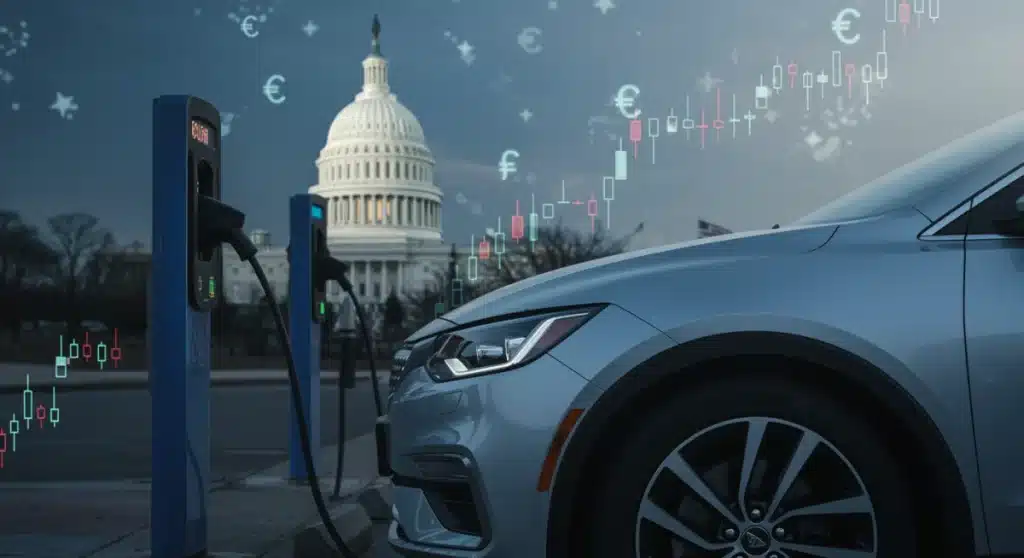
The 2026 federal tax credits for new electric vehicle purchases offer significant financial incentives for US consumers, influencing adoption rates and shaping the automotive market by reducing upfront costs.
Are you considering making the leap to an electric vehicle (EV) in the near future? Understanding the financial landscape, particularly the incentives available, is crucial. This article delves into Examining the 2026 Federal Tax Credits for New Electric Vehicle Purchases (FINANCIAL IMPACT), offering a comprehensive look at what consumers can expect and how these policies will shape the EV market.
Understanding the Evolution of EV Tax Credits
The federal tax credit system for electric vehicles has undergone significant transformations, aiming to bolster domestic manufacturing and critical mineral sourcing. These changes are not merely administrative; they directly impact the affordability and accessibility of EVs for American consumers. The 2026 framework builds upon previous iterations, refining the criteria to align with broader economic and environmental objectives.
Initial EV incentives were relatively straightforward, primarily focusing on battery capacity. However, as the market matured and geopolitical considerations gained prominence, the focus shifted. Policymakers recognized the need to incentivize a robust domestic supply chain, reducing reliance on foreign sources for essential components.
Key Legislative Milestones
Several legislative acts have shaped the current tax credit structure. The Inflation Reduction Act (IRA) of 2022 was a pivotal moment, introducing stringent requirements for battery components and vehicle assembly. These requirements are set to become even more demanding by 2026, influencing automakers’ production strategies.
- Inflation Reduction Act (IRA) of 2022: Introduced significant changes to EV tax credit eligibility, emphasizing domestic content.
- Phased Implementation: The IRA’s provisions are being phased in over several years, with 2026 marking a critical juncture for full implementation.
- Supply Chain Focus: A primary goal is to encourage manufacturing within North America and friendly trade partners.
The evolution of these credits reflects a strategic effort to not only accelerate EV adoption but also to cultivate a resilient and self-sufficient US EV industry. This dual objective has profound implications for both consumers and manufacturers.
Eligibility Criteria for 2026 Federal EV Tax Credits
Navigating the eligibility requirements for the 2026 federal EV tax credits can be complex, as they encompass various factors related to the vehicle, its components, and the buyer’s income. These criteria are designed to direct incentives towards vehicles that support domestic manufacturing and ethical supply chains, while also ensuring the benefits are accessible to a broad range of consumers.
The core of the 2026 eligibility hinges on two main categories: the vehicle itself and the buyer’s financial situation. Both must meet specific thresholds to qualify for the full credit. Understanding these nuances is paramount for prospective EV owners to accurately assess their potential savings.
Vehicle Manufacturing and Component Sourcing
The most significant and often challenging criteria relate to where the vehicle is manufactured and the origin of its battery components. By 2026, a substantial percentage of battery components must be manufactured or assembled in North America, and a certain percentage of critical minerals must be extracted or processed in the U.S. or a country with a free trade agreement with the U.S.
- Final Assembly Location: The vehicle must undergo final assembly in North America.
- Battery Component Sourcing: A high percentage of battery components must originate from North America.
- Critical Mineral Sourcing: A specific percentage of critical minerals must be sourced from the U.S. or approved trade partners.
Income Limitations and Vehicle Price Caps
To ensure the credits benefit a wider economic demographic, income limitations for buyers and price caps for eligible vehicles are strictly enforced. These measures prevent the credits from disproportionately benefiting high-income earners or purchasers of luxury EVs. The income thresholds are based on modified adjusted gross income (MAGI).
For new clean vehicles, the manufacturer’s suggested retail price (MSRP) is capped at $80,000 for vans, SUVs, and pickup trucks, and $55,000 for other vehicles. These caps are crucial for determining which models qualify for the incentive. Consumers should verify both their income eligibility and the vehicle’s MSRP before committing to a purchase.
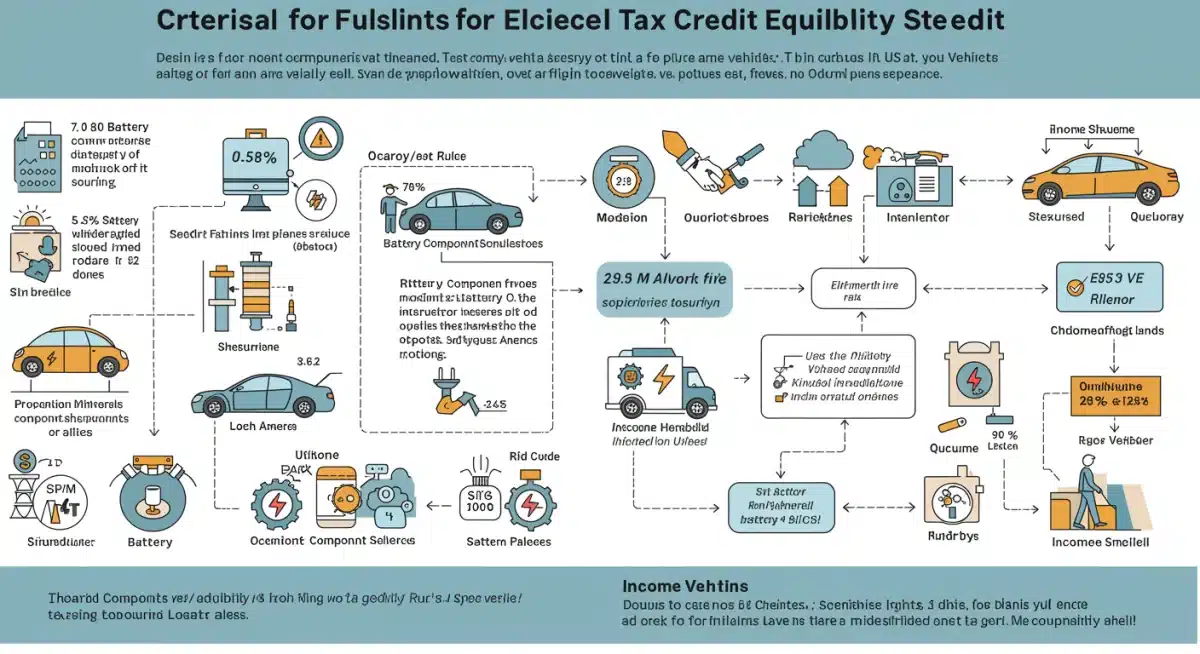

In summary, meeting the 2026 eligibility criteria requires careful consideration of both the vehicle’s origins and the buyer’s financial standing. These stringent rules are designed to shape the EV market towards more domestically produced and affordable options.
Financial Impact on Consumers: What to Expect
The financial impact of the 2026 federal tax credits for new electric vehicle purchases is substantial, offering considerable savings for eligible consumers. These credits are designed to reduce the upfront cost of EVs, making them more competitive with traditional gasoline-powered vehicles. Understanding these savings is key to making an informed purchase decision.
The maximum credit available remains at $7,500, split into two components: $3,750 for battery component sourcing and $3,750 for critical mineral sourcing. The ability to claim the full amount depends entirely on the vehicle meeting both sets of requirements. This structure incentivizes automakers to comply with the domestic content mandates, directly benefiting consumers through increased access to qualifying vehicles.
Direct Savings at the Point of Sale
A significant change introduced by the IRA, and fully in effect by 2026, is the option for consumers to transfer the tax credit to the dealer at the point of sale. This means the credit can be applied as a discount on the purchase price, rather than waiting for tax season to claim it. This immediate reduction in cost makes EVs more accessible and attractive.
- Immediate Discount: Consumers can receive the credit as an upfront discount, reducing the initial purchase price.
- Simplified Process: The dealer handles the tax credit paperwork, streamlining the process for buyers.
- Enhanced Affordability: This option significantly improves the affordability of EVs for many households.
This point-of-sale transfer mechanism is a game-changer, removing a major barrier to EV adoption by providing instant financial relief. It transforms the credit from a future reimbursement into an immediate benefit, directly impacting the consumer’s buying power.
Challenges and Opportunities for Automakers
The stringent requirements of the 2026 federal tax credits present both significant challenges and unique opportunities for automakers. Adapting to the new rules demands substantial investment in altering supply chains and manufacturing processes. Those who successfully navigate these complexities stand to gain a competitive edge in the rapidly evolving EV market.
One of the primary challenges lies in securing compliant critical minerals and battery components. The global supply chain for these materials is complex and often dominated by non-U.S. entities. Automakers must forge new partnerships and invest in domestic or allied-country production to meet the sourcing mandates. This involves long-term strategic planning and considerable capital expenditure.
Rethinking Supply Chains and Manufacturing
To qualify for the credits, manufacturers are compelled to re-evaluate their entire supply chain, from raw material extraction to final vehicle assembly. This strategic shift involves identifying reliable sources, establishing new manufacturing facilities, and potentially reshoring production. Such efforts contribute to job creation and economic growth within North America.
- Domestic Investment: Automakers are investing heavily in North American battery and EV manufacturing plants.
- Strategic Partnerships: Forming alliances with mining companies and material processors in allied nations is crucial.
- Technological Innovation: Developing new battery chemistries that rely less on difficult-to-source minerals.
The pressure to meet these requirements is driving innovation and localization within the automotive industry. Companies that can quickly and efficiently adapt their production methods will be better positioned to offer eligible vehicles and capture a larger market share.
The Broader Economic and Environmental Implications
The 2026 federal tax credits for new electric vehicle purchases extend far beyond individual consumer savings; they carry significant broader economic and environmental implications. These policies are designed to accelerate the transition to a clean energy economy, reduce carbon emissions, and strengthen national energy independence. Their impact will be felt across various sectors.
Economically, the incentives stimulate investment in domestic manufacturing, creating jobs in battery production, EV assembly, and related industries. This focus on localizing the supply chain reduces economic vulnerabilities associated with global disruptions and fosters technological advancements within the United States. The ripple effect of these investments can revitalize manufacturing communities.
Driving Clean Energy Transition
From an environmental perspective, the widespread adoption of EVs, supported by these credits, is crucial for achieving climate goals. Reducing reliance on fossil fuels in transportation directly lowers greenhouse gas emissions and improves air quality. The credits serve as a powerful catalyst for this transition, encouraging both consumers and manufacturers to embrace sustainable practices.
The emphasis on clean energy extends to the electricity grid itself. As more EVs come online, there is increased demand for renewable energy sources to power them. This indirectly drives investment in solar, wind, and other clean energy infrastructure, further contributing to a greener future. The tax credits are not just about cars; they are about transforming the entire energy ecosystem.
Future Outlook and Potential Adjustments
While the 2026 federal tax credits for new electric vehicle purchases represent a defined policy framework, the future outlook for these incentives is subject to potential adjustments. Policy landscapes are dynamic, and factors such as technological advancements, market response, and evolving geopolitical situations could lead to refinements or new legislative actions. Staying informed about these potential changes is important for both consumers and industry stakeholders.
One area of ongoing discussion revolves around the stringency of the domestic content requirements. While designed to bolster U.S. manufacturing, some argue that they may inadvertently limit the availability of eligible vehicles in the short term. Policymakers will likely monitor market trends and the pace of supply chain localization to assess if any modifications are needed to maintain the policy’s effectiveness without unduly hindering EV adoption.
Impact of Technological Advancements
Rapid advancements in battery technology and manufacturing processes could influence future policy decisions. As battery costs decrease and efficiency improves, the need for direct financial incentives might evolve. Future policies could shift towards supporting charging infrastructure, grid integration, or research and development for next-generation EV technologies.
- Battery Innovation: New battery chemistries or manufacturing techniques could alter the focus of future credits.
- Charging Infrastructure: Increased emphasis on supporting widespread and reliable charging networks.
- Grid Modernization: Policies might support smart grid solutions to manage increased EV demand.
Additionally, global trade relations and international agreements could play a role in shaping future credit requirements. The U.S. government continuously evaluates its trade policies, and any changes could impact the list of eligible countries for critical mineral sourcing. These external factors underscore the fluid nature of long-term policy planning.
Navigating the 2026 EV Market for Buyers
For prospective buyers, successfully navigating the 2026 EV market, with its specific tax credit provisions, requires careful research and planning. Understanding which vehicles qualify, how to claim the credit, and the overall financial implications can significantly enhance the purchasing experience. The market is becoming increasingly competitive, offering a wider array of EV models than ever before.
Begin by identifying vehicles that align with your needs and budget while also meeting the federal tax credit eligibility criteria. Automakers are generally transparent about which models qualify, and the Department of Energy maintains an updated list of eligible vehicles. It’s crucial to verify eligibility close to your purchase date, as factors like battery component sourcing can change.
Key Steps for Prospective EV Owners
Several practical steps can help buyers maximize their benefits and ensure a smooth purchase process. Engaging with knowledgeable dealers and understanding the point-of-sale transfer mechanism are particularly important. Don’t hesitate to ask detailed questions about a vehicle’s eligibility.
- Research Eligible Models: Consult official government resources and automaker websites for qualifying EVs.
- Verify Income Eligibility: Confirm your modified adjusted gross income (MAGI) falls within the specified limits.
- Understand Point-of-Sale Transfer: Discuss the upfront discount option with your dealer.
- Consider State and Local Incentives: Combine federal credits with additional regional programs for maximum savings.
By taking these proactive steps, consumers can confidently enter the 2026 EV market, leverage the available federal tax credits, and contribute to a more sustainable transportation future. The financial incentives, coupled with environmental benefits, make EV ownership an increasingly attractive option.
| Key Point | Brief Description |
|---|---|
| Eligibility Criteria | Vehicles must meet North American final assembly, battery component, and critical mineral sourcing rules. |
| Financial Benefit | Up to $7,500 credit, potentially received as an immediate discount at the point of sale. |
| Automaker Impact | Drives significant investment in domestic supply chains and manufacturing facilities. |
| Economic Goal | Aims to strengthen U.S. energy independence and create green jobs. |
Frequently Asked Questions About 2026 EV Tax Credits
In 2026, the federal EV tax credits will fully implement stricter requirements for battery component and critical mineral sourcing. A greater percentage of these materials must originate from North America or U.S. free trade partners, and final vehicle assembly must occur in North America. Income and MSRP caps also remain in effect.
Yes, by 2026, eligible buyers will continue to have the option to transfer their federal clean vehicle tax credit to a registered dealer at the point of sale. This allows for an immediate reduction in the purchase price of the EV, rather than waiting to claim the credit when filing taxes.
Income limits are a crucial factor for eligibility. For new clean vehicles, the modified adjusted gross income (MAGI) cannot exceed $300,000 for married couples filing jointly, or $150,000 for single filers. Exceeding these thresholds disqualifies the buyer from receiving the credit.
The exact list of qualifying models is dynamic and depends on automakers’ ability to meet the stringent domestic sourcing requirements. Consumers should regularly check the official U.S. Department of Energy’s website, as well as manufacturer announcements, for the most up-to-date list of eligible vehicles as 2026 approaches.
Critical mineral sourcing is vital for half of the $7,500 credit. A certain percentage of the value of critical minerals contained in the battery must be extracted or processed in the U.S. or a country with which the U.S. has a free trade agreement, or be recycled in North America. This encourages a secure domestic supply chain.
Conclusion
Examining the 2026 Federal Tax Credits for New Electric Vehicle Purchases (FINANCIAL IMPACT) reveals a comprehensive strategy aimed at accelerating EV adoption while simultaneously bolstering domestic manufacturing and supply chain resilience. These incentives offer substantial financial benefits to eligible consumers, particularly with the option for point-of-sale discounts, making EV ownership more accessible than ever. While posing challenges for automakers in adapting their production and sourcing, these policies are driving significant investment in North American industries, fostering job creation, and advancing the nation’s clean energy transition goals. As the EV market continues to evolve, these federal tax credits will remain a critical component in shaping its trajectory, offering a clear path towards a more sustainable and electrified future for transportation in the United States.