5G’s Impact on US Transportation: Enhancing Mobility by 2026
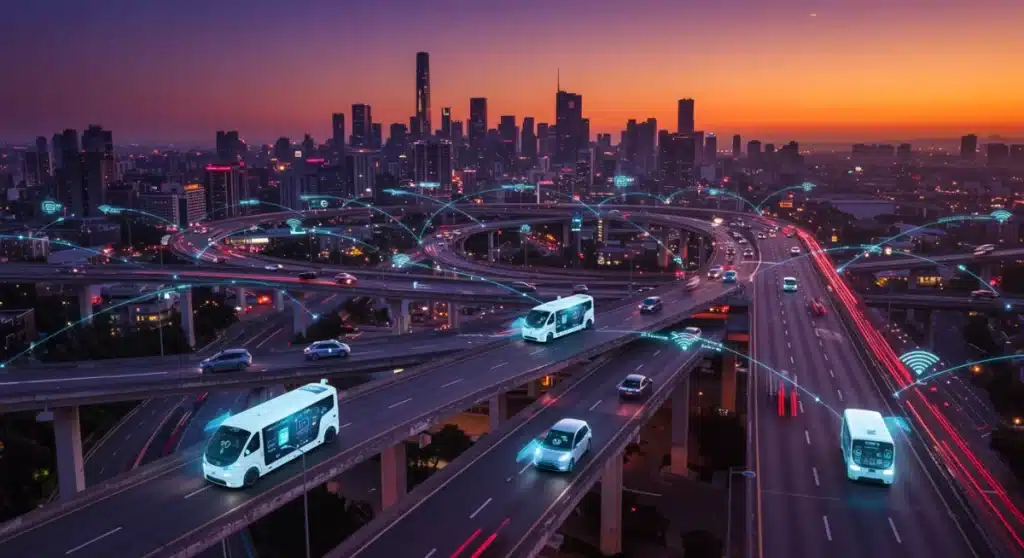
By 2026, 5G technology is poised to profoundly transform US transportation systems, enabling enhanced connectivity, real-time data exchange, and the widespread adoption of autonomous and intelligent mobility solutions nationwide.
The landscape of American transportation is on the cusp of a profound transformation, driven by the rollout of fifth-generation wireless technology. The Impact of 5G on Transportation: Enhancing US Mobility Systems by 2026 promises not just faster connections, but a fundamental shift in how we move, interact with our environment, and manage complex logistical operations across the nation.
The Dawn of Connected Mobility: 5G’s Fundamental Role
The advent of 5G is not merely an upgrade from previous wireless generations; it represents a paradigm shift that will redefine the core functionalities of transportation systems. Its unparalleled speed, ultra-low latency, and massive connectivity capabilities are the foundational pillars for a truly intelligent and responsive mobility ecosystem.
In the United States, by 2026, these technological attributes will enable a level of interconnectedness previously unimaginable, paving the way for innovations that will enhance safety, efficiency, and sustainability across all modes of transport. From personal vehicles to public transit and freight logistics, 5G’s influence will be pervasive.
Key Characteristics Driving Transportation Innovation
Understanding 5G’s unique characteristics is crucial to grasping its transformative potential in transportation. These features allow for real-time data processing and communication vital for advanced applications.
- Ultra-low Latency: Near-instantaneous response times, critical for autonomous vehicles and real-time traffic management.
- High Bandwidth: Enables the rapid transfer of massive data volumes, essential for high-definition mapping, sensor data, and infotainment in connected cars.
- Massive Connectivity: Supports a vast number of connected devices simultaneously, from individual sensors on roads to entire fleets of vehicles.
- Network Slicing: Allows for dedicated virtual networks with guaranteed performance for specific applications, such as emergency services or mission-critical autonomous operations.
The combination of these features creates a robust communication backbone that can support the complex demands of future transportation systems. This foundational role of 5G is what makes it a game-changer, moving beyond simple internet access to enable a new era of intelligent transport.
Ultimately, 5G will serve as the nervous system for an increasingly complex and interconnected transportation network. Its ability to handle vast amounts of data with minimal delay is what differentiates it, allowing for the creation of truly smart infrastructure and vehicles that can communicate and react in fractions of a second, profoundly impacting safety and operational efficiency.
Autonomous Vehicles and V2X Communication
One of the most anticipated and impactful applications of 5G in transportation is its role in accelerating the development and deployment of autonomous vehicles (AVs). By 2026, 5G will be instrumental in enabling the sophisticated vehicle-to-everything (V2X) communication necessary for fully self-driving cars to operate safely and efficiently on US roads.
V2X communication allows vehicles to exchange information not only with each other (V2V) but also with road infrastructure (V2I), pedestrians (V2P), and the network (V2N). This constant flow of data provides AVs with a 360-degree awareness of their surroundings, far beyond what on-board sensors alone can achieve.
Enhancing Safety and Decision-Making
The ultra-low latency of 5G is paramount for V2X communications, ensuring that critical safety information is transmitted and received in milliseconds. This is vital for preventing accidents and dynamic route adjustments.
- Collision Avoidance: Vehicles can warn each other of sudden braking, slippery road conditions, or obstacles beyond the line of sight.
- Traffic Signal Optimization: AVs can communicate with traffic lights to optimize speed and flow, reducing congestion and unnecessary stops.
- Pedestrian Detection: V2P communication can alert both AVs and vulnerable road users to potential hazards, enhancing urban safety.
- Cooperative Maneuvering: Enables platooning of commercial trucks, where vehicles travel in close proximity to reduce drag and fuel consumption.
Beyond safety, 5G’s high bandwidth supports the transfer of rich sensor data, high-definition maps, and over-the-air software updates, which are all crucial for the continuous improvement and safe operation of autonomous fleets. This data exchange will allow AVs to learn from collective experiences and adapt to diverse driving conditions.
The synergy between 5G and autonomous technology promises to revolutionize road travel in the US. By 2026, we can expect to see significant strides in the deployment of AVs, particularly in controlled environments and designated corridors, thanks to the robust V2X framework that 5G enables, leading to fewer accidents and more efficient journeys.
Smart Infrastructure and Traffic Management
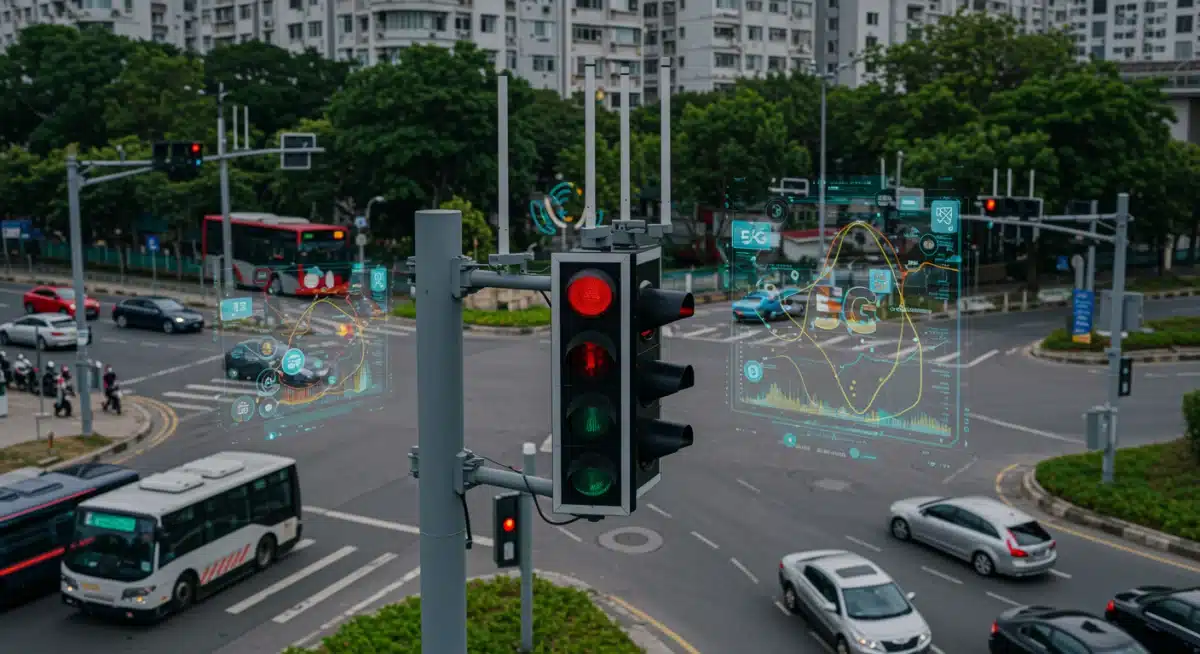
The integration of 5G goes beyond just vehicles; it extends to the very fabric of our transportation networks, creating smart infrastructure that can dynamically respond to real-time conditions. By 2026, US cities will leverage 5G to implement sophisticated traffic management systems, optimize public transit, and enhance overall urban mobility.
Smart infrastructure, powered by 5G, involves a network of interconnected sensors, cameras, and communication devices embedded within roads, bridges, and public spaces. This network collects vast amounts of data, which is then analyzed to make intelligent decisions that improve traffic flow and reduce congestion.
Real-time Data for Dynamic Solutions
The ability of 5G to provide low-latency, high-bandwidth communication is essential for the real-time data processing required for effective smart infrastructure. This enables proactive rather than reactive management.
- Adaptive Traffic Signals: Traffic lights can adjust their timing based on real-time traffic volume and pedestrian movement, reducing wait times.
- Congestion Prediction: AI-powered systems can predict congestion hotspots before they occur, rerouting traffic and informing drivers through connected apps.
- Smart Parking: Sensors can detect available parking spaces and guide drivers directly to them, minimizing cruising for parking and reducing emissions.
- Infrastructure Monitoring: Sensors on bridges and roads can detect structural issues or environmental hazards (e.g., ice, flooding) and alert authorities instantly.
Furthermore, 5G’s network slicing capabilities can dedicate specific network resources for critical infrastructure applications, ensuring their reliable operation even during peak network usage. This reliability is paramount for systems managing public safety and essential services.
The implementation of 5G-enabled smart infrastructure will transform urban environments. By 2026, US cities will see tangible improvements in traffic flow, reduced commute times, and a more sustainable approach to urban planning, all driven by the intelligent data exchange facilitated by 5G technology.
Revolutionizing Public Transit and Logistics
Beyond individual vehicles and road infrastructure, 5G is set to revolutionize public transit and the vast logistics networks that underpin the US economy. These sectors, often characterized by complex scheduling and extensive asset management, stand to gain significantly from 5G’s enhanced connectivity and data capabilities.
In public transit, 5G will enable more efficient operations, improved passenger experience, and enhanced safety. For logistics, it will provide unprecedented visibility and control over supply chains, from warehousing to last-mile delivery, fostering greater efficiency and cost savings.
Transforming Urban Commutes and Supply Chains
The high bandwidth and low latency of 5G are particularly beneficial for real-time tracking, communication, and data analytics in these complex systems. This allows for dynamic adjustments and predictive maintenance.
- Connected Public Transport: Buses, trains, and trams can transmit real-time location data, passenger counts, and operational status, allowing for dynamic scheduling and better resource allocation.
- Enhanced Passenger Experience: High-speed Wi-Fi on public transport, real-time arrival information, and personalized journey planning will improve rider satisfaction.
- Smart Logistics and Fleet Management: Real-time tracking of goods, predictive maintenance for delivery vehicles, and optimized routing based on live traffic data will streamline supply chains.
- Port and Warehouse Automation: 5G will facilitate the deployment of autonomous guided vehicles (AGVs) and drones in ports and warehouses, increasing efficiency and reducing manual labor.
Moreover, 5G’s ability to support a massive number of connected devices means that every package, pallet, and vehicle in a logistics network can be monitored and managed, providing end-to-end visibility. This level of detail is crucial for optimizing inventory, preventing losses, and ensuring timely deliveries across the vast US landscape.
By 2026, the integration of 5G into public transit and logistics will lead to more reliable, efficient, and user-friendly systems. Commuters will experience smoother journeys, while businesses will benefit from leaner, more responsive supply chains, ultimately contributing to economic growth and improved quality of life.
The Economic and Environmental Benefits of 5G Mobility
The technological advancements brought by 5G in transportation are not merely about speed and connectivity; they translate into significant economic and environmental benefits for the United States. By 2026, these advantages will become increasingly apparent, influencing everything from job creation to carbon footprint reduction.
Economically, enhanced mobility systems powered by 5G will drive productivity, create new industries, and streamline existing operations, leading to substantial cost savings. Environmentally, the optimization of traffic flow and the adoption of more efficient transport methods will contribute to a greener future.
Driving Growth and Sustainability
The efficiencies and innovations enabled by 5G in transportation have a ripple effect across the economy and environment. This includes creating new markets and reducing waste.
- Job Creation: The development, deployment, and maintenance of 5G infrastructure and related smart mobility solutions will generate numerous jobs in technology, engineering, and urban planning.
- Increased Productivity: Reduced commute times and more efficient freight logistics will free up valuable time and resources, boosting overall economic productivity.
- Reduced Fuel Consumption: Optimized traffic flow, intelligent routing, and vehicle platooning will significantly decrease fuel usage and associated emissions.
- Lower Congestion Costs: Less traffic congestion means fewer wasted hours, reduced wear and tear on infrastructure, and lower economic losses due to delays.
- New Business Models: The connected environment will foster innovation in areas like ride-sharing, on-demand delivery services, and personalized mobility solutions.
Furthermore, the data collected by 5G-enabled smart infrastructure can inform better urban planning decisions, leading to more sustainable city development. This includes optimizing public transit routes to encourage greater ridership and designing pedestrian-friendly zones.
By 2026, the US will experience a dual benefit from 5G’s impact on transportation: a powerful economic stimulus driven by innovation and efficiency, coupled with a significant stride towards environmental sustainability. These collective advantages underscore the critical importance of robust 5G deployment across the nation.
Challenges and the Path Forward for 5G in US Transportation
While the promise of 5G in enhancing US mobility systems by 2026 is immense, its widespread implementation is not without challenges. Addressing these hurdles will be crucial to fully realize the transformative potential of this technology. These challenges range from infrastructure deployment to regulatory frameworks and cybersecurity concerns.
Successfully navigating this path requires concerted efforts from government, industry, and academic institutions, working collaboratively to establish standards, secure investments, and ensure equitable access to these advanced capabilities across the nation.
Overcoming Barriers to Widespread Adoption
Several key areas demand attention to ensure a smooth and effective integration of 5G into US transportation. These include technical, financial, and societal considerations.
- Infrastructure Deployment: Accelerating the build-out of 5G networks, especially in rural and underserved areas, remains a significant challenge. This includes deploying small cells and fiber optic backbones.
- Standardization and Interoperability: Ensuring that different vehicles, infrastructure components, and communication protocols can seamlessly interact requires robust industry standards.
- Data Security and Privacy: The vast amounts of data generated by connected transportation systems raise critical concerns about cybersecurity threats and the protection of personal privacy.
- Regulatory Frameworks: Developing clear and adaptive regulations for autonomous vehicles, V2X communication, and data usage is essential for safe and legal operation.
- Public Acceptance and Trust: Educating the public about the benefits and safety measures of 5G-enabled transportation is vital for fostering trust and adoption.
Investment in research and development, particularly in areas like AI for traffic management and advanced sensor technologies, will also be critical. Public-private partnerships can play a crucial role in funding large-scale infrastructure projects and piloting innovative mobility solutions.
Despite these challenges, the trajectory towards a 5G-enabled transportation future in the US is clear. By proactively addressing these issues, stakeholders can ensure that by 2026, the nation’s mobility systems are not only enhanced but also resilient, secure, and accessible to all, truly leveraging the power of 5G.
| Key Aspect | Impact by 2026 |
|---|---|
| Autonomous Vehicles | Enhanced safety and efficiency via V2X communication, accelerating deployment in specific corridors. |
| Smart Infrastructure | Real-time traffic management, adaptive signals, and congestion prediction for urban areas. |
| Public Transit & Logistics | Optimized routes, real-time tracking, and improved passenger experience and supply chain efficiency. |
| Economic & Environmental | Job creation, reduced fuel consumption, lower congestion costs, and new business models. |
Frequently Asked Questions About 5G and US Transportation
5G’s ultra-low latency enables near-instantaneous V2X communication, allowing autonomous vehicles to exchange critical safety information with other vehicles, infrastructure, and pedestrians in real-time. This rapid data exchange helps prevent collisions, provides early warnings of hazards, and supports cooperative driving maneuvers, significantly enhancing overall road safety.
For public transportation, 5G offers benefits like real-time tracking of vehicles, dynamic route optimization, and enhanced passenger information systems. It also facilitates high-speed Wi-Fi onboard, improving the passenger experience. These capabilities lead to more efficient scheduling, reduced delays, and better resource allocation, making public transit more reliable and attractive.
While 5G will significantly mitigate traffic congestion, it’s unlikely to eliminate it entirely by 2026. 5G-enabled smart infrastructure, adaptive traffic signals, and intelligent routing will optimize traffic flow and reduce delays. However, factors like urban growth, infrastructure limitations, and human driving behavior will still contribute to some level of congestion.
The extensive connectivity of 5G transportation systems introduces cybersecurity risks, including data breaches, hacking of vehicle controls, and denial-of-service attacks on critical infrastructure. Protecting these systems requires robust encryption, secure network architectures, continuous monitoring, and strict authentication protocols to safeguard sensitive data and ensure operational integrity.
5G’s impact on transportation will bring environmental benefits by enabling more efficient vehicle operation, optimized traffic flow, and reduced fuel consumption, thereby lowering carbon emissions. It also supports the growth of electric and autonomous vehicles, further contributing to a cleaner environment through reduced reliance on fossil fuels and more sustainable urban planning.
Conclusion
The journey towards a fully integrated and intelligent transportation system in the United States, greatly influenced by 5G technology, is rapidly progressing. By 2026, the promise of enhanced mobility, increased safety, and unparalleled efficiency will be a tangible reality for millions. From autonomous vehicles communicating seamlessly to smart infrastructure managing urban flow and optimized logistics streamlining supply chains, 5G is the undeniable backbone of this evolution. While challenges in infrastructure deployment, standardization, and cybersecurity remain, the collaborative efforts across sectors are paving the way for a future where travel is not only faster and smarter but also safer and more sustainable. The transformative power of 5G on US transportation is set to redefine our understanding of mobility, fostering economic growth and a significantly improved quality of life.