Smart City AI Traffic Management: 20% Congestion Reduction by 2025
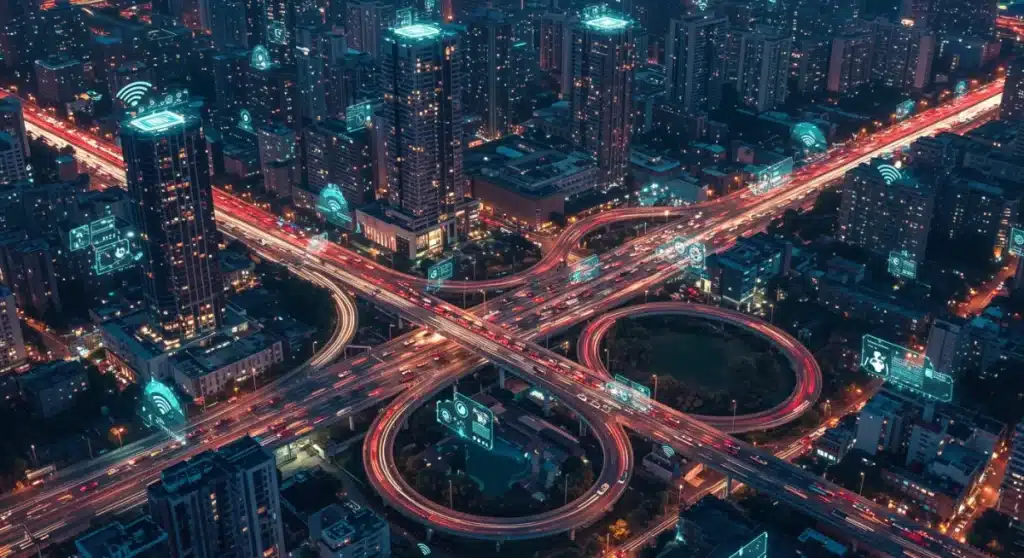
Smart City Solutions: Integrating AI-Powered Traffic Management to Reduce Urban Congestion by 20% in US Metros by 2025 is a critical initiative aimed at leveraging artificial intelligence to create more efficient and sustainable urban transportation networks.
Urban life in the United States often comes with a significant drawback: traffic congestion. However, a new era of urban planning is emerging, driven by advanced technologies. The integration of AI Traffic Management within smart city solutions promises a transformative impact, with ambitious goals to reduce urban congestion by 20% in US metros by 2025. This isn’t just about faster commutes; it’s about creating more livable, sustainable, and economically vibrant cities.
The pressing challenge of urban congestion
Urban congestion is more than just an inconvenience; it’s a significant economic drain and environmental burden. Across major US metropolitan areas, commuters spend countless hours stuck in traffic, leading to lost productivity, increased fuel consumption, and higher emissions. This persistent issue impacts everything from local economies to public health, creating a cycle of frustration for residents and a hurdle for urban development.
Understanding the multifaceted nature of this problem is the first step toward effective solutions. Congestion arises from a complex interplay of factors, including population growth, outdated infrastructure, inefficient traffic signal coordination, and a reliance on single-occupancy vehicles. Addressing these deeply entrenched issues requires innovative thinking and a willingness to embrace technological advancements that can fundamentally alter how we manage our urban landscapes.
For decades, traditional approaches to traffic management, such as road widening and fixed-timing signals, have offered only temporary relief. These methods often fail to adapt to dynamic traffic conditions, leading to bottlenecks and gridlock that persist even after significant investments. The sheer scale of urban growth demands a more responsive and intelligent system, one that can learn, predict, and adapt in real-time to the ever-changing pulse of city life.
Economic and environmental impacts
- Economic Losses: Billions of dollars are lost annually due to wasted fuel, delayed deliveries, and reduced productivity from commuters stuck in traffic.
- Environmental Degradation: Increased idle times and stop-and-go driving lead to higher greenhouse gas emissions and air pollution, contributing to climate change and respiratory issues.
- Quality of Life: Commuters experience higher stress levels, lose valuable personal time, and face reduced access to opportunities, impacting overall well-being.
The conclusion drawn from these challenges is clear: the status quo is unsustainable. A radical shift in approach is needed, one that leverages the power of data and artificial intelligence to untangle the complexities of urban traffic. This shift is not just about moving cars faster, but about fostering a more efficient, equitable, and environmentally conscious urban environment for everyone.
Introducing AI-powered traffic management systems
Artificial Intelligence (AI) is rapidly transforming various sectors, and urban transportation is no exception. AI Traffic Management systems represent a paradigm shift from reactive to proactive strategies, using sophisticated algorithms to analyze vast amounts of data and make real-time decisions that optimize traffic flow. These systems are designed to learn from historical patterns and current conditions, predicting potential congestion before it even occurs.
At its core, AI-powered traffic management relies on a network of sensors, cameras, and connected vehicle data to provide a comprehensive picture of urban mobility. This data is then fed into AI models that can identify anomalies, forecast demand, and recommend optimal solutions. Unlike traditional systems, AI can adapt to unexpected events, such as accidents or sudden surges in traffic, minimizing their disruptive impact on the city’s arteries.
The goal is to create a seamless, intelligent network where traffic signals communicate with each other, vehicles provide real-time feedback, and commuters receive personalized navigation advice. This level of integration promises not only to reduce travel times but also to enhance safety and reduce the carbon footprint associated with urban transportation. It’s about building a responsive infrastructure that evolves with the city’s needs.
How AI optimizes traffic flow
- Real-time Signal Optimization: AI adjusts traffic light timings based on current vehicle queues, pedestrian crossings, and overall network conditions, preventing unnecessary stops.
- Predictive Analytics: By analyzing historical data and live feeds, AI forecasts congestion hotspots and proactively reroutes traffic or adjusts signal patterns to prevent gridlock.
- Incident Detection and Response: AI quickly identifies accidents or stalled vehicles, alerting authorities and adjusting traffic flow around the incident site to minimize delays.
The introduction of AI into traffic management signifies a crucial step towards smarter cities. These systems are not merely tools but intelligent partners in urban planning, constantly working to improve efficiency and responsiveness. By embracing AI, cities can move beyond simply managing traffic to actively shaping a more fluid and predictable urban mobility experience for all.
Key technologies enabling smart traffic solutions
The success of AI Traffic Management hinges on the seamless integration of several advanced technologies. These components work in concert to collect, process, and act upon the vast amounts of data required for intelligent decision-making. Without a robust technological backbone, AI’s potential in urban mobility would remain largely untapped.
One of the foundational elements is the proliferation of sensors. These devices, embedded in roads, traffic lights, and even vehicles, provide real-time data on vehicle counts, speeds, and occupancy. Coupled with high-resolution cameras equipped with computer vision capabilities, they offer an unprecedented level of detail about traffic conditions, far beyond what human observers could ever track.
Beyond data collection, the ability to transmit and process this information quickly is paramount. 5G networks provide the low-latency, high-bandwidth connectivity necessary for real-time data exchange between sensors, traffic control centers, and connected vehicles. Edge computing further enhances this by processing data closer to its source, reducing delays and enabling faster responses to dynamic traffic situations.
Integrated technological components
- IoT Sensors and Cameras: Deploying a dense network of sensors and cameras provides granular data on traffic volume, speed, and patterns, feeding the AI algorithms.
- 5G Connectivity: High-speed, low-latency 5G networks enable instantaneous data transmission, crucial for real-time AI decision-making and communication with connected infrastructure.
- Edge Computing: Processing data closer to the source reduces latency and bandwidth usage, allowing AI models to react almost instantly to changing traffic conditions.
These technological advancements collectively form the nervous system of a smart city’s transportation network. They provide the eyes, ears, and brain for the AI Traffic Management system, allowing it to perceive, understand, and intelligently control urban mobility. The synergy between these technologies is what makes the ambitious goal of a 20% congestion reduction a tangible reality.
Implementation strategies in US metros
Achieving a 20% reduction in urban congestion by 2025 through AI Traffic Management requires a strategic and phased implementation approach across US metropolitan areas. This is not a one-size-fits-all solution; each city presents unique challenges and opportunities that must be addressed with tailored strategies. Successful deployment involves collaboration between city governments, technology providers, and local communities.
Initial steps often involve pilot programs in specific high-congestion corridors or intersections. These pilot projects allow cities to test the efficacy of AI systems, gather local data, and fine-tune algorithms to suit the particular traffic dynamics of the area. Lessons learned from these early deployments are crucial for scaling up the technology city-wide, ensuring that the solutions are both effective and sustainable.
Furthermore, public-private partnerships play a vital role. Cities often lack the specialized expertise or funding required for large-scale AI infrastructure projects. Collaborating with technology companies brings in the necessary innovation, capital, and operational know-how. These partnerships can accelerate deployment, share risks, and ensure that the solutions remain at the cutting edge of technological development.
Key implementation phases
- Pilot Programs: Starting with small-scale deployments in critical areas to test and refine AI models.
- Infrastructure Upgrades: Investing in necessary sensor networks, 5G connectivity, and smart traffic signal hardware.
- Data Integration Platforms: Developing central platforms to aggregate and analyze data from various sources, feeding the AI.
Beyond technology, public engagement and education are paramount. Residents need to understand the benefits of these new systems and how they will improve their daily lives. Addressing concerns about data privacy and system reliability builds trust and ensures community buy-in, which is essential for the long-term success of any smart city initiative. The strategic implementation of AI Traffic Management is a collaborative journey towards a more efficient urban future.
Measuring success: metrics and targets for 2025
The ambitious target of reducing urban congestion by 20% in US metros by 2025 necessitates clear metrics and robust evaluation frameworks. Without precise ways to measure progress, it’s impossible to determine the effectiveness of AI Traffic Management solutions or to make necessary adjustments. Defining what success looks like is as crucial as the technology itself.
Key performance indicators (KPIs) will typically include average travel times during peak hours, vehicle delay per mile, and the number of stop-and-go events. These metrics provide tangible proof of whether AI interventions are genuinely improving traffic flow. Beyond raw numbers, qualitative data, such as commuter satisfaction surveys, can offer valuable insights into the real-world impact on daily lives.
Furthermore, environmental benefits are also a critical component of measuring success. Reductions in fuel consumption and CO2 emissions, directly attributable to smoother traffic flow, contribute to broader sustainability goals. Cities will need to establish baseline measurements before AI deployment to accurately track these improvements over time, demonstrating the holistic value of smart city initiatives.
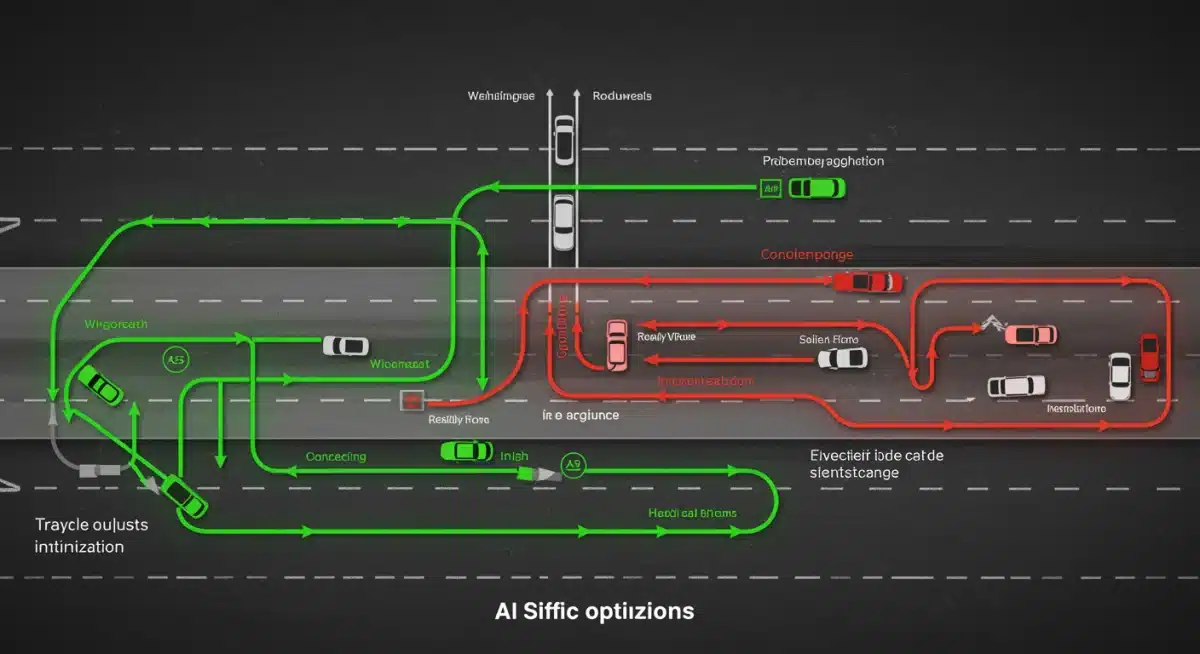
Key performance indicators
- Average Travel Time: A direct measure of how quickly vehicles move through the network, aiming for significant reductions during peak periods.
- Vehicle Delay: Quantifying the amount of time vehicles spend unnecessarily stopped or slowed due to congestion, a primary target for AI optimization.
- Emissions Reduction: Tracking the decrease in carbon dioxide and other pollutants due to smoother traffic flow and reduced idling.
Regular reporting and transparent data sharing are essential for accountability and for fostering continued investment in these technologies. By consistently monitoring these metrics, cities can ensure that their AI Traffic Management systems are not only meeting but exceeding the 2025 target. This data-driven approach solidifies the value proposition of smart city solutions and provides a clear roadmap for future urban development.
Challenges and future outlook for AI traffic management
While the promise of AI Traffic Management to reduce urban congestion is significant, its widespread adoption and long-term success face several challenges. These hurdles range from technical complexities and financial constraints to ethical considerations and public acceptance. Addressing them proactively will be key to realizing the full potential of smart city solutions.
One primary challenge is data privacy and security. AI systems rely on collecting vast amounts of data, raising concerns about how this information is stored, used, and protected. Ensuring robust cybersecurity measures and transparent data governance policies will be crucial for building public trust. Without it, resistance to these technologies could impede progress significantly.
Another significant hurdle is the initial investment required for infrastructure upgrades. Deploying a comprehensive network of sensors, cameras, and 5G connectivity is expensive, and cities often operate under tight budgets. Securing funding, whether through federal grants, private partnerships, or innovative financing models, will be essential for scaling these initiatives beyond pilot projects.
Overcoming obstacles and looking ahead
- Data Privacy and Security: Developing stringent protocols and transparent policies to protect sensitive urban data.
- Funding and Investment: Exploring diverse funding mechanisms and public-private partnerships to finance large-scale AI infrastructure.
- Interoperability: Ensuring different AI systems and city infrastructure components can communicate seamlessly, avoiding fragmented solutions.
Despite these challenges, the future outlook for AI Traffic Management remains incredibly promising. As technology evolves, costs are likely to decrease, and AI models will become even more sophisticated, capable of handling increasingly complex urban environments. The integration with autonomous vehicles and smart infrastructure holds the potential for truly self-optimizing urban transportation networks, pushing beyond the 20% congestion reduction target and ushering in an era of unprecedented urban efficiency and sustainability. The journey to smarter cities is continuous, demanding ongoing innovation and adaptation.
| Key Aspect | Brief Description |
|---|---|
| AI Traffic Management Goal | Reduce urban congestion by 20% in US metros by 2025. |
| Core Technology | AI algorithms analyzing real-time data from sensors and cameras. |
| Key Benefits | Faster commutes, reduced emissions, improved safety, economic gains. |
| Challenges | Funding, data privacy, infrastructure investment. |
Frequently asked questions about AI traffic management
AI-powered traffic management uses artificial intelligence to analyze real-time data from sensors and cameras, optimizing traffic signal timings, predicting congestion, and rerouting vehicles to improve flow and reduce delays. It’s designed to adapt dynamically to changing urban conditions.
By leveraging predictive analytics and real-time signal optimization, AI systems can proactively prevent bottlenecks, manage incident responses more efficiently, and provide better route guidance. This intelligent coordination aims to smooth traffic flow significantly, achieving the 20% reduction target.
Key technologies include IoT sensors, high-resolution cameras with computer vision, 5G connectivity for rapid data transfer, and edge computing for localized data processing. These components form the ecosystem that feeds and supports AI decision-making for traffic.
Beyond faster commutes, benefits include significant reductions in fuel consumption and CO2 emissions, improved road safety through better incident detection, and enhanced economic productivity due to less time wasted in traffic. It also contributes to a higher quality of urban life.
Major challenges include securing substantial funding for infrastructure upgrades, addressing critical data privacy and cybersecurity concerns, and ensuring interoperability between diverse urban systems. Public acceptance and long-term maintenance strategies are also vital for success.
Conclusion
The journey towards smarter cities, particularly through the lens of AI Traffic Management, represents a pivotal moment in urban development. The ambitious goal of reducing urban congestion by 20% in US metros by 2025 is not merely a technological aspiration but a commitment to enhancing the quality of life, economic vitality, and environmental sustainability of our urban centers. While challenges in funding, data privacy, and technological integration remain, the demonstrable benefits of AI-powered systems in optimizing traffic flow are too significant to ignore. As cities continue to embrace these innovative solutions, the vision of a future where urban mobility is seamless, efficient, and responsive becomes an increasingly tangible reality, paving the way for more livable and connected communities.