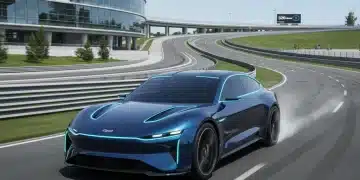
The Future of EV Charging: 4 Emerging Technologies to Watch in 2026
The Future of EV Charging: 4 Emerging Technologies to Watch in 2026 (Insider Knowledge)
The electric vehicle (EV) revolution is accelerating at an unprecedented pace, transforming the automotive industry and our daily lives. As more consumers embrace EVs, the demand for efficient, convenient, and accessible charging solutions intensifies. The current charging infrastructure, while growing, still faces challenges related to speed, availability, and integration. This is where emerging technologies come into play, promising to redefine the entire EV charging experience. By 2026, we anticipate several groundbreaking innovations will move from concept to widespread reality, fundamentally altering how we power our electric rides. This article delves into four of the most promising emerging technologies that will shape the future EV charging landscape.
Understanding the trajectory of these advancements is crucial for policymakers, infrastructure developers, automotive manufacturers, and, of course, EV owners. The goal is not just to charge faster, but to charge smarter, seamlessly, and sustainably. The future EV charging ecosystem will be characterized by speed, intelligence, and integration, addressing current pain points and unlocking new possibilities for electric mobility.
Let’s explore the cutting-edge innovations that are set to dominate the future EV charging scene.
1. Ultra-Fast Charging: Breaking the Speed Barrier
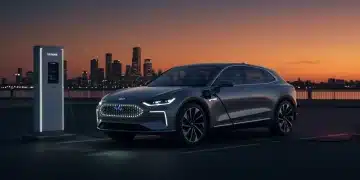
One of the most significant hurdles to mass EV adoption has been the perceived lengthy charging times compared to refueling a gasoline car. While home charging overnight is convenient for many, long-distance travel and on-the-go charging demand solutions that mimic the speed of traditional fuel pumps. This is where ultra-fast charging technology steps in, poised to be a cornerstone of future EV charging infrastructure.
The Evolution of Charging Speeds
Initially, EVs relied on Level 1 (120V AC) and Level 2 (240V AC) charging, which can take hours. DC fast charging (DCFC), often referred to as Level 3, significantly reduced these times, offering charging speeds from 50 kW to 150 kW. However, ultra-fast charging pushes these boundaries even further, typically operating at 250 kW, 350 kW, and even up to 500 kW or more. These higher power outputs are made possible by advancements in battery technology, power electronics, and sophisticated thermal management systems within both the vehicle and the charging station.
Technological Underpinnings
The ability to deliver such high power requires robust infrastructure. Higher voltages (up to 1000V) and currents are essential. This necessitates thicker cables, advanced cooling systems for the cables and connectors, and powerful rectifiers to convert AC grid power to DC for the vehicle’s battery. Automotive manufacturers are also designing EV batteries capable of accepting these high charge rates without degradation, often employing 800V architectures. Porsche’s Taycan and Hyundai’s Ioniq 5 are prime examples of vehicles already leveraging 800V systems to achieve impressive charging speeds.
Impact on Driver Experience and Infrastructure
For drivers, ultra-fast charging means significantly shorter stops. Imagine adding 200 miles of range in just 10-15 minutes – a game-changer for road trips and busy urban dwellers. This reduced charging anxiety will make EVs more appealing to a broader audience. From an infrastructure perspective, ultra-fast chargers require substantial grid connections and often necessitate dedicated substations. The deployment of these stations will likely concentrate along major highways, in urban hubs, and at fleet depots, creating a network that supports rapid turnaround times.
Challenges and Solutions
Despite the immense potential, ultra-fast charging faces challenges. The high power draw can strain local grids, requiring smart grid integration and energy storage solutions (like battery banks at charging stations) to buffer demand. The cost of installing and maintaining these powerful stations is also higher. However, ongoing research into solid-state batteries and improved thermal management systems promises to make ultra-fast charging even more efficient and less taxing on battery longevity, paving the way for widespread adoption by 2026.
2. Wireless EV Charging: The Seamless Power Transfer
Imagine pulling your EV into a parking spot and having it charge automatically, without the need to plug in any cables. This vision is rapidly becoming a reality with wireless EV charging, an emerging technology that promises unparalleled convenience and aesthetics. By 2026, we expect to see more public and private spaces equipped with this seamless power solution.
How Wireless Charging Works
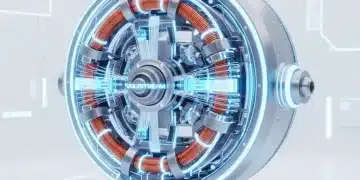
Wireless EV charging, also known as inductive charging, utilizes electromagnetic induction to transfer energy between two coils: one embedded in the ground (the primary coil) and one mounted on the underside of the EV (the secondary coil). When an alternating current flows through the primary coil, it generates a magnetic field. When the secondary coil is brought within this field, it induces a current, which is then used to charge the vehicle’s battery. The technology is similar to that used for charging smartphones and electric toothbrushes, but scaled up significantly for EVs.
Static vs. Dynamic Wireless Charging
Currently, most development focuses on static wireless charging, where the vehicle is stationary during the charging process. This is ideal for parking lots, garages, and even home use. However, a more ambitious form is dynamic wireless charging, or ‘charging while driving.’ This involves embedding charging coils beneath roads, allowing EVs to charge continuously as they travel, effectively extending range and reducing battery size requirements. Pilot projects for dynamic charging are underway globally, with promising results, though widespread deployment is a more distant prospect than static charging.
Advantages and Applications
The primary advantage of wireless charging is convenience. No more fumbling with cables, especially in adverse weather conditions or for individuals with mobility challenges. It also eliminates trip hazards and vandal-prone cables, leading to a cleaner aesthetic in public spaces. Wireless charging is particularly attractive for autonomous vehicles, which can park and charge themselves without human intervention. Furthermore, it can facilitate charging for commercial fleets, electric taxis, and public transport where quick, hands-free charging is highly beneficial.
Challenges and Future Outlook
Efficiency loss due to the air gap between coils, precise vehicle alignment requirements, and the cost of installation are current challenges. Standardization efforts are crucial to ensure interoperability between different EV models and charging pads. Organizations like SAE International are working on standards (e.g., SAE J2954) to address these issues. As the technology matures and costs decrease, wireless charging is expected to become a premium feature in many new EVs and a common sight in public charging infrastructure by 2026, especially in dedicated parking zones and smart cities.
3. Battery Swapping: The Pit Stop for EVs
While ultra-fast charging aims to reduce charging times, battery swapping offers an alternative approach: completely circumventing the charging process for the driver by exchanging a depleted battery for a fully charged one. This concept, though not new, is experiencing a resurgence, particularly in specific market segments, and is poised for significant growth by 2026.
The Concept Revisited
Battery swapping involves automated stations where an EV’s discharged battery pack is removed and replaced with a fresh, fully charged one in a matter of minutes – often faster than a traditional gasoline refill. This eliminates charging wait times entirely for the driver. The idea was famously championed by Better Place in the early 2010s but ultimately failed due to high infrastructure costs, lack of standardization, and complex logistics. However, with advancements in battery technology, modular EV platforms, and a more mature EV market, the concept is being re-evaluated with renewed optimism.
Key Players and Modern Implementation
NIO, a Chinese EV manufacturer, is a prominent proponent of battery swapping. They have established a growing network of Power Swap Stations that can complete a battery exchange in around three minutes. Their approach integrates battery-as-a-service (BaaS) models, where customers can subscribe to battery usage, separating the battery cost from the vehicle purchase price. This makes EVs more affordable upfront and allows for easy upgrades to newer battery technologies as they emerge.
Advantages and Target Markets
The most compelling advantage is the speed of ‘refueling.’ This is invaluable for high-utilization vehicles like taxis, ride-sharing fleets, and commercial delivery vans, where downtime directly impacts profitability. Battery swapping also addresses battery degradation concerns, as the battery is owned and maintained by the service provider. Furthermore, it facilitates grid balancing, as the swapped-out batteries can be charged at off-peak hours or used as stationary energy storage. For consumers, it offers flexibility and potentially lower upfront costs.
Challenges and Outlook for 2026
Standardization remains a critical challenge. For battery swapping to scale broadly, EV manufacturers need to agree on standardized battery pack designs and interfaces, which has historically been difficult. The capital expenditure for building and stocking swap stations is also substantial. However, with dedicated players like NIO demonstrating viability and other companies exploring similar models (e.g., for two-wheelers and commercial vehicles), battery swapping is expected to gain significant traction in specific fleet and niche markets by 2026. Its integration with renewable energy sources and smart grid services will also enhance its appeal.
4. Smart Grid Integration and Vehicle-to-Grid (V2G) Technology
The future EV charging ecosystem won’t just be about getting power into the vehicle; it will be about intelligent energy management. Smart grid integration and Vehicle-to-Grid (V2G) technology are at the forefront of this evolution, transforming EVs from mere energy consumers into active participants in the electrical grid. This will be a pivotal development in future EV charging by 2026.
What is Smart Grid Integration?
A smart grid is an electrical grid that uses information and communication technology to gather information, such as information about the behavior of suppliers and consumers, in an automated fashion to improve the efficiency, reliability, economics, and sustainability of the production and distribution of electricity. For EV charging, smart grid integration means optimizing when and how EVs charge based on factors like electricity prices, renewable energy availability, and grid demand. This can involve ‘smart charging,’ where charging schedules are adjusted to off-peak hours or when renewable energy generation is high, reducing stress on the grid and lowering costs for EV owners.
Unlocking V2G Potential
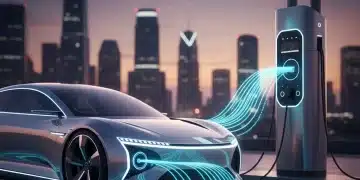
Vehicle-to-Grid (V2G) takes smart grid integration a step further. It allows EVs not only to draw power from the grid but also to feed excess energy stored in their batteries back into the grid when needed. This bidirectional flow of energy transforms EVs into mobile energy storage units, capable of supporting grid stability during peak demand, providing ancillary services, or even acting as a backup power source for homes during outages. Imagine a fleet of parked EVs collectively stabilizing the grid – this is the promise of V2G.
Benefits for the Grid and EV Owners
For grid operators, V2G offers invaluable flexibility. It can help balance intermittent renewable energy sources like solar and wind, reduce the need for expensive peaker plants, and defer infrastructure upgrades. For EV owners, V2G can create new revenue streams. By selling stored energy back to the grid during high-demand periods, owners can offset their charging costs and even earn money. This economic incentive will drive adoption and utilization of V2G-enabled vehicles and charging points.
Challenges and Path Forward
Implementing V2G requires standardized communication protocols between vehicles, charging stations, and the grid (e.g., ISO 15118). It also necessitates robust cybersecurity measures and clear regulatory frameworks for energy trading. Battery degradation due to frequent cycling is another concern, though ongoing research into battery management systems and battery chemistries is addressing this. By 2026, we expect to see more V2G-compatible EVs enter the market and pilot projects scale up, particularly in regions with high renewable energy penetration and supportive regulatory environments. This technology will be crucial for a truly sustainable and resilient energy future.
The Broader Impact of Future EV Charging Technologies
The convergence of these emerging technologies will have profound implications beyond just faster and more convenient charging. They will collectively contribute to a more sustainable, efficient, and integrated energy ecosystem.
Enhanced Grid Stability and Renewable Energy Integration
With smart grid integration and V2G, EVs will become dynamic assets, helping to absorb excess renewable energy when it’s plentiful and dispatch it back during shortages. This symbiotic relationship will accelerate the transition away from fossil fuels, making the grid more resilient and reducing carbon emissions. The ability to manage charging demand intelligently will mitigate potential strains on electrical infrastructure, even with millions of EVs on the road.
Economic Benefits and New Business Models
The advancements in future EV charging will spur new business models. Battery-as-a-Service (BaaS) and charging-as-a-service will become more prevalent, offering consumers flexibility and potentially lower ownership costs. Energy aggregators will emerge to manage V2G fleets, optimizing energy flow and revenue generation. The proliferation of charging options will also create economic opportunities for infrastructure developers, service providers, and technology innovators.
Improved User Experience and Accessibility
Ultimately, these technologies are designed to make owning and operating an EV as convenient, or even more convenient, than a gasoline car. Ultra-fast charging removes range anxiety for long journeys, wireless charging offers effortless daily power top-ups, and battery swapping provides instant full ‘refuels’ for specific use cases. This enhanced user experience will be critical in accelerating mass EV adoption, making electric mobility truly accessible to everyone.
The Role of Standardization and Collaboration
For these technologies to reach their full potential, industry-wide standardization and collaboration are paramount. Common protocols for communication, payment, and hardware interfaces will ensure seamless interoperability and prevent market fragmentation. Governments, automotive manufacturers, energy companies, and technology providers must work together to create a cohesive and supportive regulatory and infrastructural environment.
Conclusion: A Charged Future Awaits
The year 2026 is just around the corner, and the landscape of EV charging is set for a dramatic transformation. Ultra-fast charging will make long waits a relic of the past, wireless charging will offer unparalleled convenience, battery swapping will provide instant energy for specific applications, and smart grid integration with V2G will turn EVs into crucial components of our energy infrastructure. These aren’t just incremental improvements; they represent a paradigm shift in how we think about and interact with electric vehicles.
As these technologies mature and become more widespread, they will not only solve existing challenges but also unlock new possibilities for sustainable transportation and energy management. The future EV charging ecosystem will be characterized by intelligence, speed, and seamless integration, making electric vehicles an even more compelling and practical choice for consumers worldwide. The journey towards a fully electric future is charging ahead, and these innovations are paving the way.