U.S. Federal Regulations for Autonomous Vehicles: Q3 2026 Outlook

The landscape of transportation is on the cusp of a profound transformation, driven by the relentless march of autonomous vehicle (AV) technology. As these self-driving machines move from the realm of science fiction to tangible reality, the need for a robust and comprehensive regulatory framework becomes increasingly urgent. In the United States, the federal government plays a pivotal role in shaping the future of AV deployment, with significant updates to AV Federal Regulations expected by the third quarter of 2026. This article will provide an in-depth exploration of the current state of affairs, the anticipated changes, and the far-reaching implications for manufacturers, consumers, and the entire transportation ecosystem.
The journey towards fully autonomous vehicles is complex, fraught with technological hurdles, ethical dilemmas, and, crucially, regulatory vacuums. While states have taken initial steps to permit AV testing and limited deployment, a patchwork of state-specific rules creates inefficiencies and hinders widespread adoption. The federal government, primarily through agencies like the National Highway Traffic Safety Administration (NHTSA) and the Department of Transportation (DOT), is tasked with establishing overarching guidelines that ensure safety, promote innovation, and facilitate a harmonized approach across the nation. The upcoming Q3 2026 deadline for significant regulatory updates is a critical milestone that will likely redefine the trajectory of AV development and commercialization.
The Genesis of AV Federal Regulations: A Historical Perspective
To truly appreciate the significance of the impending AV Federal Regulations, it’s essential to understand the historical context. The initial guidance from federal agencies was largely voluntary and focused on providing a framework for developers rather than strict mandates. Early documents like NHTSA’s Federal Automated Vehicles Policy (2016) and subsequent updates aimed to encourage safe design and testing practices. These documents emphasized a multi-level approach to automation, from driver assistance features (Level 1 and 2) to full self-driving capabilities (Level 4 and 5).
However, as AV technology advanced and testing expanded, the limitations of voluntary guidelines became apparent. The absence of clear, enforceable federal standards created uncertainty for manufacturers and raised public concerns about safety. This led to a growing consensus that more definitive federal action was required to ensure consistency, accountability, and the safe integration of AVs into society. The call for robust AV Federal Regulations intensified as incidents involving autonomous vehicles, though rare, garnered significant media attention, highlighting the need for clear rules of engagement.
The legislative efforts, such as the SELF DRIVE Act in the House and the AV START Act in the Senate, while ultimately not passed into law, demonstrated a bipartisan recognition of the need for federal intervention. These efforts laid the groundwork for future regulatory actions, signaling a shift from a hands-off approach to one that seeks to actively shape the development and deployment of autonomous vehicles. The lessons learned from these early legislative attempts continue to inform the ongoing discussions and the anticipated updates to AV Federal Regulations.
Key Areas of Focus for Upcoming AV Federal Regulations by Q3 2026
The impending updates to AV Federal Regulations are expected to address several critical areas that are paramount for the safe and efficient deployment of autonomous vehicles. These areas include, but are not limited to, safety standards, data recording and sharing, cybersecurity, human-machine interface (HMI), and operational design domains (ODDs).
Safety Standards and Performance Metrics
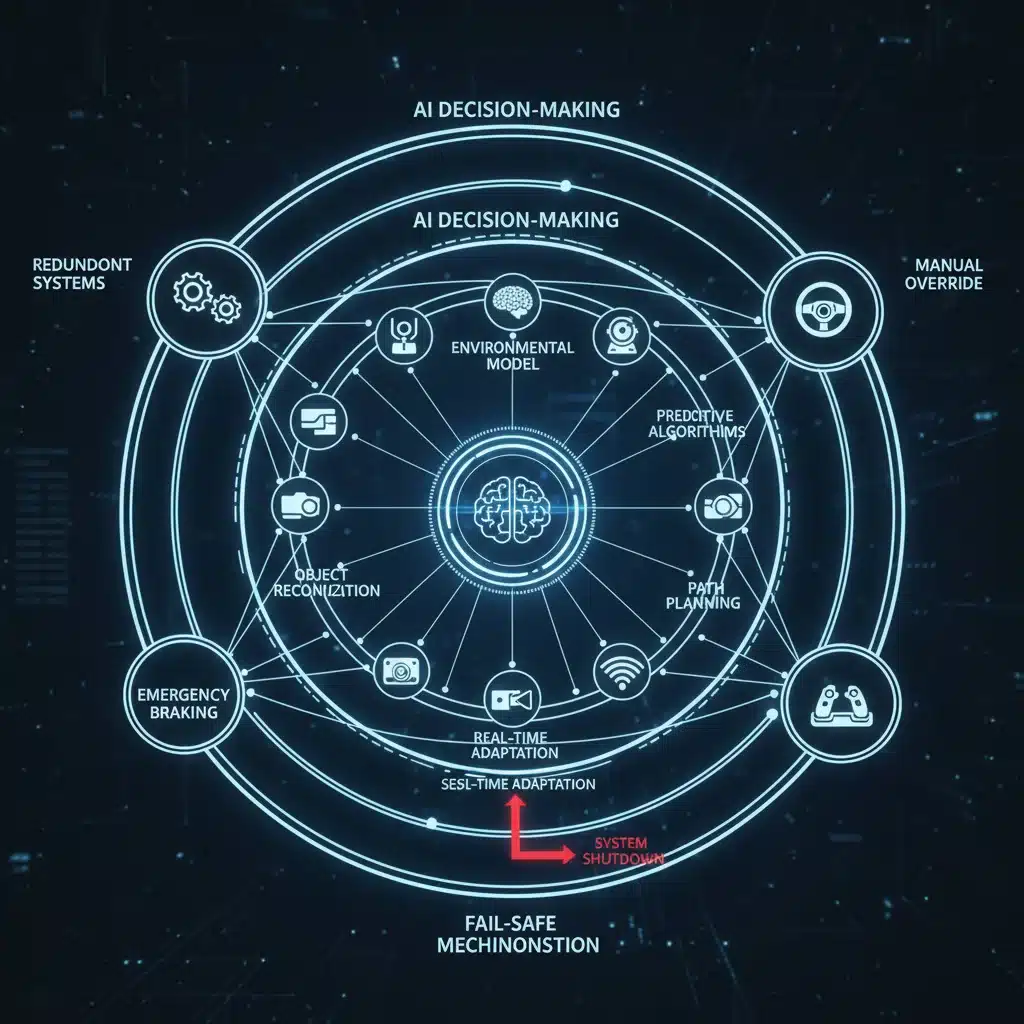
Perhaps the most crucial aspect of the forthcoming regulations will be the establishment of comprehensive safety standards. Currently, many AV developers rely on their own internal safety frameworks, which, while often rigorous, lack a unified benchmark. Federal regulations are expected to define minimum performance requirements for AVs, covering aspects such as object detection, pedestrian recognition, emergency braking, and response to unexpected situations. This could involve mandating specific testing protocols, simulation requirements, and real-world validation procedures. The goal is to ensure that all autonomous vehicles operating on public roads meet a consistent and high level of safety, thereby building public trust and reducing the risk of accidents. These standards will likely be performance-based, allowing for technological innovation while ensuring safety outcomes.
Data Recording, Sharing, and Transparency
The ability to collect, record, and analyze data is fundamental to understanding AV performance and improving safety. Upcoming AV Federal Regulations are likely to mandate specific data recording requirements, similar to event data recorders (EDRs) in conventional vehicles. This data, often referred to as "black box" data, would be crucial for accident investigation, identifying system failures, and continuously improving AV algorithms. Furthermore, there might be provisions for data sharing among manufacturers and with regulatory bodies, while carefully balancing privacy concerns. Transparency in reporting AV performance and incidents will be key to fostering public confidence and enabling effective oversight.
Cybersecurity Measures for Autonomous Systems
As highly networked and software-driven systems, autonomous vehicles are inherently vulnerable to cybersecurity threats. A malicious attack could compromise vehicle control, data integrity, or even the safety of occupants and other road users. The new AV Federal Regulations are expected to include stringent cybersecurity requirements for AV design, development, and operation. This could encompass secure software development lifecycle practices, regular vulnerability assessments, robust encryption protocols, and incident response plans. Protecting AVs from cyber threats is not just about safeguarding data; it’s about ensuring the physical safety of everyone on the road.
Human-Machine Interface (HMI) Considerations
Even in highly automated vehicles, there will be instances where human intervention is required, especially in Level 3 autonomous systems. The design of the human-machine interface (HMI) is critical in ensuring a smooth and safe transition of control between the vehicle and the human driver. Regulations might address aspects such as clear and unambiguous alerts, intuitive control handover procedures, and driver monitoring systems to ensure attentiveness. The goal is to minimize driver confusion, reduce reaction times, and prevent accidents that could arise from miscommunication between the human and the machine. Effective HMI design is a cornerstone of safe AV deployment.
Defining Operational Design Domains (ODDs)
Autonomous vehicles are typically designed to operate within specific conditions, known as Operational Design Domains (ODDs). These can include geographical areas, weather conditions, road types, and even time of day. The upcoming AV Federal Regulations may require manufacturers to clearly define and disclose the ODDs of their vehicles. This would provide consumers with a clear understanding of where and when their AVs can safely operate autonomously. Furthermore, regulations could establish standards for how AVs behave when they encounter situations outside their defined ODD, such as safely pulling over or requesting human intervention. Clear ODD definitions are crucial for both safety and consumer understanding.
The Impact of New AV Federal Regulations on Industry and Innovation
The impending updates to AV Federal Regulations will undoubtedly have a profound impact on the autonomous vehicle industry. While some may view regulation as a hindrance to innovation, a well-crafted framework can actually foster it by providing clarity, predictability, and a level playing field. For manufacturers, these regulations will bring both challenges and opportunities.
Challenges for Manufacturers
Compliance with new federal standards will require significant investment in research, development, and testing. Companies will need to adapt their design processes, manufacturing procedures, and software development cycles to meet the new requirements. This could lead to increased costs in the short term and potentially slow down the pace of deployment for some players, particularly smaller startups. Furthermore, the need for robust data collection and cybersecurity measures will add another layer of complexity to AV development. Companies will also need to navigate the complexities of demonstrating compliance, which could involve extensive documentation and rigorous testing. The harmonization of these regulations with international standards will also be a key challenge for companies operating globally.

Opportunities for Growth and Public Trust
Despite the challenges, a clear federal regulatory framework offers significant opportunities. By establishing consistent safety standards, the regulations will help build public trust in autonomous vehicle technology. This trust is essential for widespread adoption and the realization of the societal benefits of AVs, such as reduced accidents, improved traffic flow, and increased accessibility. Furthermore, a predictable regulatory environment will encourage investment and innovation by reducing uncertainty for businesses. Companies that can effectively navigate and comply with the new AV Federal Regulations will gain a competitive advantage and be better positioned for long-term success. The regulations could also spur the development of new technologies and services that help AVs meet safety and performance benchmarks, creating new market segments.
Moreover, federal oversight can facilitate the standardization of certain technologies and communication protocols, leading to greater interoperability between different AV systems and infrastructure. This can accelerate the development of smart cities and integrated transportation networks. The regulations might also promote a more collaborative environment within the industry, as companies work together to solve common challenges and contribute to a safer autonomous future. The clarity provided by federal guidelines can also streamline the process for obtaining necessary permits and approvals, speeding up deployment timelines once compliance is achieved.
The Role of Stakeholders in Shaping AV Federal Regulations
The development of comprehensive AV Federal Regulations is not solely the purview of government agencies. It is a collaborative effort involving a wide array of stakeholders, each bringing their unique perspectives and expertise to the table. These stakeholders include:
- Automotive Manufacturers: Companies like Waymo, Cruise, Tesla, and traditional automakers are at the forefront of AV development. Their technical expertise and practical experience are invaluable in shaping realistic and effective regulations. They advocate for frameworks that allow for innovation while ensuring safety.
- Technology Companies: Software and hardware providers, including sensor manufacturers and AI developers, play a crucial role. Their insights into the capabilities and limitations of current and future technologies are essential for creating forward-looking regulations.
- Safety Advocates: Organizations dedicated to road safety, consumer protection, and disability rights provide a critical voice, ensuring that regulations prioritize the well-being of all road users and address potential equity concerns.
- Insurance Industry: Insurers have a vested interest in understanding and mitigating risks associated with AVs. Their data and actuarial expertise can inform liability frameworks and risk assessment models within the regulations.
- Academic Researchers: Universities and research institutions contribute scientific knowledge on human factors, traffic modeling, and ethical considerations, providing an evidence-based foundation for regulatory decisions.
- State and Local Governments: While federal regulations will provide a national framework, states and localities will still have a role in local deployment and infrastructure. Their input ensures that federal rules are practical and implementable at the local level.
The ongoing dialogue among these diverse groups is crucial for crafting regulations that are both effective and widely accepted. Public forums, industry consultations, and expert panels are all mechanisms through which these stakeholders contribute to the evolving landscape of AV Federal Regulations. The expectation is that the Q3 2026 updates will reflect a synthesis of these various perspectives, aiming for a balanced approach that promotes both innovation and public safety.
Looking Beyond Q3 2026: The Future Evolution of AV Federal Regulations
The updates expected by Q3 2026 will undoubtedly mark a significant milestone, but they will not be the final word on AV Federal Regulations. The nature of autonomous vehicle technology is dynamic and continuously evolving. As AV capabilities advance, as new use cases emerge, and as real-world deployment data becomes more extensive, the regulatory framework will need to adapt and evolve in tandem.
Adaptive Regulatory Approaches
Future iterations of federal regulations are likely to adopt more adaptive and agile approaches. This could involve performance-based regulations that focus on outcomes rather than prescribing specific technologies, allowing for greater flexibility as technology matures. There may also be a move towards more iterative rulemaking, where regulations are updated more frequently to keep pace with technological progress. The goal is to avoid stifling innovation with overly rigid rules while still maintaining a robust safety oversight.
International Harmonization
As autonomous vehicles become a global phenomenon, the need for international harmonization of regulations will become increasingly important. Discrepancies in national standards can create significant barriers to trade and hinder the global deployment of AV technology. The U.S. federal government will likely continue to engage with international bodies and other nations to develop common standards and best practices, ensuring that AV Federal Regulations are compatible with global efforts.
Addressing Emerging Challenges
New challenges will inevitably arise as AVs become more prevalent. These could include questions of liability in complex accident scenarios, the ethical implications of AI decision-making, the impact on employment in the transportation sector, and the integration of AVs with smart infrastructure. Future AV Federal Regulations will need to proactively address these emerging issues, ensuring that the benefits of autonomous technology are realized responsibly and equitably. This long-term perspective is crucial for building a sustainable future for autonomous transportation.
Conclusion: A Regulated Path to an Autonomous Future
The anticipated updates to U.S. AV Federal Regulations by Q3 2026 represent a pivotal moment in the journey towards widespread autonomous vehicle deployment. These regulations are not merely bureaucratic hurdles; they are foundational pillars designed to ensure safety, foster public trust, and create a predictable environment for innovation. While the path to a fully autonomous future is complex, a well-defined and adaptive regulatory framework is essential for navigating its challenges and harnessing its immense potential.
By focusing on comprehensive safety standards, robust data management, stringent cybersecurity, intuitive human-machine interfaces, and clear operational domains, the federal government aims to lay the groundwork for a future where autonomous vehicles can operate safely and efficiently on our roads. The collaboration between government, industry, academia, and advocacy groups will be crucial in refining these regulations and ensuring they remain relevant as technology continues to advance.
The period leading up to Q3 2026 will be a critical time for all stakeholders to engage, understand, and prepare for the new regulatory landscape. The successful integration of autonomous vehicles promises profound societal benefits, from enhanced safety and reduced congestion to improved mobility for all. With careful planning, thoughtful regulation, and continued innovation, the vision of an autonomous future can become a safe and reliable reality. The evolution of AV Federal Regulations is not just about rules; it’s about shaping the future of transportation for generations to come, ensuring that this revolutionary technology serves humanity responsibly and effectively.