Federal EV Charging Standards: What US Drivers Need to Know
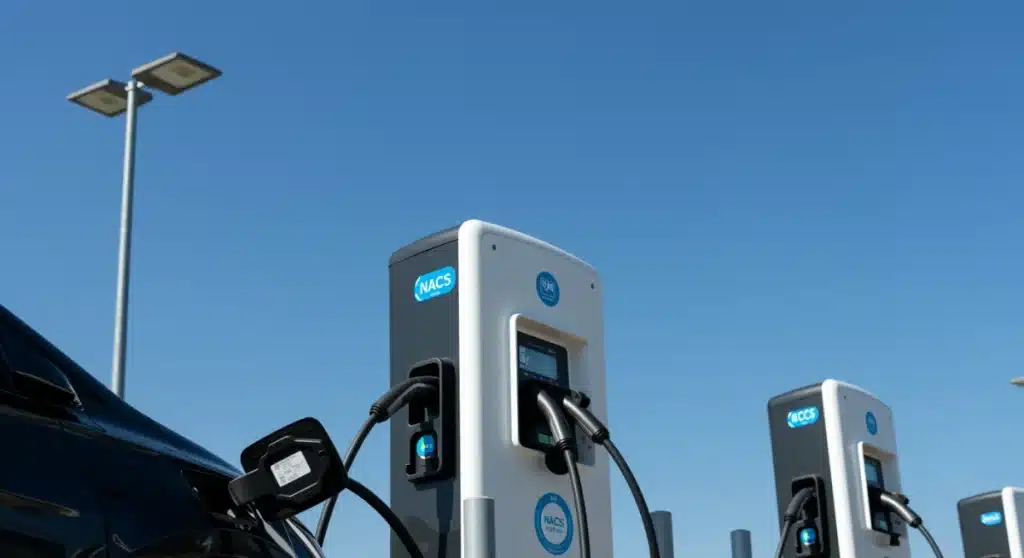
By January 2026, new federal EV charging standards will mandate NACS compatibility and specific uptime requirements for publicly funded chargers, significantly impacting US drivers and the national charging infrastructure.
As the electric vehicle revolution accelerates, understanding the upcoming federal EV charging standards becomes paramount for every US driver and stakeholder in the EV ecosystem. The landscape of electric vehicle charging is on the cusp of a significant transformation, with January 2026 marking a critical deadline for new federal guidelines that will reshape how we power our EVs.
The evolving landscape of EV charging standards
The electric vehicle market in the United States is rapidly expanding, bringing with it an urgent need for robust and standardized charging infrastructure. Historically, a fragmented approach to charging connectors and network reliability has created confusion and range anxiety for many EV owners. Recognizing these challenges, federal authorities are stepping in to streamline the process, aiming to create a more cohesive and user-friendly charging experience nationwide.
This push for standardization isn’t just about convenience; it’s about unlocking the full potential of electric mobility. By establishing clear guidelines, the government intends to accelerate EV adoption, reduce operational complexities for charging providers, and ensure that every driver has access to reliable charging options, regardless of their vehicle’s make or model. The upcoming January 2026 deadline is a significant milestone in this ambitious endeavor.
The impact of federal intervention
Federal involvement in EV charging standards is a game-changer. It provides a unified vision for an infrastructure that can support millions of electric vehicles, addressing key issues that have hindered growth. This top-down approach ensures consistency and interoperability, which are vital for a seamless transition to an all-electric future.
- Ensuring interoperability: Federal standards aim to eliminate the headache of incompatible charging stations, allowing any EV to charge at any compliant station.
- Boosting consumer confidence: A reliable and standardized network encourages more drivers to switch to EVs, knowing charging will be straightforward.
- Driving innovation: While standardizing, the guidelines also encourage innovation within a defined framework, pushing for more efficient and faster charging technologies.
Ultimately, these evolving standards are designed to build a future where charging an EV is as simple and predictable as refueling a gasoline car. The federal government’s role is crucial in orchestrating this complex transition, ensuring that the benefits of electric mobility are accessible to all Americans. This foundational work will pave the way for a more sustainable and efficient transportation system.
NACS: The new federally preferred connector
One of the most significant shifts under the new federal EV charging standards is the strong endorsement of the North American Charging Standard (NACS) connector. Developed by Tesla, NACS has quickly gained traction, with a growing number of automakers announcing their adoption of the standard. This move marks a pivotal moment, as it signals a potential unification of the charging landscape, moving away from the previously dominant Combined Charging System (CCS).
The federal government’s preference for NACS, especially for publicly funded charging infrastructure, is driven by its widespread acceptance and proven reliability. This decision aims to simplify the charging experience for consumers by reducing the number of different connectors they might encounter. For EV owners, this means less confusion and greater confidence that they will find a compatible charger when needed.
Why NACS is gaining traction
NACS offers several advantages that have contributed to its rapid adoption. Its compact design, ease of use, and Tesla’s extensive Supercharger network have made it a favorite among many EV drivers. The federal government’s decision to back NACS for funding purposes will further accelerate its integration across the nation.
- Simplicity and size: NACS connectors are smaller and lighter than CCS, making them easier to handle for a broader range of users.
- Proven network: Tesla’s Supercharger network, known for its reliability and density, has demonstrated the effectiveness of the NACS connector.
- Industry consensus: Major automakers like Ford, GM, Rivian, and others committing to NACS signal a strong industry shift towards this standard.
The transition to NACS will require significant investment and adaptation from charging network providers and EV manufacturers. However, the long-term benefits of a unified standard, including improved user experience and reduced infrastructure complexity, are expected to outweigh the initial challenges. This move is a clear indication that the federal government is committed to fostering a more streamlined and efficient EV charging ecosystem.
Mandatory uptime and reliability requirements
Beyond connector types, the new federal EV charging standards place a strong emphasis on the operational reliability of charging stations. A common frustration for EV drivers has been encountering non-functional or unreliable chargers, leading to inconvenience and undermining confidence in the EV ecosystem. To combat this, the federal guidelines will mandate stringent uptime requirements for all publicly funded charging stations.
These requirements are designed to ensure that when an EV driver pulls up to a charging station, they can be reasonably certain that it will be operational and able to deliver a charge. This focus on reliability is crucial for building trust in the charging infrastructure and encouraging wider adoption of electric vehicles. It shifts the responsibility towards charging providers to maintain their equipment to a high standard.
What ‘uptime’ truly means for drivers
Uptime isn’t just a technical metric; it directly translates to the driver’s experience. High uptime means less time searching for a working charger and more time confidently driving their EV. The federal government is setting a high bar, aiming for near-perfect operational status for these stations.
- 97% uptime target: Many proposals suggest a minimum 97% uptime requirement, meaning stations must be functional almost all the time.
- Real-time monitoring: Charging providers will likely need to implement sophisticated monitoring systems to track station performance and respond quickly to issues.
- Transparency: Drivers may see more transparent reporting on station status, allowing them to plan routes with greater certainty.
The implementation of these reliability standards will necessitate better maintenance schedules, quicker repair times, and more robust station designs. Charging network operators will need to invest in advanced diagnostics and a responsive support infrastructure to meet these new federal expectations. Ultimately, this will lead to a much more dependable charging experience for all EV users, reducing range anxiety and making electric vehicle ownership more appealing.
Funding and incentives for compliance by 2026
To facilitate the widespread adoption of these new federal EV charging standards, the US government is leveraging significant funding and incentive programs, primarily through initiatives like the National Electric Vehicle Infrastructure (NEVI) Formula Program. This strategic allocation of resources is crucial for encouraging charging network operators and states to upgrade existing infrastructure and build new stations that meet the upcoming requirements by January 2026.
The NEVI program alone dedicates billions of dollars to states for building out a national EV charging network, with a strong emphasis on reliability, accessibility, and standardization. For states and private entities to access these funds, their charging projects must adhere to the federal guidelines, including the NACS compatibility and stringent uptime mandates. This financial leverage creates a powerful incentive for rapid compliance and expansion.
How incentives drive infrastructure development
The financial incentives provided by the federal government are designed to offset the costs associated with upgrading and expanding the charging network. This minimizes the financial burden on states and private companies, making it more attractive for them to invest in compliant infrastructure.
- Grant programs: Various federal grants are available to support the deployment of compliant charging stations in underserved areas.
- Tax credits: Businesses investing in EV charging infrastructure may qualify for tax credits, further reducing their financial outlay.
- Strategic partnerships: The funding encourages partnerships between state governments, charging providers, and utilities to maximize impact and efficiency.
The goal is to create a robust, interconnected charging network that spans the nation, ensuring that drivers can confidently travel long distances without worrying about charging availability or compatibility. By tying funding directly to adherence to the new standards, the federal government is effectively guiding the evolution of the national EV charging landscape towards a unified and highly reliable system, ensuring a smoother transition for all.
Implications for current EV owners and future buyers
The impending January 2026 deadline for new federal EV charging standards brings significant implications for both current electric vehicle owners and those considering a purchase. For existing EV drivers, the transition will primarily involve adapting to a more standardized charging environment, which should ultimately lead to a better user experience. Future buyers, on the other hand, will enter a market with a clearer, more predictable charging infrastructure.
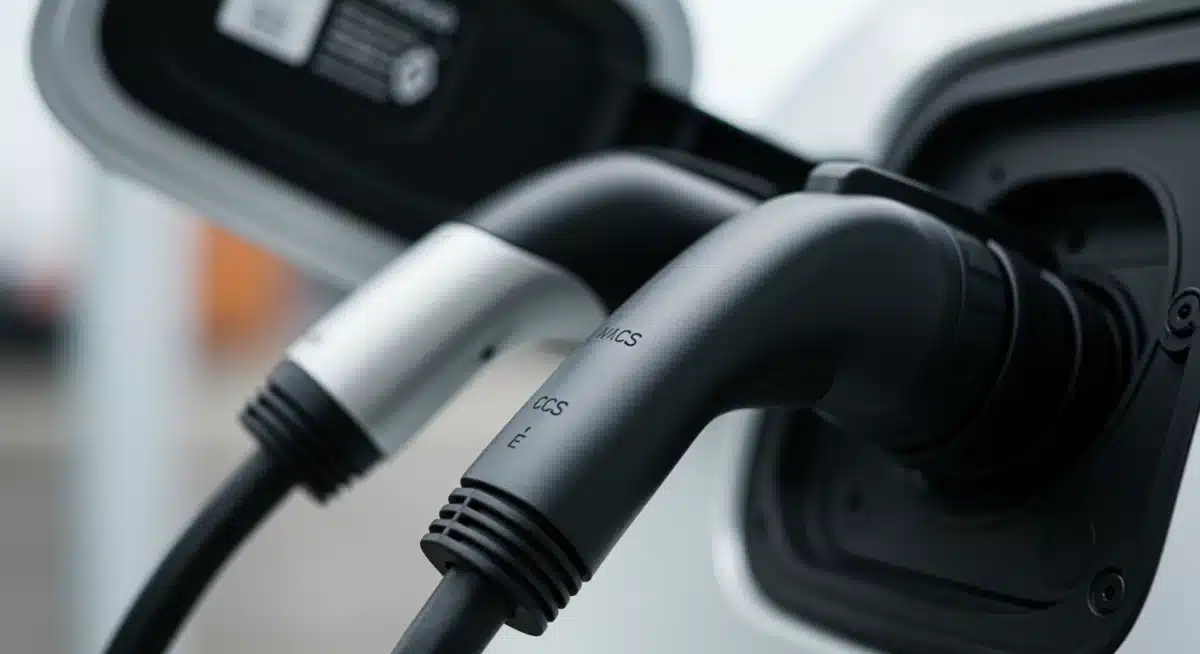
Current EV owners with vehicles primarily using the CCS connector might initially face a period of adjustment. However, many charging stations are expected to offer both NACS and CCS connectors during a transition phase, and adapters will likely become more prevalent and affordable. The long-term benefit is a more reliable and ubiquitous charging network, reducing range anxiety and enhancing the overall convenience of EV ownership.
Navigating the transition period
The shift to NACS and the demand for higher uptime will change how drivers interact with charging stations. Awareness and preparation will be key to a smooth transition.
- Adapter availability: Expect automakers to provide NACS adapters for CCS-equipped vehicles, allowing access to the expanding NACS network.
- Improved station reliability: Drivers will benefit from more consistently operational charging stations, reducing frustrating experiences.
- Simplified planning: With fewer connector types and more reliable stations, route planning for long trips will become significantly easier.
For prospective EV buyers, these new standards create a more attractive proposition. The promise of a standardized, highly reliable charging network addresses many of the historical concerns associated with EV ownership. This clarity and improved infrastructure are expected to boost consumer confidence, making the decision to go electric much easier and more appealing. The federal commitment ensures that the future of EV charging is designed with the user in mind, fostering a seamless and enjoyable electric driving experience.
Preparing for the January 2026 deadline
As the January 2026 deadline for the new federal EV charging standards approaches, various stakeholders, from charging network operators to state departments of transportation and individual consumers, must prepare for the changes. This preparation involves understanding the new requirements, planning for necessary upgrades, and educating the public about what to expect. The goal is to ensure a smooth transition that maximizes the benefits of a standardized and reliable charging infrastructure.
Charging network providers, in particular, face the immediate challenge of upgrading their stations to include NACS connectors and implementing systems to meet the stringent uptime requirements. This will involve significant investment in hardware, software, and maintenance protocols. States, guided by federal funding, will play a crucial role in overseeing these deployments and ensuring that new installations adhere to all guidelines.
Key actions for stakeholders
Proactive steps are essential to meet the federal mandate effectively and efficiently, ensuring the EV ecosystem is ready for the future.
- Network operators: Prioritize NACS integration and invest in robust monitoring and maintenance systems to achieve high uptime.
- Automakers: Ensure future EV models are NACS-compatible and provide adapter solutions for existing CCS vehicles.
- State governments: Align NEVI program allocations with federal standards and streamline permitting processes for new charging installations.
- EV drivers: Stay informed about adapter availability and the locations of compliant charging stations through updated apps and navigation systems.
The collaborative effort across all these groups will be vital for the success of these new standards. By proactively addressing the requirements and leveraging the available funding and incentives, the US can build a world-class EV charging infrastructure that supports the nation’s transition to sustainable transportation. The January 2026 deadline is not just a regulatory milestone; it’s a testament to the collective commitment to an electric future.
| Key Aspect | Brief Description |
|---|---|
| Deadline | January 2026 for compliance with new federal standards. |
| Connector Standard | NACS (North American Charging Standard) is federally preferred for new installations. |
| Uptime Requirement | Publicly funded chargers must achieve a minimum of 97% operational uptime. |
| Funding Impact | NEVI program funds tied to compliance, encouraging rapid infrastructure upgrades. |
Frequently asked questions about EV charging standards
The primary changes include a strong federal preference for the NACS connector for publicly funded chargers, along with mandatory uptime requirements, typically targeting 97% operational reliability, to ensure a consistent charging experience for all EV drivers.
Current CCS vehicle owners will likely need adapters to access NACS-only stations. However, many stations are expected to offer both connectors during a transition period, and automakers are working on providing adapter solutions for seamless compatibility.
The 97% uptime requirement means that publicly funded charging stations must be operational and available for use almost all the time. This aims to significantly reduce instances of encountering broken or non-functional chargers, boosting driver confidence.
The critical deadline for compliance with the new federal EV charging standards, especially for projects receiving federal funding, is set for January 2026. This date marks the full expectation for adherence to the new guidelines.
Not all stations will switch exclusively to NACS by 2026. The mandate primarily applies to federally funded stations. Many existing and private stations may continue supporting CCS, and a mixed infrastructure with adapters is anticipated during the transition.
Conclusion
The upcoming federal EV charging standards, set to be fully implemented by January 2026, represent a monumental step towards a unified and efficient electric vehicle charging infrastructure in the United States. By standardizing around the NACS connector and enforcing stringent uptime requirements, the government is addressing key pain points that have historically challenged EV adoption. These changes promise a future where charging an electric vehicle is simpler, more reliable, and universally accessible, thereby accelerating the transition to sustainable transportation and enhancing the overall experience for millions of American drivers.