Maximize EV Battery Lifespan: 5 Solutions for 2026
Maximizing Your EV’s Lifespan: 5 Practical Solutions for EV Battery Lifespan in 2026
As electric vehicles (EVs) continue to dominate the automotive landscape, the longevity and health of their batteries have become a paramount concern for owners and prospective buyers alike. The battery is the heart of an EV, and its performance directly impacts the vehicle’s range, resale value, and overall driving experience. In 2026, with advancements in battery technology and a clearer understanding of best practices, there are definitive steps EV owners can take to significantly extend their EV battery lifespan. This comprehensive guide will delve into five practical solutions designed to help you get the most out of your electric vehicle’s most crucial component, ensuring optimal performance and peace of mind for years to come.
Understanding Your EV Battery: A Foundation for Longevity
Before diving into specific solutions, it’s essential to grasp the fundamentals of how an EV battery works and what factors influence its degradation. Most modern EVs utilize lithium-ion batteries, known for their high energy density and relatively long cycle life. However, like all batteries, they are subject to degradation over time due to chemical processes. This degradation manifests as a gradual reduction in capacity, meaning the battery can hold less charge and, consequently, provide less range. Several factors contribute to this process, including charging habits, temperature exposure, driving style, and overall usage patterns. Understanding these elements is the first step towards effectively maximizing your EV battery lifespan.
Battery management systems (BMS) play a crucial role in monitoring and protecting the battery pack, ensuring it operates within safe parameters. These systems track individual cell voltages, temperatures, and current flows, making micro-adjustments to optimize performance and prevent damage. However, even with advanced BMS, owner behavior remains a significant determinant of long-term battery health. By adopting proactive measures, EV owners can work in tandem with their vehicle’s technology to preserve the battery’s integrity and extend its operational life. The goal is not just to maintain functionality, but to sustain optimal performance, thereby maximizing your EV battery lifespan and ensuring a robust driving experience.
The concept of ‘cycle life’ is central to battery longevity. A charge cycle refers to one full charge and discharge. While a partial charge and discharge count as a fraction of a cycle, the total number of cycles a battery can endure before significant degradation sets in is a key metric. Modern EV batteries are designed for thousands of cycles, translating to hundreds of thousands of miles for most drivers. However, how these cycles are utilized, particularly with respect to depth of discharge and charge rates, profoundly impacts the actual realized EV battery lifespan. Therefore, conscious charging and driving practices are indispensable for preserving this valuable asset.
Another critical aspect is the internal resistance of the battery. As a battery ages, its internal resistance tends to increase. This higher resistance leads to more heat generation during charging and discharging, which further accelerates degradation. It also reduces the battery’s ability to deliver high power, potentially impacting acceleration and regenerative braking efficiency. Understanding these underlying mechanisms empowers EV owners to make informed decisions that actively contribute to extending their EV battery lifespan, translating into better performance and higher resale value.
Solution 1: Embrace Smart Charging Habits for Optimal EV Battery Lifespan
One of the most impactful ways to preserve your EV battery lifespan is through disciplined and smart charging practices. The ‘always charge to 100%’ mentality, common with gasoline vehicles, is generally not ideal for lithium-ion batteries. While occasional full charges are necessary for battery balancing, daily charging to 100% and allowing the battery to sit at that state for extended periods can accelerate degradation.
Avoid Extreme States of Charge
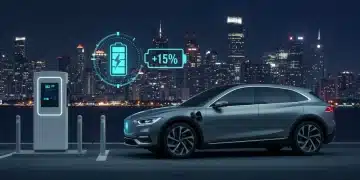
The sweet spot for lithium-ion batteries is typically between 20% and 80% charge. Regularly keeping your EV battery within this range minimizes stress on the cells. Charging to 80% for daily commutes and topping up to 100% only when preparing for a long trip can significantly extend your EV battery lifespan. Similarly, avoid letting your battery consistently drop below 20%. Deep discharges put considerable strain on the battery and should be infrequent.
Utilize Smart Charging Features
Many modern EVs and charging stations offer smart charging features. These allow you to schedule charging during off-peak hours (benefiting your wallet) and, more importantly, to set a charge limit. Take advantage of these functionalities to automatically stop charging at 80% or 90% when parked overnight. This simple habit can make a substantial difference in maintaining your EV battery lifespan over the long term.
Minimize DC Fast Charging (DCFC)
While convenient for long journeys, frequent use of DC fast chargers can generate more heat and put greater stress on the battery compared to Level 2 (AC) charging. The high power delivery can lead to faster ion movement and increased internal resistance, contributing to quicker degradation. Reserve DCFC for when you genuinely need it – on road trips or when time is of the essence. For daily charging at home or work, prioritize Level 2 charging to protect your EV battery lifespan.
Slow and Steady Wins the Race
Think of charging like exercising. A gentle, consistent workout is better for long-term health than intense, sporadic bursts. Slow charging (Level 1 or Level 2) allows the battery to charge more efficiently and with less heat generation, which is crucial for preserving its chemical integrity. This gentle approach is a cornerstone for maximizing your EV battery lifespan.
Solution 2: Master Temperature Management for EV Battery Lifespan Preservation
Temperature is perhaps the single most critical environmental factor affecting EV battery lifespan. Lithium-ion batteries perform optimally within a specific temperature range, typically around room temperature. Exposing them to extreme heat or cold for prolonged periods can cause irreversible damage and accelerate degradation.
Avoid Extreme Heat Exposure
High temperatures are the arch-nemesis of EV batteries. Heat accelerates the chemical reactions within the battery, leading to faster degradation of the electrolyte and electrodes. Parking your EV in direct sunlight during hot summer days, especially when the battery is highly charged, can be particularly detrimental. Whenever possible, park in shaded areas, garages, or under carports. If your EV has a battery cooling system (which most do), ensure it’s functioning correctly. Some EVs even allow you to precondition the cabin while charging, which can indirectly help regulate battery temperature.
Mitigate the Effects of Cold Weather
While less damaging than extreme heat, very cold temperatures can also negatively impact battery performance and, over time, EV battery lifespan. In cold conditions, the internal resistance of the battery increases, reducing its power output and regenerative braking efficiency. This often leads to a temporary reduction in range. While the battery’s chemical structure isn’t as permanently damaged by cold as by heat, repeated exposure to severe cold can still take a toll. Preconditioning your EV’s battery before driving in cold weather, if your vehicle allows, can help warm it to an optimal operating temperature, improving efficiency and protecting its long-term health.
Utilize Battery Preconditioning Features
Many modern EVs come equipped with sophisticated thermal management systems that include battery preconditioning. This feature allows the vehicle to warm or cool the battery to an optimal temperature before driving or charging. Activating preconditioning, especially when planning a fast charge or driving in extreme weather, can significantly reduce stress on the battery and contribute to a longer EV battery lifespan. Check your owner’s manual for specific instructions on how to use this feature.
Monitor Battery Temperature
If your EV’s infotainment system or a third-party app provides real-time battery temperature data, pay attention to it. Understanding how your driving and charging habits affect battery temperature can help you make more informed decisions. For instance, if you notice the battery getting unusually hot after a fast charge, perhaps allowing it to cool down before another strenuous activity could be beneficial for your EV battery lifespan.
Solution 3: Drive Smart and Regenerate Wisely to Enhance EV Battery Lifespan
Your driving style has a direct impact on the stress experienced by your EV battery and, consequently, its lifespan. Aggressive driving, with rapid accelerations and hard braking, demands high power output from the battery and can generate more heat, accelerating degradation. Conversely, a smooth and measured driving approach can significantly contribute to a healthier, longer-lasting EV battery.
Smooth Acceleration and Deceleration
Avoid ‘pedal to the metal’ acceleration whenever possible. While EVs offer exhilarating instant torque, frequent bursts of high power draw can stress the battery cells. Similarly, smooth, gradual deceleration is preferable to abrupt stops. This not only conserves energy but also allows the regenerative braking system to work more efficiently, returning energy to the battery rather than wasting it as heat through friction brakes.
Maximize Regenerative Braking
Regenerative braking is a fantastic feature of EVs that converts kinetic energy back into electrical energy to recharge the battery. Utilizing regenerative braking effectively means anticipating stops and slowing down gradually, allowing the system to do its work. Many EVs offer adjustable regenerative braking levels. Experiment with these settings to find one that feels natural and maximizes energy recovery. This gentle, consistent energy input is far kinder to the battery cells than rapid charging and discharging, thereby extending your EV battery lifespan.
Avoid Consistent High-Speed Driving
While EVs are capable of sustained high speeds, doing so continuously puts a higher demand on the battery, leading to increased heat generation and faster depletion. For long highway stretches, consider maintaining a slightly lower, more efficient speed. This not only conserves range but also reduces stress on the battery, contributing to a longer EV battery lifespan.
Consider ‘One-Pedal Driving’
Many EVs offer a ‘one-pedal driving’ mode, where lifting off the accelerator pedal initiates strong regenerative braking, often bringing the vehicle to a complete stop. This mode can be highly efficient for energy recovery and promotes a smoother, less aggressive driving style. By reducing the reliance on friction brakes and maximizing regeneration, one-pedal driving can indirectly help preserve your EV battery lifespan.
Solution 4: Regular Software Updates and Diagnostics for EV Battery Lifespan Optimization
Modern EVs are essentially computers on wheels, and just like your smartphone or laptop, their performance and efficiency benefit greatly from regular software updates. These updates often contain crucial improvements to the battery management system (BMS) and thermal management algorithms, directly impacting your EV battery lifespan.
Stay Current with Software Updates
Vehicle manufacturers continuously gather data and refine their battery management strategies. Over-the-air (OTA) software updates can introduce optimizations that improve charging efficiency, enhance thermal control, and fine-tune discharge patterns – all of which contribute to extending your EV battery lifespan. Always ensure your vehicle’s software is up-to-date. Ignoring updates could mean missing out on significant improvements designed to protect your battery.
Utilize Diagnostic Tools and Apps
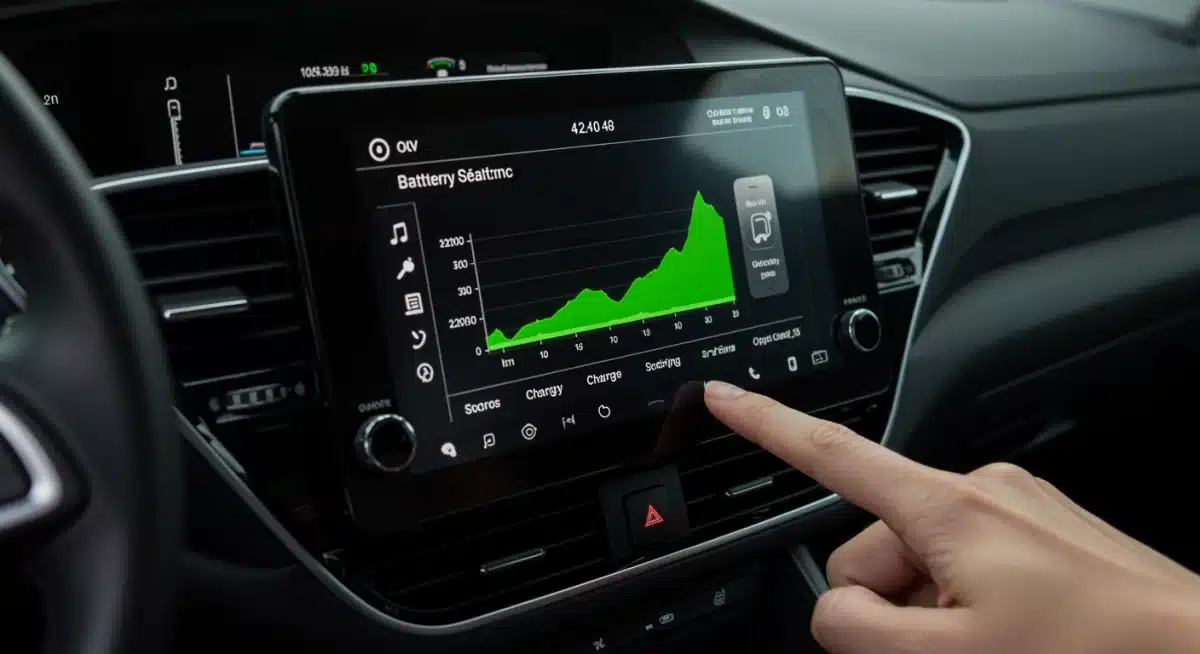
Many EV manufacturers provide diagnostic tools or smartphone apps that allow owners to monitor their battery’s health, charge status, and even temperature. Third-party apps can also offer more in-depth insights. Regularly checking these metrics can help you identify any unusual patterns or potential issues early on. Early detection of anomalies can prevent minor problems from escalating into significant battery degradation, thus safeguarding your EV battery lifespan.
Professional Battery Health Checks
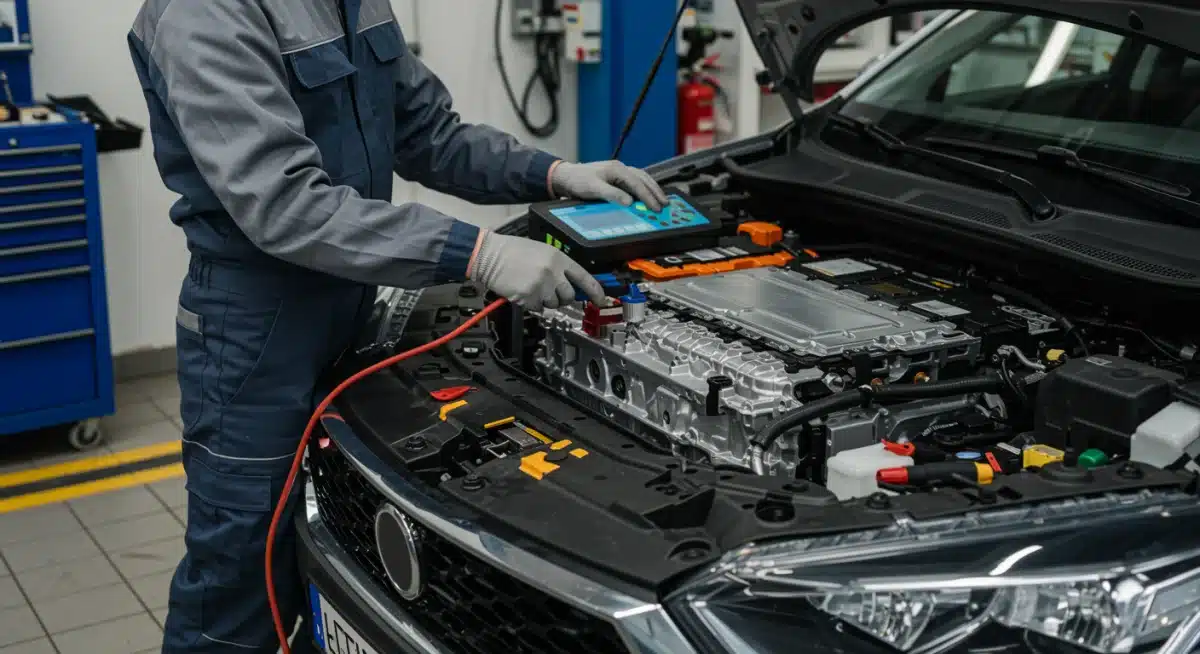
While daily monitoring is beneficial, periodic professional battery health checks at an authorized service center are invaluable. Technicians have access to advanced diagnostic equipment that can perform a deep dive into the battery’s internal state, checking individual cell balance, internal resistance, and overall capacity. These checks can provide a more accurate picture of your battery’s health and help identify any components that might need attention, ensuring proactive maintenance for your EV battery lifespan.
Understand Your Warranty
Familiarize yourself with your EV’s battery warranty. Most manufacturers offer extensive warranties, often covering 8 years or 100,000 miles, guaranteeing a certain percentage of original capacity remains. While the goal is to exceed these guarantees, understanding the terms can provide peace of mind and guide your maintenance decisions. Regular diagnostics, especially those provided by the manufacturer, can help document your battery’s health in case a warranty claim becomes necessary, further protecting your investment and EV battery lifespan.
Solution 5: Long-Term Storage and General Maintenance for EV Battery Lifespan
Even when your EV is not in daily use, proper care is essential to maintain its battery health. Long-term storage and general vehicle maintenance practices also play a significant role in preserving your EV battery lifespan.
Optimal State of Charge for Storage
If you plan to store your EV for an extended period (weeks or months), it’s crucial to leave the battery at an optimal state of charge. The ideal range for long-term storage is typically between 50% and 70%. Storing a battery at 100% or very low (below 20%) charge for prolonged periods can cause irreversible damage. If possible, plug the vehicle into a Level 1 (trickle) charger set to maintain this optimal charge level. This prevents self-discharge from dropping the battery too low and avoids the stress of being at full charge, thereby protecting your EV battery lifespan.
Consider Environmental Factors During Storage
Just as with daily use, temperature is a critical factor during storage. Store your EV in a cool, dry place, ideally a garage, away from direct sunlight and extreme temperatures. An insulated environment helps keep the battery within its optimal temperature range, even when inactive. Protecting the battery from environmental extremes during storage is a simple yet effective way to preserve your EV battery lifespan.
Regular Driving and Charging (Even During Storage)
If your EV is stored for a very long time, it’s beneficial to periodically drive it for a short distance (even just around the block) and perform a small charge cycle. This helps to keep the battery cells active and balanced, preventing them from becoming stagnant. Think of it as giving the battery a gentle workout. This intermittent activity can significantly contribute to maintaining your EV battery lifespan.
General Vehicle Maintenance
While the focus is on the battery, overall vehicle maintenance indirectly supports battery health. Ensuring tires are properly inflated reduces energy consumption, meaning less frequent or strenuous battery usage. Keeping the cooling system (if separate for the battery) in good condition ensures efficient thermal management. Regular inspections can catch issues that might otherwise put undue stress on the electrical system or battery. A well-maintained vehicle is a vehicle where all components, including the battery, can perform optimally, thus extending your EV battery lifespan.
Cleanliness and Inspections
Periodically inspect the battery pack area (if accessible and safe to do so, follow manufacturer guidelines) for any signs of damage, leaks, or corrosion. Keep the charging port clean and free of debris. While the battery pack itself is sealed, external connections and cooling vents should be clear. These simple checks can prevent minor issues from becoming major problems that could impact your EV battery lifespan.
The Future of EV Battery Lifespan: What’s Next?
As we look beyond 2026, the landscape of EV battery technology is constantly evolving. Research and development are focused on creating batteries with even longer lifespans, higher energy densities, and faster charging capabilities. Solid-state batteries, for instance, promise to revolutionize EV performance by offering greater safety, faster charging, and potentially even longer lifespans due to their inherent stability and resistance to degradation mechanisms seen in liquid electrolyte batteries. These advancements will further simplify the owner’s role in maintaining EV battery lifespan.
Improved battery management systems (BMS) are also on the horizon. Future BMS will likely incorporate more sophisticated AI and machine learning algorithms to predict degradation patterns, optimize charging and discharging cycles in real-time based on individual driving habits and environmental conditions, and provide even more accurate health assessments. These intelligent systems will take much of the guesswork out of battery care, automatically implementing strategies to extend your EV battery lifespan without constant intervention from the driver.
Furthermore, the focus on sustainable battery production and recycling will continue to grow. As batteries reach the end of their primary EV lifespan, they can often be repurposed for secondary applications, such as stationary energy storage. This ‘second life’ further maximizes the utility and environmental benefits of EV batteries, contributing to a circular economy and reducing the overall carbon footprint. Eventually, when a battery is truly at the end of its useful life, advanced recycling processes will recover valuable materials, minimizing waste and resource depletion.
The increasing availability of public charging infrastructure, coupled with smarter charging solutions, will also make it easier for EV owners to adhere to optimal charging habits. More ubiquitous Level 2 chargers and strategically placed DC fast chargers will reduce range anxiety and allow for more flexible charging routines, discouraging practices that might negatively impact EV battery lifespan. The integration of vehicle-to-grid (V2G) and vehicle-to-home (V2H) technologies will also introduce new ways to utilize and manage EV batteries, potentially balancing grid demand while offering financial incentives to owners, all while carefully managing battery health.
Ultimately, the continuous innovation in battery chemistry, thermal management, and software intelligence means that future generations of EVs will likely boast even more robust and longer-lasting batteries, further enhancing the appeal and practicality of electric transportation. However, even with these advancements, the fundamental principles of good battery care discussed in this article will remain relevant, empowering current and future EV owners to actively participate in maximizing their EV battery lifespan and enjoying their electric vehicles to the fullest.