Cybersecurity for Smart City Infrastructure: Protecting Data and Systems
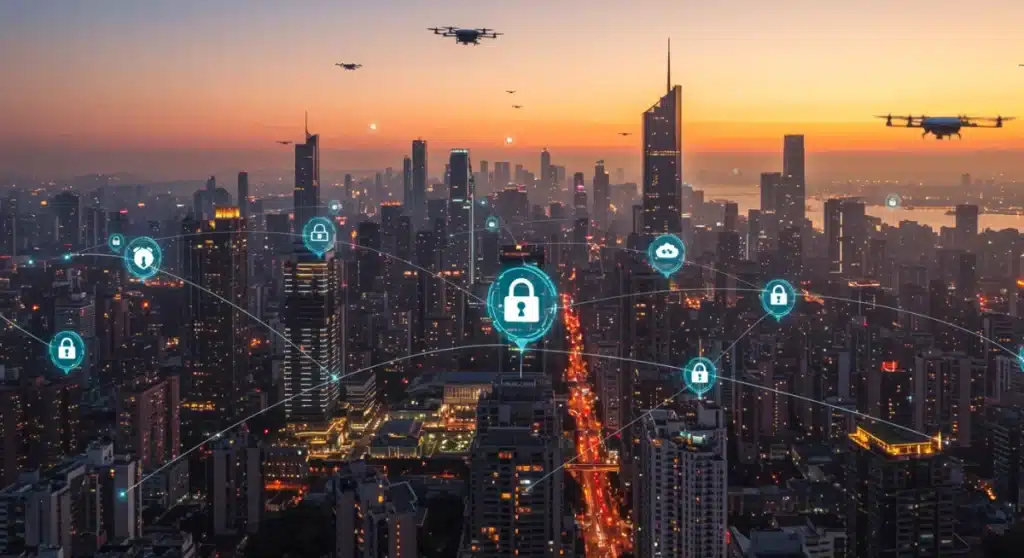
Robust smart city cybersecurity is paramount for safeguarding interconnected urban infrastructures, ensuring the integrity and availability of essential services and protecting citizen data from evolving digital threats.
As urban landscapes evolve into interconnected ecosystems, the imperative for robust Cybersecurity for Smart City Infrastructure: Protecting Data and Systems with 99% Effectiveness in 2026 becomes undeniably critical. The promise of smart cities—enhanced efficiency, improved quality of life, and sustainable development—rests entirely on the secure foundation of their digital backbone. Without vigilant protection, these advanced urban environments face significant vulnerabilities that could compromise everything from public safety to economic stability.
The evolving threat landscape in smart cities
Smart cities, by their very nature, are rich targets for cyber adversaries. The sheer volume of interconnected devices, sensors, and vast data streams creates an expansive attack surface that traditional cybersecurity models may struggle to defend. Understanding these evolving threats is the first step towards building resilient urban defenses.
The convergence of Operational Technology (OT) and Information Technology (IT) in smart city infrastructure introduces unique challenges. Attacks on OT systems, such as those controlling traffic lights or power grids, can have immediate and tangible physical consequences, far beyond data breaches.
Common attack vectors
Cybercriminals and state-sponsored actors frequently exploit several key weaknesses within smart city ecosystems. Identifying these vectors is crucial for proactive defense.
- IoT device vulnerabilities: Many IoT devices are deployed with weak default security settings or unpatched firmware, making them easy targets.
- Supply chain risks: Compromised hardware or software components introduced at any stage of development can create backdoors.
- Data privacy breaches: The collection of vast amounts of personal and public data attracts attackers seeking sensitive information.
- Ransomware attacks: Disrupting critical services and demanding payment, which can cripple urban operations.
The dynamic nature of these threats necessitates a continuous adaptation of security strategies, moving beyond static defenses to a more agile and predictive approach. Preparing for the unexpected is key to maintaining urban resilience.
Foundational pillars of smart city cybersecurity
Effective cybersecurity in a smart city relies on a multi-layered approach, integrating technology, policy, and human expertise. Establishing a strong foundation is non-negotiable for achieving high levels of protection.
This foundation encompasses everything from secure hardware design to sophisticated threat intelligence sharing, creating a cohesive defense posture against a myriad of cyber threats. It’s about building security in, not bolting it on as an afterthought.
Secure by design principles
Implementing security from the initial design phase of smart city components and systems is more effective and cost-efficient than trying to fix vulnerabilities later. This proactive approach ensures that cybersecurity is an intrinsic part of the infrastructure.
- Minimalist design: Only include essential functionalities to reduce potential attack surfaces.
- Robust authentication: Implement strong, multi-factor authentication protocols for all access points.
- Encryption everywhere: Encrypt data at rest and in transit to protect sensitive information.
- Regular security audits: Continuously assess systems for vulnerabilities and compliance.
Beyond technical measures, fostering a culture of cybersecurity awareness among city employees and citizens is equally vital. Human error remains a significant factor in many security incidents, highlighting the need for ongoing education and training.
Leveraging AI and machine learning for enhanced protection
The scale and complexity of smart city data make traditional, manual security analysis impractical. Artificial intelligence (AI) and machine learning (ML) offer powerful tools to automate threat detection and response, significantly boosting defensive capabilities.
These advanced technologies can process vast quantities of data in real-time, identifying anomalous patterns that indicate potential cyber threats far more quickly and accurately than human analysts. AI’s predictive capabilities allow for proactive defense strategies.
AI-driven threat detection
AI algorithms can analyze network traffic, system logs, and sensor data to detect subtle indicators of compromise that might otherwise go unnoticed. This allows for early intervention before an attack can fully materialize.
- Behavioral analytics: Identifying deviations from normal user and system behavior.
- Predictive analysis: Forecasting potential attack vectors based on historical data and current threat intelligence.
- Automated incident response: Initiating pre-defined actions, such as isolating compromised devices, upon threat detection.
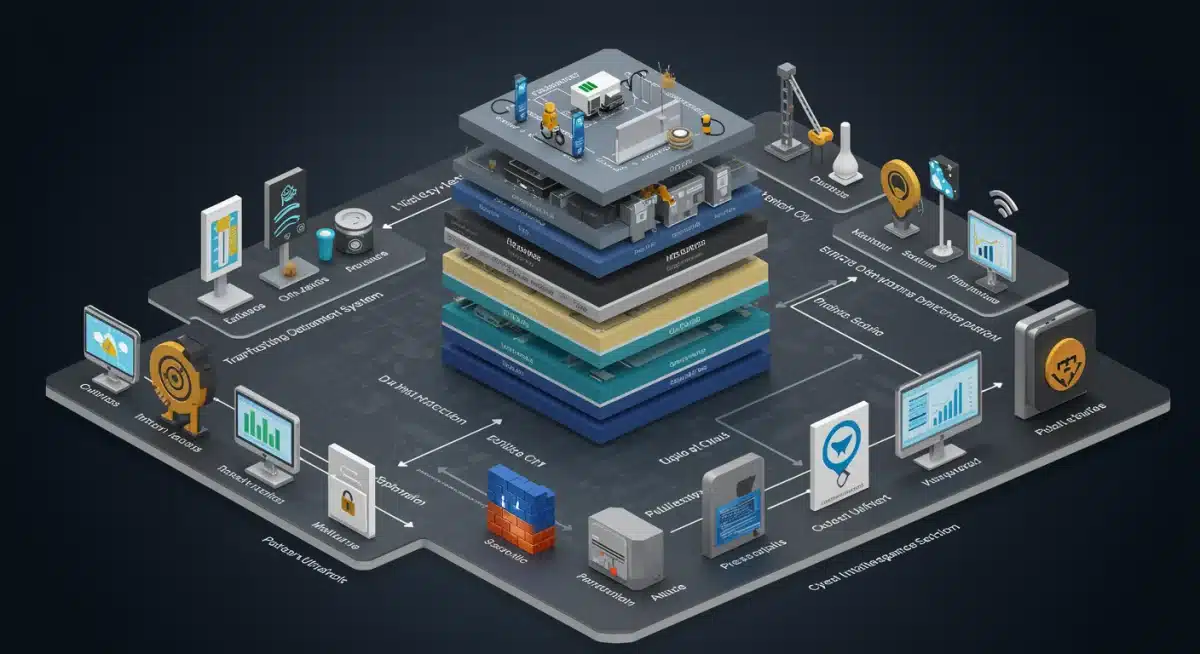
The integration of AI and ML transforms cybersecurity from a reactive measure into a proactive, intelligent defense system. However, it also demands careful consideration of data privacy and algorithmic bias to ensure ethical and effective deployment.
Data privacy and ethical considerations in smart cities
Smart cities collect and process enormous amounts of data, much of which is personal and sensitive. Protecting this data and ensuring its ethical use is not just a technological challenge but a societal imperative. Trust is fundamental to the success of any smart city initiative.
Balancing the benefits of data-driven insights with the individual right to privacy requires careful policy formulation and robust technical safeguards. Transparency in data collection and usage practices is crucial for maintaining public confidence.
Privacy by design
Just as security should be built-in, so too should privacy. ‘Privacy by Design’ principles advocate for embedding privacy considerations into the entire lifecycle of smart city projects, from conception to deployment.
- Data minimization: Collecting only the data absolutely necessary for a specific purpose.
- Anonymization and pseudonymization: Stripping identifying information from data whenever possible.
- Granular consent: Providing citizens with clear choices and control over their data usage.
- Regular privacy impact assessments: Evaluating the privacy implications of new technologies and initiatives.
Adhering to regulations like GDPR or CCPA, even outside their primary jurisdictions, can serve as a strong framework for establishing high privacy standards. Furthermore, ethical guidelines for AI use in urban environments must be developed to prevent misuse and ensure fairness.
Building resilience: Incident response and recovery plans
Even with the most advanced cybersecurity measures, breaches can occur. The ability of a smart city to quickly detect, respond to, and recover from cyber incidents is paramount for minimizing damage and restoring normalcy. Resilience is about bouncing back swiftly.
A well-defined incident response plan acts as a roadmap, guiding city officials and technical teams through the chaos of a cyberattack. This plan must be regularly tested and updated to remain effective against evolving threats.
Key components of an incident response plan
An effective plan outlines clear roles, responsibilities, and procedures for every stage of an incident, from initial detection to post-incident review.
- Detection and analysis: Tools and processes for identifying security incidents and understanding their scope.
- Containment: Strategies to limit the spread of an attack and prevent further damage.
- Eradication: Removing the threat from affected systems and eliminating vulnerabilities.
- Recovery: Restoring systems and data to their operational state.
- Post-incident review: Learning from the incident to improve future defenses.
Regular drills and simulations are essential for ensuring that all stakeholders are familiar with their roles and that the plan is practical and effective. Collaboration with external cybersecurity experts and government agencies can also provide valuable support during crises.
Collaboration and regulation: A unified front against cyber threats
Cybersecurity is not a challenge that any single entity can tackle alone. Smart cities thrive on collaboration—between city departments, private sector partners, academic institutions, and even international bodies. A unified approach strengthens defenses and fosters innovation.
Establishing clear regulatory frameworks and industry standards is also vital for ensuring a baseline level of security across diverse smart city components and service providers. These regulations help to standardize best practices and promote accountability.
The role of public-private partnerships
Private companies often possess specialized cybersecurity expertise and advanced technologies that can significantly benefit smart city initiatives. Partnerships allow cities to leverage these resources effectively.
- Information sharing: Exchanging threat intelligence and best practices between public and private sectors.
- Joint research and development: Collaborating on innovative security solutions tailored for urban environments.
- Capacity building: Training city staff with the latest cybersecurity skills through private sector expertise.
- Standardization: Working together to develop and adopt common security standards and protocols.
Furthermore, international cooperation can help address cross-border cyber threats and establish global norms for smart city security. The collective effort ensures a more resilient and secure digital future for all urban inhabitants.
| Key Aspect | Brief Description |
|---|---|
| Threat Landscape | Smart cities face complex cyber threats from IoT vulnerabilities and ransomware, requiring adaptive defenses. |
| Security Foundations | Robust cybersecurity built on ‘secure by design’ principles, strong authentication, and encryption is essential. |
| AI/ML Integration | AI and machine learning enhance threat detection and automated response for large-scale smart city data. |
| Resilience & Recovery | Effective incident response and recovery plans are crucial for minimizing damage and ensuring operational continuity post-attack. |
Frequently asked questions about smart city cybersecurity
Smart cities present unique challenges due to their vast interconnectedness of IoT devices, critical infrastructure, and massive data collection. This creates an expansive attack surface, making them attractive targets for cyber threats that can have both digital and physical consequences.
AI and ML significantly enhance cybersecurity by automating threat detection and response. They can analyze vast amounts of data in real-time, identify anomalies, predict potential attacks, and initiate automated countermeasures more efficiently than human-only systems.
‘Privacy by design’ integrates privacy considerations into every stage of smart city project development. This includes data minimization, anonymization, explicit consent mechanisms, and regular privacy impact assessments to protect citizen data proactively.
Public-private partnerships are crucial for smart city security. They allow cities to leverage specialized cybersecurity expertise, share threat intelligence, collaborate on R&D, and build capacity through joint training, strengthening overall urban resilience.
Achieving 99% effectiveness by 2026 requires continuous investment in advanced AI/ML defenses, stringent ‘secure by design’ policies, robust incident response plans, extensive public-private collaboration, and ongoing cybersecurity training for all stakeholders.
Conclusion
The journey towards fully realized and secure smart cities is complex, yet imperative. As urban environments become increasingly digitized, the foundational role of Cybersecurity for Smart City Infrastructure: Protecting Data and Systems with 99% Effectiveness in 2026 cannot be overstated. By embracing adaptive defense mechanisms, leveraging cutting-edge AI and machine learning, prioritizing data privacy through ethical frameworks, and fostering robust collaboration across sectors, cities can build resilience against an ever-evolving threat landscape. The future of urban living hinges not just on technological innovation, but on the unwavering commitment to securing these innovations for the benefit and trust of all citizens. Proactive measures, continuous vigilance, and integrated strategies are the cornerstones of a truly smart and secure urban future.