Cybersecurity in Smart City Networks: Protecting US Infrastructure by 2026

Cybersecurity in Smart City Networks: Essential Protections for US Infrastructure in 2026 to Prevent 90% of Breaches
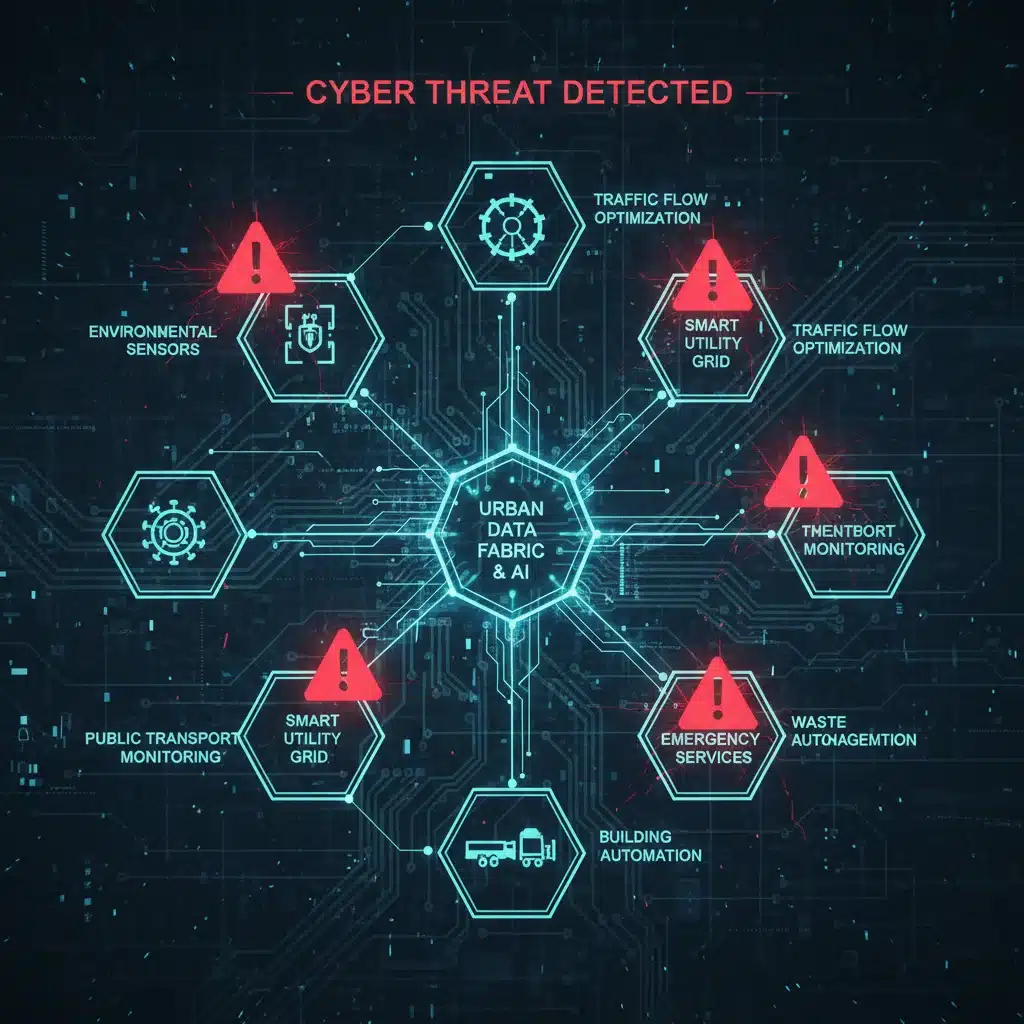
The vision of a smart city, where interconnected technologies optimize urban living, is rapidly becoming a reality across the United States. From intelligent traffic management and automated public services to smart energy grids and advanced public safety systems, these technological advancements promise unparalleled efficiency and quality of life. However, this intricate web of interconnected devices and systems, often referred to as Smart City Cybersecurity, also presents an expansive and increasingly vulnerable attack surface for cyber threats. The imperative to secure these networks is paramount, especially with an ambitious goal: to prevent 90% of breaches in US smart city infrastructure by 2026. Achieving this requires a multi-faceted approach, encompassing cutting-edge technology, proactive policy, and robust collaboration.
As cities evolve into sophisticated digital ecosystems, the stakes of cybersecurity have never been higher. A successful cyberattack on a smart city could lead to catastrophic consequences, ranging from widespread disruption of essential services like power and water, to compromise of sensitive citizen data, and even physical harm through manipulation of critical infrastructure. This blog post delves into the critical components of securing US smart city networks, exploring the challenges, the technological solutions, and the strategic road map necessary to achieve this ambitious prevention target by 2026.
The Expanding Attack Surface: Why Smart City Cybersecurity is Critical
Smart cities are built upon a foundation of data – collected, processed, and transmitted by an immense number of devices and sensors. This includes everything from ubiquitous Internet of Things (IoT) devices in homes and public spaces, to sophisticated Supervisory Control and Data Acquisition (SCADA) systems managing utilities, and advanced AI-driven analytics platforms. Each point of connection, each sensor, and each data exchange represents a potential vulnerability that can be exploited by malicious actors. The sheer scale and diversity of these interconnected systems make Smart City Cybersecurity an incredibly complex challenge.
The primary reason for this expanded attack surface lies in the nature of IoT devices. Many are designed for low cost and ease of deployment, often neglecting robust security features. Default passwords, unpatched vulnerabilities, and insecure communication protocols are common issues that hackers can readily exploit. Furthermore, the convergence of Operational Technology (OT) and Information Technology (IT) networks, while beneficial for efficiency, blurs traditional security perimeters, creating new pathways for attacks. Industrial control systems (ICS) that manage critical infrastructure, once isolated, are now increasingly connected to broader networks, exposing them to advanced persistent threats (APTs) and sophisticated cyber warfare tactics.
The urgency to bolster Smart City Cybersecurity is underscored by the evolving threat landscape. Nation-state actors, organized cybercrime groups, and even individual hackers are constantly developing new methods to penetrate defenses. The motivations behind these attacks vary, from espionage and economic disruption to political destabilization and direct financial gain. The potential for a cascading failure across multiple city systems, triggered by a single point of entry, is a nightmare scenario that requires immediate and comprehensive preventative measures.
Key Pillars of a Robust Smart City Cybersecurity Strategy by 2026
Achieving the goal of preventing 90% of breaches in US smart city infrastructure by 2026 demands a strategic, multi-layered approach. This strategy must integrate technological advancements with regulatory frameworks, public-private partnerships, and continuous vigilance. Here are the key pillars:
1. Advanced Threat Intelligence and AI-Driven Defense
Proactive defense is crucial. Smart cities must leverage advanced threat intelligence platforms that aggregate data from various sources, including government agencies, private security firms, and international partners. This intelligence can help identify emerging threats, attack patterns, and vulnerabilities before they are exploited. Artificial Intelligence (AI) and Machine Learning (ML) will play a pivotal role in automating threat detection and response. AI algorithms can analyze vast amounts of network traffic, identify anomalous behavior indicative of an attack, and even predict potential breach points with greater accuracy and speed than human analysts alone. This capability is essential for real-time protection in rapidly evolving smart city environments.
2. Zero Trust Architecture Implementation
The traditional perimeter-based security model is insufficient for the distributed and interconnected nature of smart city networks. A Zero Trust Architecture (ZTA) assumes that no user or device, whether inside or outside the network, should be trusted by default. Every access request must be authenticated, authorized, and continuously validated. Implementing ZTA across all smart city components – from IoT devices to cloud services and critical infrastructure control systems – will significantly reduce the risk of unauthorized access and lateral movement by attackers within the network. This ‘never trust, always verify’ principle is fundamental to modern Smart City Cybersecurity.
3. Comprehensive IoT Security Frameworks
Given the proliferation of IoT devices, establishing robust security frameworks specifically for these endpoints is non-negotiable. This includes:
- Secure Device Provisioning: Ensuring that all IoT devices are securely provisioned with unique identities and strong authentication mechanisms from the moment they are deployed.
- Regular Patching and Updates: Implementing automated systems for continuous monitoring, patching, and updating of IoT device firmware and software to address known vulnerabilities.
- Network Segmentation: Isolating IoT devices into separate network segments to limit the impact of a breach in one area from spreading to other critical systems.
- Behavioral Analytics: Monitoring the normal behavior of IoT devices and flagging any deviations that might indicate compromise.
- Hardware-Level Security: Encouraging manufacturers to build security features directly into the hardware of IoT devices, such as hardware root of trust and secure boot capabilities.
4. Data Encryption and Privacy by Design
Smart cities generate and process an enormous amount of sensitive data, including personal citizen information, critical infrastructure operational data, and proprietary urban planning details. All data, both in transit and at rest, must be encrypted using strong, modern cryptographic standards. Furthermore, the principle of ‘privacy by design’ must be embedded into the development of all smart city applications and services. This means privacy considerations are integrated from the initial design phase, rather than being an afterthought. Anonymization and pseudonymization techniques should be employed wherever possible to protect individual identities while still allowing for valuable data analysis.
5. Resilient Infrastructure and Disaster Recovery Planning
Even with the most robust preventative measures, breaches can occur. Therefore, smart cities must develop highly resilient infrastructure and comprehensive disaster recovery plans. This includes:
- Redundant Systems: Implementing redundant systems and backup power sources for critical infrastructure to ensure continuity of service during an attack or outage.
- Regular Backups: Performing frequent and secure backups of all critical data and system configurations, stored in isolated environments.
- Incident Response Plans: Developing and regularly testing detailed incident response plans that outline clear procedures for identifying, containing, eradicating, and recovering from cyberattacks.
- Cyber Insurance: Considering comprehensive cyber insurance policies to mitigate the financial impact of a significant breach.
The Role of Policy and Collaboration in Smart City Cybersecurity
Technology alone cannot address the full spectrum of Smart City Cybersecurity challenges. A strong policy framework and robust collaboration across various stakeholders are equally vital.
1. Federal and State-Level Cybersecurity Mandates
The US government, at both federal and state levels, must establish clear and enforceable cybersecurity mandates and standards for smart city infrastructure. This includes guidelines for secure development practices, data handling, incident reporting, and mandatory security audits. The National Institute of Standards and Technology (NIST) Cybersecurity Framework provides an excellent foundation, but specific adaptations for smart city contexts are needed. Financial incentives and grants could encourage cities to adopt these best practices.
2. Public-Private Partnerships
Smart cities are often built and operated through a complex web of public agencies, private technology providers, and utility companies. Effective Smart City Cybersecurity requires seamless collaboration among these entities. Information sharing platforms, joint threat intelligence centers, and collaborative incident response exercises can foster a unified defense posture. Private sector innovation in cybersecurity solutions is critical, and government policies should encourage this through procurement preferences and research funding.
3. Cybersecurity Workforce Development and Training
There is a significant shortage of skilled cybersecurity professionals. Smart cities need to invest in workforce development programs, including educational initiatives, apprenticeships, and continuous training for existing personnel. City employees, from IT staff to urban planners and public works personnel, must receive regular cybersecurity awareness training to understand their role in maintaining security and identifying potential threats like phishing attempts.
4. International Cooperation
Cyber threats are global. International cooperation with allied nations on threat intelligence sharing, coordinated defense strategies, and joint research and development initiatives is essential to combat sophisticated, cross-border cyberattacks targeting critical infrastructure. This global perspective is increasingly important for US smart cities.
Overcoming Challenges to Achieve 90% Breach Prevention
While the goal of preventing 90% of breaches by 2026 is ambitious, it is achievable with dedicated effort and strategic investment. Several challenges must be addressed:
1. Legacy Systems Integration
Many existing urban infrastructures rely on legacy systems that were not designed with modern cybersecurity in mind. Integrating these older systems into a secure smart city network without introducing new vulnerabilities is a significant hurdle. This often requires phased modernization, robust segmentation, and the use of specialized security gateways.
2. Budgetary Constraints
Implementing comprehensive Smart City Cybersecurity solutions can be expensive. Cities often face budgetary constraints, making it difficult to allocate sufficient funds for cutting-edge security technologies, skilled personnel, and ongoing maintenance. Federal and state funding, along with innovative financing models, will be crucial to overcome this challenge.
3. Complexity of Governance and Ownership
The distributed nature of smart city components often leads to complex governance structures, with multiple agencies and private companies owning and operating different parts of the infrastructure. Clearly defining roles, responsibilities, and accountability for cybersecurity across these entities is vital to avoid security gaps.

The Future of Smart City Cybersecurity: Beyond 2026
Achieving the 90% breach prevention target by 2026 will not be the end of the journey but rather a significant milestone. The cybersecurity landscape is constantly evolving, and smart cities must adopt a mindset of continuous improvement and adaptation. Looking beyond 2026, several trends will shape the future of Smart City Cybersecurity:
- Quantum-Resistant Cryptography: As quantum computing advances, current encryption methods may become vulnerable. Smart cities will need to transition to quantum-resistant cryptographic algorithms to protect long-term data security.
- Edge Computing Security: The increasing reliance on edge computing for real-time processing will necessitate robust security measures at the network edge, closer to the data sources.
- Digital Twins for Cybersecurity: The use of digital twins – virtual replicas of physical assets and systems – could extend to cybersecurity, allowing cities to simulate cyberattack scenarios and test defenses in a safe, controlled environment.
- Human-Centric Security: Emphasizing human factors in cybersecurity, including user education, behavioral science, and designing systems that are inherently difficult for humans to misconfigure or misuse.
- Regulatory Harmonization: A push towards more harmonized international cybersecurity regulations for smart cities, facilitating global collaboration and setting common standards.
Conclusion: A Secure Digital Future for US Cities
The promise of smart cities – enhanced efficiency, improved public services, and a better quality of life – can only be fully realized if the underlying digital infrastructure is secure. The goal of preventing 90% of breaches in US smart city networks by 2026 is an ambitious yet necessary endeavor. It requires a concerted effort from government bodies, private industry, academic institutions, and citizens themselves.
By prioritizing advanced threat intelligence, implementing Zero Trust architectures, strengthening IoT security, ensuring data privacy, and building resilient infrastructure, US cities can significantly harden their defenses. Coupled with proactive policy, robust public-private partnerships, and continuous workforce development, this comprehensive approach to Smart City Cybersecurity will not only protect critical infrastructure but also foster trust and confidence in the digital transformation of our urban environments. The future of US cities depends on our ability to build not just smart, but also secure, interconnected communities.
References and Further Reading:
- NIST Cybersecurity Framework: https://www.nist.gov/cyberframework
- CISA Smart City Cybersecurity Resources: https://www.cisa.gov/ (search for smart city security)
- Reports from industry leaders on IoT and smart city security.