Smart Traffic Management: US Cities to Cut Congestion by 10% in 2026
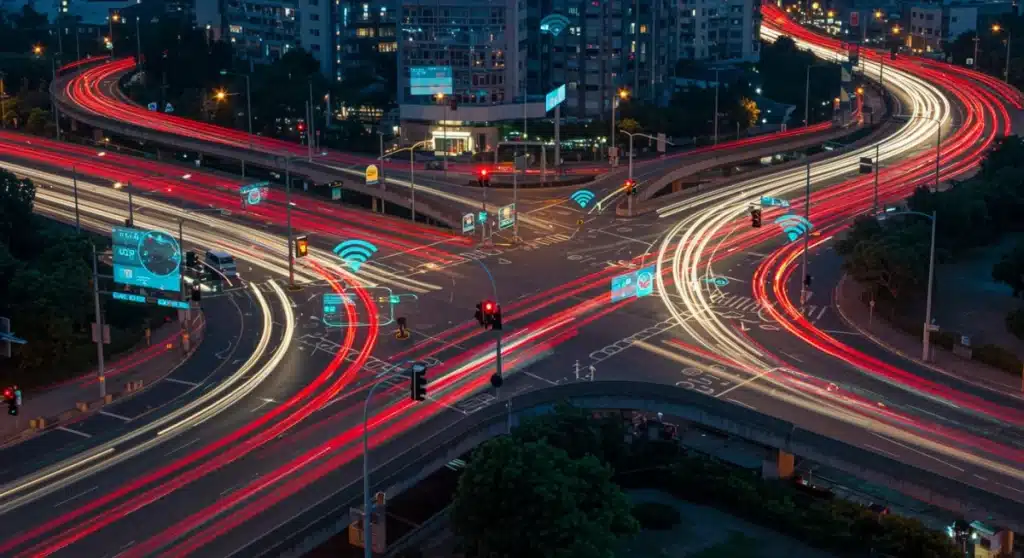
Advanced smart traffic management systems, leveraging AI and IoT, are projected to reduce urban congestion by 10% in US cities by 2026, significantly improving urban mobility and efficiency.
As urban populations continue to grow, traffic congestion remains a pervasive challenge impacting daily commutes, economic productivity, and environmental quality. However, the landscape of urban mobility is on the cusp of a transformative change. By 2026, the implementation of advanced smart traffic management systems is poised to reduce congestion by a significant 10% across major US cities, promising a future of smoother commutes and more efficient urban living. This ambitious goal is driven by cutting-edge innovations that are redefining how we understand and control traffic flow.
The evolving landscape of urban congestion
Urban congestion is more than just an inconvenience; it’s a multifaceted problem costing billions in lost productivity, fuel consumption, and environmental degradation. Historically, traffic management has relied on static signal timings and reactive measures, which are often insufficient to address the dynamic nature of modern urban traffic. The sheer volume of vehicles, coupled with unpredictable events like accidents or sudden weather changes, creates a complex system that traditional methods struggle to control effectively. Understanding the root causes of congestion is the first step towards developing robust solutions.
Studies consistently show that peak-hour congestion is a major contributor to stress for commuters and significantly impacts logistics and supply chains. The economic toll alone is staggering, with estimates placing the annual cost of congestion in the US in the hundreds of billions of dollars. This financial burden, combined with the environmental impact of increased emissions from idling vehicles, underscores the urgent need for innovative approaches. The current infrastructure, largely designed for a different era, often exacerbates these issues, creating bottlenecks and inefficient routes that are difficult to mitigate without significant technological intervention.
Measuring the impact of traffic congestion
- Economic losses: Billions of dollars annually in wasted fuel and lost productivity.
- Environmental impact: Increased greenhouse gas emissions from idling vehicles.
- Quality of life: Longer commute times, increased stress, and reduced leisure time for urban dwellers.
- Safety concerns: Higher incidence of accidents due to stop-and-go traffic patterns.
The imperative to address congestion has never been clearer. Cities are increasingly looking towards data-driven solutions to unravel the complexities of urban traffic. This involves moving beyond simple traffic counts to understanding behavioral patterns, predicting demand, and dynamically responding to real-time conditions. The challenge lies not only in deploying new technologies but also in integrating them seamlessly into existing urban fabrics. The goal is to create a responsive and adaptive transportation network that can flex and flow with the demands of the city, rather than being overwhelmed by them.
In conclusion, urban congestion is a systemic issue with far-reaching consequences, demanding a comprehensive and technologically advanced response. The traditional methods are no longer sufficient to cope with the demands of modern cities, paving the way for smart traffic management solutions.
Pioneering technologies driving traffic optimization
The drive to reduce congestion by 10% in US cities by 2026 is largely dependent on the deployment of pioneering technologies. These innovations are transforming traffic management from a reactive process into a proactive and predictive one. Artificial intelligence (AI), the Internet of Things (IoT), and advanced data analytics are at the forefront of this revolution, offering unprecedented capabilities to monitor, analyze, and control traffic flows in real-time. These technologies work in concert to create a more intelligent and responsive urban transportation network.
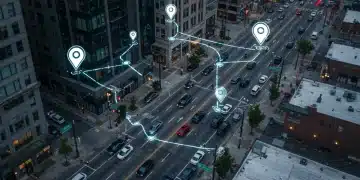
AI algorithms can process vast amounts of data from various sources, including traffic cameras, sensors embedded in roadways, and even anonymized GPS data from mobile devices. This allows for the identification of patterns, prediction of congestion hotspots before they occur, and dynamic adjustment of traffic signals. IoT devices, such as smart traffic lights and connected vehicle sensors, provide the crucial real-time data input necessary for these AI systems to function effectively. The synergy between AI and IoT is creating a powerful ecosystem for traffic optimization.
Key technological components
- Artificial intelligence (AI): Predictive modeling, adaptive signal control, incident detection.
- Internet of Things (IoT): Sensors, cameras, connected vehicles providing real-time data.
- Big data analytics: Processing and interpreting large datasets for actionable insights.
- Connected infrastructure: Communication between vehicles, infrastructure, and central systems.
Beyond AI and IoT, the emergence of connected vehicle technology is set to play a pivotal role. Vehicle-to-everything (V2X) communication allows vehicles to communicate with each other (V2V) and with roadside infrastructure (V2I), sharing information about speed, location, and potential hazards. This real-time information exchange can significantly improve traffic flow by enabling adaptive cruise control, optimized routing, and immediate incident alerts. The integration of these technologies promises a level of coordination and efficiency previously unimaginable.
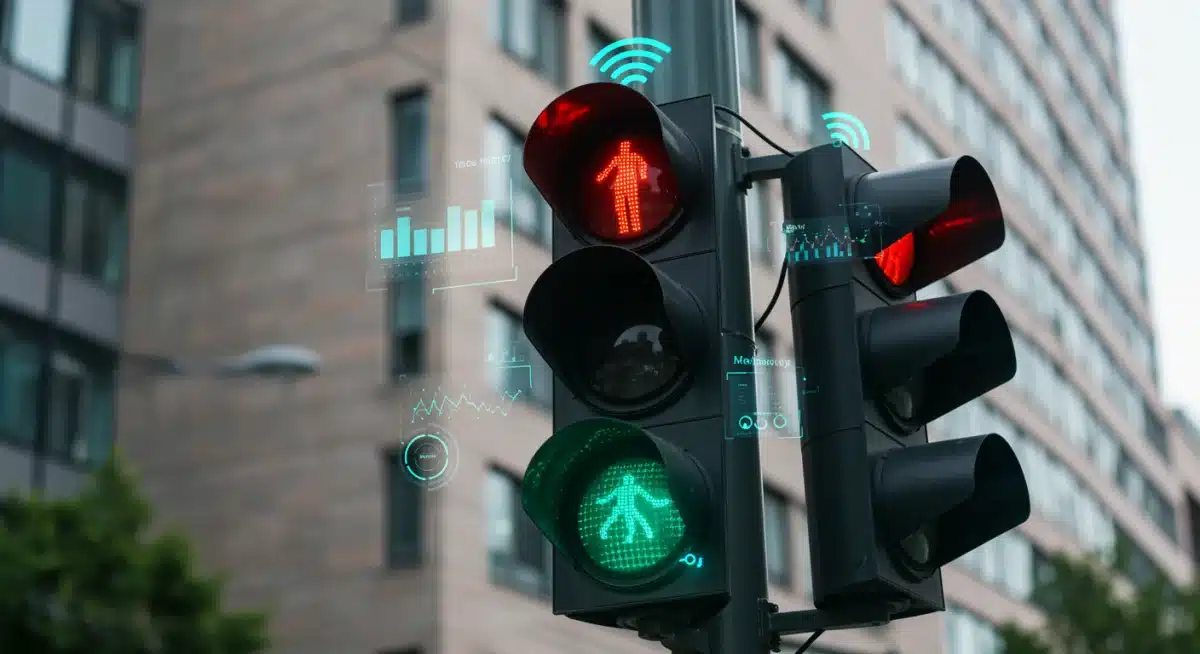
Furthermore, cloud computing platforms are essential for housing and processing the immense volume of data generated by these smart systems. These platforms enable scalable data storage, rapid analysis, and secure communication between various components of the traffic management infrastructure. The ability to quickly analyze and disseminate information is critical for making timely decisions that impact traffic flow. The combination of these advanced technologies forms the backbone of the next generation of traffic management.
In essence, the future of traffic management is data-driven and interconnected. By harnessing the power of AI, IoT, connected vehicles, and cloud computing, cities can move towards a more efficient, safer, and less congested future. These technologies are not just incremental improvements; they represent a fundamental shift in how urban mobility is designed and managed.
Smart signalization and adaptive traffic control
One of the most immediate and impactful applications of smart traffic management is in intelligent signalization and adaptive traffic control systems. Unlike traditional fixed-time signals, adaptive systems dynamically adjust signal timings based on real-time traffic conditions. This means that instead of a light staying green for a predetermined period, it can extend or shorten its cycle based on the actual volume of vehicles approaching the intersection, pedestrian demand, and even emergency vehicle priority. This dynamic responsiveness is crucial for optimizing flow and minimizing delays at critical junctions.
These systems utilize a network of sensors, cameras, and radar to collect data on vehicle presence, speed, and queue lengths. AI algorithms then analyze this data to predict traffic patterns and make optimal signal adjustments. For instance, if a major sporting event or concert is letting out, the system can anticipate increased traffic in certain areas and proactively adjust signal timings to accommodate the surge, preventing bottlenecks before they fully form. This predictive capability is a game-changer for urban traffic flow.
Benefits of adaptive signal control
- Reduced delays: Minimizes waiting times at intersections by optimizing green light duration.
- Improved travel times: Smoother flow of traffic leads to faster overall journeys.
- Decreased fuel consumption: Fewer stops and starts mean less idling and better fuel efficiency.
- Lower emissions: Directly contributes to better air quality by reducing vehicle emissions.
Beyond individual intersections, adaptive traffic control systems can be integrated across entire corridors or even city-wide networks. This allows for coordinated signal timing that considers the flow of traffic along multiple routes, preventing a green light at one intersection from immediately becoming a red light at the next. This holistic approach ensures that traffic moves efficiently throughout the urban grid, not just at isolated points. The coordination between multiple signals is critical for achieving significant reductions in overall congestion.
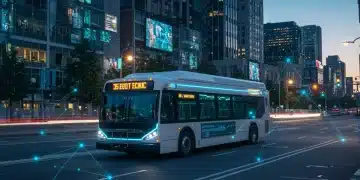
Furthermore, these systems can prioritize certain types of vehicles. For example, public transit buses can communicate with traffic lights to request extended green times, ensuring they stay on schedule and encouraging greater use of public transportation. Emergency vehicles can also trigger green waves, clearing routes for faster response times. This level of intelligent prioritization adds another layer of efficiency and public safety to urban mobility. The ability to dynamically adapt to diverse needs makes these systems incredibly versatile.
In summary, smart signalization and adaptive traffic control are fundamental to achieving the 10% congestion reduction target. By leveraging real-time data and AI, these systems create a fluid and responsive traffic network that significantly improves urban mobility and efficiency.
The role of data analytics and predictive modeling
At the heart of effective smart traffic management lies sophisticated data analytics and predictive modeling. Without the ability to collect, process, and interpret vast amounts of traffic data, even the most advanced hardware would be ineffective. Data analytics provides the insights needed to understand current traffic conditions, identify recurring patterns, and diagnose the root causes of congestion. This foundation of understanding is what enables intelligent systems to make informed decisions and optimize traffic flow.
Predictive modeling takes this a step further by using historical data and real-time inputs to forecast future traffic conditions. Machine learning algorithms can learn from past traffic behaviors, special events, weather patterns, and even social media trends to anticipate where and when congestion is likely to occur. This foresight allows traffic managers to implement proactive strategies, such as adjusting signal timings or issuing rerouting advisories, before gridlock sets in. The ability to predict rather than just react is a paradigm shift in traffic management.
Applications of predictive analytics
- Congestion forecasting: Predicting future traffic hotspots based on various factors.
- Incident management: Anticipating the impact of accidents or road closures and planning alternative routes.
- Event planning: Adjusting traffic strategies for large public gatherings.
- Dynamic route guidance: Providing drivers with optimized routes based on predicted conditions.
The sources of data for these analytical models are incredibly diverse. They include traditional traffic loop detectors, advanced video analytics from surveillance cameras, anonymized cellular data, GPS information from ride-sharing services, and even public transport schedules. Integrating these disparate data streams into a unified platform is a complex but crucial task. The more comprehensive the data input, the more accurate and reliable the predictive models become, leading to better traffic outcomes.
Moreover, the continuous feedback loop between data collection, analysis, prediction, and action is vital. As new data comes in, the models refine their predictions and the system adjusts its responses, leading to a constant cycle of improvement. This iterative process ensures that the smart traffic management system becomes increasingly efficient and adaptable over time. The learning capability of these systems is what truly sets them apart from previous generations of traffic control.
In essence, data analytics and predictive modeling are the brains of smart traffic management systems. They provide the intelligence needed to proactively manage urban traffic, anticipate challenges, and implement solutions that lead to measurable reductions in congestion and improved urban mobility.
Integrating connected and autonomous vehicles
The full potential of smart traffic management will be realized with the widespread integration of connected and autonomous vehicles (CAVs). While still in various stages of development and deployment, CAVs are expected to profoundly impact urban traffic flow. Connected vehicles, through V2X communication, can share real-time data about their speed, direction, and intentions with other vehicles and with the traffic infrastructure. This constant exchange of information enables a level of coordination that is impossible with human-driven vehicles, paving the way for significantly smoother traffic flow.
Autonomous vehicles, by eliminating human error and optimizing driving patterns, can further enhance traffic efficiency. They can maintain precise following distances, accelerate and decelerate smoothly, and seamlessly merge into traffic, all of which reduce the stop-and-go patterns that contribute heavily to congestion. When a critical mass of CAVs is on the road, they can form platoons, travel closer together, and navigate intersections with minimal delay, effectively increasing road capacity without needing new physical infrastructure.
Impact of CAVs on traffic
- Optimized vehicle spacing: Reduced gaps between vehicles, increasing road throughput.
- Smoother acceleration/deceleration: Minimizes stop-and-go waves that cause phantom traffic jams.
- Enhanced intersection management: Coordinated passage through intersections without full stops.
- Dynamic route optimization: Vehicles can autonomously choose the most efficient routes based on real-time traffic data.
The transition to a CAV-dominated environment will not happen overnight, but cities are already planning for their integration. This involves developing communication protocols, upgrading infrastructure to support V2I communication, and establishing regulatory frameworks. Pilot programs in various US cities are testing the capabilities of CAVs in real-world scenarios, gathering valuable data on their impact on traffic flow and safety. These early deployments are crucial for understanding the challenges and opportunities that CAVs present.
Furthermore, the data generated by CAVs will feed directly into the smart traffic management systems, providing an even richer and more granular understanding of traffic conditions. This real-time, vehicle-specific data will allow AI systems to make even more precise and effective adjustments to traffic signals and routing recommendations. The synergy between CAVs and intelligent infrastructure creates a powerful feedback loop that continuously optimizes the urban transportation network.
In conclusion, the integration of connected and autonomous vehicles represents a future where traffic flows with unprecedented efficiency. By enabling real-time communication and precise vehicle control, CAVs are poised to be a cornerstone of achieving significant congestion reductions in US cities.
Challenges and implementation strategies for 2026
Achieving a 10% reduction in congestion by 2026 through smart traffic management is an ambitious goal, and it comes with its share of challenges. One of the primary hurdles is the significant investment required for infrastructure upgrades. Deploying thousands of smart sensors, cameras, and communication units across a city, along with the necessary central control systems, demands substantial financial commitment. Securing funding from federal, state, and local sources, as well as public-private partnerships, will be crucial.
Another significant challenge is data privacy and security. The collection and analysis of vast amounts of traffic data raise legitimate concerns about individual privacy. Cities must implement robust data anonymization techniques and adhere to strict privacy regulations to build public trust. Additionally, ensuring the cybersecurity of these interconnected systems is paramount to prevent malicious attacks that could disrupt traffic flow or compromise sensitive data. A breach could have severe consequences for urban mobility and public safety.
Key implementation challenges
- Funding and investment: High upfront costs for technology and infrastructure.
- Data privacy and security: Protecting sensitive information and preventing cyber threats.
- Interoperability: Ensuring different systems and technologies can communicate seamlessly.
- Public acceptance: Gaining support from citizens and stakeholders for new technologies.
Beyond funding and privacy, technical interoperability is a complex issue. Smart traffic management systems often involve components from various vendors, and ensuring they can communicate and work together seamlessly is essential. Standardized protocols and open-source platforms will be vital for creating a cohesive and scalable system. Without interoperability, cities risk creating fragmented solutions that cannot achieve their full potential for congestion reduction.
Finally, public acceptance and engagement are critical for successful implementation. Citizens need to understand the benefits of these systems and feel confident in their deployment. Educational campaigns, transparent communication about data usage, and opportunities for public feedback can help build support. Resistance to change or skepticism about new technologies can hinder progress, making community involvement a key strategy. The human element of smart city initiatives cannot be overlooked.
To overcome these challenges, cities are adopting multi-faceted implementation strategies. These include phased rollouts, starting with pilot projects in specific corridors before expanding city-wide, and fostering strong collaborations between government agencies, technology providers, and academic institutions. By addressing these hurdles proactively, US cities can pave the way for a more efficient and livable urban future by 2026.
Future outlook: beyond 2026 and sustainable mobility
While the 2026 target of a 10% congestion reduction in US cities through smart traffic management is a significant milestone, it represents just one step in a much larger journey towards sustainable urban mobility. Beyond 2026, the evolution of traffic management will continue, driven by emerging technologies and a growing emphasis on environmental sustainability. The foundation laid by current innovations will enable even more sophisticated and integrated systems that address not only congestion but also broader urban planning goals.
One key area of future development is the integration of multimodal transportation systems. Smart traffic management will increasingly incorporate data from public transit, ride-sharing services, micro-mobility options like e-scooters and bikes, and even pedestrian flows. This holistic approach aims to optimize the movement of people, not just vehicles, encouraging shifts towards more sustainable modes of transport. Real-time information on all available options will empower citizens to make smarter travel choices, further reducing reliance on single-occupancy vehicles.
Innovations for sustainable urban mobility
- Multimodal integration: Seamless coordination across public transit, ride-sharing, and micro-mobility.
- Demand management: Dynamic pricing, congestion charges, and incentives for off-peak travel.
- Digital twins: Virtual replicas of cities for simulating and optimizing traffic scenarios.
- Energy efficiency: Smart infrastructure designed to minimize energy consumption.
Furthermore, the concept of demand management will become more prevalent. This includes strategies like dynamic pricing for tolls or parking, congestion charges in highly trafficked areas, and incentives for off-peak travel or carpooling. These measures, combined with predictive analytics, can proactively influence travel behavior, distributing demand more evenly throughout the day and across different modes of transport. The goal is to make the most efficient use of existing infrastructure.
The development of urban digital twins will also play a crucial role. These virtual replicas of cities, continuously updated with real-time data, will allow urban planners and traffic engineers to simulate various scenarios and test the impact of different traffic management strategies before implementing them in the physical world. This capability will enable more informed decision-making and accelerate the deployment of effective solutions. Digital twins offer a powerful tool for continuous optimization.
Ultimately, the future of smart traffic management extends beyond simply reducing congestion; it’s about creating resilient, equitable, and environmentally friendly urban environments. By continuously innovating and integrating new technologies, US cities can move towards a future where urban mobility is not just efficient but also sustainable, supporting the long-term well-being of their residents and the planet.
| Key Aspect | Brief Description |
|---|---|
| Congestion Target | US cities aim for a 10% reduction in traffic congestion by 2026. |
| Core Technologies | AI, IoT, big data analytics, and connected infrastructure are key drivers. |
| Adaptive Signals | Dynamic signal timing based on real-time traffic conditions for optimized flow. |
| CAV Integration | Connected and autonomous vehicles will significantly enhance traffic efficiency. |
Frequently asked questions about smart traffic management
Smart traffic management involves using advanced technologies like AI, IoT, and data analytics to monitor, analyze, and control urban traffic flow in real-time. It aims to optimize signal timings, manage incidents, and provide dynamic routing to reduce congestion and improve overall mobility.
This reduction will be achieved through adaptive signal control, predictive modeling, and the integration of connected vehicles. These innovations allow cities to anticipate congestion, respond dynamically to changing conditions, and make more efficient use of existing road infrastructure.
Connected vehicles (CAVs) communicate with each other and infrastructure, sharing real-time data on speed, location, and intentions. This enables coordinated movement, smoother traffic flow, and optimized routing, significantly reducing stop-and-go patterns that cause congestion.
Key challenges include securing significant funding for infrastructure upgrades, ensuring data privacy and cybersecurity, achieving interoperability between diverse technologies, and gaining public acceptance for new traffic management approaches and policies.
By reducing congestion, these systems decrease fuel consumption and vehicle emissions, leading to better air quality. They also support multimodal integration and demand management, encouraging shifts to public transit and other sustainable forms of transportation for a greener urban environment.
Conclusion
The vision of US cities achieving a 10% reduction in traffic congestion by 2026 through smart traffic management is not merely aspirational; it is a tangible goal backed by rapid technological advancements. From adaptive signalization and predictive analytics to the eventual seamless integration of connected and autonomous vehicles, the tools are now available to fundamentally reshape urban mobility. While challenges in funding, data security, and public acceptance remain, the concerted efforts of urban planners, technologists, and policymakers are paving the way for a more efficient, sustainable, and less stressful urban experience for millions. This transformative journey promises not only smoother commutes but also a significant step towards creating truly smart and livable cities for the future.