Smart Water Management: 20% Water Savings in US Cities

Advanced sensor networks are revolutionizing smart water management in US urban areas, aiming to conserve 20% more water this year by optimizing distribution and detecting leaks efficiently.
Imagine a future where every drop of water counts, and none is wasted. In the United States, this vision is rapidly becoming a reality through innovative approaches to smart water management. As urban populations grow and climate patterns shift, the imperative to conserve water has never been more critical. This year, US urban areas are setting ambitious goals, aiming to conserve an additional 20% of water through the strategic deployment of advanced sensor networks and intelligent systems.
The urgent need for water conservation in US urban areas
Water, a fundamental resource, faces increasing pressure from population growth, urbanization, and the unpredictable impacts of climate change across the United States. Many cities are grappling with aging infrastructure and traditional management systems that lead to significant water losses.
These challenges underscore a critical need for more efficient and sustainable water management practices. Without proactive measures, water scarcity could become a widespread issue, affecting both economic stability and public health.
Aging infrastructure and water loss
Many US cities rely on water infrastructure built decades ago, which is now prone to leaks, bursts, and inefficiencies. These physical losses represent a substantial waste of treated water, impacting both resource availability and operational costs.
- Billions of gallons lost annually due to leaks.
- Increased operational costs for water utilities.
- Environmental impact from wasted energy in water treatment.
- Reduced water security for communities.
Climate change and water scarcity
Changing weather patterns, including prolonged droughts and extreme rainfall events, further complicate water resource management. These shifts make traditional water planning less reliable, necessitating adaptive strategies.
The urgency to conserve water is not just about reducing waste; it’s about building resilience against future uncertainties. Smart water management offers a pathway to mitigate these risks by providing real-time data and actionable insights.
The current state of water infrastructure and the looming threats of climate change highlight why effective water conservation is not merely an option but a necessity for the sustainable future of US urban areas. Implementing advanced systems can bridge the gap between demand and supply, securing this vital resource for generations.
Understanding smart water management: a technological leap
Smart water management represents a paradigm shift from reactive to proactive water utility operations, leveraging cutting-edge technology to monitor, analyze, and optimize water usage. This approach integrates various digital tools to create a comprehensive system for efficient water delivery and conservation.
At its core, smart water management aims to provide real-time visibility into the entire water network, from source to tap, enabling timely interventions and informed decision-making. This technological leap is essential for addressing the complex water challenges of today.
Key components of smart water systems
Modern smart water systems are built upon several integrated components that work in concert to enhance efficiency and conservation. These technologies provide the backbone for intelligent water networks.
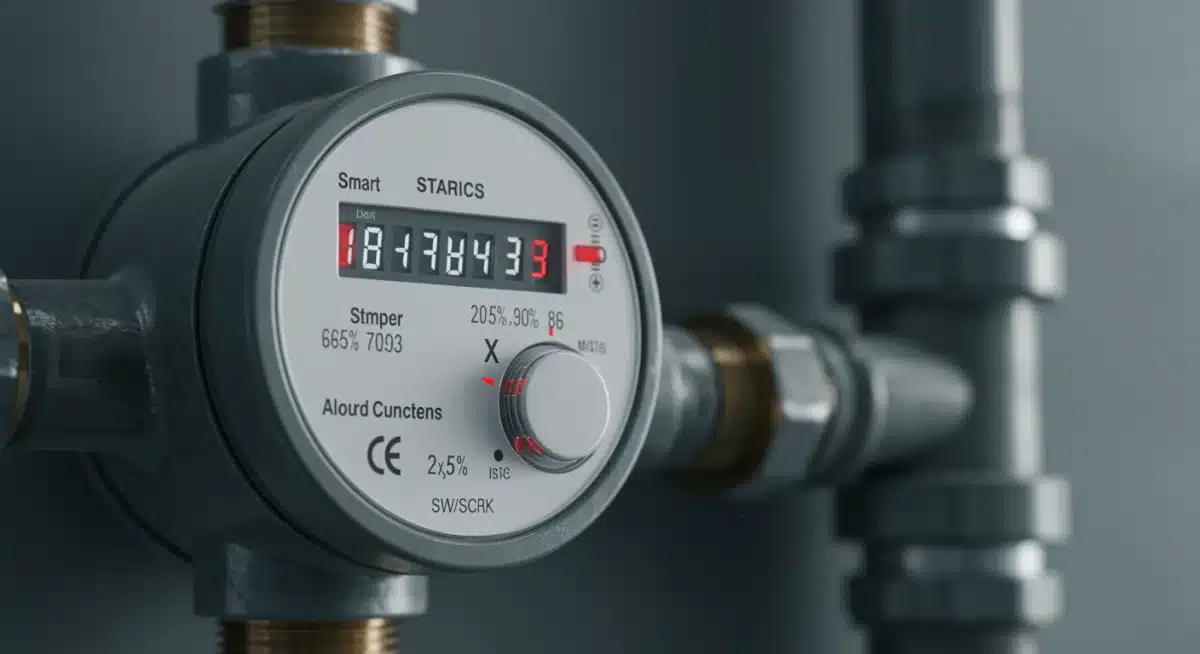
- Advanced metering infrastructure (AMI): Digital meters that record consumption data and communicate it wirelessly to utilities.
- Sensor networks: Arrays of sensors deployed throughout the distribution system to detect pressure, flow, and water quality.
- Data analytics platforms: Software that processes and interprets vast amounts of data from sensors and meters, identifying patterns and anomalies.
- Automated control systems: Mechanisms that allow utilities to remotely adjust valves and pumps based on real-time data.
How smart technology drives conservation
The integration of these technologies allows for unprecedented levels of control and insight into water usage. By precisely identifying where and how water is being used, utilities can implement targeted conservation strategies.
This proactive management minimizes waste, reduces operational costs, and ensures a more sustainable water supply. Smart systems also empower consumers with detailed usage information, encouraging behavioral changes that contribute to conservation.
Ultimately, smart water management transforms the way urban areas interact with their water resources. It moves beyond traditional methods by providing the tools and intelligence needed to achieve significant conservation goals, making water networks more resilient and responsive to demand.
The role of advanced sensor networks in achieving 20% conservation
Advanced sensor networks are the unsung heroes of modern smart water management, acting as the eyes and ears of the water distribution system. Their deployment is pivotal in the ambitious goal of conserving 20% more water in US urban areas this year.
These networks provide granular, real-time data that traditional systems simply cannot offer, allowing for unparalleled precision in identifying and addressing inefficiencies. From leak detection to pressure management, sensors are transforming conservation efforts.
Real-time leak detection and pressure management
One of the most significant contributions of sensor networks is their ability to detect leaks almost instantaneously. Traditional methods often rely on visual inspections or customer reports, leading to considerable water loss before a problem is identified.
- Acoustic sensors pinpoint the exact location of underground leaks.
- Pressure sensors monitor fluctuations, indicating potential pipe bursts.
- Early detection significantly reduces water wastage, saving millions of gallons.
Beyond leak detection, sensors enable dynamic pressure management. By adjusting water pressure in real time based on demand, utilities can prevent pipe stress, reduce the likelihood of new leaks, and optimize energy consumption for pumping.
Optimizing irrigation and public water use
Sensor networks extend their utility beyond the main distribution lines to public spaces and large irrigation systems. Soil moisture sensors, for instance, can inform smart irrigation systems to water only when necessary, avoiding overwatering and runoff.
This intelligent approach to public water use, such as in parks and communal gardens, contributes substantially to overall urban water conservation. It ensures that water is applied efficiently, maximizing its benefit while minimizing waste.
The strategic placement and sophisticated analytics of advanced sensor networks are indispensable for achieving aggressive water conservation targets. They provide the actionable intelligence needed to move from broad conservation goals to tangible, measurable savings across urban water systems.
Case studies: US cities leading the way in smart water conservation
Across the United States, several cities are demonstrating the tangible benefits of adopting smart water management technologies. Their experiences provide valuable insights into how advanced sensor networks and data analytics can lead to significant water savings and operational efficiencies.
These pioneering efforts serve as blueprints for other urban areas aiming to enhance their water conservation strategies. Their successes highlight the potential for widespread adoption and impact.
Los Angeles: A model for large-scale implementation
Los Angeles, a city in a historically arid region, has been at the forefront of smart water initiatives. The Los Angeles Department of Water and Power (LADWP) has invested heavily in AMI and sensor technologies to monitor its vast distribution network.
By deploying thousands of smart meters and acoustic leak detection sensors, LADWP has been able to identify and repair leaks much faster than before, contributing to substantial reductions in non-revenue water.
- Improved leak detection rates by over 30%.
- Enhanced customer engagement through detailed usage data.
- Reduced operational costs associated with manual meter reading and leak detection.
Atlanta: Innovating with predictive analytics
Atlanta’s Department of Watershed Management has leveraged smart sensors and predictive analytics to anticipate and prevent infrastructure failures. By analyzing data from pressure sensors and historical maintenance records, the city can proactively address potential issues before they escalate into major leaks or main breaks.
This predictive approach not only conserves water but also minimizes service disruptions to residents and businesses, showcasing the multifaceted benefits of smart water investments.
These case studies underscore the transformative power of smart water management. By embracing technology, US cities are not only conserving vital resources but also building more resilient and efficient urban water systems for the future, proving that the 20% conservation target is within reach.
Overcoming challenges and ensuring widespread adoption
While the benefits of smart water management are clear, the path to widespread adoption across all US urban areas is not without its hurdles. Implementing these advanced systems requires significant investment, technical expertise, and a willingness to adapt traditional practices.
Addressing these challenges proactively is crucial for ensuring that the ambitious conservation goals can be met nationwide. Collaborative efforts and strategic planning are key to overcoming these obstacles.
Funding and infrastructure investment
One of the primary challenges is securing the necessary funding for the initial investment in smart water infrastructure. Upgrading aging systems and deploying new sensor networks can be costly, especially for smaller municipalities with limited budgets.
However, the long-term savings from reduced water loss, lower operational costs, and improved efficiency often outweigh the initial expenditures. Creative financing models and federal grants can help bridge this funding gap.
- Exploring public-private partnerships.
- Leveraging federal and state infrastructure grants.
- Demonstrating clear return on investment (ROI) to stakeholders.
Data security and public education
As water systems become more digitalized, concerns around data security and privacy naturally arise. Protecting sensitive operational data and customer information is paramount to maintaining public trust and system integrity.
Alongside security, educating the public about the benefits of smart water technologies is vital. Explaining how these systems contribute to conservation and improve service quality can foster greater acceptance and cooperation from residents.
Overcoming these challenges requires a concerted effort from policymakers, utility providers, technology developers, and the community. By addressing funding, technical, and societal aspects, US cities can accelerate the adoption of smart water management and secure a more water-efficient future for all.
The future outlook: scaling smart water solutions for greater impact
The journey towards comprehensive smart water management in US urban areas is ongoing, with significant potential for further innovation and expansion. The current target of 20% additional water conservation this year is an important milestone, but it also lays the groundwork for even greater impacts in the years to come.
The future outlook involves scaling existing solutions, integrating new technologies, and fostering a culture of continuous improvement in water resource management. This evolution is critical for sustainable urban development.
Integration with broader smart city initiatives
Smart water systems are not isolated technologies; they are integral components of the broader smart city ecosystem. Future developments will see deeper integration with other smart infrastructure, such as energy grids, waste management, and transportation systems.
This holistic approach allows for synergistic benefits, where data from one system can inform optimizations in another, leading to more efficient and sustainable urban environments overall. For example, smart streetlights could power water sensors.
Emerging technologies and predictive maintenance
The landscape of smart water technology is constantly evolving. Advances in artificial intelligence, machine learning, and even drone technology are poised to bring new capabilities to water management, enhancing predictive maintenance and real-time anomaly detection.
- AI-powered analytics for more accurate demand forecasting.
- Machine learning for identifying complex leak patterns.
- Drone inspections for rapid assessment of above-ground infrastructure.
These emerging technologies will further refine the precision and effectiveness of smart water solutions, allowing utilities to anticipate problems before they occur and manage resources with unprecedented efficiency.
The future of smart water management in the US is bright, promising not only greater water conservation but also more resilient, sustainable, and livable urban areas. By continuously embracing innovation and scaling successful strategies, cities can secure their water future for generations to come.
| Key Aspect | Brief Description |
|---|---|
| Conservation Goal | US urban areas aim to conserve 20% more water this year. |
| Core Technology | Advanced sensor networks provide real-time data for efficiency. |
| Key Benefits | Leak detection, pressure management, optimized public water use. |
| Challenges | Funding, infrastructure investment, data security, public education. |
Frequently asked questions about smart water management
Smart water management uses technology like sensors and data analytics to monitor, analyze, and optimize water usage and distribution. It helps utilities detect leaks, manage pressure, and improve overall efficiency to conserve water resources effectively.
Sensor networks provide real-time data on water flow, pressure, and quality. This allows for immediate detection of leaks, efficient pressure adjustments, and optimized irrigation schedules, significantly reducing water waste across urban areas.
US cities benefit from reduced water loss, lower operational costs, improved infrastructure resilience, and enhanced water security. Smart systems also empower residents with better insights into their water consumption, promoting conservation.
Key challenges include securing funding for initial investments, integrating complex technologies, ensuring data security, and educating the public about the new systems. Overcoming these requires strategic planning and collaboration.
Absolutely. By providing precise data and automated controls, smart water management systems are instrumental in achieving ambitious conservation targets, such as the 20% goal for US urban areas this year, by minimizing waste and optimizing resource use.
Conclusion: A sustainable future through smart water innovation
The journey towards achieving 20% more water conservation in US urban areas this year through advanced sensor networks is a testament to the power of innovation and strategic planning. Smart water management is not just a technological upgrade; it’s a fundamental shift towards a more sustainable and resilient urban future. By embracing these intelligent solutions, cities are not only safeguarding a vital resource but also enhancing operational efficiency and building stronger, more informed communities. The continued evolution and widespread adoption of these systems will be crucial in ensuring water security and environmental stewardship for generations to come.