EV Charging Infrastructure: US Expansion & Investment Outlook (3 Months)
Electric Vehicle Charging Infrastructure: A 3-Month Outlook on US Expansion and Investment Opportunities
The landscape of transportation is undergoing a profound transformation, with electric vehicles (EVs) at the forefront of this revolution. As more consumers embrace sustainable mobility, the demand for robust and accessible electric vehicle charging infrastructure, particularly in the US, has surged. This article provides a comprehensive 3-month outlook, exploring the current state, anticipated expansion, and lucrative investment opportunities within the US EV charging sector. Understanding the dynamics of EV charging US is crucial for stakeholders, investors, and policymakers alike.
The Biden administration’s ambitious goals, coupled with significant private sector investment, are accelerating the deployment of charging stations across the nation. The next three months are poised to be a period of intense activity, marked by new policy implementations, technological advancements, and strategic partnerships aiming to solidify the backbone of America’s electric future. Our focus will be on dissecting these elements to offer a clear picture of what to expect and where the smart money is likely to flow.
The Current State of US EV Charging Infrastructure
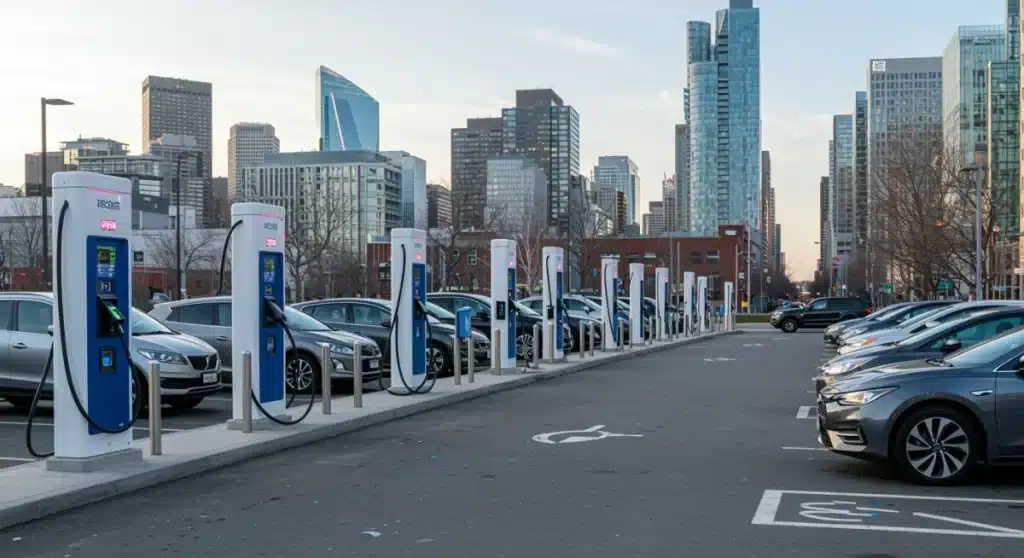
Before we delve into the future, it’s essential to understand the current foundation. The United States has made significant strides in building its EV charging network, yet challenges persist. As of early 2024, the US boasts over 160,000 public charging ports across more than 60,000 charging stations. This includes a mix of Level 2 (AC) chargers, suitable for overnight or workplace charging, and DC Fast Chargers (DCFC), which can replenish a significant portion of a battery in under an hour, crucial for long-distance travel. The distribution, however, remains uneven, with urban centers typically having better access than rural areas.
Key players in the market include ChargePoint, Electrify America, EVgo, and Tesla’s Supercharger network, which has recently opened up to non-Tesla vehicles, marking a significant shift. Government initiatives, such as the National Electric Vehicle Infrastructure (NEVI) Formula Program, funded by the Bipartisan Infrastructure Law, are channeling billions of dollars into building a national network of 500,000 EV chargers along designated alternative fuel corridors by 2030. This program is a major catalyst for EV charging US expansion.
The NEVI program mandates specific requirements for charger density, reliability, and payment interoperability, pushing the industry towards a more standardized and user-friendly experience. This regulatory push is designed to alleviate range anxiety and make EV ownership more attractive to a wider demographic. Over the past year, we’ve seen states actively submitting and gaining approval for their NEVI plans, setting the stage for accelerated deployment in the coming months.
Technological advancements are also playing a crucial role. Faster charging speeds, more efficient energy management systems, and smart grid integration are continually improving the performance and sustainability of charging networks. The industry is also exploring innovative solutions like vehicle-to-grid (V2G) technology, which allows EVs to send power back to the grid, and wireless charging, though these are still in nascent stages of widespread adoption.
Key Drivers for Expansion in the Next 3 Months
The next quarter is expected to witness several critical developments that will significantly impact the trajectory of EV charging US expansion. These drivers can be broadly categorized into policy and regulatory movements, technological advancements, and increasing consumer demand.
Policy and Regulatory Momentum
The NEVI program will continue to be a primary driver. States that have had their plans approved are now moving into the procurement and construction phases. We anticipate a visible increase in NEVI-compliant charging station installations, particularly along interstate highways. This will involve significant coordination between state departments of transportation, utility companies, and charging network operators.
Beyond NEVI, other federal and state incentives will continue to stimulate growth. Tax credits for charging equipment installation, grants for community charging projects, and local zoning reforms are all contributing to a more favorable environment for deployment. The Inflation Reduction Act (IRA) also includes provisions that support clean energy infrastructure, indirectly benefiting EV charging. These policy frameworks are creating a stable and predictable investment climate, encouraging both established companies and new entrants to commit resources to the sector.
Furthermore, discussions around national charging standards and interoperability will likely intensify. The industry is moving towards a unified charging experience, where any EV can charge at any station with ease, regardless of the network operator or vehicle manufacturer. This is critical for consumer confidence and broader EV adoption. The recent agreement by several major automakers to adopt Tesla’s North American Charging Standard (NACS) is a testament to this trend, and we can expect more announcements in this vein over the next three months, potentially accelerating the standardization process.
Technological Advancements and Innovations
The race for faster and more efficient charging continues. Within the next three months, we might see further progress in the deployment of ultra-fast DC chargers (350 kW and above), capable of adding hundreds of miles of range in minutes. This is particularly important for high-traffic corridors and commercial vehicle fleets.
Software innovations will also play a pivotal role. Improved charging management systems, enhanced payment processing, and better integration with navigation apps will make the charging experience smoother and more reliable. Predictive analytics, using AI to anticipate charging demand and optimize energy distribution, will become more sophisticated, leading to more efficient network operations. The development of more robust and secure cybersecurity measures for charging networks is also a growing area of focus, given the increasing interconnectedness of these systems.
Moreover, battery technology advancements, while not directly part of charging infrastructure, indirectly influence it. As battery capacities grow and charging curves improve, the practical utility of existing and new charging infrastructure increases. This symbiotic relationship drives continuous innovation in both sectors.
Increasing Consumer Demand and EV Sales
EV sales continue to climb, albeit with some market fluctuations. As more electric vehicles hit the road, the pressure to expand charging infrastructure intensifies. Automakers are releasing new EV models across various segments, from sedans and SUVs to pickup trucks, catering to a broader consumer base. This diversification of the EV market directly fuels the need for more charging points. The growing familiarity and acceptance of EVs among the general public also contribute to this demand.
The transition of fleet vehicles to electric is another significant demand driver. Commercial fleets, including delivery vans, ride-sharing services, and public transport, are increasingly electrifying their operations. This creates a specific demand for depot charging solutions and publicly accessible fast chargers that can accommodate larger vehicles and higher utilization rates. We can expect to see more partnerships between fleet operators and charging infrastructure providers in the coming months.
Investment Opportunities in the Next 3 Months
The rapid expansion of EV charging US infrastructure presents a multitude of investment opportunities across various segments. Investors looking to capitalize on this growth can consider several avenues, ranging from direct infrastructure development to technology providers and service operators.
Direct Infrastructure Development and Ownership
Investing directly in the development and ownership of charging stations and networks remains a prime opportunity. This includes companies that design, build, and operate public and private charging facilities. As NEVI funds are disbursed and private capital continues to flow, companies involved in site acquisition, construction, and equipment installation will see increased demand. This segment often involves long-term contracts and recurring revenue streams from charging fees.
Opportunities also exist in specialized charging solutions, such as those for multi-unit dwellings (MUDs), workplaces, and commercial fleets. These sectors often require tailored solutions and present unique scalability potential. Real estate developers and property owners are increasingly integrating EV charging as a standard amenity, creating demand for turnkey solutions from charging providers.
Technology and Equipment Providers
The companies manufacturing charging hardware (chargers, cables, power electronics) and developing charging management software are critical to the ecosystem. As the market expands, demand for more advanced, reliable, and cost-effective equipment will grow. This includes manufacturers of smart charging solutions that can integrate with grid management systems, as well as providers of energy storage solutions that can buffer demand peaks at charging hubs.
Software companies offering solutions for network management, payment processing, user authentication, and data analytics are also attractive. These platforms are essential for optimizing network performance, enhancing user experience, and ensuring the profitability of charging operations. Innovations in cybersecurity for charging systems will also present compelling investment cases, given the growing concern over data integrity and network resilience.
Service and Maintenance Providers
As the number of charging stations proliferates, the need for robust service and maintenance will become paramount. Companies specializing in the installation, repair, and ongoing maintenance of charging infrastructure will find a growing market. Reliable uptime is crucial for consumer confidence and network profitability, making these services invaluable. This also includes customer support services, which are essential for resolving user issues and ensuring a seamless charging experience.
Furthermore, energy management consulting and grid integration services will be in high demand. As more high-power chargers come online, managing their impact on the local grid and ensuring efficient energy procurement will be vital for utilities and charging network operators. Companies that can provide expertise in demand-side management, renewable energy integration, and smart grid solutions will be well-positioned for growth.
Public-Private Partnerships and Joint Ventures
Many large-scale EV charging projects, especially those funded by government initiatives like NEVI, involve public-private partnerships. These collaborations can offer attractive investment opportunities, combining government funding with private sector expertise and capital. Joint ventures between charging companies, utilities, and even automakers are becoming more common, allowing for shared risk and accelerated deployment. These partnerships are particularly effective in addressing the complexities of large-scale infrastructure projects and ensuring broad coverage.
Investors should look for companies with a strong track record in securing these types of partnerships and demonstrating the ability to execute large-scale projects efficiently. The ability to navigate complex regulatory environments and work effectively with multiple stakeholders will be a key differentiator.
Challenges and Considerations
While the outlook for EV charging US is largely positive, several challenges and considerations need to be addressed in the coming months to ensure sustainable growth.
Grid Capacity and Upgrades
The increasing demand for electricity from EVs will necessitate significant upgrades to the grid infrastructure. Local utilities will need to invest in strengthening their distribution networks to handle higher loads, especially with the proliferation of DC fast chargers. This involves smart grid technologies, energy storage solutions, and careful planning to avoid localized power outages and ensure reliable service. Coordination between charging network operators and utilities will be crucial to manage this transition smoothly.
The timelines for grid upgrades can sometimes be longer than charging station deployment, creating potential bottlenecks. Policymakers and industry players must work together to streamline permitting processes and incentivize necessary grid investments. The integration of renewable energy sources into the charging ecosystem will also be vital for ensuring that EV charging is truly sustainable and minimizes its carbon footprint.
Interoperability and Standardization
Despite progress, achieving full interoperability across all charging networks and vehicle types remains a challenge. Different connectors, payment systems, and communication protocols can create confusion and frustration for EV drivers. While the adoption of NACS by more automakers is a positive step, ensuring a seamless experience for all EV users, regardless of their vehicle or preferred charging network, is paramount. The next three months will likely see continued efforts to harmonize these standards and simplify the user journey.
This includes ensuring that payment systems are universally accepted and transparent, similar to how gasoline pumps operate. Efforts to implement ‘plug and charge’ functionality, where the vehicle automatically authenticates and pays for charging, will significantly enhance convenience and drive wider adoption.
Reliability and Maintenance
The reliability of charging stations is a persistent concern for EV drivers. Out-of-order chargers, slow charging speeds due to technical issues, and poor maintenance can deter potential EV buyers. As the network expands, ensuring consistent uptime and prompt maintenance will be critical. This requires robust monitoring systems, readily available spare parts, and skilled technicians. Investment in quality control and preventative maintenance programs will be essential to build and maintain consumer trust in the EV charging US infrastructure.
Data collection and analysis on charger reliability will become increasingly important for identifying common issues and implementing effective solutions. Regulatory bodies may also introduce stricter uptime requirements for publicly funded charging stations, further emphasizing the need for reliable operations.
Site Selection and Permitting
Finding suitable locations for new charging stations, especially fast chargers that require significant power upgrades, can be complex. Factors such as land availability, local zoning laws, utility access, and community acceptance all play a role. The permitting process can also be time-consuming and vary significantly by jurisdiction, slowing down deployment. Efforts to streamline permitting and provide clear guidelines for site selection will be crucial for accelerating expansion.
Strategic site selection involves not just technical feasibility but also understanding driver behavior and traffic patterns to maximize utilization and accessibility. This often requires sophisticated mapping and data analytics tools to identify optimal locations that serve both local residents and long-distance travelers.
Regional Spotlight: Areas of Anticipated High Growth
While expansion is nationwide, certain regions within the US are poised for particularly rapid growth in EV charging infrastructure over the next three months, driven by state-level policies, existing EV adoption rates, and strategic funding allocations.
West Coast States (California, Oregon, Washington)
These states have historically been leaders in EV adoption and continue to push aggressive clean transportation policies. California, in particular, has ambitious mandates for EV sales and significant state-level funding to complement federal programs. We can expect to see a sustained build-out of both urban and corridor charging in these regions, with a strong emphasis on renewable energy integration and innovative charging solutions.
The high concentration of tech companies and environmental consciousness in these states also fosters a culture of innovation, attracting further investment and pilot projects for advanced charging technologies. This region will likely continue to set benchmarks for the rest of the country in terms of EV charging US deployment and technological sophistication.
Northeast Corridor (New York, Massachusetts, New Jersey)
The dense population centers and high traffic volumes in the Northeast make it a prime candidate for rapid EV charging expansion. States in this region are actively leveraging federal funds and implementing their own incentive programs to accelerate deployment. Focus areas include urban charging solutions for apartment dwellers, public transit electrification, and fast chargers along major interstate highways connecting metropolitan areas.
The region’s commitment to reducing emissions and improving air quality further fuels the drive for extensive EV infrastructure. Collaborations between states in this corridor to create a seamless charging experience for inter-state travel are also likely to gain momentum.
Texas and the Sun Belt States
States like Texas, Arizona, and Florida, characterized by rapidly growing populations and increasing EV sales, are becoming significant players. While historically more reliant on traditional energy, these states are recognizing the economic and environmental benefits of electrifying transportation. Texas, with its vast distances, has a particular need for robust DC fast charging networks along its major highways. We anticipate considerable investment in these areas, often driven by private sector initiatives seeking to capture market share in burgeoning EV markets.
The availability of land and relatively lower construction costs in some parts of these states can also make them attractive for large-scale charging hub developments. As more people relocate to these sun belt areas, the demand for accessible and reliable EV charging US solutions will only intensify.
The Role of Utilities
Utility companies are pivotal to the success of EV charging expansion. They are not only responsible for delivering the power but are also increasingly involved in the deployment and management of charging infrastructure itself. Many utilities are launching their own EV programs, offering incentives for residential charging, and investing in public charging stations.
Over the next three months, we expect to see utilities play an even more proactive role in grid modernization, smart charging initiatives, and facilitating interconnection for new charging sites. Their collaboration with charging network operators and state agencies will be fundamental to overcoming potential grid constraints and ensuring a smooth transition to an electrified transportation system. The regulatory environment for utility involvement in EV charging is also evolving, with many states allowing utilities to recover investments in charging infrastructure, thereby incentivizing their participation.
Conclusion: A Dynamic 3-Month Horizon for EV Charging US
The next three months represent a dynamic and critical period for the expansion of electric vehicle charging infrastructure in the US. Driven by robust government policies, continuous technological innovation, and surging consumer demand, the sector is set for significant growth. Investment opportunities are abundant, spanning infrastructure development, technology provision, and essential support services.
While challenges related to grid capacity, interoperability, and reliability persist, concerted efforts from policymakers, industry players, and utilities are actively addressing these hurdles. The strategic deployment of NEVI funds, coupled with private sector ingenuity, will lead to a more extensive, reliable, and user-friendly EV charging US network. Stakeholders who strategically position themselves within this evolving ecosystem stand to reap substantial rewards as the nation accelerates towards its electric future. The foundation being laid now will determine the pace and success of EV adoption for years to come, making this an exciting time to observe and participate in the transformation of American transportation.