Smart City Solutions 2026: Boosting Urban Efficiency by 20% in US Cities
Smart City Solutions in 2026: How 3 Major US Cities Are Enhancing Urban Efficiency by 20% (PRACTICAL SOLUTIONS)
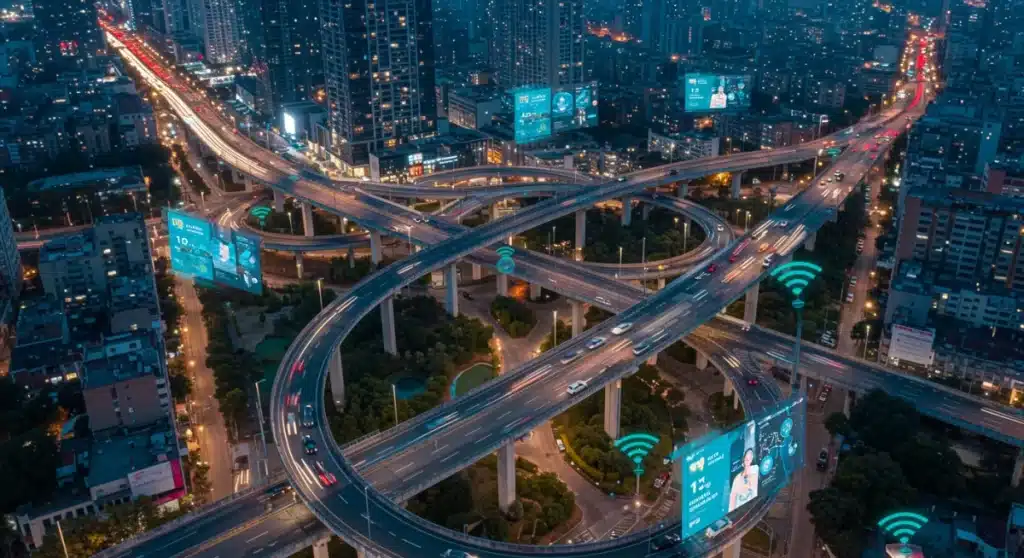
The urban landscape is undergoing a profound transformation, driven by a relentless pursuit of efficiency, sustainability, and improved quality of life for its residents. As we look towards 2026, the concept of the ‘Smart City’ is no longer a futuristic dream but a tangible reality, with several major US cities leading the charge. These pioneering urban centers are actively implementing cutting-edge Smart City Solutions designed to optimize everything from traffic flow and energy consumption to public safety and waste management. The ambitious goal? To enhance overall urban efficiency by a remarkable 20% within the next three years. This article delves into the practical strategies and innovative technologies being deployed by three prominent US cities, offering a glimpse into the future of urban living and the significant impact of Smart City Solutions.
The imperative for such a transformation is clear. Rapid urbanization brings with it a host of challenges: congested roads, strained public services, environmental degradation, and increasing demands on infrastructure. Traditional approaches are often insufficient to address these complex issues. This is where Smart City Solutions come into play, offering data-driven, interconnected, and responsive frameworks that can adapt to the dynamic needs of a growing metropolis. By integrating advanced technologies like the Internet of Things (IoT), artificial intelligence (AI), big data analytics, and ubiquitous connectivity, cities can gain unprecedented insights into their operations, enabling more informed decision-making and proactive problem-solving.
Achieving a 20% efficiency boost is not a trivial undertaking. It requires a holistic approach that spans multiple sectors, strong political will, public-private partnerships, and, crucially, citizen engagement. The cities we will explore have embraced these challenges, demonstrating how strategic investments in Smart City Solutions can yield significant dividends, creating more livable, sustainable, and economically vibrant urban environments. From intelligent transportation systems that reduce commute times to smart energy grids that minimize waste, the innovations are diverse and far-reaching. Let’s embark on a journey to understand how these urban pioneers are redefining what it means to be a smart city.
The Core Pillars of Smart City Solutions: A Framework for Efficiency
Before diving into specific city examples, it’s essential to understand the foundational elements that constitute effective Smart City Solutions. These pillars provide a comprehensive framework for urban development and efficiency enhancement:
-
Intelligent Transportation Systems (ITS)
Traffic congestion is a perennial problem in most major cities, leading to lost productivity, increased pollution, and frustration. ITS leverages sensors, cameras, and real-time data analytics to manage traffic flow, optimize signal timing, and provide dynamic routing information. This includes smart parking systems, autonomous vehicle integration, and interconnected public transport networks. The goal is to reduce travel times, lower emissions, and improve overall mobility. For cities aiming for a 20% efficiency increase, optimizing transportation is often a primary focus, as it impacts daily life directly and has cascading effects on economic activity and environmental health.
-
Smart Energy Management
Energy consumption is a massive operational cost and environmental concern for cities. Smart City Solutions in this domain involve smart grids that monitor and manage energy distribution more efficiently, integrating renewable energy sources, and implementing smart street lighting that adjusts illumination based on real-time conditions. Smart buildings with automated energy management systems also play a crucial role. These solutions not only reduce energy waste but also contribute significantly to sustainability goals and lower utility costs for municipalities and residents alike.
-
Sustainable Waste Management
Waste management has evolved beyond simple collection. Smart waste bins equipped with sensors can signal when they are full, optimizing collection routes and reducing fuel consumption. Data analytics can identify patterns in waste generation, leading to more effective recycling programs and waste-to-energy initiatives. These Smart City Solutions contribute to cleaner urban environments, reduce landfill dependence, and foster a circular economy.
-
Public Safety and Security
Ensuring the safety of residents is a paramount responsibility of any city. Smart surveillance systems, predictive policing models, and interconnected emergency services enhance response times and deter crime. Data from various sources can be integrated to provide a comprehensive real-time view of urban safety, allowing for proactive interventions. While privacy concerns must always be addressed, intelligent deployment of these technologies can significantly improve urban security and emergency preparedness.
-
Environmental Monitoring and Management
Air and water quality, noise pollution, and urban heat island effects are critical environmental challenges. Smart City Solutions utilize networks of environmental sensors to collect real-time data on these parameters. This data informs policy decisions, triggers alerts for unhealthy conditions, and helps in planning green infrastructure. By understanding and managing environmental factors, cities can create healthier and more resilient spaces for their inhabitants.
-
Digital Governance and Citizen Engagement
A truly smart city empowers its citizens. Digital platforms for civic engagement, online public services, and open data initiatives foster transparency, accessibility, and participation. These solutions streamline administrative processes, reduce bureaucracy, and ensure that residents have a voice in urban development. Efficient digital governance is a cornerstone of a well-functioning smart city, directly contributing to citizen satisfaction and operational efficiency.
City Spotlight: Pioneering Smart City Solutions
Now, let’s look at how specific US cities are implementing these Smart City Solutions to achieve their ambitious efficiency targets.
1. Los Angeles: Revolutionizing Transportation and Sustainability
Los Angeles, a sprawling metropolis synonymous with traffic, is making significant strides in transforming its urban fabric through comprehensive Smart City Solutions. The city’s ambitious ‘Sustainable City pLAn’ outlines a clear path towards a greener, more efficient future, with a significant focus on reducing congestion and carbon emissions. By 2026, LA aims for a 20% reduction in vehicle miles traveled (VMT) and a substantial increase in public transit ridership, directly contributing to its overall efficiency goals.
Key Initiatives in Los Angeles:
- Adaptive Traffic Control System (ATCS): LA has deployed one of the most advanced ATCS in the world, known as ATSAC (Automated Traffic Surveillance and Control). This system uses real-time data from thousands of inductive loops and cameras to dynamically adjust traffic signal timings across the city. The result? Smoother traffic flow, reduced idling, and optimized travel times. The continuous refinement of ATSAC is a core component of LA’s Smart City Solutions for mobility.
- LA Metro’s Digital Transformation: The city’s public transit agency, LA Metro, is heavily investing in digital platforms for real-time bus and rail tracking, contactless payment systems, and integrated mobility-as-a-service (MaaS) applications. These initiatives aim to make public transportation more convenient and attractive, encouraging a shift away from private car usage.
- Smart Parking Solutions: LA is implementing smart parking meters and guidance systems that direct drivers to available parking spaces, reducing cruising time and congestion. This not only saves time and fuel for drivers but also minimizes localized traffic bottlenecks.
- Electric Vehicle (EV) Infrastructure Expansion: To combat air pollution and reduce reliance on fossil fuels, LA is aggressively expanding its EV charging infrastructure and promoting the adoption of electric vehicles, including electric buses for its public transit fleet. This is a critical long-term Smart City Solution for environmental sustainability.
- Green Building Codes and Energy Efficiency: The city has some of the most stringent green building codes in the nation, encouraging energy-efficient construction and retrofits. Smart grid technologies are also being explored to manage energy demand and integrate renewable sources more effectively.
The combination of these initiatives is projected to yield significant efficiency gains, not just in transportation but also in environmental quality and economic productivity. By leveraging data and technology, Los Angeles is actively working to shed its reputation for gridlock and emerge as a leader in urban efficiency.
2. Chicago: Innovating with Data and Community Engagement
Chicago, often referred to as a ‘living laboratory’ for urban innovation, is leveraging its robust data infrastructure and strong community engagement to implement impactful Smart City Solutions. The city’s ‘Array of Things’ (AoT) project stands out as a unique initiative aimed at understanding urban dynamics and improving public services. Chicago’s goal is to enhance operational efficiency across various city departments by 20% by 2026, with a strong emphasis on data-driven decision-making and resident quality of life.
Key Initiatives in Chicago:
- Array of Things (AoT): This groundbreaking project involves a network of interactive, modular sensor nodes installed on light poles throughout the city. These nodes collect real-time data on air quality, temperature, light intensity, sound levels, and even pedestrian and vehicle traffic. This anonymized data is then made publicly available, enabling researchers, city planners, and citizens to develop novel applications and insights. AoT is a cornerstone of Chicago’s Smart City Solutions, providing invaluable granular data for urban management.
- Smart Waste Management: Chicago has piloted smart waste bins equipped with sensors that monitor fill levels. This allows the Department of Streets and Sanitation to optimize collection routes, reducing fuel consumption, operational costs, and emissions. This data-driven approach to waste management is a practical example of efficiency gains through smart technology.
- Intelligent Street Lighting: The city is in the process of upgrading its streetlights to smart LED fixtures with remote monitoring and control capabilities. These lights can be dimmed or brightened based on ambient light conditions and pedestrian activity, leading to substantial energy savings and improved public safety.
- Predictive Analytics for Public Services: Chicago is a pioneer in using predictive analytics to optimize public services. For instance, data on rodent complaints, weather patterns, and sanitation schedules are used to predict areas likely to experience rodent issues, allowing for proactive pest control measures. Similar approaches are being applied to infrastructure maintenance and emergency response, enhancing overall city efficiency.
- Open Data Portal: Chicago boasts one of the most comprehensive open data portals in the US, making vast amounts of municipal data accessible to the public. This transparency fosters innovation, allows for citizen oversight, and encourages the development of third-party applications that benefit the city.
Chicago’s approach to Smart City Solutions is characterized by its commitment to open data, research, and community collaboration. By empowering its citizens and researchers with data, the city is creating a dynamic ecosystem for continuous urban improvement and efficiency gains.
3. Miami: Building Resilience and Smart Infrastructure
Miami, a city at the forefront of climate change impacts, is strategically investing in Smart City Solutions to enhance its resilience, optimize resource management, and improve the quality of life for its growing population. With a focus on mitigating environmental risks and fostering economic development, Miami aims to achieve a 20% improvement in infrastructure efficiency and environmental sustainability by 2026.
Key Initiatives in Miami:
- Smart Flood Sensors and Sea Level Rise Monitoring: Given its coastal location and vulnerability to rising sea levels and storm surges, Miami is deploying a network of smart flood sensors. These sensors provide real-time data on water levels, allowing for proactive flood management, early warning systems, and optimized deployment of pumping stations. This is a critical resilience-focused Smart City Solution.
- Intelligent Water Management: Beyond flood control, Miami is implementing smart water meters and leak detection technologies to conserve water resources and reduce waste. These systems provide citizens with detailed consumption data and alert utility providers to potential issues, leading to significant efficiency improvements in water distribution.
- Smart Grid Development: Florida Power & Light (FPL), serving the Miami area, has been a leader in smart grid technology. This includes advanced metering infrastructure, automated fault detection, and self-healing grids that automatically reroute power to minimize outages. These advancements enhance energy reliability and efficiency, crucial for a city prone to extreme weather events.
- Connected Mobility and Traffic Management: Miami is investing in connected vehicle technologies and intelligent traffic systems to alleviate congestion and improve multimodal transportation options. This includes smart intersections that adapt to real-time traffic conditions and integrated platforms for ride-sharing, public transit, and micro-mobility services.
- Green Infrastructure and Urban Greening: The city is promoting the development of green infrastructure, such as permeable pavements, urban tree canopies, and green roofs, to manage stormwater, reduce urban heat island effects, and improve air quality. These nature-based Smart City Solutions contribute to both resilience and livability.
Miami’s holistic approach to Smart City Solutions demonstrates how technology can be deployed not only for efficiency but also for building resilience in the face of significant environmental challenges. By integrating smart infrastructure with environmental management, Miami is charting a course towards a sustainable and secure urban future.
The Role of Data and AI in Driving Smart City Efficiency
At the heart of all these Smart City Solutions lies the intelligent use of data and artificial intelligence. Without robust data collection, analysis, and predictive capabilities, the ‘smart’ aspect of these initiatives would be severely limited. Here’s a deeper look at their critical role:
-
Real-time Data Collection and Integration
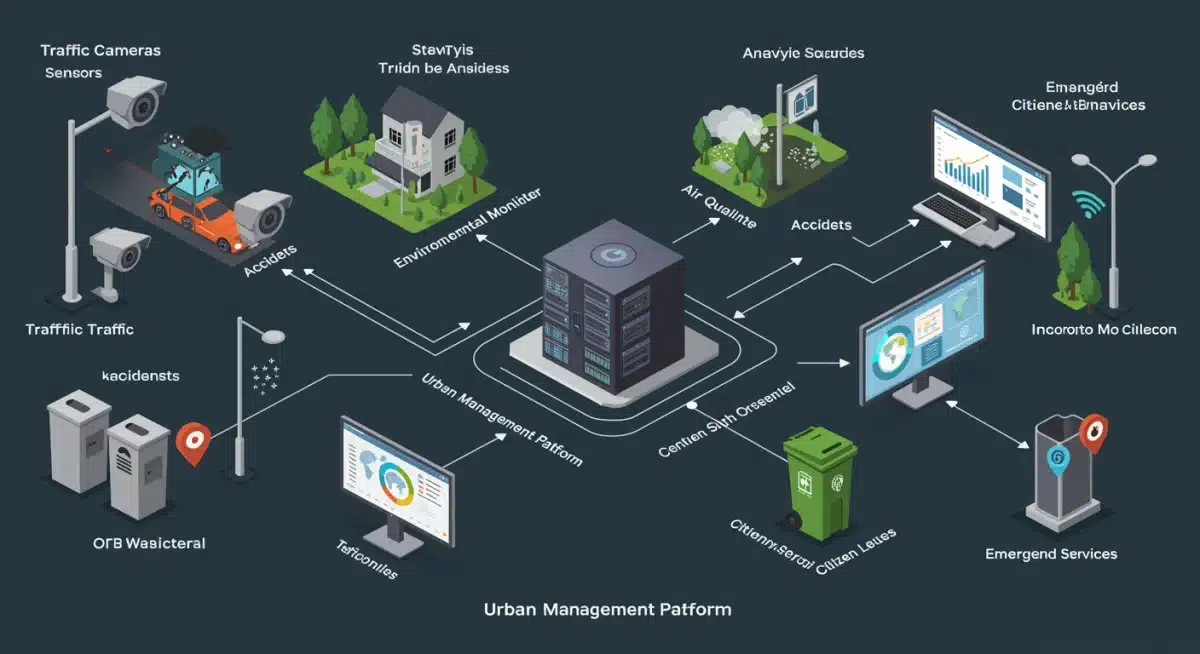
Sensors, cameras, IoT devices, and citizen-contributed data streams are constantly generating an immense volume of information. Effective Smart City Solutions require platforms that can collect, integrate, and process this diverse data in real time. This unified data layer provides a comprehensive operational picture of the city, enabling immediate responses and long-term strategic planning.
-
Big Data Analytics for Insights
Once collected, raw data needs to be transformed into actionable insights. Big data analytics tools are crucial for identifying patterns, trends, and anomalies that would otherwise go unnoticed. For instance, analyzing traffic patterns can reveal optimal signal timings, while correlating environmental data with public health records can inform targeted interventions. These insights directly drive efficiency improvements across all urban sectors.
-
Artificial Intelligence and Machine Learning for Prediction and Automation
AI and machine learning algorithms take data analysis a step further by enabling predictive capabilities and automation. Predictive models can forecast traffic congestion, anticipate infrastructure failures, or identify areas at higher risk of crime. This allows cities to move from reactive to proactive management. Furthermore, AI can automate tasks like adjusting streetlights, optimizing waste collection routes, or managing energy flow within a smart grid, significantly boosting operational efficiency and reducing manual intervention.
-
Cybersecurity and Data Privacy
As cities become more digitized and interconnected, cybersecurity becomes paramount. Protecting sensitive urban data from breaches and ensuring the privacy of citizens are non-negotiable aspects of any successful Smart City Solutions deployment. Robust security protocols and transparent data governance frameworks are essential to build trust and maintain the integrity of smart city systems.
The synergy between data, AI, and interconnected infrastructure is what truly unlocks the potential of Smart City Solutions to deliver significant efficiency gains. It allows for a dynamic, self-optimizing urban environment that can adapt to changing conditions and citizen needs.

Challenges and the Path Forward for Smart City Solutions
While the benefits of Smart City Solutions are undeniable, their implementation is not without challenges. Cities face hurdles such as:
- Funding and Investment: Developing and deploying advanced smart city infrastructure requires substantial capital investment. Cities often rely on a mix of public funding, private partnerships, and grants to finance these initiatives.
- Interoperability and Standardization: Different smart city technologies from various vendors often operate on disparate platforms, making integration complex. The lack of universal standards can hinder seamless data exchange and system interoperability.
- Data Governance and Privacy Concerns: The extensive collection of urban data raises legitimate concerns about data privacy, surveillance, and potential misuse. Establishing clear ethical guidelines, robust cybersecurity measures, and transparent data policies is crucial.
- Digital Divide: Ensuring equitable access to smart city services and technologies for all residents, regardless of socio-economic status, is a significant challenge. Bridging the digital divide is essential to prevent the creation of a two-tiered urban society.
- Citizen Acceptance and Engagement: For Smart City Solutions to be truly successful, they must be embraced by the citizens they serve. Effective communication, public education, and opportunities for citizen feedback are vital to foster acceptance and co-creation.
Despite these challenges, the momentum behind Smart City Solutions is undeniable. The path forward involves:
- Collaborative Ecosystems: Fostering stronger partnerships between city governments, technology providers, academic institutions, and local communities.
- Scalable and Modular Approaches: Implementing smart city initiatives in phases, starting with pilot projects and then scaling successful solutions.
- Focus on Outcomes: Prioritizing solutions that deliver measurable improvements in efficiency, sustainability, and quality of life for residents.
- Continuous Innovation: Embracing emerging technologies and adapting to new challenges and opportunities.
Conclusion: The Efficient Urban Future is Here
The journey towards smarter, more efficient cities is a continuous one, but the progress made by cities like Los Angeles, Chicago, and Miami offers compelling evidence of what is possible. By strategically deploying Smart City Solutions across transportation, energy, waste, safety, and governance, these urban centers are not just dreaming of a 20% efficiency boost by 2026; they are actively building it.
These practical solutions, fueled by data, AI, and a commitment to innovation, are transforming urban environments into more responsive, sustainable, and livable spaces. The lessons learned from these pioneering cities will undoubtedly inform and inspire other municipalities around the globe, paving the way for a future where technology and urban planning converge to create truly intelligent and efficient cities for everyone. The era of the smart city is not just arriving; it’s accelerating, promising a brighter, more efficient urban future.