2026 EV Software Updates: Boosting Range by 10% Across Top Models
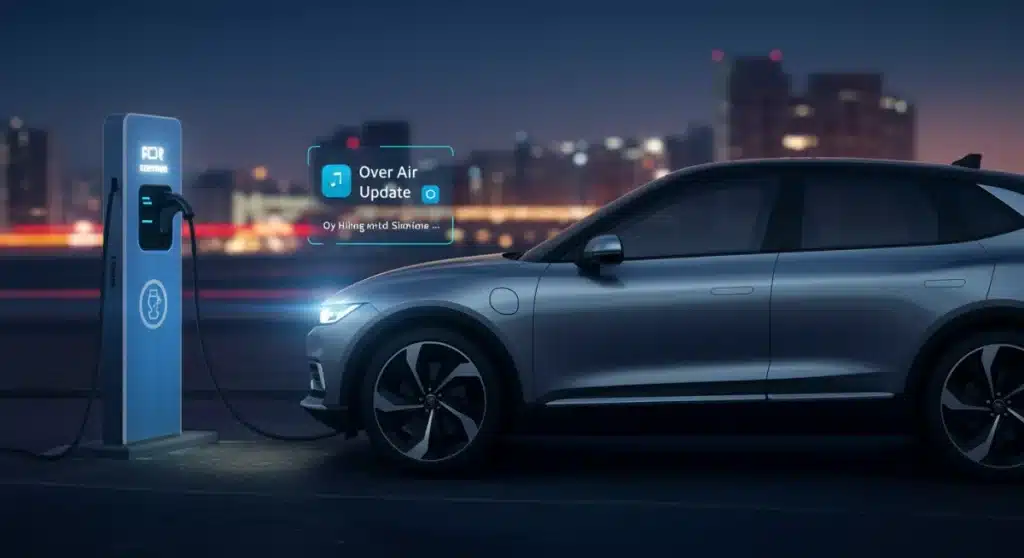
The electric vehicle (EV) landscape is evolving at an unprecedented pace, driven by relentless innovation in battery technology, motor efficiency, and perhaps most crucially, software. For years, the automotive industry has focused on hardware improvements to extend range, but a new era has dawned where lines of code are proving just as impactful as physical components. The year 2026 marks a significant milestone in this journey, with a wave of groundbreaking EV software updates that are fundamentally reshaping the capabilities of electric vehicles. These updates are not merely incremental; they are delivering substantial improvements, with an average 10% increase in range across many top models. This article delves deep into the mechanisms behind these advancements, exploring how intricate algorithms, enhanced energy management, and predictive analytics are transforming the driving experience for EV owners worldwide.
The Silent Revolution: How Software is Redefining EV Performance
When we talk about electric vehicles, the conversation often gravitates towards battery capacity (kWh), charging speeds, and horsepower. While these hardware specifications remain vital, the true genius of modern EVs lies beneath the surface, within their complex software ecosystems. These systems control everything from power delivery and regenerative braking to thermal management and infotainment. In 2026, manufacturers have leveraged the power of over-the-air (OTA) updates to push significant enhancements that directly translate into improved vehicle efficiency and, consequently, extended range.
The concept of improving a car’s performance through software might seem abstract to some, but it’s a reality that mirrors the evolution of smartphones. Just as a new operating system update can make your phone faster and more efficient, advanced EV software updates can optimize the intricate dance between the battery, motor, and other electrical components. This ‘silent revolution’ is particularly exciting because it means that your EV can get better over time, even years after you’ve driven it off the lot. This contrasts sharply with internal combustion engine vehicles, where performance improvements typically require physical modifications or a new purchase.
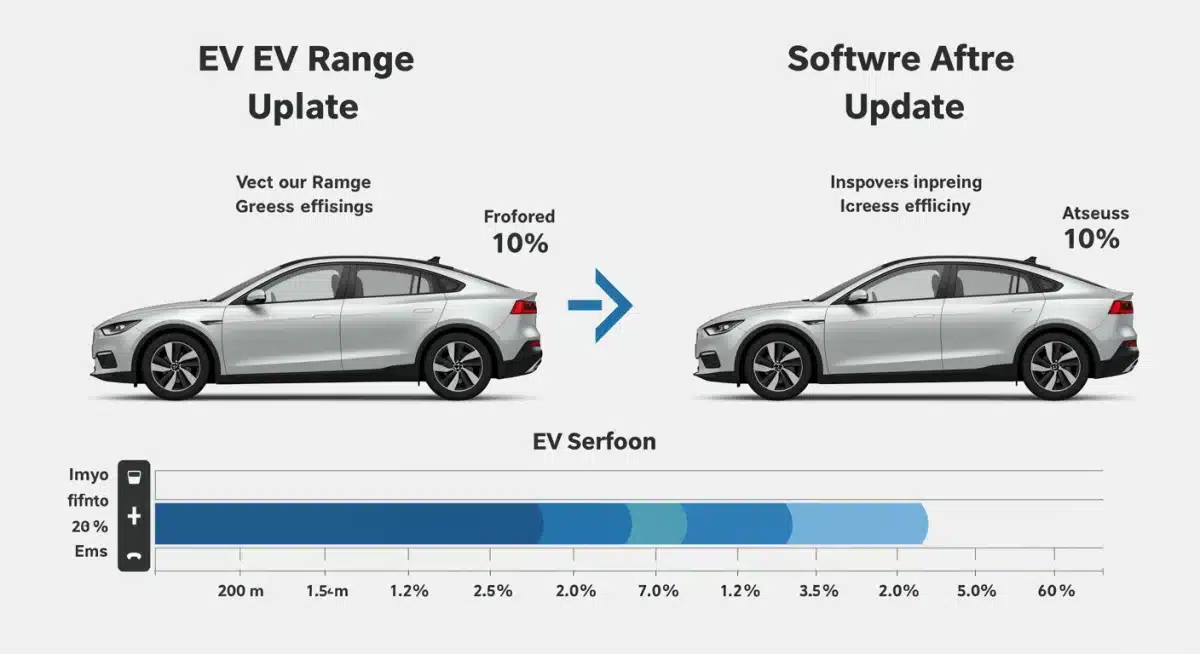
The average 10% range boost isn’t a figure pulled out of thin air; it’s a measurable outcome observed across a spectrum of leading EV brands. This percentage represents a significant leap, potentially adding dozens of miles to a vehicle’s travel capability, alleviating range anxiety for many drivers. It underscores a fundamental shift in how automotive engineering is perceived, with software engineers playing an increasingly critical role alongside traditional mechanical and electrical engineers.
Key Technologies Driving the 2026 EV Software Updates
So, what exactly is under the hood, or rather, in the code, that’s enabling these remarkable range extensions? Several technological pillars support the latest EV software updates, each contributing to the overall efficiency gains:
1. Enhanced Battery Management Systems (BMS) Algorithms
The battery is the heart of any EV, and its efficient management is paramount to range. Modern Battery Management Systems (BMS) are incredibly sophisticated, constantly monitoring cell voltage, temperature, and current. The 2026 software updates introduce next-generation BMS algorithms that are even more adept at optimizing battery usage. These algorithms can:
- Precise State of Charge (SoC) Calculation: More accurate estimation of the remaining energy, reducing conservative estimates and unlocking previously ‘hidden’ capacity.
- Improved Cell Balancing: Ensuring all battery cells discharge and charge uniformly, which extends battery life and maximizes usable capacity.
- Smarter Thermal Management: Optimizing the battery’s operating temperature more effectively, preventing degradation and maintaining peak performance in various climates. Overheating or overcooling can significantly impact efficiency, and advanced software can dynamically adjust cooling or heating strategies to keep the battery in its optimal thermal window.
- Predictive Degradation Modeling: Utilizing machine learning to predict battery degradation patterns and adjust charging/discharging cycles to mitigate them, thereby preserving long-term capacity.
These enhancements allow the battery to operate closer to its theoretical maximum efficiency, squeezing out every possible watt-hour of energy for propulsion.
2. Optimized Powertrain Control and Motor Efficiency
Beyond the battery, the electric motors and the inverters that control them are prime candidates for software-driven optimization. The latest EV software updates focus heavily on refining the interaction between the driver’s input, the motor controller, and the power electronics. This includes:
- Refined Torque Delivery: More precise control over how much torque is applied to the wheels, reducing energy waste during acceleration and deceleration. This means smoother power delivery and less abrupt use of energy.
- Advanced Regenerative Braking: Significant improvements in the efficiency and seamlessness of regenerative braking systems. New algorithms can capture more kinetic energy during deceleration and feed it back into the battery, often making the ‘one-pedal driving’ experience even more intuitive and effective. This is a critical factor in urban driving range.
- Reduced Parasitic Losses: Software can manage auxiliary systems (e.g., climate control, power steering, infotainment) more intelligently, minimizing their energy draw when not strictly necessary. For instance, smart climate control can learn driver preferences and optimize heating/cooling cycles to use less energy without sacrificing comfort.
- Inverter Efficiency Improvements: Subtle software tweaks to the inverter’s switching patterns can lead to small but cumulative gains in converting DC battery power to AC motor power with less heat loss.
These optimizations ensure that the energy stored in the battery is converted into motion with the highest possible efficiency, directly contributing to the extended range.
3. Predictive Energy Management and Route Optimization
Modern EVs are becoming increasingly intelligent, capable of understanding their environment and predicting future energy demands. The 2026 EV software updates integrate advanced predictive energy management features that leverage real-time data:
- Traffic and Topography Awareness: Integrating navigation data with power management, the vehicle can anticipate uphill climbs, downhill descents, and traffic congestion. It can then pre-condition the battery or adjust power delivery to optimize energy use for the upcoming conditions. For example, knowing a long downhill stretch is coming, the system might slightly lower the battery’s state of charge to maximize regenerative braking potential.
- Dynamic Driving Mode Adjustments: Rather than fixed driving modes, new software can dynamically adjust power curves and regenerative braking based on current driving style, road conditions, and remaining range, offering a personalized yet efficient experience.
- Smart Charging Integration: For vehicles that support bi-directional charging or smart grid integration, software updates can optimize charging schedules based on electricity prices and predicted usage, further enhancing overall energy economy.
By making the vehicle ‘smarter’ about how it uses and recovers energy, these updates help drivers achieve greater range without conscious effort.
Impact on Top EV Models: A Look at the Winners
While the 10% average range increase is a general trend, specific models are experiencing varying degrees of benefit from these 2026 EV software updates. Early reports and manufacturer announcements highlight significant gains across several popular brands:
Tesla
Tesla, a pioneer in OTA updates, continues to push the boundaries. Their latest software iteration (often referred to as ‘Full Self-Driving’ Beta updates, though range improvements are separate) has reportedly refined their heat pump management, motor control, and regenerative braking. Owners of Model 3 and Model Y vehicles are seeing noticeable improvements, particularly in colder climates where battery efficiency traditionally suffers. The software’s ability to pre-condition the battery more intelligently and route energy more efficiently through the heat pump system is a major contributor to their reported range gains.
Hyundai/Kia (E-GMP Platform)
Vehicles built on the E-GMP platform, such as the Hyundai Ioniq 5, Kia EV6, and Genesis GV60, have also received substantial EV software updates. These updates focus on optimizing their 800V architecture, fine-tuning the inverter’s performance, and enhancing the thermal management of their advanced battery packs. Drivers are reporting smoother power delivery and extended range, especially during highway cruising, where minor efficiency gains become more pronounced over longer distances. The improvements also touch upon the vehicle’s ability to manage its high-speed charging capabilities more effectively, further enhancing the user experience.
Ford (F-150 Lightning, Mustang Mach-E)
Ford’s electric offerings, particularly the F-150 Lightning and Mustang Mach-E, have benefited from updates primarily geared towards refining their power delivery and battery thermal management for diverse use cases. For the F-150 Lightning, software improvements have focused on optimizing energy consumption under load, such as towing, making the Pro Power Onboard feature even more efficient. Mach-E updates have targeted better energy recuperation and refined accelerator pedal mapping for more efficient driving, leading to a tangible boost in real-world range figures.
General Motors (Ultium Platform)
GM’s Ultium platform, underpinning vehicles like the Cadillac Lyriq and Chevrolet Blazer EV, is designed with software-defined architecture in mind. The 2026 EV software updates for these models leverage this flexibility to enhance battery cell management, improve motor control algorithms, and optimize the overall energy flow within the Ultium battery pack. These updates are crucial for maximizing the potential of their modular battery system and ensuring consistent performance across their growing EV lineup. The focus is on robust, long-term efficiency and adaptability.
Volkswagen (MEB Platform)
Volkswagen’s ID. family (ID.3, ID.4, ID.5) on the MEB platform has also seen significant software overhauls. These updates often address initial software complexities and introduce more refined energy management protocols. VW’s focus has been on improving the interaction between the battery, motor, and vehicle control unit, leading to smoother power curves and more efficient energy regeneration. Early adopters are noting better consistency in range estimates and improved real-world driving efficiency, making their EVs more competitive in the long-range segment.
The Future is Software-Defined: Implications for EV Ownership
The trend of significant range improvements through EV software updates has profound implications for both current and prospective EV owners:
Increased Resale Value and Longevity
Unlike traditional cars that depreciate significantly due to aging hardware, EVs that receive continuous software enhancements can maintain or even improve their performance over time. This could lead to better resale values and extend the useful life of the vehicle, as software keeps it competitive with newer models. Owners can feel confident that their investment is future-proofed against rapid technological obsolescence, at least in terms of efficiency.
Reduced Range Anxiety
For many, range anxiety remains a significant barrier to EV adoption. A consistent 10% increase in range, achieved through software, directly addresses this concern. It means more flexibility in travel plans, fewer charging stops, and greater peace of mind for daily commutes and long journeys alike. This psychological shift can accelerate the mainstream adoption of electric vehicles.
Enhanced User Experience
Beyond raw range numbers, these EV software updates often bring a suite of other improvements, including faster infotainment systems, more accurate navigation, better voice commands, and new features. The continuous evolution of the user interface and overall vehicle intelligence makes the ownership experience more dynamic and engaging. Drivers get a ‘new car’ feeling periodically without having to buy a new car.
Sustainability and Resource Efficiency
By extending the range and lifespan of existing EVs through software, we are also contributing to greater sustainability. If vehicles can perform better for longer, it reduces the need for manufacturing new vehicles as frequently, conserving resources and reducing the environmental footprint associated with production. Furthermore, more efficient EVs mean less electricity consumption per mile, contributing to a greener grid.
Competitive Advantage for Manufacturers
For automotive manufacturers, the ability to deliver substantial performance upgrades via OTA software is a critical competitive differentiator. It allows them to respond quickly to market demands, implement new technologies, and continuously improve their products without costly recalls or physical modifications. This agility is becoming a hallmark of leading EV brands and will likely drive further innovation in the software space.
Challenges and Considerations
While the benefits of EV software updates are clear, there are also challenges and considerations:
Complexity and Testing
Developing and deploying complex software updates for safety-critical systems like vehicles requires rigorous testing and validation to prevent bugs or unintended consequences. Manufacturers must invest heavily in robust software development and QA processes.
Cybersecurity Risks
As vehicles become more connected and software-dependent, they also become potential targets for cyberattacks. Manufacturers must ensure that OTA update mechanisms are highly secure to protect vehicle systems and personal data.
Hardware Limitations
While software can optimize existing hardware, it cannot magically overcome fundamental physical limitations. Older EV models with less capable processors or sensors might not be able to fully leverage the most advanced software features.
Transparency and Communication
Manufacturers need to be transparent with owners about what each software update entails, what improvements it brings, and any potential changes to vehicle behavior. Clear communication builds trust and helps owners understand the value of these updates.
Conclusion: The Road Ahead for EV Software
The 2026 wave of EV software updates, delivering an average 10% range boost across top models, represents a pivotal moment in the electric vehicle industry. It solidifies the notion that software is not just an ancillary feature but a core component of EV performance and evolution. As electric vehicles continue to integrate more artificial intelligence, machine learning, and connectivity, we can expect even more sophisticated software advancements in the years to come.
Drivers are no longer just buying a car; they are investing in a continuously improving technological platform. The ability to enhance efficiency, extend range, and unlock new capabilities with a simple over-the-air download is a paradigm shift that will undoubtedly accelerate the transition to a fully electric future. The silent revolution of software is making EVs smarter, more efficient, and ultimately, more desirable for millions of drivers around the globe. The journey towards optimal electric mobility is far from over, and software will undoubtedly be the compass guiding the way.