U.S. Grid & EV Charging: Balancing Demand, Preventing Overloads with 2026 Tech
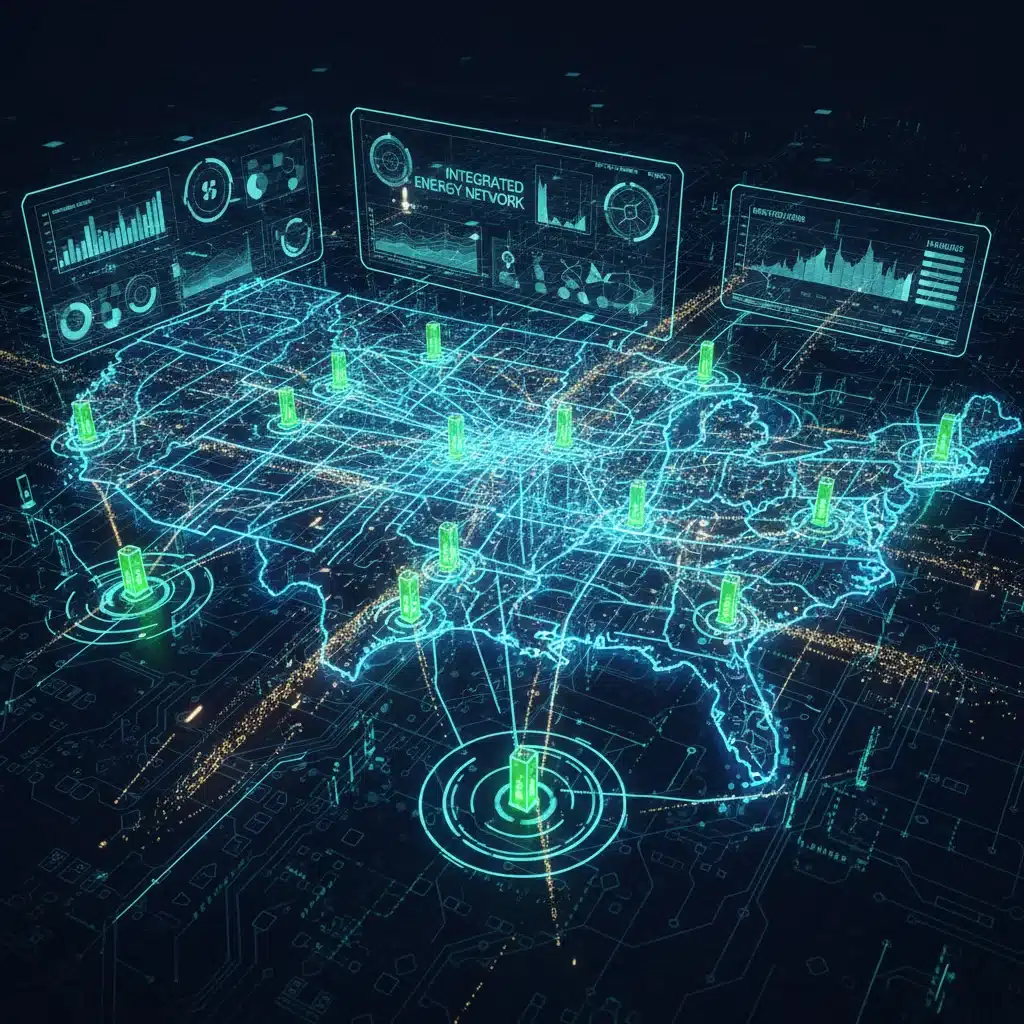
The electrification of transportation is not merely a trend; it is a fundamental shift that is reshaping our energy landscape. At the heart of this transformation lies the intricate relationship between electric vehicles (EVs) and the existing power grid. As millions of Americans transition to EVs, the demand on the U.S. electric grid is set to escalate dramatically. This presents both an immense challenge and an unparalleled opportunity for innovation. The crucial question is: how will the U.S. grid adapt to the burgeoning needs of EV Charging Grid, and what technologies will be pivotal in preventing overloads and ensuring a seamless, sustainable future by 2026?
Understanding the complexities of integrating a massive new load like EV charging into an already stressed infrastructure requires a deep dive into current capabilities, future projections, and the technological advancements poised to make a difference. This article will explore the insider knowledge on balancing demand and preventing overloads, focusing on the sophisticated solutions and strategic planning that will define the grid’s resilience in the coming years.
The Current State of the U.S. Grid and EV Charging Demands
Today, the U.S. electric grid is a marvel of engineering, but it’s also a complex patchwork of aging infrastructure and modern components. Designed primarily for one-way power flow from large, centralized power plants to consumers, it wasn’t originally conceived to handle the dynamic, distributed, and often unpredictable load of electric vehicle charging. The rapid adoption rate of EVs – spurred by environmental concerns, government incentives, and technological improvements – means that the grid must evolve at an unprecedented pace.
Consider the sheer scale: if just a fraction of the U.S. vehicle fleet converts to electric by 2026, the additional electricity demand could be equivalent to adding several new major cities to the grid. The challenge isn’t just about generating more power; it’s about delivering it efficiently and reliably to where and when it’s needed most. Peak charging times, often coinciding with evening residential electricity usage, pose a significant risk of localized overloads, brownouts, and even blackouts if not managed effectively. This is where the concept of a resilient EV Charging Grid becomes paramount.
The current infrastructure struggles with several key issues: outdated transformers, limited transmission capacity in certain areas, and a lack of real-time visibility into local demand fluctuations. Utilities are already investing in upgrades, but these are often long-term projects. The urgency of EV adoption demands faster, more agile solutions that can be implemented in the short to medium term, leading up to and beyond 2026.
Smart Charging: The Cornerstone of Grid Resilience by 2026
One of the most promising avenues for managing the increased demand from EV Charging Grid is the widespread adoption of smart charging technologies. Smart charging refers to a system where the charging of an EV is optimized based on factors such as grid demand, electricity prices, and the owner’s driving needs. Instead of simply plugging in and drawing maximum power, smart charging allows for intelligent scheduling and power modulation.
Time-of-Use (TOU) Rates and Demand Response Programs
By 2026, Time-of-Use (TOU) rates are expected to be far more prevalent. These pricing structures incentivize EV owners to charge during off-peak hours when electricity is cheaper and grid demand is lower. Utilities can use TOU rates to “shape” the charging load, shifting it away from critical peak periods. Complementary to TOU rates are demand response (DR) programs, which offer financial incentives to consumers who reduce or shift their electricity usage during periods of high grid stress. For EV owners, this might mean pausing charging for a few hours in exchange for a credit on their bill.
Advanced Charging Management Systems
Beyond simple scheduling, advanced charging management systems incorporate artificial intelligence (AI) and machine learning (ML) to predict grid conditions and optimize charging profiles. These systems can communicate with the grid, receiving real-time data on capacity, renewable energy availability, and pricing. For instance, an EV might be instructed to charge more slowly when solar production is low and demand is high, or to accelerate charging when wind farms are operating at full capacity.
Charger-to-Grid Communication Protocols
Standardized communication protocols, such as Open Charge Point Protocol (OCPP) and ISO 15118, are crucial for enabling this level of intelligence. These protocols allow charging stations to communicate seamlessly with utility back-end systems, aggregators, and even the vehicles themselves. By 2026, we anticipate these protocols to be universally adopted, fostering a truly interconnected EV Charging Grid ecosystem.
Vehicle-to-Grid (V2G) Technology: EVs as Grid Assets
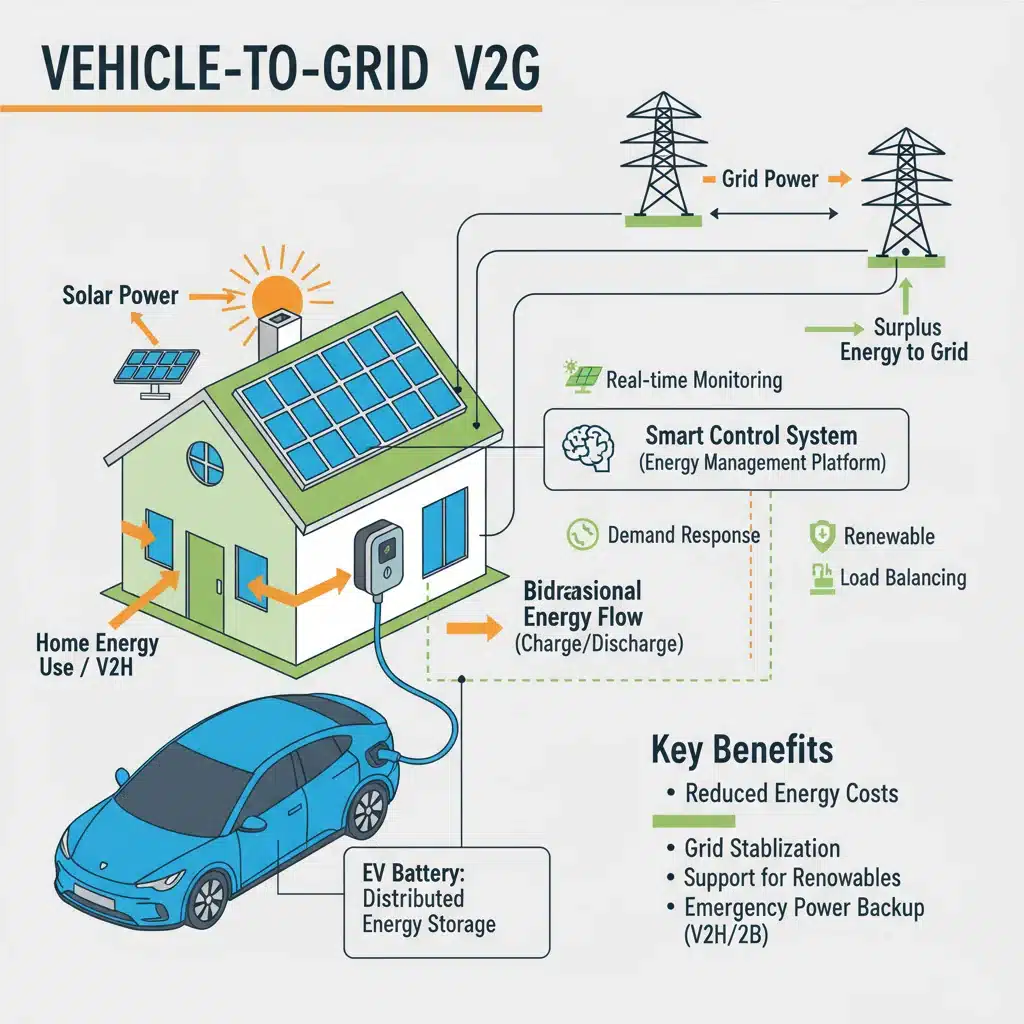
Perhaps the most revolutionary aspect of future EV Charging Grid integration is Vehicle-to-Grid (V2G) technology. While smart charging focuses on managing when and how much power an EV draws, V2G takes it a step further by allowing EVs to send electricity back to the grid. This transforms electric vehicles from mere consumers into mobile energy storage units that can support grid stability.
Imagine thousands, or even millions, of EVs parked during the day or overnight, collectively holding gigawatts of stored energy. This distributed battery capacity can be leveraged to:
- Provide Peak Shaving: During periods of high demand, V2G-enabled EVs can discharge power back into the grid, reducing the need for expensive and often carbon-intensive “peaker” power plants.
- Support Renewable Energy Integration: Intermittent renewable sources like solar and wind can cause grid fluctuations. V2G vehicles can absorb excess renewable energy when generation is high and release it when generation drops, effectively balancing supply and demand.
- Offer Ancillary Services: EVs can provide frequency regulation and voltage support, crucial services that maintain the stability and quality of the grid’s electricity supply.
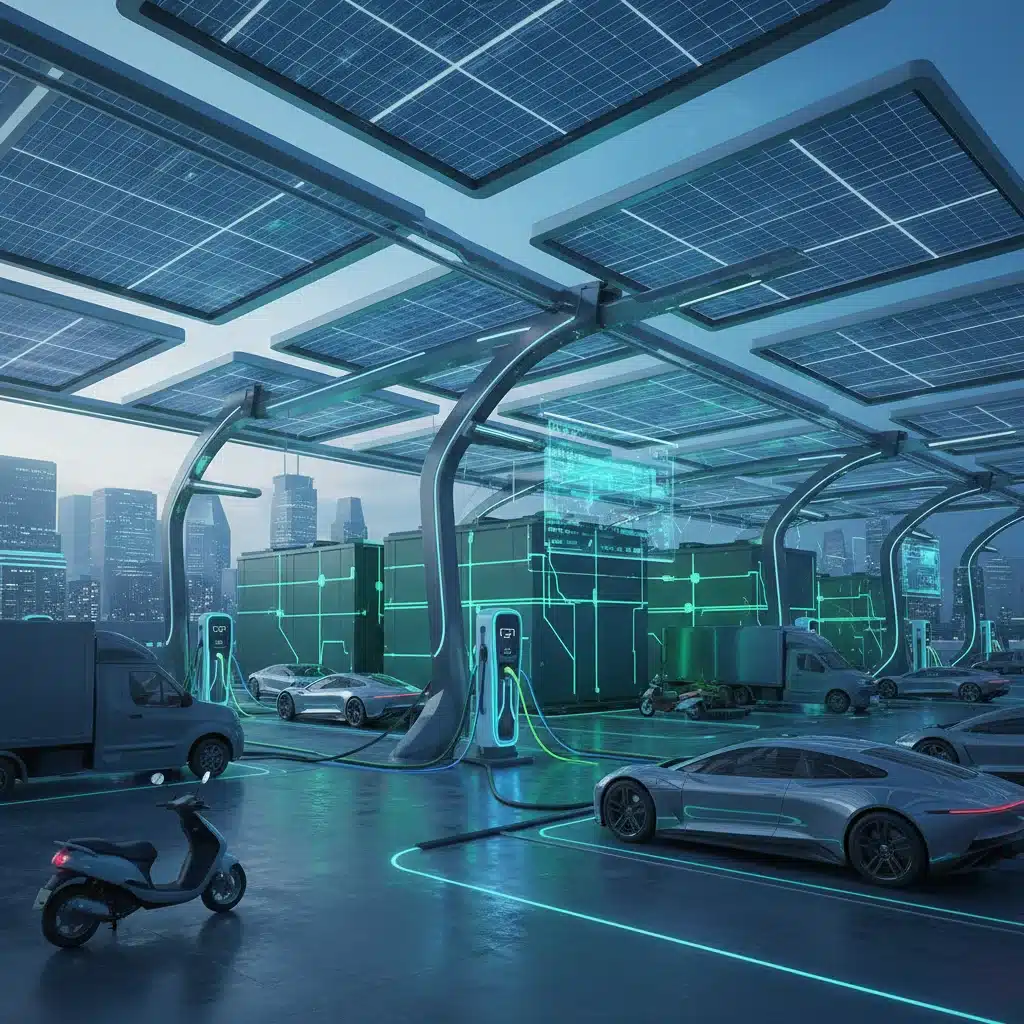
While still in its nascent stages, V2G technology is rapidly advancing. By 2026, we expect to see more V2G-capable vehicles on the market, coupled with the necessary charging infrastructure and regulatory frameworks to facilitate its widespread deployment. The economic incentives for EV owners to participate in V2G programs will also play a critical role in its adoption, turning their parked cars into revenue-generating assets.
Infrastructure Upgrades and Distributed Energy Resources
While smart charging and V2G optimize existing grid resources, physical infrastructure upgrades remain essential. Utilities are undertaking significant investments to modernize the grid, making it more robust and capable of handling the increased load from EV Charging Grid.
Distribution System Modernization
Much of the focus is on the distribution grid – the network of power lines and transformers that deliver electricity from substations to homes and businesses. Upgrades include:
- Transformer Reinforcement: Replacing older transformers with higher-capacity units to prevent localized overloads, especially in residential areas with multiple EV owners.
- Advanced Sensors and Controls: Deploying smart meters, sensors, and automated controls that provide real-time data on grid conditions, allowing utilities to proactively manage demand and quickly respond to issues.
- Microgrids: Developing localized microgrids that can operate independently of the main grid during outages, providing resilient power to critical facilities and potentially EV charging hubs.
Integration of Distributed Energy Resources (DERs)
The proliferation of rooftop solar, community solar projects, and battery storage systems at homes and businesses (Distributed Energy Resources or DERs) will significantly impact the EV Charging Grid. These resources can reduce the net demand from the central grid, especially during peak solar production hours, and can also provide localized energy storage to support EV charging. Integrating DERs effectively requires sophisticated grid management systems that can coordinate these diverse sources of power.
The Role of Data Analytics and Artificial Intelligence
The sheer volume of data generated by smart meters, EV chargers, and grid sensors is immense. Making sense of this data and using it to optimize grid operations is where data analytics and artificial intelligence shine. By 2026, AI-powered platforms will be central to managing the EV Charging Grid.
- Predictive Analytics: AI algorithms can analyze historical data and real-time inputs to predict EV charging demand patterns, grid congestion, and potential overload points. This allows utilities to take proactive measures, such as adjusting power flows or initiating demand response programs.
- Optimized Dispatch: AI can optimize the dispatch of available generation resources, including renewables and battery storage, to meet EV charging demand most efficiently and cost-effectively.
- Fault Detection and Self-Healing Grids: AI can quickly identify faults and anomalies in the grid caused by sudden load changes, and in some cases, even reconfigure the grid to reroute power and prevent widespread outages – a concept known as a self-healing grid.
These intelligent systems will be critical for maintaining grid stability and reliability as EV adoption continues its upward trajectory. The ability to anticipate and respond to dynamic conditions will be a hallmark of the modern EV Charging Grid.
Policy and Regulatory Frameworks for a Future-Ready Grid
Technological advancements alone are not enough. Robust policy and regulatory frameworks are essential to facilitate the transition to a modern EV Charging Grid. Governments at federal, state, and local levels are working to create an environment that encourages investment, innovation, and equitable access to EV charging.
Federal Initiatives and Funding
The U.S. federal government has allocated significant funding through initiatives like the Bipartisan Infrastructure Law to expand EV charging infrastructure and modernize the grid. These funds support everything from Level 2 chargers in residential areas to high-speed DC fast chargers along major corridors. Crucially, these programs often include provisions for smart charging capabilities and grid integration.
State and Local Regulations
States and municipalities are implementing their own policies, such as building codes that require new constructions to be “EV ready” with pre-wired charging infrastructure. Others are experimenting with innovative utility tariffs and incentive programs to encourage off-peak charging and V2G participation. The patchwork of state regulations can be complex, but there’s a growing consensus on the need for harmonized standards to accelerate grid modernization for EV Charging Grid.
Interoperability and Standardization
Ensuring interoperability between different charging networks, vehicles, and grid systems is paramount. Regulatory bodies are pushing for open standards and protocols to avoid vendor lock-in and foster a competitive, innovative market. This includes standards for data exchange, billing, and cybersecurity, all of which are vital for a secure and efficient EV Charging Grid.
Cybersecurity Challenges and Solutions
As the EV Charging Grid becomes more interconnected and intelligent, it also becomes more vulnerable to cyberattacks. A compromised charging network or grid control system could have severe consequences, from disrupting charging services to impacting overall grid stability. Cybersecurity is not an afterthought but an integral part of designing and deploying future grid technologies.
- Robust Encryption and Authentication: Implementing strong encryption for data transmission and multi-factor authentication for access to critical systems will be standard practice.
- Intrusion Detection Systems: Advanced AI-powered intrusion detection systems will monitor grid networks for unusual activity, alerting operators to potential threats in real-time.
- Regular Audits and Updates: Continuous security audits, penetration testing, and timely software updates will be essential to patch vulnerabilities and adapt to evolving cyber threats.
- Supply Chain Security: Ensuring the security of the entire supply chain, from hardware components to software development, is critical to prevent malicious backdoors or vulnerabilities from being introduced.
By 2026, a multi-layered cybersecurity approach will be foundational to the trusted operation of the EV Charging Grid, protecting both consumer data and national energy infrastructure.
The Path Forward: Collaboration and Innovation
Achieving a resilient and efficient EV Charging Grid by 2026 and beyond requires unprecedented collaboration among diverse stakeholders. This includes:
- Utilities: Investing in infrastructure upgrades, implementing smart grid technologies, and developing innovative rate structures.
- Automakers: Designing EVs with V2G capabilities and standardized communication protocols.
- Charging Network Operators: Deploying smart chargers and integrating with grid management systems.
- Technology Providers: Developing advanced AI, data analytics, and cybersecurity solutions.
- Policymakers and Regulators: Creating supportive frameworks, incentives, and standards.
- Consumers: Participating in smart charging and demand response programs to help balance the grid.
The journey to a fully electrified transportation system is complex, but the convergence of technological innovation, strategic investment, and collaborative policy-making paints a promising picture. The U.S. grid is not merely passive infrastructure; it is becoming an active, intelligent participant in the energy transition. By embracing smart technologies, fostering V2G adoption, and continuously upgrading its physical and digital backbone, the U.S. is well on its way to building an EV Charging Grid that can reliably power the electric vehicles of today and tomorrow, preventing overloads and ensuring a sustainable energy future for all.
The challenges are significant, but the solutions are emerging rapidly. The insights gained from pilot projects today will inform widespread deployments by 2026, creating a more robust, efficient, and environmentally friendly energy ecosystem. The future of transportation is electric, and the future of the grid is smart, resilient, and interconnected.
Conclusion: A Resilient EV Charging Grid by 2026 is Within Reach
The transformation of the U.S. electric grid to accommodate the surge in electric vehicle adoption represents one of the most critical infrastructure challenges of our time. However, with the rapid advancements in smart charging, Vehicle-to-Grid (V2G) technology, robust infrastructure upgrades, and sophisticated data analytics, the vision of a resilient and efficient EV Charging Grid by 2026 is not just aspirational, but entirely achievable.
The key lies in a multi-pronged approach that integrates technological innovation with sound policy and proactive investment. Utilities are moving towards more localized, intelligent distribution systems, while EV owners are increasingly becoming active participants in grid management through smart charging and V2G programs. The seamless communication between vehicles, chargers, and the grid, underpinned by strong cybersecurity measures, will be the bedrock of this new energy paradigm.
As we move towards the middle of the decade, the insights and pilot programs currently underway will scale up, providing valuable lessons and best practices. The collaborative efforts of government, industry, and consumers will ensure that the U.S. grid not only withstands the demands of an electrified future but thrives, offering reliable, sustainable, and affordable power for the next generation of electric vehicles. The journey to a fully integrated and optimized EV Charging Grid is an ongoing one, but the foundations being laid today promise a brighter, cleaner, and more resilient energy landscape for 2026 and beyond.