Smart Waste Management Systems: A 2026 Blueprint for US Cities to Decrease Landfill Volume by 18%

Smart Waste Management Systems: A 2026 Blueprint for US Cities to Decrease Landfill Volume by 18%
The escalating challenge of waste management in urban centers across the United States demands innovative and sustainable solutions. As cities grow, so does the volume of waste generated, placing immense pressure on existing infrastructure and environmental resources. Traditional waste collection methods, often inefficient and reactive, contribute significantly to greenhouse gas emissions, operational costs, and, crucially, the ever-increasing burden on landfills. However, a promising paradigm shift is underway: the adoption of smart waste management systems. This comprehensive blueprint outlines how US cities can leverage cutting-edge technologies and strategic planning to achieve a remarkable 18% reduction in landfill volume by 2026, paving the way for a more sustainable and economically efficient future.
The Urgency of Smart Waste Management
The United States generates approximately 292.4 million tons of municipal solid waste (MSW) annually, with a significant portion still ending up in landfills. Landfills are not merely unsightly; they are major contributors to environmental degradation, emitting methane – a potent greenhouse gas – and leaching toxic substances into soil and groundwater. The economic costs associated with waste collection, transportation, and disposal are substantial, often consuming a significant part of municipal budgets. Moreover, the finite nature of landfill space means that many cities are running out of options, leading to increased transportation distances and associated carbon footprints.
The case for embracing smart waste management is compelling. It offers a multifaceted approach to tackle these challenges head-on, transforming waste from a liability into a resource. By integrating Internet of Things (IoT) devices, data analytics, and automation, cities can optimize every stage of the waste lifecycle, from generation to disposal and recycling. This not only leads to environmental benefits but also unlocks significant economic efficiencies and improves the quality of life for urban residents.
Defining Smart Waste Management Systems
At its core, smart waste management refers to the use of technology to improve the efficiency and effectiveness of waste collection, processing, and recycling. This encompasses a broad range of technologies and strategies, including:
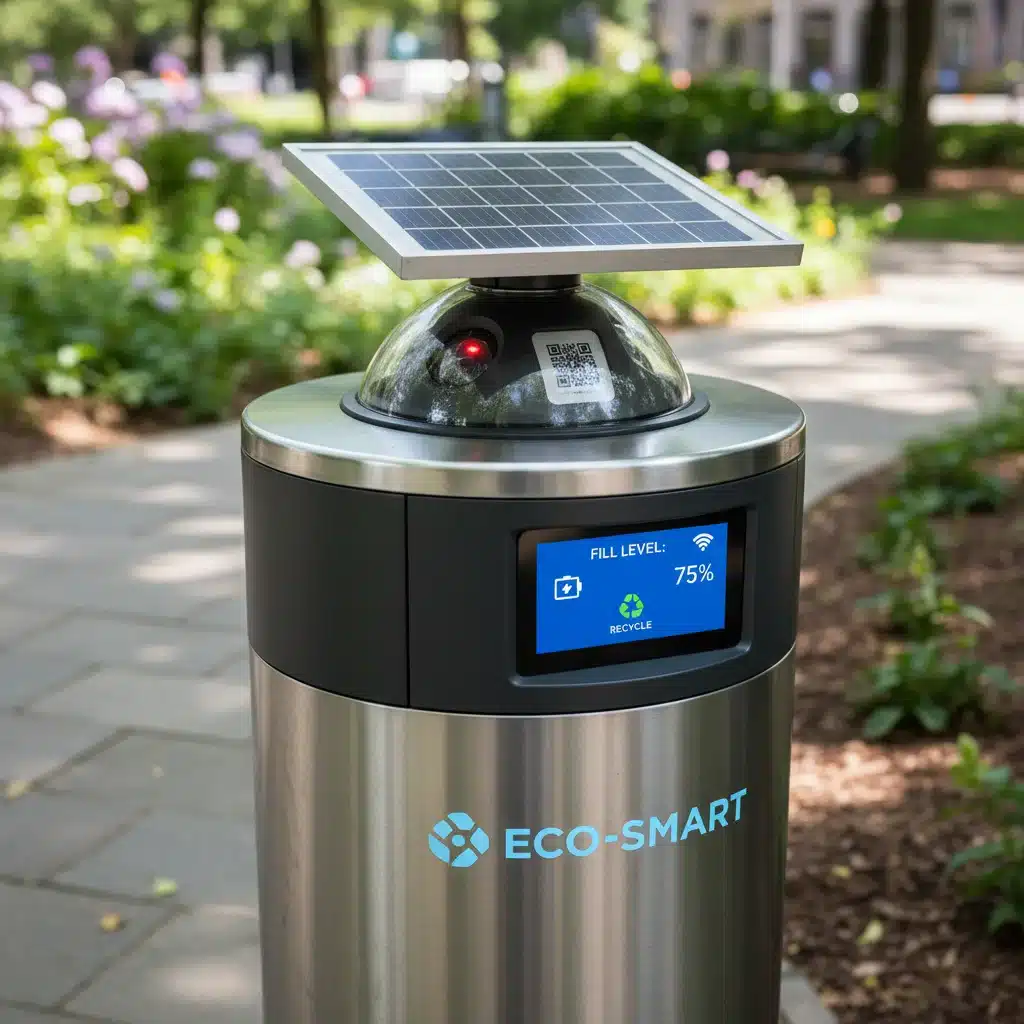
- Smart Bins and Sensors: These bins are equipped with ultrasonic sensors that monitor fill levels in real-time. When a bin reaches a certain capacity, it automatically sends an alert to the waste management department. Some advanced bins also include compaction mechanisms to increase capacity and solar panels for self-powering.
- Optimized Collection Routes: Data from smart bins is fed into sophisticated software that uses algorithms to dynamically plan the most efficient collection routes. This eliminates unnecessary trips to partially empty bins, reducing fuel consumption, vehicle wear and tear, and labor costs.
- Fleet Management and GPS Tracking: Waste collection vehicles are outfitted with GPS trackers and telematics systems. This allows for real-time monitoring of vehicle location, speed, and engine performance, further enhancing route optimization and operational oversight.
- Data Analytics and Predictive Modeling: Collected data on waste generation patterns, bin fill rates, and collection efficiency can be analyzed to identify trends, predict future waste volumes, and make informed decisions about resource allocation and infrastructure development.
- Citizen Engagement Platforms: Mobile applications and online portals allow residents to report overflowing bins, schedule special pickups, and access information on recycling guidelines, fostering greater community participation in waste reduction efforts.
- Automated Sorting and Recycling Facilities: Advanced facilities utilize robotics, artificial intelligence, and optical sorters to efficiently sort recyclable materials, increasing recovery rates and purity.
The 2026 Blueprint: Key Pillars for 18% Landfill Reduction
Achieving an 18% reduction in landfill volume by 2026 requires a concerted and strategic effort across several key pillars. This blueprint provides a roadmap for US cities to implement effective smart waste management strategies.
Pillar 1: Data-Driven Decision Making and Infrastructure Upgrade
The foundation of any successful smart waste management system is robust data. Cities must invest in the necessary infrastructure to collect, analyze, and act upon this data.
Phase 1: Baseline Assessment and Needs Analysis (6-12 months)
- Current State Analysis: Conduct a comprehensive audit of existing waste generation, collection, and disposal practices. This includes quantifying waste streams, identifying inefficiencies in current routes, and assessing the condition of existing infrastructure.
- Technology Feasibility Study: Evaluate various smart bin technologies, fleet management software, and data analytics platforms. Consider factors such as scalability, integration capabilities, and cost-effectiveness.
- Stakeholder Engagement: Involve municipal departments, waste haulers, recycling centers, and community groups in the planning process to ensure buy-in and address potential concerns.
Phase 2: Smart Bin Deployment and Sensor Integration (12-18 months)
- Phased Rollout: Begin with a pilot program in a specific district or neighborhood to test the effectiveness of smart bins and sensors. This allows for adjustments and fine-tuning before a city-wide deployment.
- Strategic Placement: Utilize data from the baseline assessment to strategically place smart bins in high-traffic areas, public spaces, and residential zones.
- Network Connectivity: Ensure reliable cellular or LoRaWAN connectivity for data transmission from smart bins to a central platform.
Pillar 2: Optimized Collection and Logistics
Once data is flowing, the next step is to revolutionize waste collection logistics, a critical component of effective smart waste management.
Phase 1: Route Optimization Software Implementation (6-9 months)
- Software Selection: Choose a robust route optimization software that can integrate with smart bin data and GPS tracking systems.
- Dynamic Routing: Transition from fixed collection schedules to dynamic, on-demand routing based on real-time fill levels. This means trucks only visit bins that are full or near capacity.
- Performance Monitoring: Continuously monitor route efficiency, fuel consumption, and collection times to identify areas for further optimization.
Phase 2: Fleet Modernization and Telematics (9-12 months)
- Vehicle Upgrades: Invest in modern waste collection vehicles that are more fuel-efficient and equipped with advanced telematics systems.
- Driver Training: Provide comprehensive training to collection crews on using new technologies and adhering to optimized routes.
- Preventative Maintenance: Utilize telematics data for predictive maintenance, reducing vehicle downtime and extending the lifespan of the fleet.
Pillar 3: Enhanced Recycling and Resource Recovery
Reducing landfill volume is not just about efficient collection; it’s also about diverting more waste from landfills through robust recycling and resource recovery initiatives. This is a crucial aspect of smart waste management.
Phase 1: Public Awareness and Education Campaigns (Ongoing)
- Targeted Messaging: Develop clear and concise public awareness campaigns on proper recycling practices, emphasizing the benefits of waste reduction and reuse.
- Multi-Channel Communication: Utilize social media, local news, community events, and school programs to disseminate information.
- Incentive Programs: Explore incentive programs to encourage higher recycling rates, such as reward systems for proper sorting.
Phase 2: Advanced Material Recovery Facilities (MRFs) (18-24 months)
- Investment in Technology: Explore investments in modern MRFs equipped with artificial intelligence, robotics, and optical sorters to improve the efficiency and purity of sorted recyclables.
- Partnerships: Foster partnerships with private recycling companies and material processors to ensure a robust market for recovered materials.
- Composting Initiatives: Expand composting programs for organic waste, diverting a significant portion of the waste stream from landfills and creating valuable soil amendments.
Pillar 4: Policy and Regulatory Framework
Supportive policies and regulations are essential to facilitate the widespread adoption and effectiveness of smart waste management systems.
Phase 1: Policy Review and Development (6-12 months)
- Regulatory Updates: Review and update existing waste management regulations to accommodate smart technologies and encourage sustainable practices.
- Procurement Guidelines: Develop clear procurement guidelines for smart waste management technologies, ensuring fair competition and quality standards.
- Data Privacy and Security: Establish protocols for data privacy and security related to the collection and use of waste management data.
Phase 2: Funding and Incentives (Ongoing)
- Grant Applications: Actively pursue federal and state grants for smart city initiatives and environmental sustainability projects.
- Public-Private Partnerships: Explore public-private partnerships (PPPs) to co-finance infrastructure upgrades and technology deployments.
- Economic Incentives: Implement economic incentives for businesses and residents that adopt waste reduction and recycling practices.
Measuring Success: Achieving the 18% Landfill Reduction Goal
To ensure the 18% landfill reduction goal is met by 2026, continuous monitoring and evaluation are paramount. Key performance indicators (KPIs) must be established and regularly tracked.
- Landfill Diversion Rate: This is the primary metric, measuring the percentage of waste diverted from landfills through recycling, composting, and other recovery methods.
- Waste Generation Per Capita: Track changes in the amount of waste generated per person to assess the effectiveness of waste reduction initiatives.
- Collection Efficiency: Monitor metrics such as miles driven per ton of waste collected, fuel consumption per route, and labor hours per collection cycle.
- Recycling Purity Rates: Measure the quality of recycled materials to ensure they meet market standards and are not contaminated.
- Cost Savings: Quantify the economic benefits realized from optimized routes, reduced fuel consumption, and extended landfill lifespans.
- Citizen Satisfaction: Gather feedback from residents on the effectiveness and convenience of the new waste management system.
Regular reporting and transparency will be crucial in demonstrating progress and maintaining public support for smart waste management initiatives.
Case Studies and Inspiration
Several cities globally have already embarked on their smart waste management journeys, offering valuable lessons and inspiration for US cities. Barcelona, for instance, implemented smart bins and optimized routes, leading to significant reductions in collection costs and carbon emissions. Seoul introduced a pay-as-you-throw system combined with smart bin technology, dramatically increasing recycling rates and reducing overall waste. These examples demonstrate the tangible benefits and feasibility of achieving ambitious waste reduction targets through intelligent systems.
Challenges and Mitigation Strategies
While the benefits of smart waste management are clear, cities may face challenges during implementation. These include:
- Initial Investment Costs: The upfront cost of smart bins, sensors, software, and fleet upgrades can be substantial. Mitigation: Explore grants, PPPs, and phased implementation to spread costs over time. Highlight long-term cost savings to justify initial investment.
- Data Management and Integration: Integrating data from various sources and ensuring interoperability can be complex. Mitigation: Invest in robust data platforms and work with technology providers that offer seamless integration solutions.
- Public Acceptance and Behavior Change: Residents may resist changes to collection schedules or new recycling guidelines. Mitigation: Implement comprehensive public education campaigns, engage community leaders, and offer incentives.
- Cybersecurity Concerns: Smart systems rely on data, making them vulnerable to cyber threats. Mitigation: Implement strong cybersecurity protocols, encrypt data, and conduct regular security audits.
- Scalability: Ensuring the system can scale with urban growth. Mitigation: Choose flexible and modular technologies that can be expanded as needed.

The Future of Smart Waste Management
Beyond 2026, the evolution of smart waste management will continue to push the boundaries of efficiency and sustainability. We can anticipate further advancements:
- Artificial Intelligence and Machine Learning: AI will play an even greater role in predictive analytics, optimizing waste collection in real-time, and identifying new opportunities for resource recovery.
- Robotics in Sorting: The use of advanced robotics for waste sorting will become more prevalent, improving efficiency and safety at recycling facilities.
- Waste-to-Energy Solutions: Integration with advanced waste-to-energy technologies will convert non-recyclable waste into clean energy, further reducing landfill reliance.
- Circular Economy Integration: Smart systems will be integral to fostering a true circular economy, where waste is minimized, and resources are kept in use for as long as possible.
- Hyper-Local Waste Solutions: Development of smaller, localized waste processing units within communities to further reduce transportation needs.
Conclusion
The vision of US cities significantly reducing their landfill volume by 18% by 2026 is ambitious but entirely achievable through the strategic implementation of smart waste management systems. This blueprint provides a comprehensive framework, encompassing technological adoption, operational optimization, policy development, and community engagement. By embracing data-driven decision-making, investing in modern infrastructure, and fostering a culture of sustainability, US cities can transform their waste management practices. This transformation will not only lead to cleaner, healthier urban environments but also unlock substantial economic savings and position these cities as leaders in global sustainability efforts. The time for smart waste management is now; the future of our cities depends on it.