EV Adoption Rates Surge: Impact on US Infrastructure Development

Electric Vehicle Adoption Rates Surge 15% in Q1 2026: What This Means for Future US Infrastructure Development
The first quarter of 2026 has marked a truly transformative period for the automotive industry and, by extension, the entire energy and infrastructure landscape of the United States. A staggering 15% surge in electric vehicle (EV) adoption rates has not only exceeded even the most optimistic projections but has also ignited a crucial conversation about the readiness and future development of US infrastructure. This unprecedented growth in EV adoption impact is a clear signal that the transition to electric mobility is accelerating at an incredible pace, demanding immediate and innovative solutions for the supporting infrastructure.
For years, the promise of electric vehicles has been tempered by concerns about charging availability, range anxiety, and the capacity of the existing power grid. However, with this significant leap in adoption, these concerns are no longer hypothetical; they are pressing realities that require urgent attention and strategic planning. The 15% increase is not just a statistic; it represents millions of new EVs on American roads, each requiring reliable access to charging and a robust energy supply. This article delves into the profound implications of this surge, exploring the multifaceted challenges and unparalleled opportunities it presents for the future of US infrastructure development.
The shift towards electric vehicles is more than just a change in propulsion; it’s a fundamental reimagining of how we power our transportation, how our cities are designed, and how our national energy grid operates. Understanding the full scope of this EV adoption impact is paramount for policymakers, urban planners, utility companies, and consumers alike. We will examine the critical areas affected, from the expansion of charging networks to the modernization of the electrical grid, and from urban planning adjustments to the economic ripple effects that will shape the coming decades.
The Unprecedented Surge: A Deeper Look into Q1 2026 EV Adoption Impact
The 15% increase in EV adoption rates during Q1 2026 is a watershed moment, reflecting a confluence of factors. Advancements in battery technology, leading to increased range and reduced costs, have made EVs more appealing to a broader demographic. Furthermore, growing environmental consciousness, coupled with government incentives and a wider array of EV models from various manufacturers, has significantly lowered barriers to entry. This rapid acceleration of EV adoption impact necessitates a comprehensive review of our existing infrastructure and a proactive approach to future planning.
This surge isn’t evenly distributed across the nation. While coastal states and urban centers have historically led the charge, Q1 2026 data indicates a broader geographical spread, with significant growth observed in previously slower-adopting regions. This widespread adoption underscores the need for a national, rather than localized, strategy for infrastructure development. The implications are enormous, touching every aspect of public and private sector planning.
Why the Sudden Acceleration?
Several key drivers contributed to this remarkable Q1 2026 surge:
- Technological Maturity: EVs are no longer niche products. They offer competitive range, performance, and increasingly, affordability.
- Expanded Model Availability: Nearly every major automaker now offers compelling EV options, catering to diverse consumer needs and preferences.
- Government Incentives: Renewed and expanded federal and state incentives, including tax credits and rebates, made EV ownership more financially attractive.
- Rising Fuel Costs: Persistent volatility in gasoline prices continued to push consumers towards the more stable and often lower operating costs of EVs.
- Improved Public Perception: As more EVs appear on the roads, public familiarity and confidence in the technology grow, reducing skepticism.
These factors combined to create a perfect storm for rapid EV adoption. However, this success story brings with it the imperative to build the foundational infrastructure capable of supporting such sustained growth. The EV adoption impact is now undeniable and requires a strategic national response.
Reimagining the Charging Network: The Forefront of EV Adoption Impact
Perhaps the most immediate and visible impact of increased EV adoption is the pressing need for a vastly expanded and modernized charging infrastructure. The current network, while growing, is simply not equipped to handle the Q1 2026 growth trajectory. This isn’t just about adding more chargers; it’s about strategic placement, diverse charging speeds, and a seamless user experience.
The Need for Ubiquitous and Reliable Charging
To sustain the momentum of EV adoption, charging must become as convenient and accessible as gasoline refueling. This means:
- Increased Public Fast Charging: High-speed DC fast chargers are crucial for long-distance travel and rapid top-ups, especially along major highways and in urban centers.
- Expanded Workplace Charging: Employers play a vital role in providing charging options, making it easier for employees to commute by EV.
- Residential Charging Solutions: While most charging occurs at home, solutions for apartment dwellers and those without dedicated parking remain a significant challenge.
- Destination Charging: Hotels, shopping malls, entertainment venues, and other destinations need to integrate charging stations to attract and serve EV drivers.
The EV adoption impact on charging infrastructure is not merely about volume; it’s about intelligence. Future charging networks must be smart, capable of dynamic pricing, load balancing, and integration with renewable energy sources. This requires significant investment and collaboration between government, private industry, and utility providers.
Addressing Charging Deserts and Equity
The current distribution of charging infrastructure often mirrors existing economic disparities. Rural areas and underserved communities frequently lack adequate charging options, creating ‘charging deserts’ that hinder EV adoption. As EV adoption rates surge, it becomes even more critical to ensure equitable access to charging infrastructure across all demographics and geographies. This requires targeted investments and policies to prevent a two-tiered system of mobility.
Modernizing the Electrical Grid: Powering the EV Revolution
A 15% surge in EV adoption translates into a substantial increase in electricity demand. The existing US electrical grid, much of which was designed in the mid-20th century, faces significant challenges in accommodating this new load. The EV adoption impact extends directly to the heart of our energy supply.
Grid Capacity and Stability
The primary concern is grid capacity. While the overall increase in electricity demand from EVs might be manageable on a national scale, localized spikes in demand, especially during peak charging times, can strain substations and distribution networks. This necessitates:
- Grid Modernization and Upgrades: Investment in smart grid technologies, including advanced sensors, automated controls, and energy storage solutions, is essential to manage fluctuating demand.
- Distributed Energy Resources (DERs): Integrating more renewable energy sources like solar and wind, coupled with battery storage at local levels, can alleviate pressure on the central grid and enhance resilience.
- Demand-Side Management: Encouraging off-peak charging through incentives and smart charging technologies can help flatten the demand curve and optimize grid utilization.
The EV adoption impact on grid stability requires a holistic approach, moving beyond incremental upgrades to a fundamental transformation of our energy infrastructure. This involves significant capital investment and regulatory frameworks that encourage innovation and efficiency.
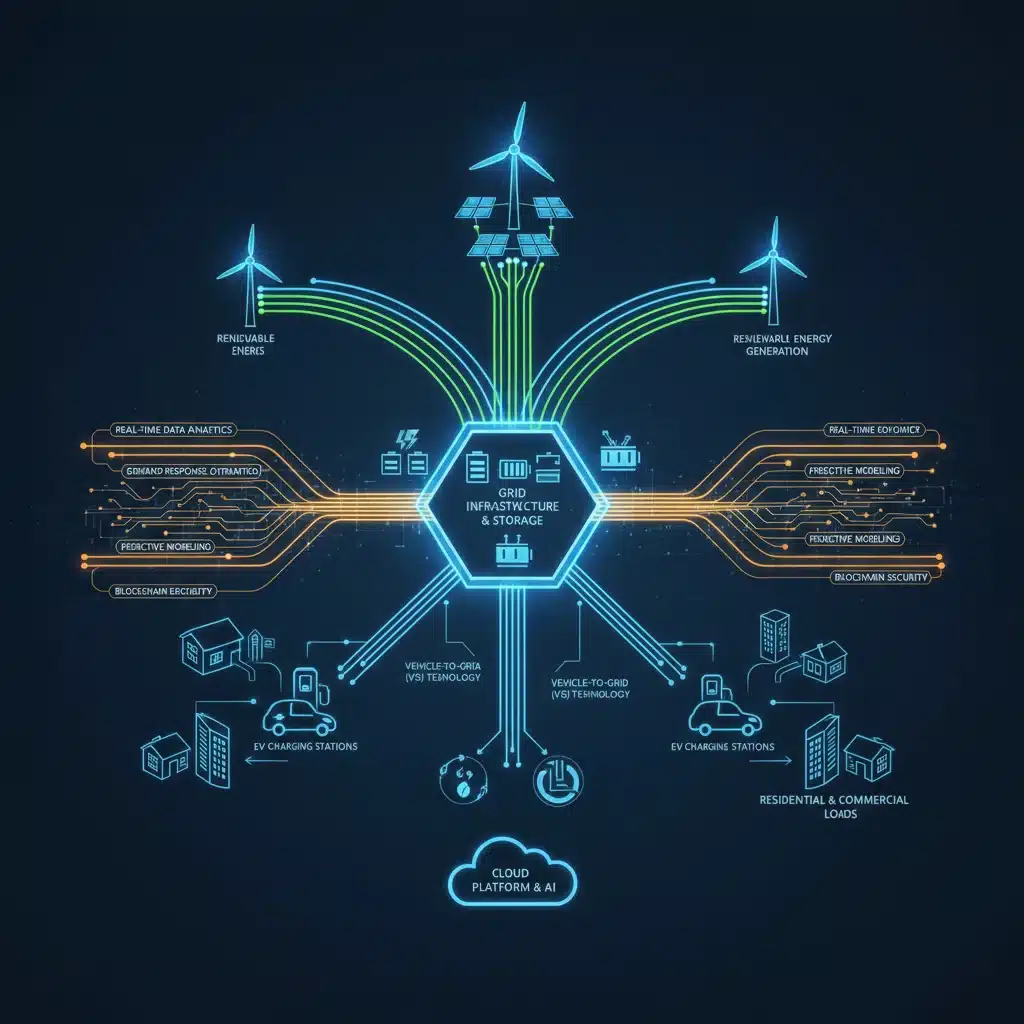
The shift to EVs also presents an opportunity to make the grid more resilient and sustainable. By integrating vehicle-to-grid (V2G) technology, EVs can become mobile energy storage units, feeding power back into the grid during peak demand or emergencies. This bidirectional energy flow could revolutionize grid management and enhance energy security.
Urban Planning and Smart City Integration: Adapting Our Environments
The growing number of EVs on our roads has profound implications for urban planning and the development of smart cities. The EV adoption impact isn’t confined to highways; it’s reshaping our urban landscapes.
Redesigning Urban Spaces
Traditional urban planning often prioritized internal combustion engine vehicles, with dedicated parking structures and gas stations. The rise of EVs demands a rethinking of these spaces:
- Integrated Charging in Public Spaces: Charging infrastructure needs to be seamlessly integrated into street parking, public garages, and commercial areas, becoming an expected amenity.
- Building Codes and Regulations: New construction, both residential and commercial, must incorporate EV charging readiness as a standard feature.
- Curb Management: Cities will need to develop strategies for managing curbside space, balancing charging needs with other uses like delivery zones and pedestrian access.
- Reduced Air and Noise Pollution: A positive EV adoption impact is cleaner air and quieter streets, which can lead to healthier urban environments and improved quality of life for residents.
Smart city initiatives are perfectly positioned to leverage EV adoption. Data from charging networks, traffic patterns, and energy consumption can inform adaptive urban planning, leading to more efficient transportation systems and sustainable urban development. This interconnectedness is crucial for maximizing the positive EV adoption impact.
Public Transportation and Shared Mobility
The surge in EV adoption also has implications for public transportation. Electrifying bus fleets, ride-sharing services, and even last-mile delivery vehicles can further reduce emissions and improve urban air quality. Integrating EV charging into public transit hubs can create multimodal transportation ecosystems, offering citizens more sustainable and efficient travel options. This broader EV adoption impact extends beyond private vehicle ownership to encompass the entire mobility landscape.
Economic Ripple Effects: Opportunities and Challenges
The 15% surge in EV adoption rates is not just an environmental or technological story; it’s a significant economic event with far-reaching consequences. The EV adoption impact will create new industries, transform existing ones, and shift investment priorities across various sectors.
Job Creation and New Industries
The transition to electric vehicles is a powerful engine for job creation. This includes:
- Manufacturing: Jobs in battery production, EV assembly, and component manufacturing will see substantial growth.
- Infrastructure Development: The construction and maintenance of charging stations, grid upgrades, and renewable energy installations will require a skilled workforce.
- Technology and Software: Development of smart charging solutions, grid management software, and EV-related applications will fuel innovation and create high-tech jobs.
- Service and Maintenance: A new generation of technicians will be needed to service and repair EVs and their associated infrastructure.
Policymakers must ensure that investment in workforce training and education keeps pace with the demands of these emerging industries to fully capitalize on the economic EV adoption impact.
Impact on Traditional Industries
While new opportunities arise, traditional industries face disruption. The fossil fuel industry, internal combustion engine vehicle manufacturing, and associated service sectors will need to adapt. This transition requires careful planning and support for affected workers and communities to mitigate negative economic impacts.
Investment and Funding
The scale of infrastructure development required to support widespread EV adoption necessitates massive investment. This will come from a combination of public and private sources:
- Government Funding: Federal and state grants, loans, and tax incentives will be crucial for kickstarting projects and de-risking private investment.
- Private Sector Investment: Automakers, charging network operators, utility companies, and technology firms will invest heavily in expanding their EV-related offerings.
- Public-Private Partnerships: Collaborative models will be essential for tackling complex, large-scale infrastructure projects that benefit from both public oversight and private efficiency.
The financial EV adoption impact is substantial, requiring innovative funding mechanisms and a clear, long-term investment strategy.
Overcoming Challenges and Ensuring a Smooth Transition
While the benefits of widespread EV adoption are clear, the path forward is not without its challenges. Addressing these proactively will be key to maximizing the positive EV adoption impact.
Standardization and Interoperability
A fragmented charging ecosystem, with different plug types, payment systems, and network operators, can create confusion and frustration for consumers. Standardization and interoperability across the charging network are crucial for a seamless user experience. This includes common communication protocols and open payment systems.
Data Security and Privacy
As more smart charging infrastructure comes online, and EVs become increasingly connected, concerns about data security and privacy will grow. Robust cybersecurity measures and clear privacy policies will be essential to maintain consumer trust and protect sensitive information related to charging habits and travel patterns. The EV adoption impact on data management is a new frontier.
Material Sourcing and Supply Chains
The production of EV batteries relies on critical minerals such as lithium, cobalt, and nickel. Ensuring sustainable and ethical sourcing of these materials, along with robust supply chains, is vital to avoid bottlenecks and geopolitical dependencies. Investing in domestic mining, refining, and battery recycling capabilities will be increasingly important.

The rapid EV adoption impact places new pressures on global supply chains, requiring strategic foresight and international cooperation to secure necessary resources.
The Road Ahead: Strategic Imperatives for US Infrastructure
The 15% surge in Q1 2026 EV adoption rates is a wake-up call and a call to action. It underscores the urgent need for a cohesive, national strategy for US infrastructure development to support this accelerating transition. The EV adoption impact is no longer a future consideration; it’s a present reality.
Key Strategic Imperatives:
- National EV Infrastructure Plan: Develop a comprehensive federal plan that sets clear goals, allocates funding, and streamlines regulatory processes for charging infrastructure and grid upgrades.
- Smart Grid Acceleration: Prioritize investment in smart grid technologies, including advanced metering infrastructure, energy storage, and demand response programs, to enhance grid resilience and efficiency.
- Equitable Access: Implement policies and funding mechanisms to ensure that charging infrastructure is equitably distributed across all communities, urban and rural, affluent and underserved.
- Research and Development: Continue to invest in battery technology, charging speeds, and grid integration solutions to push the boundaries of EV performance and infrastructure capabilities.
- Workforce Development: Create robust training programs and educational pathways to equip the workforce with the skills needed for the EV economy, from manufacturing to maintenance.
- Public-Private Collaboration: Foster strong partnerships between government entities, utility companies, automakers, and technology providers to leverage diverse expertise and resources.
By embracing these strategic imperatives, the United States can transform the challenge of rapid EV adoption into an unparalleled opportunity. An opportunity to build a cleaner, more resilient, and more economically vibrant nation. The EV adoption impact is a catalyst for positive change.
Conclusion: Seizing the Moment for a Sustainable Future
The remarkable 15% surge in electric vehicle adoption rates in Q1 2026 is a definitive indicator that the future of transportation is electric, and that future is arriving faster than anticipated. This rapid EV adoption impact demands an equally rapid and strategic response in terms of infrastructure development. The challenges are significant, encompassing everything from grid capacity and charging availability to urban planning and economic transitions. However, the opportunities are even greater: cleaner air, reduced reliance on fossil fuels, new job creation, and a more resilient energy system.
The time for incremental changes is over. The US must now commit to a bold, comprehensive vision for its infrastructure, one that not only supports the current wave of EV adoption but anticipates and enables future growth. This requires unprecedented collaboration, significant investment, and innovative thinking from all stakeholders. By proactively addressing the implications of this surge, the United States can solidify its position as a leader in sustainable mobility, building an infrastructure that serves not just the vehicles of today, but the electric future of tomorrow. The EV adoption impact is a call to build a better future, starting now.