Unlock Savings: Commuter Costs Down 10% with New Mobility in US
US commuters can achieve substantial transportation cost reductions, potentially exceeding 10%, by strategically adopting new mobility services like ride-sharing, micro-mobility, and public transit integration, offering significant financial relief.
For US commuters, the daily journey often represents a significant financial burden. However, there’s a growing opportunity for unlocking savings: how US commuters can reduce transportation costs by 10% with new mobility services (financial impact), fundamentally changing how we think about getting around.
The Rising Cost of Commuting in America
Commuting in the United States has become an increasingly expensive endeavor. From fuel prices to vehicle maintenance, insurance, and parking, the cumulative costs can quickly deplete a significant portion of a household budget. Understanding these expenses is the first step toward identifying effective savings strategies.
Many commuters rely heavily on personal vehicles, which come with a multitude of associated costs that extend far beyond just the initial purchase price. These hidden and overt expenses often go unexamined but represent a ripe area for financial optimization.
Understanding the True Cost of Car Ownership
Owning a car involves more than just monthly payments. There are numerous recurring and unpredictable expenses that contribute to the overall financial strain on commuters. Recognizing these components is crucial for making informed decisions about transportation.
- Fuel Expenses: Volatile gas prices can drastically impact budgets, often fluctuating unexpectedly.
- Maintenance and Repairs: Regular servicing, unexpected breakdowns, and tire replacements add up over time.
- Insurance Premiums: Car insurance is a mandatory and often substantial annual expense, varying by location and driving record.
- Parking Fees: Daily or monthly parking in urban areas can be incredibly costly, sometimes rivaling a car payment.
- Depreciation: The value of a new car drops significantly the moment it leaves the dealership, a hidden but real cost.
These expenses, when tallied, reveal the true financial weight of car-centric commuting. Exploring alternatives becomes not just a matter of convenience, but a critical financial strategy for many American households.
The financial impact of traditional commuting methods necessitates a re-evaluation of daily travel habits. By understanding where money is currently being spent, commuters can better appreciate the potential for savings offered by emerging mobility solutions, paving the way for a more economically sound travel future.
The Emergence of New Mobility Services
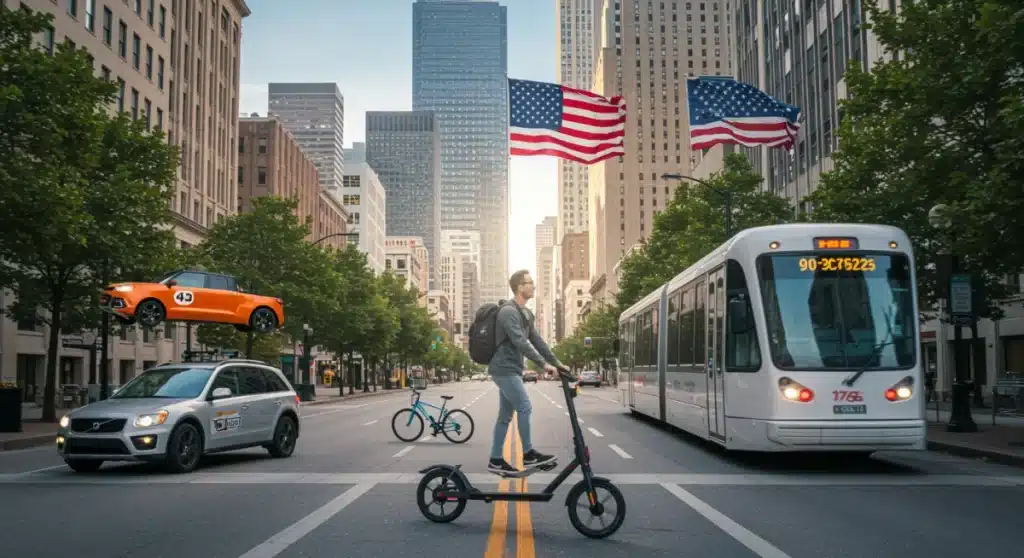
The transportation landscape is rapidly evolving, with a diverse array of new mobility services emerging to challenge traditional car ownership. These services offer flexibility, convenience, and, most importantly, the potential for significant cost savings for US commuters. From ride-sharing to micro-mobility, the options are expanding.
These innovative solutions are designed to cater to various needs and distances, providing alternatives that can be tailored to individual commuting patterns. They represent a shift from ownership to access, allowing commuters to pay for transportation as a service rather than a fixed asset.
Key Types of New Mobility Services
Understanding the different categories of new mobility services helps commuters identify which options best suit their specific needs and financial goals. Each category offers unique benefits and cost structures.
- Ride-Sharing and Ride-Hailing: Services like Uber and Lyft offer on-demand transportation, often cheaper than owning a car for infrequent use or specific routes.
- Micro-Mobility: Electric scooters, e-bikes, and bike-sharing programs provide efficient and affordable options for short to medium distances, especially in urban environments.
- Car-Sharing: Companies such as Zipcar allow users to rent cars by the hour or day, eliminating ownership costs for those who need a vehicle occasionally.
- Integrated Public Transit: Enhanced public transportation networks, often integrated with apps that show real-time data, make buses, trains, and subways more accessible and reliable.
- Commuter Vans and Shuttles: Employer-sponsored or community-based shuttle services can offer cost-effective and convenient options for group commuting.
The integration of these services often creates a multimodal approach, where commuters combine different options to optimize their journey for both cost and efficiency. This flexible approach is central to achieving significant savings.
As these services become more prevalent and sophisticated, they offer a compelling alternative to the traditional single-occupancy vehicle model. Their growth signifies a broader trend towards sustainable, accessible, and financially viable urban transportation solutions for the American workforce.
Strategies for Achieving 10% Commuter Cost Reduction
Achieving a 10% reduction in transportation costs requires a conscious effort to evaluate existing habits and embrace new mobility solutions. This isn’t about drastic, overnight changes, but rather smart, incremental adjustments that compound over time to deliver substantial savings.
The key lies in understanding your current spending and actively seeking out alternatives that align with your travel needs while minimizing expenses. It involves a strategic blend of planning, flexibility, and leveraging technology.
Practical Steps to Cut Commuting Expenses
Several actionable strategies can lead to measurable reductions in commuter costs. These steps empower individuals to take control of their transportation budget and optimize their daily travel.
- Audit Your Current Spending: Track all transportation-related expenses for a month to identify major cost centers.
- Embrace Multimodality: Combine public transit with micro-mobility or ride-sharing for different legs of your journey.
- Utilize Off-Peak Hours: If flexible, traveling during off-peak times can reduce ride-share costs and avoid surge pricing.
- Explore Employer Benefits: Many companies offer pre-tax commuter benefits or subsidies for public transit and ride-sharing.
- Consider Carpooling: Sharing rides with colleagues or neighbors significantly reduces fuel and parking costs for everyone involved.
By systematically implementing these strategies, commuters can begin to see tangible financial benefits. The goal is to move away from a one-size-fits-all approach to transportation and instead adopt a dynamic, cost-effective strategy.
The transition to more cost-efficient commuting often starts with small changes that build momentum. Each decision to opt for a cheaper, more sustainable mode of transport contributes to the overarching goal of reducing financial strain and improving overall financial well-being.
Financial Impact: Case Studies and Projections
The promise of reducing transportation costs by 10% or more is not merely theoretical. Real-world examples and economic projections illustrate how new mobility services are already making a significant financial impact on US commuters. These case studies provide tangible evidence of savings.
By analyzing different scenarios and commuter profiles, we can see how varied approaches to new mobility lead to substantial financial benefits, transforming daily commutes from a burden into an opportunity for savings.
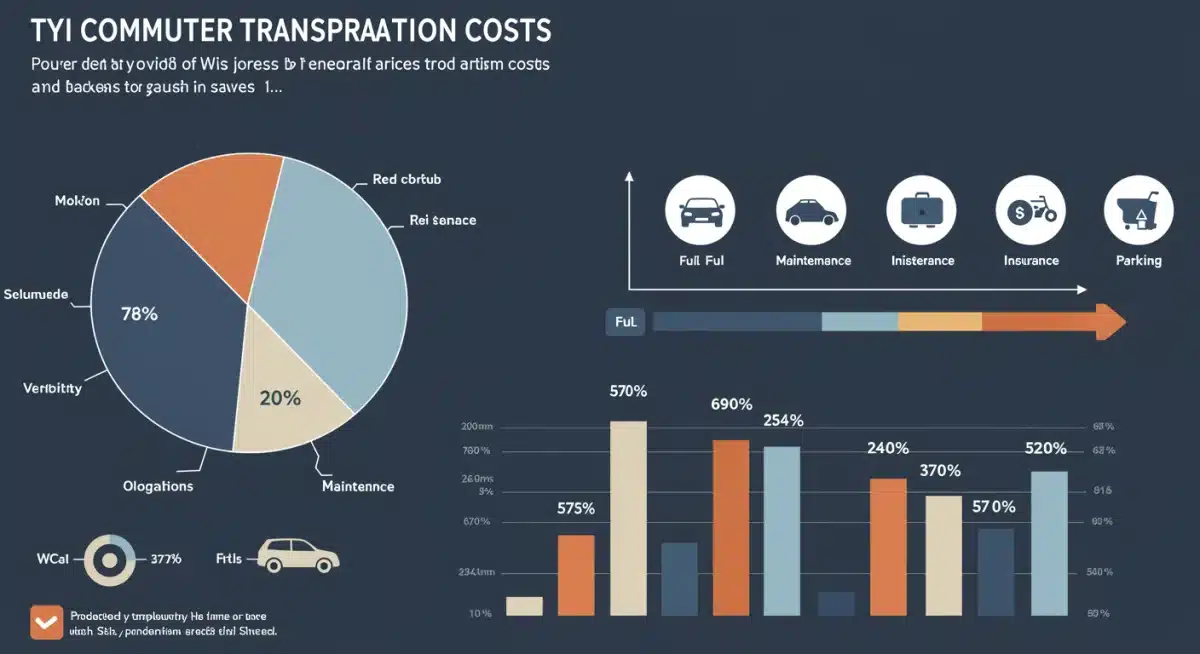
For instance, a commuter living 15 miles from work, currently driving alone, might spend upwards of $400-$600 per month on fuel, parking, and car depreciation. Shifting to a combination of public transit and micro-mobility for the “last mile” can cut these costs dramatically.
Quantifiable Savings Scenarios
Let’s look at specific examples to understand the financial implications of adopting new mobility solutions. These scenarios highlight how a 10% reduction is not only achievable but often surpassable.
- Suburban Commuter: A person driving 25 miles daily, spending $15 on gas and $10 on parking. By carpooling three times a week and taking public transit twice, they could save over $200 monthly, far exceeding 10%.
- Urban Commuter: An individual taking ride-shares daily for short distances, spending $25 per day. Switching to an e-scooter for half their trips could save them $12.50 per day, totaling $250 monthly.
- Car Ownership Reduction: Households that eliminate a second car by relying on car-sharing and other services can save thousands annually on insurance, maintenance, and loan payments, easily surpassing a 10% reduction.
These examples demonstrate that the financial benefits are diverse and depend on individual circumstances and the strategic adoption of available services. The key is to find the right mix that maximizes savings without compromising convenience.
The long-term financial impact of sustained savings can be substantial, freeing up funds for other essential expenses, investments, or discretionary spending. This economic empowerment is a core benefit of embracing the new mobility paradigm.
Policy and Infrastructure Supporting New Mobility
The widespread adoption and success of new mobility services are heavily reliant on supportive policy and robust infrastructure. Governments and urban planners play a crucial role in creating an environment where these services can thrive, benefiting commuters and the broader economy.
Forward-thinking policies and infrastructure investments are essential to ensure that new mobility options are not only available but also integrated, safe, and accessible to a wide range of commuters across the United States.
Government Initiatives and Urban Planning
- Dedicated Bike Lanes and Pedestrian Paths: Expanding safe infrastructure encourages micro-mobility and walking, reducing reliance on cars.
- Integrated Ticketing Systems: Unified payment systems for public transit and private mobility services simplify multimodal journeys.
- Incentives for Electric Vehicles and Micro-Mobility: Tax breaks or subsidies for purchasing e-bikes or electric scooters can boost adoption.
- Smart City Technology: Real-time traffic data, smart parking solutions, and connected infrastructure optimize routes and reduce congestion.
- Zoning and Land Use Reforms: Policies that encourage mixed-use developments reduce commute distances and promote walking or cycling.
These policy and infrastructure developments are not just about convenience; they are about fostering a more sustainable and economically efficient urban environment. They create the necessary framework for commuters to confidently transition to new mobility options.
The collaboration between public and private sectors is vital in shaping the future of urban transportation. By investing in resilient and adaptable infrastructure, cities can ensure that new mobility services continue to provide significant financial and environmental benefits for their residents.
Overcoming Challenges and Maximizing Benefits
While the potential for savings with new mobility services is clear, commuters may encounter challenges in fully integrating these options into their daily routines. Addressing these hurdles proactively is key to maximizing the financial and practical benefits.
Understanding common obstacles, such as first-mile/last-mile issues or service availability, allows commuters to devise effective strategies for seamless and cost-effective travel, ensuring consistent savings.
Common Obstacles and Solutions
Navigating the evolving landscape of new mobility requires adaptability and an awareness of potential drawbacks. However, most challenges have practical solutions that can be implemented by individual commuters or supported by broader infrastructure.
- First-Mile/Last-Mile Connectivity: The gap between home/work and public transit can be bridged effectively using e-scooters, bikes, or short ride-share trips.
- Weather Dependency: For micro-mobility, having backup options like public transit or ride-sharing for inclement weather days is crucial.
- Safety Concerns: Choosing reputable services, wearing helmets for micro-mobility, and staying aware of surroundings can mitigate safety risks.
- Service Availability: In less dense areas, car-sharing or planned carpooling might be more viable than on-demand services.
- Learning Curve: Familiarizing oneself with different apps and service models takes time but quickly becomes second nature.
By proactively addressing these challenges, commuters can ensure that their adoption of new mobility services is sustainable and consistently delivers the desired financial savings. It’s about building a robust and flexible personal transportation plan.
Ultimately, maximizing the benefits of new mobility involves a willingness to experiment and adapt. Commuters who embrace this mindset are best positioned to unlock significant savings and enjoy a more efficient, less stressful daily journey.
| Key Point | Brief Description |
|---|---|
| Rising Commuting Costs | Traditional car ownership costs are significant, including fuel, maintenance, insurance, and parking. |
| New Mobility Services | Ride-sharing, micro-mobility, and car-sharing offer flexible, cost-effective alternatives. |
| Achieving 10% Savings | Strategic multimodal planning, expenditure audits, and employer benefits can reduce costs. |
| Supportive Infrastructure | Government policies, bike lanes, and smart city tech foster a conducive environment. |
Frequently Asked Questions About Commuter Savings
Primary new mobility services include ride-sharing platforms like Uber and Lyft, micro-mobility options such as electric scooters and bike-shares, and car-sharing services like Zipcar. These provide flexible, on-demand transportation alternatives to personal car ownership, often at a lower cost for many commuters.
To calculate current commuting costs, track all transportation-related expenses for a month, including fuel, parking, tolls, public transit fares, and an estimated portion of car insurance and maintenance. This comprehensive overview will highlight areas where new mobility services can offer significant reductions.
Yes, a 10% reduction in transportation costs is often a realistic and achievable goal for many US commuters. By strategically combining new mobility services like public transit, carpooling, and micro-mobility, individuals can frequently realize savings even greater than 10%, especially those heavily reliant on single-occupancy vehicle travel.
Employers can play a significant role by offering commuter benefits programs, such as pre-tax deductions for public transit or ride-sharing, providing shuttle services, or subsidizing bike-share memberships. These initiatives not only help employees save money but also contribute to a more sustainable workforce.
Infrastructure improvements like dedicated bike lanes, integrated public transit systems with real-time information, and smart city technologies are crucial. These enhancements make new mobility options safer, more efficient, and more appealing, encouraging wider adoption and maximizing commuter savings.
Conclusion
The landscape of urban transportation in the US is undergoing a profound transformation, offering unprecedented opportunities for commuters to significantly reduce their daily travel expenses. By strategically embracing new mobility services and adopting a multimodal approach, a 10% reduction in transportation costs is not just an aspiration but a tangible reality for many. The financial impact extends beyond mere savings, contributing to greater personal economic freedom and fostering more sustainable urban environments. As policies and infrastructure continue to evolve, the future of commuting promises both efficiency and affordability, empowering individuals to navigate their cities smarter and save more.