Connected Vehicle Platforms: Enhancing U.S. Road Safety by 2026
Connected Vehicle Platforms: Enhancing U.S. Road Safety by 2026
The automotive industry is in the midst of a profound transformation, driven by advancements in connectivity, automation, and artificial intelligence. At the heart of this revolution are connected vehicle platforms, sophisticated ecosystems that enable vehicles to communicate with each other, with infrastructure, and with the cloud. These platforms are not merely about entertainment or convenience; their primary mission is increasingly focused on enhancing road safety, reducing congestion, and improving overall transportation efficiency. As we look towards 2026, the United States is at the forefront of this innovation, with several key players developing and deploying cutting-edge solutions that promise to redefine our driving experience.
The concept of connected vehicles, often referred to as V2X (Vehicle-to-Everything) communication, encompasses a broad range of technologies. This includes V2V (Vehicle-to-Vehicle), V2I (Vehicle-to-Infrastructure), V2N (Vehicle-to-Network), and V2P (Vehicle-to-Pedestrian) communications. By facilitating this constant exchange of data, connected vehicle platforms create a holistic awareness of the driving environment, far beyond what a human driver or even a standalone autonomous system can perceive. This enhanced awareness is crucial for preventing accidents, optimizing traffic flow, and providing real-time information to drivers and traffic management systems.
The urgency for these advancements is clear. Despite significant improvements in vehicle safety over the decades, traffic accidents remain a major public health concern, leading to millions of injuries and tens of thousands of fatalities annually in the U.S. alone. Connected vehicle platforms offer a proactive approach to safety, moving beyond passive protection to active prevention. Imagine a scenario where your car instantly warns you of a vehicle rapidly braking several cars ahead, even before you can see it, or where it receives information about a slippery patch of road around a blind corner. These are not futuristic fantasies but tangible capabilities being developed and deployed through these advanced platforms.
This article will delve into a comparison of four leading U.S. connected vehicle platforms that are poised to make significant strides in enhancing road safety by 2026. We will explore their technological underpinnings, their current capabilities, the unique features they offer, and their potential impact on the future of transportation. Understanding these platforms is essential for anyone interested in the future of automotive technology, urban planning, and, most importantly, road safety.
The Foundation of Connected Vehicle Platforms: V2X Communication
Before diving into specific platforms, it’s crucial to understand the foundational technology that powers them: V2X communication. This umbrella term describes the ability of a vehicle to communicate with various entities in its environment. The primary goal is to gather and disseminate real-time information that can be used to make driving safer and more efficient. Let’s break down the key components of V2X:
- Vehicle-to-Vehicle (V2V): This allows vehicles to directly exchange data with nearby vehicles. Information shared can include speed, direction, braking status, and even GPS coordinates. This direct communication is vital for applications like collision avoidance, cooperative adaptive cruise control, and platooning. By knowing what surrounding vehicles are doing, potential hazards can be identified and mitigated much earlier than with traditional sensor-based systems.
- Vehicle-to-Infrastructure (V2I): V2I enables vehicles to communicate with roadside infrastructure such as traffic lights, road signs, and construction zones. This communication can provide real-time information about traffic signal timings, road conditions, speed limits, and upcoming lane closures. This helps drivers anticipate changes, optimize their speed to avoid red lights (green light optimal speed advisories), and receive timely warnings about road hazards.
- Vehicle-to-Network (V2N): This involves vehicles communicating with a centralized network or cloud server. V2N is essential for accessing broader traffic information, weather updates, navigation services, over-the-air (OTA) software updates, and emergency services. It allows for a more comprehensive understanding of the overall transportation system and provides data for intelligent traffic management.
- Vehicle-to-Pedestrian (V2P): While still an emerging area, V2P focuses on communication between vehicles and vulnerable road users like pedestrians and cyclists, often through their smartphones or dedicated devices. This can provide warnings to drivers about nearby pedestrians or cyclists, and vice versa, significantly enhancing safety in urban environments.
The underlying technologies for V2X communication have evolved significantly. Initially, Dedicated Short Range Communications (DSRC) was the predominant standard. However, cellular V2X (C-V2X), which leverages existing cellular networks (4G LTE and increasingly 5G), has gained considerable traction due to its broader coverage, higher bandwidth, and ability to integrate with existing telecommunications infrastructure. The choice of technology has significant implications for deployment costs, scalability, and the types of services that can be offered by connected vehicle platforms.
Platform 1: General Motors’ Super Cruise and Ultifi
General Motors (GM) has been a prominent player in the connected vehicle space, particularly with its Super Cruise advanced driver-assistance system (ADAS) and the newer Ultifi software platform. While Super Cruise is primarily an automation feature, its underlying connectivity and data processing capabilities are integral to GM’s broader connected vehicle strategy.
Super Cruise: Advanced Hands-Free Driving with Enhanced Awareness
Super Cruise allows for hands-free driving on compatible highways, using a combination of LiDAR map data, high-precision GPS, a sophisticated driver attention system, and a network of cameras and radar sensors. The connectivity aspect comes into play with constant map updates and the ability for the vehicle to receive real-time information about road conditions and potential issues. While not a full V2V or V2I system in the broader sense, Super Cruise’s reliance on highly accurate, constantly updated mapping and sensor fusion demonstrates a powerful form of localized connectivity and data processing that contributes to safety.
Ultifi: The Future Software-Defined Vehicle Platform
GM’s Ultifi is a new end-to-end software platform designed to unlock a new era of connected services and features. Launched in 2021, Ultifi will underpin GM’s next-generation vehicles, starting in 2023. It’s a Linux-based operating system designed to enable frequent over-the-air (OTA) software updates, allowing GM to continuously improve vehicle performance, add new features, and enhance safety systems throughout the vehicle’s lifespan. This platform moves beyond traditional infotainment to integrate deeply with the vehicle’s core operating systems.
Safety Enhancements through Ultifi:
- Proactive Maintenance and Diagnostics: Ultifi can monitor vehicle health in real-time, predicting potential failures and scheduling proactive maintenance, thus preventing unexpected breakdowns that could lead to accidents.
- Rapid Software Updates: Critical safety patches and improvements to ADAS features can be deployed quickly and efficiently across the entire fleet, ensuring vehicles are always equipped with the latest safety technologies.
- Personalized Safety Features: The platform allows for customization of safety alerts and driving preferences, tailoring the experience to individual driver needs and potentially reducing driver distraction.
- Data-Driven Safety Insights: By collecting anonymized data on driving patterns and incidents, GM can gain valuable insights to further refine safety systems and identify common risk factors.
By 2026, Ultifi is expected to be deeply integrated across a wide range of GM vehicles, providing a robust, adaptable, and continuously improving foundation for safety-critical applications. Its ability to support future V2X communication modules seamlessly will be key to its long-term impact on road safety, making GM a significant player in the evolution of connected vehicle platforms.
Platform 2: Ford’s Co-Pilot360 and FordPass Connect
Ford has also invested heavily in connected vehicle technology, primarily through its Co-Pilot360 suite of ADAS features and the FordPass Connect embedded modem, which powers a variety of connected services. Ford’s approach emphasizes a blend of in-vehicle intelligence and cloud-based connectivity to enhance both safety and convenience.
Co-Pilot360: Comprehensive Driver-Assist Technologies
Ford Co-Pilot360 is a suite of standard and available driver-assist technologies designed to help drivers navigate busy roads and parking lots with greater confidence. While not a fully autonomous system, its features rely heavily on sensors and, increasingly, on connected data. Key safety features include Pre-Collision Assist with Automatic Emergency Braking, Blind Spot Information System (BLIS) with Cross-Traffic Alert, Lane-Keeping System, and Adaptive Cruise Control with Stop-and-Go.
FordPass Connect: The Heart of Ford’s Connectivity
FordPass Connect is the embedded modem in Ford vehicles that enables a suite of connected services. It provides a Wi-Fi hotspot, remote access features (start/stop, lock/unlock, vehicle location), and vehicle health alerts. More importantly for safety, it facilitates the flow of data essential for future V2X applications.
Safety Enhancements through FordPass Connect:
- eCall and Emergency Assistance: In the event of a collision, FordPass Connect can automatically alert emergency services, providing vehicle location and crucial data, potentially reducing response times and saving lives.
- Traffic and Hazard Information: Through partnerships with navigation providers and leveraging aggregated vehicle data, FordPass Connect can deliver real-time traffic updates and hazard warnings, helping drivers avoid dangerous situations.
- Over-the-Air Updates: Similar to GM’s Ultifi, Ford is increasingly using OTA updates to improve existing safety features and introduce new ones, ensuring vehicles remain current with the latest safety innovations.
- Connected Roadside Assistance: The platform can facilitate quicker and more informed roadside assistance, crucial for drivers stranded in potentially dangerous locations.
Ford’s strategy with Co-Pilot360 and FordPass Connect is to create a robust, interconnected ecosystem that not only assists the driver but also continuously learns and adapts to improve safety. By 2026, we can expect Ford to further integrate C-V2X capabilities into its vehicles, leveraging the FordPass Connect infrastructure to communicate with smart city infrastructure and other vehicles, making their connected vehicle platforms even more impactful for road safety.
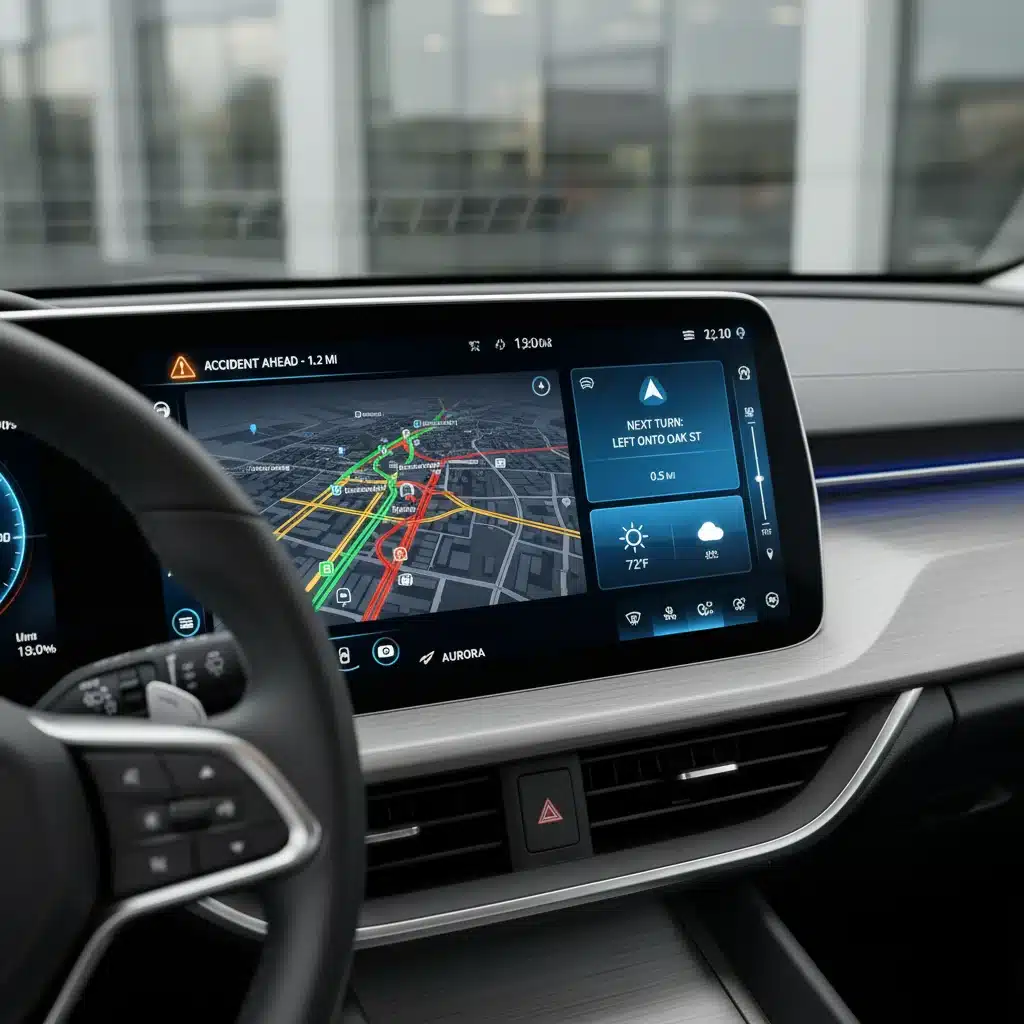
Platform 3: Qualcomm’s Snapdragon Digital Chassis
While not an OEM, Qualcomm plays a pivotal role in the development of connected vehicle platforms as a leading supplier of chipsets and software solutions. Their Snapdragon Digital Chassis is an expansive platform that provides the foundational technology for automotive companies to build their next-generation connected, intelligent, and autonomous vehicles. This platform is adopted by numerous major automakers globally, including many in the U.S.
Snapdragon Digital Chassis: A Comprehensive Automotive Platform
The Snapdragon Digital Chassis is a modular and scalable platform that encompasses several key technology pillars:
- Snapdragon Ride Platform: Designed for ADAS and autonomous driving, providing high-performance computing for sensor fusion, perception, and decision-making.
- Snapdragon Cockpit Platform: Powers the in-car infotainment, digital instrument clusters, and connected services, offering rich user experiences.
- Snapdragon Auto Connectivity Platform: Crucially, this pillar provides the necessary hardware and software for advanced telematics, Wi-Fi, Bluetooth, and, most importantly, C-V2X communication.
- Car-to-Cloud Services: Enables secure communication with the cloud for OTA updates, remote diagnostics, and data analytics.
Safety Enhancements through Snapdragon Digital Chassis:
- Advanced C-V2X Integration: Qualcomm is a strong proponent and leader in C-V2X technology. Their chipsets enable vehicles to communicate directly with other vehicles (V2V) and infrastructure (V2I) with low latency, facilitating critical safety applications like collision warning, intersection movement assist, and vulnerable road user detection.
- High-Performance AI for ADAS: The Snapdragon Ride Platform’s AI capabilities allow for more accurate object detection, classification, and prediction, enhancing the performance of ADAS features like automatic emergency braking and lane-keeping assist, reducing false positives and improving reliability.
- Seamless Connectivity for Emergency Services: Robust and reliable connectivity ensures that eCall systems and other emergency services can function effectively, even in challenging environments.
- Secure Over-the-Air Updates: The platform’s cloud connectivity facilitates secure and efficient OTA updates for safety-critical software, ensuring vehicles are always running the latest, most secure versions of their operating systems and ADAS algorithms.
By 2026, Qualcomm’s Snapdragon Digital Chassis is expected to be a pervasive force in the automotive industry, powering a significant portion of the connected and autonomous vehicles on U.S. roads. Its comprehensive integration of C-V2X capabilities, coupled with powerful AI and robust connectivity, positions it as a foundational technology for enhancing road safety across multiple vehicle brands. Qualcomm’s role is not just about providing components; it’s about enabling a future where all vehicles are inherently safer through advanced connectivity, making it an indispensable part of the connected vehicle platforms ecosystem.
Platform 4: Tesla’s Full Self-Driving (FSD) and Connectivity Ecosystem
Tesla has carved out a unique position in the automotive industry, not just as an electric vehicle manufacturer but also as a technology company deeply focused on software and connectivity. While their primary focus is on achieving Full Self-Driving (FSD) capabilities, the underlying architecture and continuous connectivity are integral to their safety strategy and qualify as a leading connected vehicle platform.
Full Self-Driving (FSD) Beta: AI-Driven Autonomy
Tesla’s FSD Beta system uses a sophisticated array of cameras, ultrasonic sensors, and radar (though radar has been deemphasized in newer models) combined with a powerful on-board computer and an extensive neural network. Unlike some other systems that rely on high-definition maps, Tesla’s approach emphasizes real-time vision processing and AI to interpret the driving environment. While FSD is still in beta and requires active driver supervision, its development is pushing the boundaries of what’s possible with in-vehicle intelligence.
Tesla’s Connectivity Ecosystem: Real-time Data and Updates
Every Tesla vehicle is continuously connected to the company’s network, enabling a constant flow of data and over-the-air (OTA) software updates. This connectivity is fundamental to Tesla’s iterative development process, allowing them to rapidly deploy improvements to FSD, introduce new features, and enhance safety systems.
Safety Enhancements through Tesla’s Platform:
- Fleet Learning and Data Collection: Tesla collects vast amounts of real-world driving data from its fleet, which is used to train its AI models. This continuous feedback loop allows for rapid improvements in FSD’s ability to perceive and navigate complex driving scenarios, directly contributing to safety.
- Proactive Safety Features: Beyond FSD, Tesla’s Autopilot and standard safety features (like automatic emergency braking, lane departure avoidance, and blind spot collision warning) are continuously refined through OTA updates, improving their reliability and effectiveness over time.
- Emergency Lane Departure Avoidance: If the vehicle detects an unintentional lane departure and a potential collision, it can automatically steer back into the lane or prevent the vehicle from leaving the roadway.
- Remote Diagnostics and Service: The constant connectivity allows Tesla to remotely diagnose vehicle issues, often resolving them with software updates or proactively scheduling service appointments, preventing potential safety hazards from escalating.
- Sentient Mode and Sentry Mode: While not directly driving-related, these features use the vehicle’s cameras to monitor its surroundings when parked, deterring theft and vandalism, which indirectly contributes to the overall safety and security of the vehicle and its occupants.
By 2026, Tesla aims to have significantly advanced its FSD capabilities, and its unique approach to fleet learning and continuous OTA updates will likely continue to differentiate its connected vehicle platforms. While their strategy for V2X communication is less about direct DSRC or C-V2X and more about robust internal perception combined with network-level data, the outcome is a highly connected and increasingly safer driving experience. The sheer volume of real-world data processed and the speed of software iteration provide a powerful mechanism for enhancing road safety.

Challenges and the Road Ahead for Connected Vehicle Platforms
While the promise of connected vehicle platforms for enhancing road safety is immense, several challenges need to be addressed for their widespread and effective deployment by 2026 and beyond.
Standardization and Interoperability
One of the most significant hurdles is the lack of universal standards for V2X communication. With different automakers and technology providers potentially adopting varying communication protocols (e.g., DSRC vs. C-V2X, or proprietary systems), ensuring that vehicles from different manufacturers can seamlessly communicate with each other and with diverse infrastructure is crucial. Without robust interoperability, the full safety benefits of a connected ecosystem cannot be realized. Efforts by organizations like SAE International and the 5G Automotive Association (5GAA) are working towards harmonizing these standards, but it remains a complex task.
Cybersecurity Concerns
As vehicles become more connected, they also become more vulnerable to cyberattacks. A compromised connected vehicle platform could lead to serious safety risks, from unauthorized access to vehicle controls to manipulation of data that could cause accidents. Robust cybersecurity measures, including encryption, authentication protocols, and continuous monitoring, are paramount to building public trust and ensuring the integrity of these systems. The industry is investing heavily in this area, but it’s an ongoing battle against evolving threats.
Data Privacy
The vast amounts of data collected by connected vehicles, including location, driving behavior, and even biometric information, raise significant privacy concerns. How this data is collected, stored, used, and shared must be transparent and subject to strong regulatory frameworks. Balancing the benefits of data-driven safety improvements with individual privacy rights is a delicate but essential act.
Infrastructure Deployment
The full potential of V2I communication relies on the widespread deployment of smart infrastructure, including connected traffic lights, intelligent road signs, and roadside units (RSUs). This requires significant investment from governments and municipalities, and the pace of deployment can vary widely across different regions. Public-private partnerships will be crucial to accelerate this necessary infrastructure build-out.
Regulatory Frameworks
Existing automotive regulations were not designed for highly connected and increasingly autonomous vehicles. New regulatory frameworks are needed to address issues like liability in the event of an accident involving a connected vehicle, software updates, data ownership, and the certification of V2X technologies. Harmonizing these regulations across states and at the federal level is a complex process that will significantly influence the pace of adoption.
Public Acceptance and Education
Despite the clear safety benefits, public acceptance of connected vehicle technologies is not guaranteed. Concerns about privacy, cybersecurity, and the reliability of autonomous features can hinder adoption. Effective public education campaigns and clear demonstrations of the benefits and safety records of these technologies will be vital to fostering trust and encouraging widespread use.
The Future Outlook for Connected Vehicle Platforms in U.S. Road Safety
Looking ahead to 2026, the landscape of connected vehicle platforms in the U.S. is set to be dynamic and transformative. The four platforms discussed—General Motors’ Super Cruise and Ultifi, Ford’s Co-Pilot360 and FordPass Connect, Qualcomm’s Snapdragon Digital Chassis, and Tesla’s FSD and Connectivity Ecosystem—represent diverse approaches to achieving the shared goal of enhanced road safety.
We can anticipate several key trends:
- Increased Integration of C-V2X: While DSRC had its moment, C-V2X (leveraging 5G) is rapidly becoming the preferred technology for direct vehicle-to-vehicle and vehicle-to-infrastructure communication due to its scalability and integration with existing cellular networks. By 2026, a significant number of new vehicles are expected to come equipped with C-V2X capabilities, enabling a richer exchange of safety-critical information.
- Software-Defined Vehicles Dominate: The concept of a software-defined vehicle, exemplified by GM’s Ultifi and Tesla’s ecosystem, will become the norm. This means vehicles will be continuously upgradable, with new safety features and improvements delivered via over-the-air updates, ensuring that the safety capabilities of a vehicle can evolve throughout its lifespan.
- Enhanced AI and Machine Learning: Artificial intelligence will become even more sophisticated in processing sensor data, predicting potential hazards, and making real-time safety decisions. Fleet learning, where data from millions of vehicles is used to improve AI models, will accelerate the development of highly reliable safety systems.
- Personalized Safety Experiences: Connected platforms will increasingly offer personalized safety settings and alerts, adapting to individual driving styles and preferences, and potentially providing tailored coaching to improve driver behavior.
- Synergy with Smart City Initiatives: The full benefits of V2X will be realized as more cities invest in smart infrastructure. Connected vehicles will become an integral part of intelligent traffic management systems, optimizing traffic flow, reducing congestion, and proactively preventing accidents in urban environments.
- Focus on Vulnerable Road Users: While V2V and V2I are crucial, there will be a growing emphasis on V2P technologies to protect pedestrians and cyclists, especially in dense urban areas.
The competition among these leading platforms and the collaborative efforts within the industry will drive rapid innovation. While the technical capabilities are advancing quickly, the pace of regulatory alignment, infrastructure deployment, and public acceptance will ultimately determine how swiftly these technologies translate into a significant reduction in road fatalities and injuries across the U.S.
Conclusion
The journey towards a safer, more efficient transportation system is irrevocably linked to the evolution of connected vehicle platforms. By 2026, the U.S. automotive landscape will be profoundly shaped by the advancements made by companies like General Motors, Ford, Qualcomm, and Tesla. Their respective platforms, whether focused on comprehensive software ecosystems, advanced driver assistance, foundational connectivity chipsets, or AI-driven autonomy, are all contributing to a future where vehicles are not just modes of transport but intelligent, interconnected entities actively working to prevent accidents.
The ongoing development of V2X communication, powered by robust software and AI, promises to create a collective awareness on our roads that was once unimaginable. While challenges related to standardization, cybersecurity, privacy, and infrastructure remain, the momentum behind these technologies is undeniable. As these platforms mature and become more integrated into our daily lives, we can look forward to a significant enhancement in road safety, making our journeys not only more convenient but, more importantly, infinitely safer. The future of driving is connected, and that future is arriving rapidly, promising a safer tomorrow for everyone on the road.