Hydrogen Fuel Cell Vehicles: 2026 US Adoption Surge?
The year 2026 is anticipated to mark a significant turning point for hydrogen fuel cell vehicles in the US, driven by evolving infrastructure, supportive policies, and technological maturation, propelling them towards broader public adoption.
The landscape of automotive innovation is constantly shifting, and among the most promising contenders for a sustainable future are hydrogen fuel cell vehicles. While electric vehicles have captured much of the public’s attention, hydrogen technology offers unique advantages that could position it as a critical player in the decarbonization of transport. As we look towards the middle of the decade, specifically 2026, there’s a growing sentiment that this year could represent a pivotal moment for the mass adoption of hydrogen fuel cell vehicles across the United States. This article delves into the confluence of factors – technological breakthroughs, infrastructure development, and policy support – that are converging to make 2026 a potential game-changer for hydrogen mobility.
The promise of hydrogen in mobility
Hydrogen, as the most abundant element in the universe, holds immense potential as a clean energy carrier for transportation. Unlike fossil fuels, hydrogen fuel cell vehicles (FCVs) produce only water vapor as emissions, offering a zero-tailpipe-emission solution. This inherent cleanliness is a major draw in an era increasingly focused on environmental sustainability and air quality improvements. The current state of hydrogen technology has advanced significantly, moving beyond experimental stages to practical applications, albeit on a smaller scale.
The appeal of hydrogen extends beyond just emissions. FCVs can refuel in minutes, a process comparable to gasoline vehicles, which stands in stark contrast to the longer charging times associated with battery electric vehicles (BEVs). This rapid refueling capability is particularly attractive for long-haul trucking, commercial fleets, and regions where extensive daily driving is common. Furthermore, hydrogen fuel cells generally offer a longer driving range than many current BEVs, addressing another key consumer concern.
Efficiency and performance advantages
Modern fuel cell stacks are becoming more efficient, converting hydrogen into electricity with minimal energy loss. This efficiency directly translates to better vehicle performance and extended range. The durability of these systems is also improving, with manufacturers now offering warranties comparable to traditional internal combustion engine vehicles, building consumer confidence. The weight distribution of FCVs, often with hydrogen tanks housed along the chassis, can also contribute to a balanced and stable driving experience.
- Zero tailpipe emissions: Only water vapor is produced.
- Rapid refueling: Minutes, not hours.
- Extended driving range: Often comparable to gasoline cars.
- Improved efficiency: Better energy conversion.
- Enhanced durability: Longer lifespan for key components.
In conclusion, the fundamental advantages of hydrogen in terms of environmental impact, refueling speed, and range make it a compelling alternative. As technological refinements continue, its competitive edge against other propulsion systems only sharpens, laying the groundwork for increased adoption.
Advancements in fuel cell technology and manufacturing
The journey towards widespread adoption of hydrogen fuel cell vehicles is heavily reliant on continuous innovation in fuel cell technology and scalable manufacturing processes. Over the past decade, significant strides have been made in reducing the cost, improving the efficiency, and enhancing the durability of fuel cell stacks. These advancements are crucial for making FCVs more economically viable and attractive to the average consumer.
Researchers and engineers are focusing on several key areas. One primary focus is the reduction of platinum usage in catalytic converters, a costly component that has historically driven up the price of fuel cells. New materials and designs are emerging that require less platinum or even replace it entirely with more abundant and cheaper alternatives, without sacrificing performance. This material innovation is a direct contributor to lowering overall manufacturing costs.
Breakthroughs in stack design and power density
Modern fuel cell stacks are not only more efficient but also more compact, allowing for greater flexibility in vehicle design. Higher power density means more electricity can be generated from a smaller, lighter unit, which is beneficial for packaging within various vehicle types, from sedans to heavy-duty trucks. Automation in fuel cell manufacturing is also playing a pivotal role, driving down labor costs and increasing production volumes to meet anticipated demand.
- Reduced platinum dependency: Lowering material costs.
- Increased power density: More compact and efficient fuel cells.
- Automated manufacturing: Boosting production and reducing labor costs.
- Enhanced durability: Extending the lifespan of fuel cell components.
These technological and manufacturing advancements are not just theoretical; they are being implemented by leading automotive manufacturers. The continuous improvement cycle in fuel cell design and production scale is instrumental in pushing FCVs from niche markets towards mainstream acceptance, making 2026 a realistic target for significant progress.
The evolving hydrogen refueling infrastructure in the US
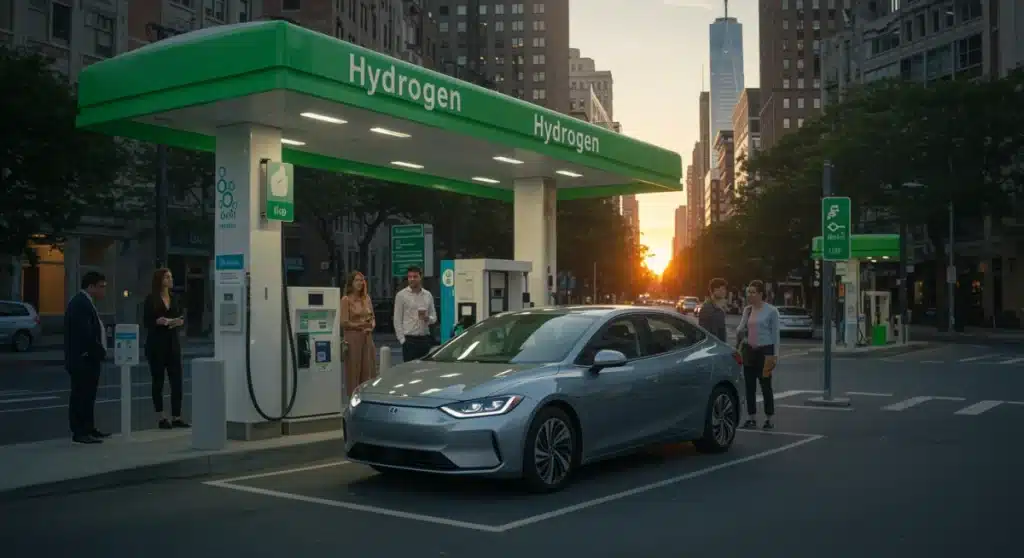
One of the most significant hurdles to the mass adoption of hydrogen fuel cell vehicles has been the lack of a robust refueling infrastructure. Consumers are naturally hesitant to invest in a vehicle if they cannot easily and reliably refuel it. However, the United States is witnessing a concerted effort to expand its hydrogen refueling network, with 2026 emerging as a critical year for the maturation of this infrastructure.
Initial deployments of hydrogen stations were largely concentrated in California, primarily serving early adopters and demonstration projects. While California remains a leader, other states are beginning to establish their own networks, often driven by federal incentives and state-level clean energy mandates. The focus is not just on the number of stations but also on their strategic placement along major transportation corridors and in urban centers, ensuring accessibility for a broader population.
Federal and state initiatives driving expansion
Government funding and policy support are playing a crucial role in de-risking investments in hydrogen infrastructure. The Bipartisan Infrastructure Law, for instance, includes significant allocations for clean hydrogen hubs and infrastructure development, providing a strong impetus for growth. These initiatives are designed to foster a hydrogen economy that supports not only FCVs but also other industrial applications of hydrogen.

- Strategic station placement: Covering key routes and urban areas.
- Government funding: Federal and state support for infrastructure.
- Public-private partnerships: Collaborations to accelerate development.
- Increased station capacity: Handling higher demand for refueling.
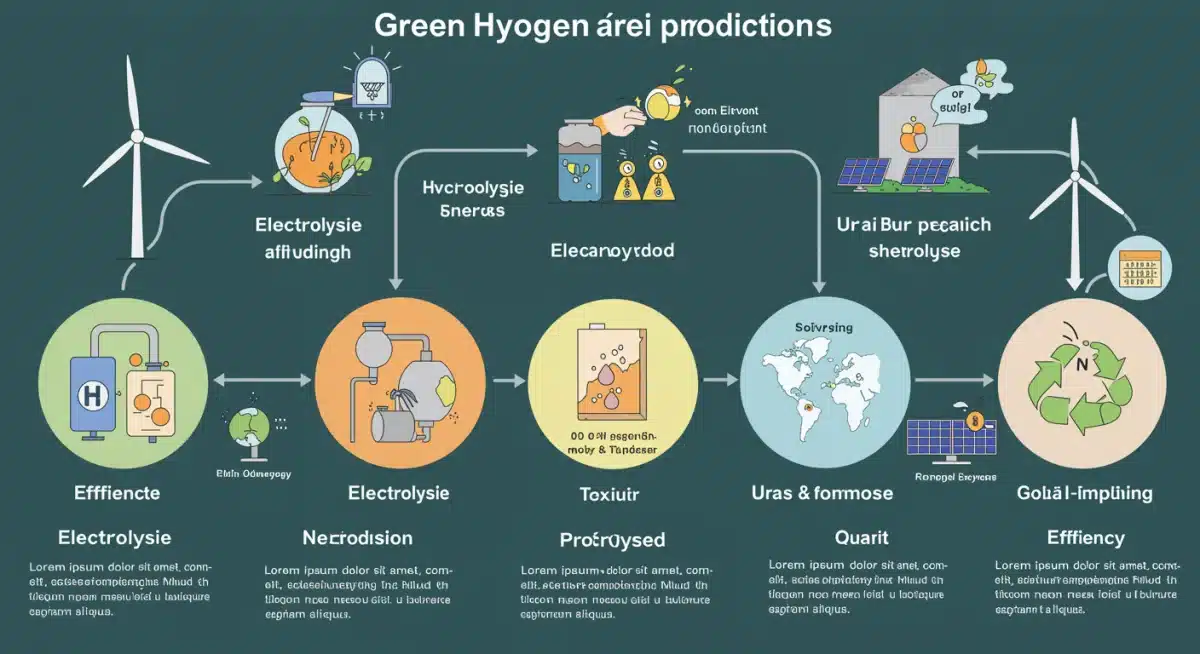
The expansion of hydrogen production facilities, particularly those utilizing renewable energy sources (green hydrogen), is also critical. A reliable and sustainable supply chain for hydrogen fuel is essential to support the growing network of refueling stations. By 2026, many of these planned projects are expected to be operational, significantly improving the accessibility and reliability of hydrogen fuel for consumers.
Policy support and economic incentives
The journey towards mass adoption of hydrogen fuel cell vehicles is significantly bolstered by supportive government policies and economic incentives. Recognizing the environmental and economic benefits of a hydrogen economy, both federal and state governments in the US are implementing measures designed to accelerate FCV deployment and infrastructure build-out. These policy frameworks are crucial for creating a favorable environment for manufacturers, infrastructure developers, and consumers alike.
At the federal level, tax credits for FCV purchases and for the development of hydrogen refueling infrastructure have been instrumental. These incentives help offset the higher initial costs associated with new technologies, making FCVs more competitive with traditional vehicles. Additionally, funding programs for research and development are pushing the boundaries of hydrogen technology, ensuring continuous innovation and cost reduction.
State-level initiatives and mandates
Many states, particularly those with ambitious climate goals, are enacting their own policies to promote hydrogen. California, for example, has long been a pioneer with its Zero Emission Vehicle (ZEV) mandate, which includes FCVs. Other states are following suit, implementing similar mandates, offering rebates, and streamlining permitting processes for hydrogen stations. These state-level actions create regional markets that can then coalesce into a national network.
- Federal tax credits: Reducing purchase and infrastructure costs.
- Clean hydrogen hubs: Regional initiatives for production and distribution.
- State ZEV mandates: Driving FCV sales and infrastructure.
- R&D funding: Supporting technological advancements.
The cumulative effect of these policies, both federal and state, is to reduce financial barriers and accelerate the pace of adoption. By 2026, the consistency and breadth of these incentives are expected to reach a critical mass, making hydrogen a more attractive and viable option for a larger segment of the US population.
Overcoming challenges: cost and consumer perception
Despite the promising outlook, the path to mass adoption of hydrogen fuel cell vehicles is not without its challenges. Two primary hurdles remain: the initial cost of FCVs and shaping consumer perception. Addressing these issues effectively will be paramount to reaching the tipping point in 2026.
The manufacturing cost of FCVs, while decreasing, is still generally higher than comparable internal combustion engine vehicles and even many battery electric vehicles. This higher sticker price can be a significant deterrent for potential buyers. However, economies of scale, driven by increased production volumes, are expected to bring these costs down. Furthermore, the aforementioned government incentives play a vital role in bridging this price gap for consumers.
Addressing consumer awareness and skepticism
Consumer perception is another critical factor. Many individuals are still unfamiliar with hydrogen technology, leading to skepticism or misconceptions. Concerns about safety, the availability of refueling stations, and the overall practicality of FCVs need to be addressed through education and successful real-world deployments. Marketing efforts that highlight the benefits of FCVs – rapid refueling, long range, and environmental friendliness – are essential.
- High initial purchase cost: Mitigated by incentives and scale.
- Limited public awareness: Requiring robust educational campaigns.
- Perceived safety concerns: Addressed by stringent safety standards and data.
- Refueling anxiety: Overcome by expanding infrastructure.
As more FCVs hit the roads and the refueling infrastructure becomes more visible and accessible, consumer confidence is expected to grow. The year 2026 will likely see a concentrated effort from manufacturers and governments to actively engage the public, dispelling myths and showcasing the practical advantages of hydrogen mobility. This shift in perception, coupled with decreasing costs, will be fundamental for widespread acceptance.
The road to 2026: forecasts and predictions
Looking ahead to 2026, various forecasts and predictions suggest a significant acceleration in the adoption of hydrogen fuel cell vehicles in the US. These projections are based on the current trajectory of technological advancements, infrastructure development, and policy support, painting a picture of a burgeoning hydrogen economy.
Industry analysts anticipate a notable increase in the number of FCV models available on the market, offering consumers more choices and competition among manufacturers. This expansion of vehicle options, combined with a growing network of refueling stations, is expected to make FCVs a more viable and attractive option for a broader segment of the population. The commercial sector, particularly heavy-duty transport and logistics, is also projected to be a major growth area, as hydrogen offers distinct advantages for these applications.
Key indicators for growth
Several key indicators will signal whether 2026 truly becomes the turning point. These include the rate of new hydrogen station openings, the year-over-year increase in FCV sales, and the expansion of green hydrogen production capacity. Public-private partnerships are also expected to intensify, pooling resources and expertise to overcome remaining challenges more rapidly.
- Increased FCV model availability: More choices for consumers.
- Growth in commercial fleet adoption: Leveraging FCV benefits.
- Accelerated infrastructure build-out: Expanding refueling access.
- Lowered total cost of ownership: Making FCVs more competitive.
By 2026, the cumulative effect of these trends is expected to create a self-sustaining ecosystem for hydrogen mobility. As more vehicles are sold, demand for hydrogen fuel increases, spurring further infrastructure investment, which in turn makes FCVs more appealing. This positive feedback loop is what many industry experts believe will solidify hydrogen’s place in the future of US transportation.
| Key Aspect | 2026 Impact for FCVs |
|---|---|
| Infrastructure Development | Significant expansion of refueling stations beyond California. |
| Technological Maturity | Improved efficiency, lower manufacturing costs, enhanced durability. |
| Policy & Incentives | Strong federal and state support driving adoption and investment. |
| Consumer Acceptance | Growing awareness and confidence as costs decrease and infrastructure grows. |
Frequently asked questions about hydrogen fuel cell vehicles
Hydrogen fuel cell vehicles (FCVs) offer zero tailpipe emissions, producing only water vapor. They also boast rapid refueling times, comparable to gasoline cars, and typically provide a longer driving range than many battery electric vehicles, making them suitable for various driving needs.
2026 is seen as pivotal due to the confluence of factors: maturing fuel cell technology reducing costs, significant expansion of hydrogen refueling infrastructure, and robust federal and state policy support. These elements are expected to collectively drive increased consumer adoption and market growth.
Currently, hydrogen refueling stations are concentrated in California, but significant expansion is underway across other states. Federal and state investments are accelerating the development of a national network, with many new stations projected to be operational by 2026, improving accessibility.
Initial FCV costs are generally higher than gasoline cars and some EVs. However, ongoing technological advancements, economies of scale in manufacturing, and substantial government incentives are actively working to reduce these costs, making FCVs more competitive in the long term.
The sustainability of hydrogen production depends on its source. “Green hydrogen,” produced using renewable energy sources like solar or wind via electrolysis, is highly sustainable and produces zero emissions. Efforts are focused on increasing green hydrogen production to support FCVs and other clean energy applications.
Conclusion
The trajectory for hydrogen fuel cell vehicles in the United States points towards a transformative period, with 2026 emerging as a critical year for potential mass adoption. The convergence of sustained technological innovation, a rapidly expanding refueling infrastructure, and supportive governmental policies is creating an increasingly fertile ground for hydrogen mobility. While challenges related to cost and consumer awareness persist, the proactive measures being taken by industry and policymakers suggest that these hurdles are being systematically addressed. As the US pushes for a greener transportation future, hydrogen fuel cell vehicles are poised to play a much larger role than ever before, offering a compelling, clean, and efficient alternative for a significant segment of the automotive market.