Next-Gen EV Motors: Efficiency Gains & 2026 Innovations
The automotive world is on the cusp of another revolution, and this time, the focus is squarely on the heart of electric vehicles: the motor. For years, EV technology has advanced at a breakneck pace, driven by increasing consumer demand, stringent environmental regulations, and relentless innovation. While battery technology often grabs the headlines, the evolution of electric motors is equally, if not more, critical to achieving true sustainability and performance in electric mobility. We are now standing at the precipice of a new era, with the next generation of EV motors poised to arrive in late 2026, promising unprecedented EV Motor Efficiency 2026 gains and redefining what’s possible in electric transportation.
This deep dive will explore the groundbreaking technologies, design philosophies, and material science breakthroughs that are propelling these next-gen motors into reality. From enhanced power density to superior thermal management and reduced reliance on rare earth elements, the innovations coming our way are set to transform the electric vehicle landscape, offering drivers longer ranges, faster acceleration, and a more sustainable footprint. Join us as we take an insider look at the future of EV propulsion.
The Current State of EV Motors: A Foundation for Innovation
Before we delve into the future, it’s essential to understand the present. Today’s electric vehicles predominantly utilize two main types of motors: Permanent Magnet Synchronous Motors (PMSMs) and Induction Motors (IMs). PMSMs are highly efficient and offer excellent power density, making them a popular choice for many high-performance EVs. However, their reliance on rare earth magnets, primarily neodymium, presents supply chain challenges and environmental concerns.
Induction motors, on the other hand, are more robust and cost-effective, using electromagnets instead of permanent magnets, thus avoiding rare earth materials. While generally less efficient than PMSMs at certain operating points, advancements in control systems have significantly improved their performance. Tesla, for instance, famously used IMs in its earlier models before adopting a hybrid approach.
The quest for greater EV Motor Efficiency 2026 stems from the fundamental desire to extend range, reduce battery size (and thus cost and weight), and enhance overall vehicle performance. Every percentage point gained in motor efficiency translates directly into more miles per charge or the ability to achieve the same range with a smaller, lighter, and more affordable battery pack. This cascading effect makes motor innovation a cornerstone of EV development.
Current research and development efforts are focused on pushing the boundaries of these existing technologies while simultaneously exploring entirely new paradigms. The limitations of current designs – such as heat generation at high speeds, reliance on specific materials, and the physical constraints of motor size and weight – are the very challenges that the next generation of EV motors aims to overcome.
Key Drivers for Next-Gen Motor Development
- Range Anxiety Mitigation: Higher efficiency means longer range, directly addressing one of the biggest concerns for potential EV buyers.
- Cost Reduction: Smaller batteries, less complex cooling systems, and eventually, more affordable materials will drive down EV prices.
- Performance Enhancement: Increased power density and improved torque delivery will lead to quicker acceleration and better driving dynamics.
- Sustainability: Reducing reliance on rare earth elements and improving material recyclability are crucial for the long-term environmental impact of EVs.
- Charging Speed: More efficient energy conversion also indirectly contributes to faster charging, as less energy is lost as heat during the process.
These drivers create a powerful impetus for innovation, leading to the exciting developments we expect to see materialize around late 2026. The shift isn’t just incremental; it’s a fundamental reimagining of how electric motors are designed, manufactured, and integrated into vehicles.
Axial Flux Motors: A Game Changer for EV Motor Efficiency 2026
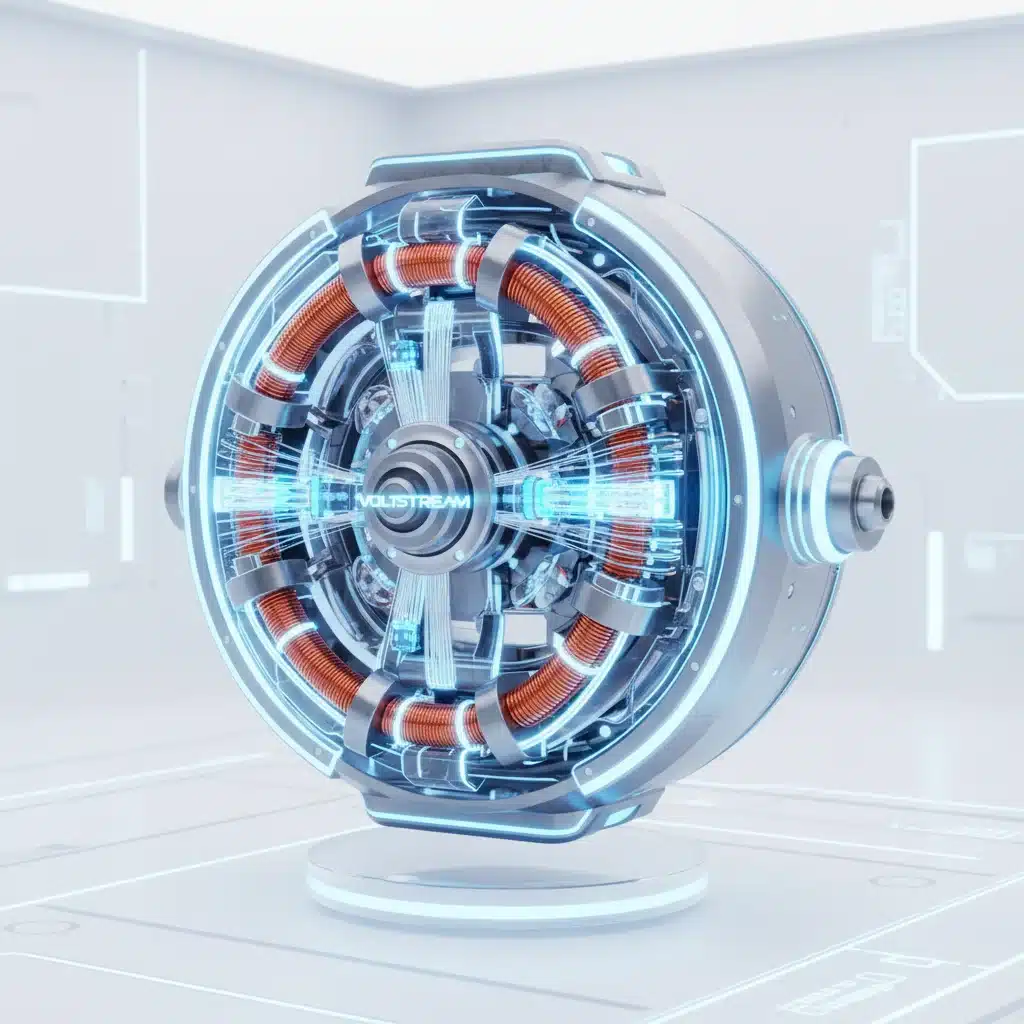
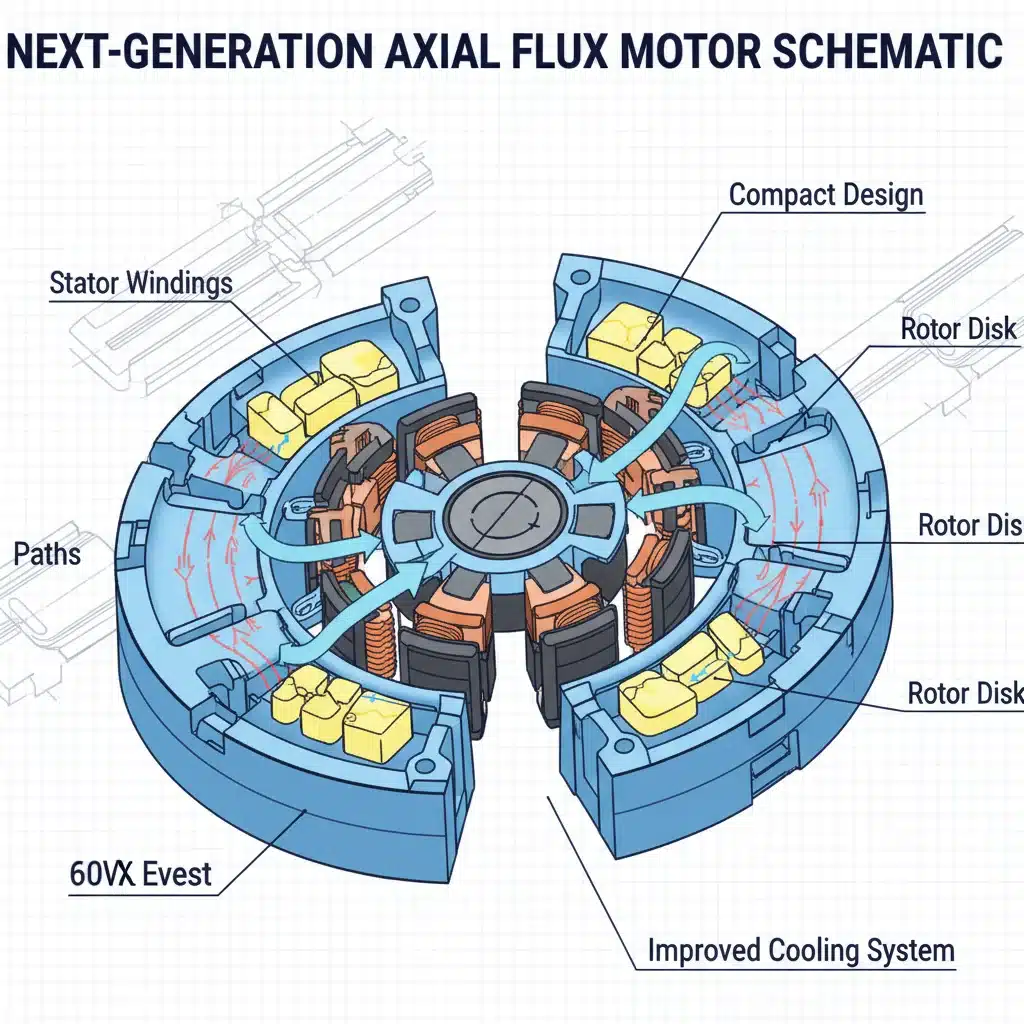
One of the most promising technologies poised to disrupt the EV motor landscape is the Axial Flux Motor (AFM). Unlike traditional radial flux motors, where the magnetic flux travels perpendicular to the axis of rotation, AFMs have their magnetic flux parallel to the axis of rotation. This fundamental difference in architecture offers several significant advantages:
Compact Design and Higher Power Density
AFMs are inherently more compact and disc-shaped, allowing for a much higher power density compared to their radial counterparts. This means more power and torque can be generated from a smaller, lighter package. For vehicle manufacturers, this translates to greater design flexibility, more interior space, and reduced overall vehicle weight, all contributing to better EV Motor Efficiency 2026.
Imagine a motor that can fit neatly within the wheel hub or be integrated more seamlessly into the vehicle chassis, freeing up space traditionally occupied by bulky radial motors. This compact form factor is not just about space-saving; it also allows for novel drivetrain configurations, such as multiple motors per axle, enabling advanced torque vectoring and unparalleled driving dynamics.
Improved Thermal Management
Heat is the enemy of efficiency and longevity in electric motors. AFMs often have better surface area-to-volume ratios, which can facilitate more effective heat dissipation. Advanced cooling strategies, such as direct oil cooling or integrated liquid cooling channels, can be more easily implemented in their design. Better thermal management means the motor can operate at peak efficiency for longer durations, under higher loads, without degradation in performance or premature wear.
This is particularly crucial for high-performance EVs and commercial vehicles, where sustained power output is essential. The ability to manage heat more effectively directly contributes to the motor’s ability to maintain high EV Motor Efficiency 2026 under diverse operating conditions, from stop-and-go city driving to high-speed highway cruising.
Reduced Rare Earth Dependence
While many early AFMs still utilized permanent magnets, ongoing research is exploring hybrid and wound rotor axial flux designs that can significantly reduce or even eliminate the need for rare earth materials. This move away from critical materials addresses both geopolitical supply chain risks and the environmental impact associated with rare earth mining and processing. Companies are investing heavily in developing magnet-free or low-magnet AFM solutions, aiming for a more sustainable and resilient future for EV manufacturing.
Enhanced Manufacturing Scalability
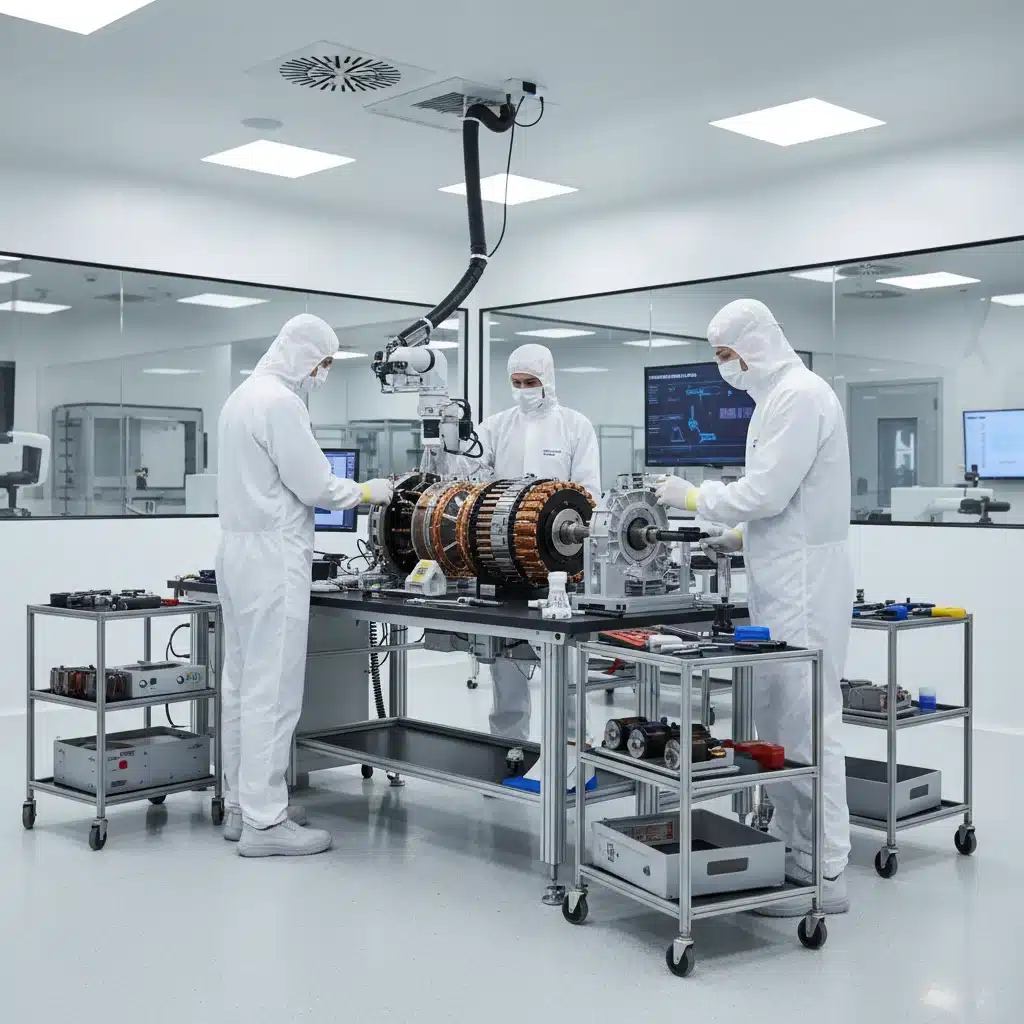
As AFM technology matures, manufacturing processes are becoming more streamlined and scalable. New winding techniques, automated assembly lines, and advanced material deposition methods are making it possible to produce these complex motors at a competitive cost. This scalability is vital for widespread adoption and the eventual democratization of highly efficient EV technology. The goal is not just to build better motors, but to build them efficiently and economically.
Several startups and established automotive suppliers are heavily investing in AFM development, with prototypes already demonstrating exceptional performance. We anticipate that by late 2026, the first production vehicles featuring these advanced axial flux motors will begin to hit the market, setting a new benchmark for EV Motor Efficiency 2026.
Beyond Axial Flux: Other Emerging Technologies
While axial flux motors are a major focus, the pursuit of ultimate EV Motor Efficiency 2026 is multifaceted. Several other innovative approaches are also gaining traction and will likely play a crucial role in the next generation of EV propulsion:
Switched Reluctance Motors (SRMs)
Switched Reluctance Motors (SRMs) are another magnet-free option that offer robust construction, high fault tolerance, and excellent efficiency over a wide operating range. Their simplicity in design – lacking windings on the rotor – makes them inherently durable and cost-effective to manufacture. The challenge with SRMs has historically been their higher noise and vibration levels, but significant advancements in control algorithms and acoustic dampening techniques are making them increasingly viable for automotive applications.
Research is focused on optimizing the stator and rotor geometries, as well as developing sophisticated electronic control units (ECUs) that can precisely manage the magnetic fields to minimize torque ripple and acoustic emissions. If these challenges are fully overcome, SRMs could offer a compelling alternative for mass-market EVs, especially those prioritizing cost-effectiveness and durability without sacrificing too much EV Motor Efficiency 2026.
Synchronous Reluctance Motors (SynRMs)
Similar to SRMs in their magnet-free nature, Synchronous Reluctance Motors (SynRMs) leverage the reluctance torque generated by the tendency of the rotor to align itself with the magnetic field of the stator. SynRMs offer high efficiency, particularly at higher speeds, and are known for their robust design and excellent thermal performance. They typically exhibit lower torque ripple and noise compared to SRMs, making them potentially more suitable for passenger vehicles.
The key to maximizing SynRM performance lies in optimizing the rotor design to create distinct magnetic saliency, which enhances the reluctance torque. Advanced computational fluid dynamics (CFD) and finite element analysis (FEA) are being used to simulate and refine these designs, pushing the boundaries of EV Motor Efficiency 2026 for magnet-free solutions. Their potential for high efficiency and lower material costs makes them strong contenders for future EV powertrains.
Integrated Motor and Inverter Designs
Beyond the motor itself, the integration of the motor and its power electronics (the inverter) is a significant area of innovation. Combining these components into a single, compact unit offers several benefits: reduced cabling, lower resistive losses, improved thermal management of the entire system, and ultimately, higher overall system efficiency. This integration also contributes to a more compact package, reducing weight and complexity.
By late 2026, we expect to see more sophisticated integrated motor-inverter units that leverage advanced semiconductor materials like Silicon Carbide (SiC) and Gallium Nitride (GaN). These wide-bandgap semiconductors allow for higher switching frequencies, leading to smaller, lighter, and more efficient inverters, which in turn contributes to greater overall EV Motor Efficiency 2026 from the entire propulsion system.
Material Science Breakthroughs: The Unsung Heroes of Efficiency
The performance of any electric motor is intrinsically linked to the materials used in its construction. The next generation of EV motors will heavily rely on breakthroughs in material science, particularly in magnetic materials, conductors, and insulation.
Advanced Magnetic Materials
For motors that still utilize permanent magnets, such as enhanced PMSMs or some AFMs, researchers are developing new magnetic alloys that offer higher magnetic flux density and better temperature stability, potentially reducing the amount of rare earth material needed or allowing for smaller, more powerful magnets. Efforts are also underway to develop novel non-rare earth permanent magnets, offering a truly sustainable alternative.
High-Performance Conductors
Copper remains the gold standard for motor windings due to its excellent conductivity. However, innovations in winding techniques, such as hairpin windings and optimized litz wire, are reducing resistive losses and improving heat dissipation. Furthermore, research into alternative conductors or hybrid conductor designs could yield further efficiency gains.
Improved Insulation and Core Materials
The insulation materials within the motor must withstand high temperatures and electrical stresses. New polymers and composites are being developed that offer superior dielectric strength and thermal resistance, allowing motors to operate more reliably at higher power densities. Similarly, advancements in soft magnetic core materials, such as amorphous metals or advanced silicon steels, are reducing eddy current losses and hysteresis losses, crucial for boosting EV Motor Efficiency 2026.
These material innovations, often unseen by the end-user, are fundamental to achieving the performance and efficiency targets for next-gen EV motors. They are the bedrock upon which the architectural and design advancements are built.
The Impact on Electric Vehicles and Beyond
The arrival of these next-generation EV motors in late 2026 will have a profound impact across the entire electric vehicle ecosystem and potentially beyond.
Extended Range and Faster Charging
The most immediate and tangible benefit for consumers will be significantly extended driving ranges. With higher EV Motor Efficiency 2026, electric vehicles will be able to travel further on a single charge, alleviating range anxiety and making long-distance travel more convenient. This efficiency also means less energy is wasted as heat during charging, potentially allowing for faster charging rates without overheating the battery or motor components.
Smaller, Lighter Batteries and Reduced Costs
Greater motor efficiency allows for the use of smaller battery packs to achieve the same range. Smaller batteries mean lower manufacturing costs, reduced vehicle weight (which further improves efficiency), and less demand for critical raw materials like lithium and cobalt. This reduction in battery size and cost is a crucial step towards making EVs more affordable and accessible to a broader market.
Enhanced Performance and Driving Dynamics
Beyond efficiency, these new motors will offer higher power density and torque delivery. This translates to quicker acceleration, more responsive handling, and an overall more engaging driving experience. For sports cars and performance-oriented EVs, the advancements will be particularly noticeable, pushing the boundaries of what electric propulsion can achieve.
Greater Design Freedom for OEMs
The compact nature of technologies like axial flux motors provides automotive designers with unprecedented freedom. Motors can be integrated more closely with the wheels (in-wheel motors), allowing for completely flat floor designs, more interior space, and innovative vehicle architectures. This could lead to a new generation of EVs that are not only efficient but also revolutionize vehicle packaging and design.
Sustainability and Supply Chain Resilience
The move away from rare earth materials, coupled with more efficient manufacturing processes and better material recyclability, will significantly enhance the sustainability profile of electric vehicles. Reduced reliance on specific geographic regions for critical materials will also strengthen supply chains, making the EV industry more resilient to geopolitical fluctuations.
Applications Beyond Passenger Vehicles
The principles of higher EV Motor Efficiency 2026 and power density are not limited to passenger cars. These advancements will also benefit electric trucks, buses, construction equipment, and even electric aircraft. The ability to generate more power from a smaller, lighter motor is transformative for heavy-duty applications where weight and efficiency are paramount.
Challenges and the Road Ahead
While the future of EV motors looks incredibly bright, the path to widespread adoption of these next-gen technologies is not without its challenges. Research and development is expensive, and scaling up production for entirely new motor architectures requires significant investment in tooling, manufacturing processes, and workforce training.
Standardization will also be a key factor. As new motor types emerge, establishing industry standards for performance metrics, testing procedures, and perhaps even basic form factors will be important for fostering competition and accelerating adoption. Furthermore, the integration of these advanced motors with existing vehicle platforms and control systems will require sophisticated engineering and rigorous testing.
Despite these hurdles, the momentum is undeniable. Governments, automotive manufacturers, and technology companies are all heavily invested in pushing the boundaries of electric propulsion. The race for the most efficient, powerful, and sustainable EV motor is in full swing, and late 2026 marks a significant milestone in this journey.
Conclusion: A Glimpse into the Electrifying Future
The upcoming generation of EV motors, set to arrive in late 2026, represents a monumental leap forward in electric vehicle technology. Driven by the relentless pursuit of higher EV Motor Efficiency 2026, these innovations promise to deliver longer ranges, enhanced performance, and a more sustainable future for transportation. Axial flux motors, advanced reluctance machines, and integrated power electronics, combined with revolutionary material science, are converging to redefine the capabilities of electric propulsion.
As we move closer to 2026, expect to see an increasing number of announcements and prototypes showcasing these incredible advancements. The transformation will not only impact the specifications on a vehicle’s brochure but will fundamentally change the driving experience, the economics of EV ownership, and the environmental footprint of personal and commercial transportation. The era of ultra-efficient, high-performance electric motors is upon us, paving the way for a truly electrifying future.
Stay tuned as we continue to track these developments and bring you the latest insights into the ever-evolving world of electric vehicles. The journey to a fully electric, highly efficient automotive landscape is accelerating, and the next-gen EV motors are at the very heart of this exciting revolution.