Smart City Renewable Energy: 40% Carbon Cut by 2026
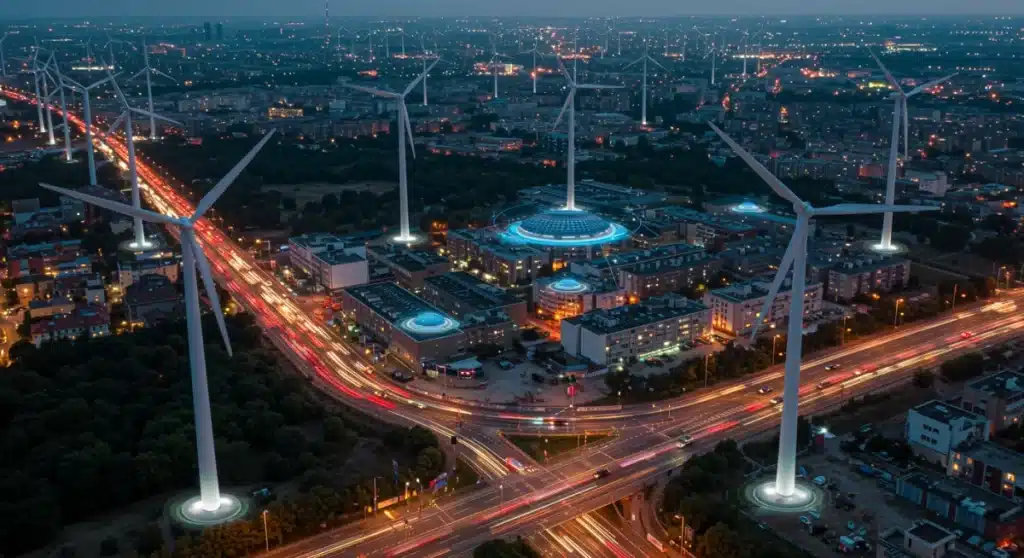
Integrating renewable energy into smart city designs is pivotal for achieving a significant 40% carbon emission reduction by 2026, driving sustainable urban development and enhancing environmental resilience across the United States.
The urgency to combat climate change has never been more pronounced, pushing urban centers globally to rethink their infrastructure. In the United States, a significant shift is underway, with cities striving for ambitious environmental goals. One of the most critical pathways to a sustainable future involves integrating renewable energy into smart city designs, aiming for a substantial 40% carbon emission reduction by 2026. This endeavor is not merely an environmental aspiration but a comprehensive strategy for economic growth, enhanced quality of life, and technological innovation. It represents a fundamental transformation in how urban environments consume and produce energy, moving towards a resilient and decarbonized future.
The imperative for integrating renewable energy
The global climate crisis demands immediate and transformative action, with urban areas being both significant contributors to, and potential solutions for, carbon emissions. Cities consume over two-thirds of the world’s energy and account for more than 70% of global carbon emissions. The United States, with its vast urban sprawl, faces a unique challenge and opportunity to lead in sustainable urban development. Integrating renewable energy into smart city designs is no longer a futuristic concept but a present-day necessity, driven by environmental mandates, economic incentives, and technological advancements.
This integration goes beyond simply installing solar panels or wind turbines; it involves a holistic approach that embeds renewable energy generation, storage, and distribution within the very fabric of urban planning and infrastructure. The ambitious target of a 40% carbon emission reduction by 2026 reflects a recognition that incremental changes are insufficient. Instead, a systemic overhaul of urban energy systems is required, leveraging the power of smart technologies to optimize energy use and maximize the benefits of clean energy sources.
Driving factors for renewable integration
- Climate Change Mitigation: Reducing greenhouse gas emissions to combat global warming and its adverse effects, such as extreme weather events and rising sea levels.
- Energy Security: Decreasing reliance on fossil fuels and geopolitical risks by diversifying energy sources with locally generated renewables.
- Economic Benefits: Creating green jobs, stimulating local economies, and reducing long-term energy costs for residents and businesses.
- Public Health Improvements: Lowering air pollution associated with fossil fuel combustion, leading to better respiratory health outcomes for urban populations.
The journey towards a renewable-powered smart city is complex, requiring collaboration between policymakers, urban planners, technology providers, and community stakeholders. It’s about building cities that are not only efficient and technologically advanced but also environmentally responsible and resilient for future generations.
Smart grid evolution and renewable energy integration
The backbone of any successful renewable energy integration strategy in smart cities is the evolution of the smart grid. Traditional power grids were designed for centralized, one-way power flow from large fossil fuel plants to consumers. In contrast, smart grids are decentralized, bidirectional, and highly intelligent, capable of managing diverse energy sources, including intermittent renewables like solar and wind power. This technological leap is fundamental to achieving ambitious carbon reduction targets by 2026.
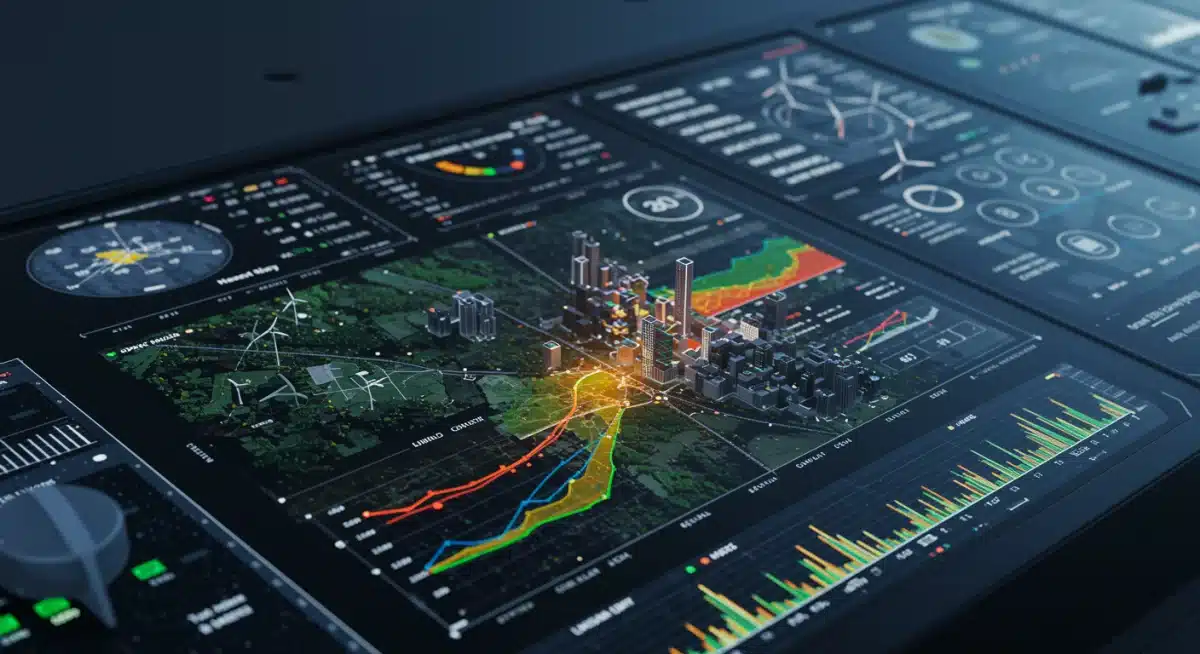
Smart grids incorporate advanced sensors, digital communications, and control systems to monitor and manage energy flow in real-time. This capability allows for efficient energy distribution, demand-side management, and the seamless integration of distributed renewable energy generation. Without a robust smart grid, the widespread adoption of rooftop solar, community solar farms, and urban wind turbines would be significantly hampered by grid instability and inefficiencies.
Key components of smart grid integration
- Advanced Metering Infrastructure (AMI): Provides real-time data on energy consumption, enabling both consumers and utilities to make informed decisions.
- Energy Storage Systems: Batteries (utility-scale and residential) are crucial for storing excess renewable energy and releasing it when demand is high or renewable generation is low, ensuring grid stability.
- Demand Response Programs: Incentivize consumers to reduce or shift their energy consumption during peak periods, alleviating strain on the grid and maximizing renewable energy use.
The development and deployment of smart grid technologies require substantial investment and policy support. However, the long-term benefits, including enhanced grid resilience, reduced energy losses, and increased capacity for renewable energy, far outweigh the initial costs. As cities across the United States adopt these advanced systems, they pave the way for a truly sustainable energy future, making the 40% carbon reduction goal a tangible reality.
Innovative renewable technologies for urban environments
To achieve a 40% carbon emission reduction by 2026, smart cities must embrace a diverse portfolio of innovative renewable energy technologies tailored for dense urban environments. While solar photovoltaic (PV) panels and wind turbines are well-known, advancements are continually expanding the possibilities for urban energy generation. These technologies are becoming more efficient, aesthetically pleasing, and adaptable to the unique constraints of cityscapes.
Beyond traditional rooftop solar installations, building-integrated photovoltaics (BIPV) are gaining traction, where solar cells are seamlessly incorporated into building materials like facades, windows, and roofs. This approach maximizes energy generation without compromising architectural design. Similarly, small-scale vertical axis wind turbines are being developed for urban settings, designed to operate effectively in turbulent city winds with minimal noise pollution.
Emerging urban renewable solutions
- Geothermal Systems: Utilizing the Earth’s stable underground temperature to provide efficient heating and cooling for buildings, significantly reducing energy consumption.
- Waste-to-Energy (WtE) Conversion: Transforming municipal solid waste into electricity or heat, addressing both waste management challenges and energy needs.
- Hydrokinetic Power: Exploring potential for small-scale hydropower in urban rivers or wastewater treatment plants, where applicable.
Furthermore, innovative approaches to energy harvesting, such as piezoelectric materials that generate electricity from vibrations (e.g., foot traffic, vehicle movement) and osmotic power from salinity gradients, hold promise for niche urban applications. The key lies in a strategic mix of these technologies, optimized for each city’s specific geographical, climatic, and infrastructural characteristics, ensuring a robust and diversified renewable energy supply.
Policy and regulatory frameworks supporting integration
The successful integration of renewable energy into smart city designs is heavily reliant on supportive policy and regulatory frameworks. Without clear guidelines, incentives, and mandates, the transition to a low-carbon urban future would be significantly slower and more fragmented. Governments at federal, state, and local levels in the United States play a crucial role in creating an enabling environment for renewable energy adoption and carbon reduction.
Federal policies, such as tax credits for renewable energy projects and grants for smart grid development, provide essential financial impetus. State-level Renewable Portfolio Standards (RPS) mandate that a certain percentage of electricity come from renewable sources, driving utility investments. However, local policies are often the most impactful for smart city initiatives, including zoning ordinances that favor renewable installations, streamlined permitting processes, and building codes that encourage energy efficiency and BIPV.
Essential policy mechanisms
- Net Metering: Allows homeowners and businesses with solar panels to receive credit for excess electricity they feed back into the grid, promoting widespread adoption.
- Feed-in Tariffs (FiTs): Guarantee a fixed price for renewable energy fed into the grid, providing financial certainty for investors.
- Green Building Certifications: Encourage sustainable construction practices, including renewable energy integration, through standards like LEED and Green Globes.
Beyond financial incentives, regulations that promote data sharing and interoperability across smart city systems are vital for optimizing energy management. Public-private partnerships are also critical, allowing cities to leverage private sector expertise and capital. By aligning these policy and regulatory efforts, cities can accelerate their progress towards the 40% carbon emission reduction target by 2026, fostering a cohesive and sustainable urban development strategy.
Economic and social benefits of smart city renewable energy
The drive to integrate renewable energy into smart city designs extends far beyond environmental concerns; it unlocks a cascade of economic and social benefits that profoundly impact urban populations in the United States. Achieving a 40% carbon emission reduction by 2026 is not just about a cleaner planet, but also about building more resilient, equitable, and prosperous communities.
Economically, investments in renewable energy infrastructure create new industries and jobs, from manufacturing and installation to maintenance and research. This localized job creation helps to stimulate regional economies and reduce unemployment rates. Furthermore, by reducing reliance on volatile fossil fuel markets, cities can achieve greater energy independence and price stability, shielding consumers and businesses from fluctuating energy costs. Lower energy bills, combined with the potential for income from selling excess renewable energy back to the grid, can significantly improve household finances.
Societal advantages of green urban energy
- Improved Public Health: Reduced air pollution from fossil fuel power plants leads to fewer respiratory illnesses and associated healthcare costs.
- Enhanced Energy Access and Equity: Distributed renewable energy systems can provide reliable power to underserved communities, reducing energy poverty.
- Increased Community Resilience: Localized renewable energy sources and microgrids offer greater resilience during power outages caused by extreme weather or other disruptions.
- Technological Innovation: Smart city renewable initiatives foster research and development in clean energy, smart grids, and sustainable urban planning, positioning cities as leaders in innovation.
Socially, cleaner air and a healthier environment contribute to a higher quality of life for urban residents. The creation of green spaces for renewable energy installations can also enhance urban aesthetics and provide recreational opportunities. Ultimately, the transition to renewable-powered smart cities represents a strategic investment in the long-term well-being and sustainability of urban communities, proving that environmental responsibility and economic prosperity can go hand-in-hand.
Challenges and future outlook for 2026 and beyond
While the vision of integrating renewable energy into smart city designs for a 40% carbon emission reduction by 2026 is compelling, it is not without its challenges. The path ahead requires overcoming significant technical, financial, and social hurdles. However, with concerted effort and continued innovation, these obstacles can be transformed into opportunities for growth and further advancement in urban sustainability.
One primary challenge is the intermittency of renewable sources like solar and wind, which necessitates robust energy storage solutions and advanced grid management. The initial capital investment for large-scale renewable projects and smart grid upgrades can also be substantial, requiring creative financing models and consistent government support. Furthermore, public acceptance and engagement are crucial; educating residents about the benefits and addressing concerns about aesthetic impacts or land use are vital for successful implementation.
Addressing key challenges
- Grid Modernization Costs: Securing funding and developing innovative financing mechanisms for comprehensive smart grid overhauls.
- Technological Integration: Ensuring seamless interoperability between diverse renewable energy systems, smart city platforms, and existing infrastructure.
- Policy Consistency: Maintaining stable and predictable policy frameworks that incentivize long-term investments in renewable energy.
Looking beyond 2026, the trajectory for smart city renewable energy integration is one of continuous evolution. We can anticipate further breakthroughs in energy storage technologies, such as solid-state batteries and hydrogen fuel cells, making renewable energy even more reliable. Artificial intelligence and machine learning will play an increasingly critical role in optimizing energy forecasting, demand response, and predictive maintenance for renewable assets. The future will also see greater emphasis on circular economy principles within smart cities, where waste is minimized, and resources are continually reused, further reducing the carbon footprint. The journey towards a fully decarbonized urban future is an ongoing process, but the ambitious targets set for 2026 are laying a strong foundation for sustained progress.
| Key Point | Brief Description |
|---|---|
| Carbon Reduction Goal | Aiming for a 40% carbon emission reduction by 2026 through renewable energy integration. |
| Smart Grid Necessity | Essential for managing diverse, intermittent renewable energy sources efficiently. |
| Innovative Technologies | Utilizing BIPV, geothermal, and waste-to-energy for urban power generation. |
| Policy Support | Crucial for providing incentives and regulatory frameworks for renewable adoption. |
Frequently asked questions about smart city renewable energy
The main objective is to achieve a substantial 40% reduction in carbon emissions. This ambitious target aims to combat climate change, enhance urban sustainability, and foster a cleaner environment for residents, aligning with global efforts to decarbonize urban centers.
Smart grids enable bidirectional energy flow, real-time monitoring, and demand-side management. They can seamlessly integrate intermittent renewable sources like solar and wind, ensuring grid stability and efficiency, which is essential for maximizing clean energy utilization.
Beyond traditional solar and wind, urban environments can utilize building-integrated photovoltaics (BIPV), geothermal heating/cooling systems, and waste-to-energy conversion. These technologies maximize energy generation within limited urban spaces and integrate aesthetically.
Government policies, including tax credits, Renewable Portfolio Standards, net metering, and streamlined permitting, are crucial. They provide financial incentives, regulatory frameworks, and planning guidance necessary to accelerate the adoption and deployment of renewable energy solutions.
Economic benefits include job creation in green sectors, reduced energy costs for consumers, increased energy independence, and stimulation of local economies. These advantages contribute to greater urban prosperity and resilience against volatile energy markets.
Conclusion
The journey towards integrating renewable energy into smart city designs is a monumental undertaking, but one that promises transformative benefits for urban centers across the United States. The ambitious target of a 40% carbon emission reduction by 2026 is a testament to the urgency and commitment required. By evolving smart grids, embracing innovative technologies, and fostering supportive policy environments, cities can not only meet this goal but also lay the groundwork for a truly sustainable and resilient future. The economic prosperity, enhanced public health, and improved quality of life that stem from these efforts underscore that investing in renewable-powered smart cities is a strategic imperative for the well-being of current and future generations. The challenges are real, but the collective vision and ongoing innovation offer a clear path forward.