Smart Parking Solutions: Boost Revenue, Cut Search Times in US Downtowns
Smart parking solutions are poised to revolutionize urban areas, projected to boost revenue by 10% and significantly reduce average parking search times by 15 minutes in US downtowns by 2026, enhancing urban efficiency and driver experience.
The urban landscape is constantly evolving, presenting both challenges and opportunities for city planners and residents alike. Among these, parking remains a persistent pain point, consuming valuable time, fuel, and contributing to urban congestion. However, the advent of smart parking solutions is rapidly transforming this narrative, promising a future where finding a spot is no longer a dreaded ordeal but a seamless experience. These innovative systems are not just about convenience; they are projected to significantly boost revenue by 10% and reduce average parking search times by a remarkable 15 minutes in US downtowns by 2026, marking a pivotal shift in urban mobility and economic vitality.
The pressing need for smart parking in US downtowns
US downtowns, as economic and cultural hubs, grapple with intense traffic and parking challenges daily. Drivers often circle blocks for extended periods, leading to wasted time, increased emissions, and heightened frustration. This inefficiency directly impacts local businesses, as potential customers may avoid areas perceived as difficult to access.
The traditional parking model, with its reliance on manual enforcement and static signage, simply cannot keep pace with the dynamic demands of modern urban environments. Cities are recognizing that a more intelligent approach is essential to maintain vibrancy and attract investment. The shift towards smart parking is not merely an upgrade; it’s a strategic imperative for sustainable urban development and economic growth.
Economic impact of parking challenges
The hidden costs of inefficient parking extend far beyond individual driver frustration. Businesses suffer from reduced foot traffic, and cities miss out on potential revenue from parking fees and associated economic activity. Studies often highlight how a lack of convenient parking can deter visitors and shoppers, directly impacting the bottom line of downtown establishments.
- Lost revenue for businesses due to parking scarcity.
- Increased operational costs for parking management.
- Environmental impact from prolonged vehicle idling.
- Negative perception of downtown areas due to congestion.
Addressing these economic drawbacks requires a comprehensive, technology-driven strategy that optimizes existing parking infrastructure and provides real-time information to users. Smart parking solutions offer that precise blend of innovation and practicality, turning a challenge into an opportunity for economic revitalization.
How smart parking solutions work: A technological overview
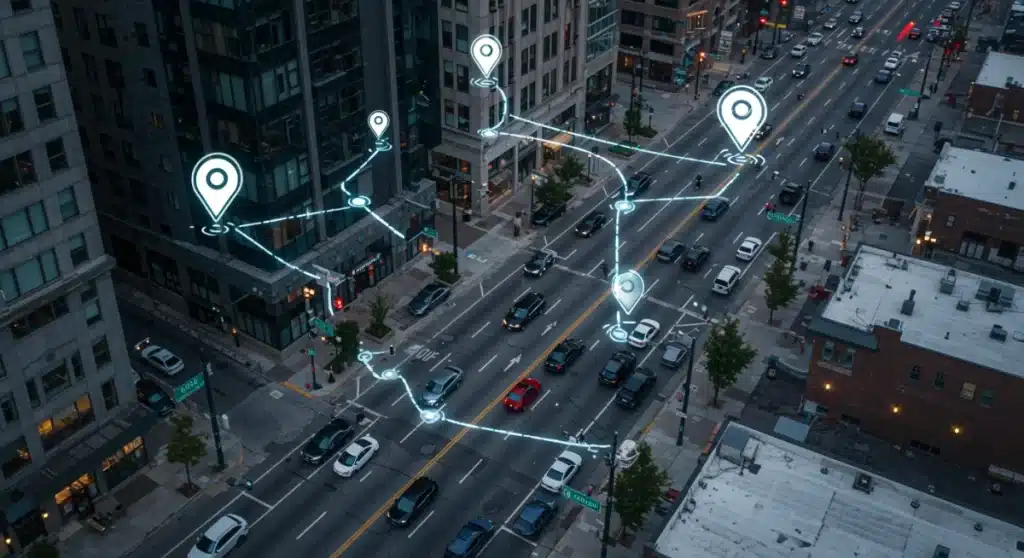
At its core, smart parking leverages a combination of cutting-edge technologies to provide real-time information about parking availability and facilitate seamless transactions. This ecosystem typically integrates sensors, cameras, data analytics, and mobile applications to create a connected and responsive parking network. The goal is to eliminate guesswork and empower drivers with the information they need to make informed decisions.
These systems can range from simple occupancy sensors in individual parking spots to sophisticated camera-based systems that monitor entire garages or street sections. The data collected is then processed and disseminated, often through user-friendly mobile apps or digital signage, guiding drivers directly to available spaces. This technological leap represents a significant departure from outdated methods, promising a future of streamlined urban mobility.
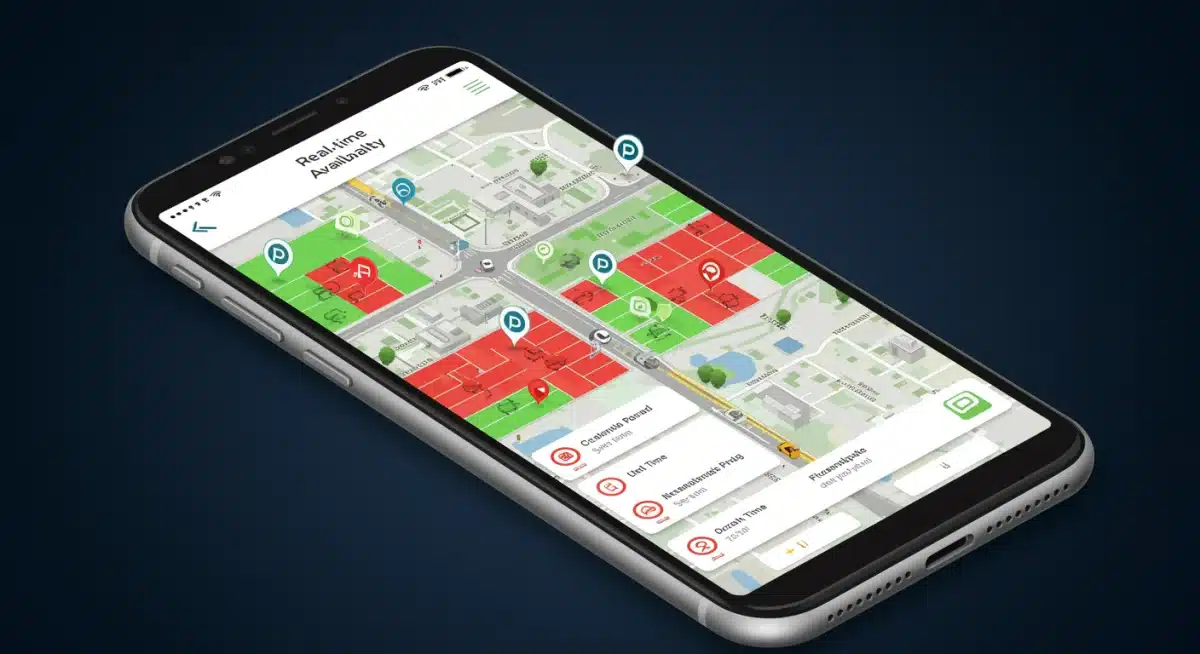
The integration of artificial intelligence (AI) and machine learning (ML) further enhances these solutions, enabling predictive analytics that can forecast parking demand based on historical data, events, and even weather patterns. This proactive approach allows cities to dynamically adjust pricing or direct traffic, further optimizing the parking experience.
Key technologies driving smart parking
Several technological pillars underpin effective smart parking systems, each playing a crucial role in data collection, processing, and dissemination.
- Sensors: Ultrasonic, infrared, or magnetic sensors detect vehicle presence in individual parking spots, providing accurate occupancy data.
- Cameras and Computer Vision: High-resolution cameras, combined with AI-powered computer vision, can monitor large areas, identify vacant spots, and even recognize license plates for automated payment and enforcement.
- Connectivity (IoT): Internet of Things (IoT) devices ensure that sensors and cameras are connected, transmitting data wirelessly to a central platform for analysis.
- Data Analytics and AI: Sophisticated algorithms process vast amounts of real-time and historical data to predict patterns, optimize pricing, and provide actionable insights.
- Mobile Applications: User-friendly apps allow drivers to view real-time availability, navigate to open spots, and make cashless payments, enhancing convenience.
The synergy of these technologies creates a powerful system that not only informs but also actively manages the parking landscape, leading to more efficient urban spaces.
Boosting revenue by 10%: The economic upside
The financial benefits of implementing smart parking solutions are substantial and multifaceted. By optimizing pricing, improving compliance, and increasing turnover, cities can unlock significant new revenue streams. The projected 10% boost in revenue for US downtowns by 2026 is a conservative estimate, reflecting the profound impact these systems can have on urban economies.
Dynamic pricing, for instance, allows cities to adjust parking rates based on real-time demand, much like ride-sharing services. During peak hours, rates might be slightly higher to encourage shorter stays and greater turnover, while off-peak hours could see reduced rates to attract more visitors. This not only maximizes revenue but also helps regulate parking behavior, distributing demand more evenly.
Dynamic pricing and increased compliance
One of the most powerful tools in the smart parking arsenal is dynamic pricing. This approach moves away from static, fixed rates, allowing prices to fluctuate based on factors such as:
- Time of day or week.
- Special events or holidays.
- Current occupancy levels.
This flexibility ensures that parking spaces are utilized more efficiently, generating more income for the city. Furthermore, automated enforcement, often linked to license plate recognition (LPR) technology, dramatically increases compliance with parking regulations. This reduces the number of unpaid tickets and ensures that drivers pay for the time they use, directly contributing to revenue growth.
The ease of cashless payments through mobile apps also removes barriers to payment, leading to fewer instances of non-payment and a more consistent revenue flow. The combination of optimized pricing and enhanced enforcement creates a robust financial model for urban parking.
Reducing search times by 15 minutes: Enhancing urban experience
Beyond the financial gains, one of the most immediate and tangible benefits of smart parking is the significant reduction in parking search times. Imagine driving into a busy downtown area and, instead of circling endlessly, being directed straight to an available spot. This is the promise of smart parking, and the projected 15-minute reduction in search times by 2026 for US downtowns will be a game-changer for urban dwellers and visitors alike.
This reduction translates directly into saved time, reduced stress, and a more pleasant urban experience. For commuters, it means arriving at their destination faster and with less frustration. For shoppers and tourists, it means more time enjoying downtown attractions and less time worrying about parking.
Impact on traffic congestion and air quality
The ripple effect of reduced parking search times extends far beyond individual convenience. A significant portion of urban traffic congestion is caused by drivers searching for parking. By guiding drivers directly to available spots, smart parking systems dramatically reduce the number of vehicles circling streets, leading to:
- Decreased Traffic Congestion: Fewer vehicles searching for parking means smoother traffic flow and less gridlock, especially during peak hours.
- Improved Air Quality: Reduced idling and shorter driving distances lead to a significant decrease in vehicle emissions, contributing to cleaner urban air.
- Lower Fuel Consumption: Drivers spend less time on the road and use less fuel, resulting in cost savings for individuals and a smaller carbon footprint for the city.
These environmental and societal benefits underscore the holistic value proposition of smart parking, making downtowns not just more efficient but also healthier and more livable.
Challenges and considerations for implementation
While the benefits of smart parking solutions are clear, their implementation is not without challenges. Cities must navigate a complex landscape of technological integration, data privacy concerns, and public acceptance. A successful rollout requires careful planning, stakeholder collaboration, and a clear understanding of both the opportunities and obstacles.
One significant hurdle is the initial investment required for infrastructure upgrades, including sensors, cameras, and central management systems. While the long-term returns are promising, securing funding and demonstrating a clear return on investment (ROI) can be a barrier for some municipalities. Furthermore, integrating new smart parking systems with existing legacy infrastructure can be technically complex and time-consuming.
Data privacy and cybersecurity concerns
The collection of real-time data, often including vehicle movements and license plate information, raises important questions about data privacy. Citizens and advocacy groups may express concerns about how this data is collected, stored, and used. Cities must implement robust data governance policies and ensure transparency to build public trust.
- Secure Data Storage: Ensuring that collected data is stored securely and protected from breaches.
- Anonymization: Implementing measures to anonymize data where possible to protect individual privacy.
- Clear Policies: Developing clear and publicly accessible policies on data collection and usage.
- Cybersecurity Protocols: Establishing strong cybersecurity measures to protect the entire smart parking network from cyber threats.
Addressing these concerns proactively is essential for the widespread adoption and success of smart parking initiatives. Building trust through transparent practices and secure systems will be paramount.
The future of urban parking: Integration and innovation
Looking ahead to 2026 and beyond, the evolution of smart parking solutions will be characterized by greater integration with broader smart city initiatives and continuous technological innovation. Parking will no longer be an isolated challenge but an integral component of a connected urban ecosystem, working in synergy with public transport, ride-sharing, and autonomous vehicles.
The development of advanced predictive analytics will become even more sophisticated, allowing cities to anticipate parking demand with greater accuracy and adjust resources accordingly. This proactive management will further enhance efficiency and reduce congestion, making urban centers more navigable and enjoyable.
Seamless integration with smart city ecosystems
- Connected Mobility Platforms: Parking data will feed into comprehensive urban mobility platforms that help citizens plan their entire journey, from origin to destination, incorporating various modes of transport.
- Autonomous Vehicle Integration: As autonomous vehicles become more prevalent, smart parking systems will need to adapt to their unique needs, potentially including automated valet parking and charging infrastructure.
- Smart Grid Integration: Electric vehicle (EV) charging stations integrated into smart parking facilities can interact with the smart grid, optimizing energy consumption and supporting renewable energy sources.
- Urban Planning: Data from smart parking can inform urban planners about traffic patterns and parking demand, guiding future infrastructure development and land use decisions.
This integrated approach will transform urban parking from a mere necessity into a strategic asset, significantly contributing to the overall intelligence and sustainability of US downtowns.
| Key Aspect | Brief Description |
|---|---|
| Revenue Boost | Projected 10% increase in downtown revenue by 2026 through dynamic pricing and improved compliance. |
| Reduced Search Times | Expected 15-minute reduction in average parking search time, enhancing driver experience and urban flow. |
| Core Technologies | Utilizes sensors, cameras, IoT, AI, and mobile apps for real-time data and management. |
| Urban Impact | Decreases congestion, improves air quality, and integrates with broader smart city initiatives. |
Frequently Asked Questions about Smart Parking
Smart parking solutions offer multiple benefits, including a projected 10% increase in city revenue through optimized pricing and improved compliance. They also significantly reduce parking search times by an average of 15 minutes, leading to less congestion, lower emissions, and a better overall urban experience for drivers and residents.
Revenue generation is boosted through dynamic pricing models that adjust rates based on demand, maximizing income during peak periods. Additionally, automated enforcement systems, often using license plate recognition, improve compliance with parking regulations, reducing unpaid fines and ensuring consistent revenue streams for municipalities.
Effective smart parking relies on a combination of technologies. Key components include sensors (ultrasonic, magnetic) for occupancy detection, cameras with computer vision for monitoring, IoT for connectivity, advanced data analytics and AI for predictive insights, and user-friendly mobile applications for real-time information and cashless payments.
By providing real-time information on available parking spots, smart parking systems guide drivers directly to open spaces. This eliminates the need for vehicles to circle blocks searching for parking, which is a major contributor to urban congestion. Reduced circling leads to smoother traffic flow, less idling, and overall more efficient urban mobility.
Implementation challenges include the significant initial investment in new infrastructure and the complexity of integrating these systems with existing city technologies. Additionally, ensuring data privacy and addressing cybersecurity concerns are critical. Public acceptance and stakeholder collaboration are also vital for successful and sustainable deployment of smart parking solutions.
Conclusion
The trajectory for smart parking solutions in US downtowns points towards a future of enhanced efficiency, increased revenue, and significantly improved urban living. By 2026, the projected 10% boost in revenue and a 15-minute reduction in parking search times will not just be statistical achievements; they will represent a tangible improvement in the daily lives of countless urban residents and visitors. As cities continue to embrace these innovative technologies, they are not merely solving a parking problem but are actively creating more dynamic, sustainable, and economically vibrant urban environments. The integration of smart parking into broader smart city ecosystems promises to further amplify these benefits, paving the way for a truly connected and intelligent urban future.