US Smart Highways: 12% Traffic Flow Improvement by 2026
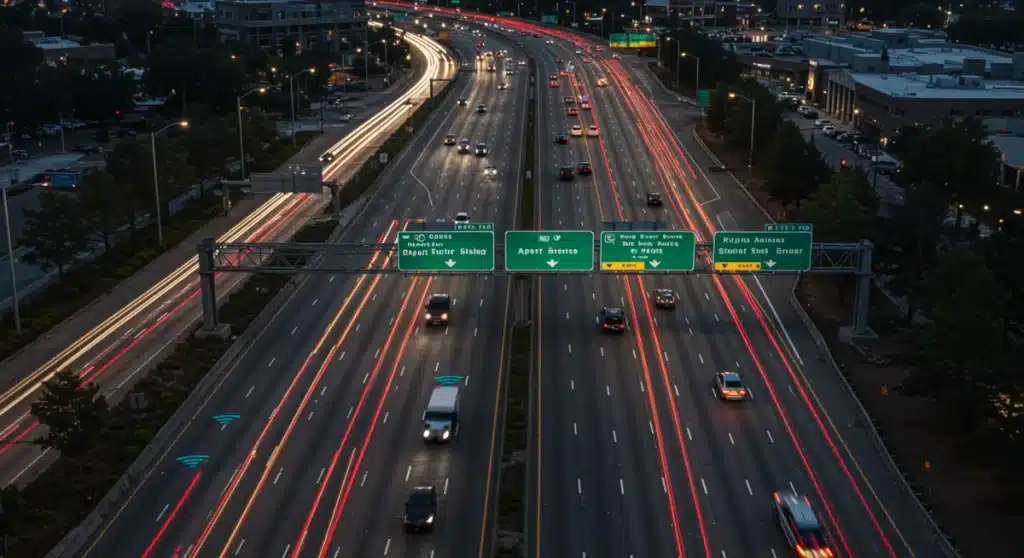
Connected infrastructure in the US is projected to improve traffic flow by 12% by 2026 through the integration of smart highway technologies, enhancing efficiency and safety.
The vision of seamlessly flowing traffic and reduced commute times is becoming a reality across the United States. US Smart Highways are at the forefront of this transformation, leveraging cutting-edge technology to enhance efficiency, safety, and overall driver experience. By 2026, these advancements are projected to improve traffic flow by a significant 12%, offering practical solutions to long-standing transportation challenges.
The Dawn of Connected Infrastructure in the US
Connected infrastructure represents a paradigm shift in how we conceive and manage our transportation networks. Far beyond simple asphalt and concrete, smart highways integrate advanced communication technologies, sensors, and data analytics to create a responsive and intelligent road system. This evolution is crucial for handling increasing traffic volumes and supporting the next generation of vehicles.
The underlying principle is simple yet profound: enable constant communication between vehicles, infrastructure, and traffic management centers. This interconnectedness allows for real-time adjustments and proactive measures that were previously impossible. The result is a more efficient and safer driving environment for everyone on the road.
Defining Smart Highways
- Integrated Sensors: Networks of sensors embedded in the road surface or mounted alongside collect data on traffic volume, speed, weather conditions, and road surface integrity.
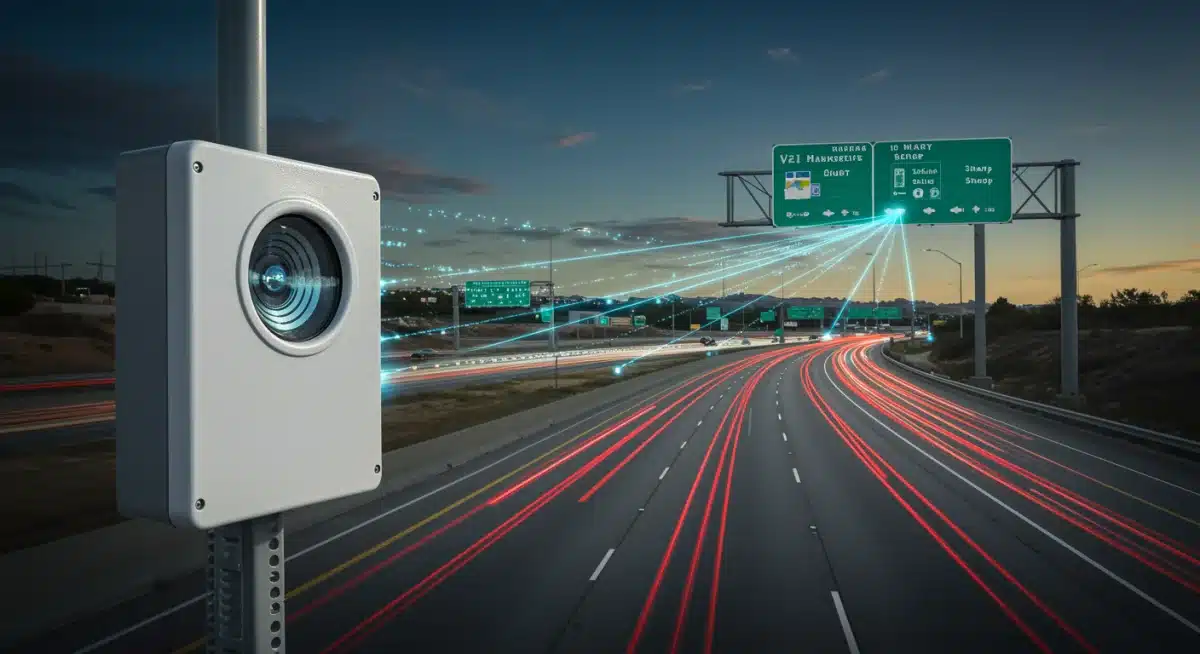
- Communication Systems: Vehicle-to-everything (V2X) communication, including vehicle-to-vehicle (V2V) and vehicle-to-infrastructure (V2I), allows for direct data exchange.
- Intelligent Traffic Signals: Adaptive traffic light systems adjust timing based on real-time traffic demand, reducing unnecessary stops and delays.
- Data Analytics Platforms: Sophisticated software processes vast amounts of data to identify patterns, predict congestion, and optimize traffic flow.
The implementation of these technologies is not uniform across the US, but key pilot programs and regional initiatives are demonstrating their immense potential. These early successes are paving the way for broader adoption and the realization of a truly connected transportation ecosystem.
Ultimately, connected infrastructure is about more than just technology; it’s about creating a more resilient, sustainable, and user-centric transportation system. By empowering both drivers and traffic managers with better information and control, we can unlock significant improvements in how we move people and goods.
Real-Time Traffic Management and Congestion Reduction
One of the most immediate and tangible benefits of connected infrastructure is its ability to significantly improve real-time traffic management. Traditional traffic systems often react to congestion after it has already formed, leading to prolonged delays. Smart highways, conversely, are designed to anticipate and prevent bottlenecks before they occur.
By continuously monitoring traffic conditions through an array of sensors and connected vehicles, traffic management centers can gain a comprehensive understanding of the entire road network. This real-time data allows them to make informed decisions and deploy strategies that actively reduce congestion.
Adaptive Traffic Signal Systems
These systems are a cornerstone of smart traffic management. Unlike fixed-time signals, adaptive lights use data from sensors and cameras to dynamically adjust signal timings in response to actual traffic volumes. This means that if one direction has heavy traffic, its green light phase can be extended, while less busy directions experience shorter waits. This dynamic optimization ensures that road capacity is utilized most effectively.
- Dynamic Lane Management: Reversible lanes or variable speed limits can be implemented based on traffic density, optimizing flow during peak hours.
- Incident Detection and Response: Automated systems can quickly detect accidents or stalled vehicles, alerting emergency services and rerouting traffic to minimize disruption.
- Predictive Analytics: AI-powered algorithms analyze historical and real-time data to forecast congestion patterns, allowing for proactive interventions like pre-emptive signal adjustments or driver alerts.
The impact of these capabilities is profound. Drivers spend less time stuck in traffic, fuel consumption decreases, and overall travel times become more predictable. This leads to reduced stress for commuters and significant economic benefits through improved logistics and productivity. The goal of a 12% improvement in traffic flow by 2026 is ambitious but achievable, primarily driven by these intelligent management strategies.
Enhancing Road Safety Through Connectivity
Beyond efficiency, a critical objective of connected infrastructure is to drastically improve road safety. The ability for vehicles and infrastructure to communicate with each other opens up unprecedented opportunities to prevent accidents and mitigate their severity. Many accidents stem from human error or delayed reactions, which smart systems are designed to address.
V2X communication plays a pivotal role here. Imagine a scenario where your car receives an alert about a sudden brake by the vehicle two cars ahead, even before you can visually perceive it. Or being warned about an icy patch on the road around a blind corner. These are the life-saving capabilities that connected infrastructure brings to the table.
Collision Avoidance Systems
These systems utilize V2V communication to share critical information like speed, heading, and braking status between vehicles. This allows cars to warn drivers of potential collisions, providing precious extra seconds to react. Intersection collision warnings, lane departure warnings, and blind spot alerts are all enhanced by this connectivity.
- Hazard Warnings: Infrastructure sensors can detect road hazards such as debris, potholes, or adverse weather conditions and transmit warnings directly to approaching vehicles.
- Emergency Vehicle Preemption: Traffic signals can automatically turn green for approaching emergency vehicles, reducing response times and preventing intersection collisions.
- Work Zone Safety: Connected infrastructure can alert drivers to upcoming work zones, variable speed limits, and the presence of workers, significantly improving safety for both motorists and construction crews.
The reduction in accidents not only saves lives but also reduces traffic delays caused by incident response and clearance. Insurance costs could also see a positive impact. By creating a more informed and responsive driving environment, smart highways are fundamentally transforming the safety landscape of US roads.
The Role of Data and AI in Optimizing Mobility
At the heart of every smart highway system lies a sophisticated data infrastructure powered by artificial intelligence. The sheer volume of data generated by sensors, cameras, and connected vehicles would be overwhelming without advanced analytical tools. AI and machine learning algorithms are essential for transforming raw data into actionable insights that optimize mobility.
These technologies go beyond simply reporting current conditions; they learn from historical patterns, identify anomalies, and predict future trends. This predictive capability is what allows smart highways to be proactive rather than reactive in managing traffic.
Predictive Traffic Modeling
AI models can analyze years of traffic data, including time of day, day of week, special events, and even weather forecasts, to create highly accurate predictions of traffic flow. This enables traffic managers to implement preventative measures, such as adjusting signal timings or recommending alternative routes, before congestion even begins to build.
Furthermore, AI can optimize complex decisions in real-time, such as synchronizing hundreds of traffic signals across an entire city or managing the flow of autonomous vehicles on a highway. This level of optimization is impossible for human operators alone.
- Anomaly Detection: AI can quickly identify unusual traffic patterns that might indicate an accident, stalled vehicle, or other disruptions, triggering immediate alerts.
- Route Optimization: By integrating real-time traffic data, navigation apps powered by AI can provide drivers with the most efficient routes, avoiding congested areas.
- Resource Allocation: AI can help optimize the deployment of maintenance crews, emergency services, and public transportation based on predicted needs and real-time events.
The continuous learning capability of AI means that smart highway systems will become even more intelligent and efficient over time. As more data is collected and processed, the accuracy of predictions and the effectiveness of interventions will steadily improve, contributing significantly to the projected 12% traffic flow improvement.
Challenges and the Path Forward for Smart Highways
While the benefits of connected infrastructure are clear, the path to widespread implementation of US smart highways is not without its challenges. These hurdles range from technological complexities and cybersecurity concerns to significant funding requirements and public acceptance.
Overcoming these obstacles requires a concerted effort from government agencies, technology developers, and the private sector. Collaboration and strategic planning are key to realizing the full potential of these transformative systems.
Key Challenges
- Interoperability and Standardization: Ensuring that different technologies from various vendors can communicate seamlessly is crucial. Standardized protocols are essential for a cohesive national network.
- Cybersecurity: A connected network is vulnerable to cyberattacks. Robust security measures are paramount to protect sensitive data and prevent malicious interference with traffic systems.
- Funding and Investment: The initial investment in smart infrastructure is substantial. Creative funding models, public-private partnerships, and federal grants are necessary to finance these projects.
- Data Privacy: Collecting vast amounts of traffic and vehicle data raises privacy concerns. Clear policies and ethical guidelines are needed to ensure data is used responsibly and securely.
Despite these challenges, the momentum behind smart highway development is strong. The economic and safety benefits provide a compelling case for continued investment. The projected 12% improvement in traffic flow by 2026 serves as a powerful incentive for stakeholders to address these issues head-on and accelerate deployment.
Moving forward, a phased approach, starting with high-impact corridors and gradually expanding, seems most practical. Continuous evaluation and adaptation based on real-world performance will also be vital to refining these systems and ensuring their long-term success.
The Economic and Environmental Impact of Improved Traffic Flow
The efficiency gains from US smart highways extend far beyond simply saving commuters time. The 12% improvement in traffic flow projected by 2026 will have significant economic and environmental ripple effects across the nation. These benefits underscore the importance of continued investment in connected infrastructure.
Economically, reduced congestion means lower fuel consumption, less wear and tear on vehicles, and more reliable delivery times for goods. This translates into cost savings for businesses and individuals alike, boosting productivity and economic growth.
Economic Benefits
- Reduced Fuel Costs: Less idling and smoother traffic flow lead to significant reductions in fuel consumption for both commercial and passenger vehicles.
- Increased Productivity: Shorter and more predictable commute times allow individuals to be more productive, both at work and in their personal lives.
- Supply Chain Efficiency: Improved freight movement on smart highways reduces transportation costs and enhances the reliability of supply chains, benefiting businesses and consumers.
- Job Creation: The development, deployment, and maintenance of smart infrastructure create new jobs in technology, engineering, construction, and data management sectors.
Environmentally, the impact is equally compelling. Less fuel consumption directly correlates with a reduction in greenhouse gas emissions and other pollutants. This contributes to cleaner air and helps states meet their environmental targets.
Furthermore, by optimizing traffic flow, smart highways can potentially reduce the need for costly and environmentally impactful road expansions. Instead of building more lanes, we can make existing ones work smarter and more efficiently.
The synergy between economic prosperity and environmental stewardship is a powerful driver for the adoption of connected infrastructure. As US smart highways continue to evolve, they will play an increasingly vital role in creating a more sustainable and prosperous future for the country.
| Key Aspect | Brief Description |
|---|---|
| Traffic Flow Improvement | US smart highways are projected to enhance traffic flow by 12% by 2026 through advanced tech integration. |
| Real-Time Management | Adaptive signals and dynamic lane control use live data to reduce congestion and optimize routes. |
| Enhanced Safety | V2X communication and hazard warnings prevent accidents and improve emergency response. |
| Economic & Environmental Impact | Reduced fuel consumption, increased productivity, and lower emissions contribute to a sustainable future. |
Frequently Asked Questions About Smart Highways
US smart highways are integrated road systems using advanced technologies like sensors, V2X communication, and AI to manage traffic, enhance safety, and optimize flow. They gather real-time data to make roads more efficient and responsive to conditions.
This improvement is expected through adaptive traffic signals, dynamic lane management, and predictive analytics that anticipate and mitigate congestion. Real-time data allows for proactive adjustments, reducing delays and optimizing vehicle movement on the network.
V2X (Vehicle-to-Everything) communication enables vehicles to exchange information with each other (V2V) and with roadside infrastructure (V2I). This connectivity enhances safety by providing collision warnings, hazard alerts, and optimizing traffic signal coordination for smoother travel.
Yes, challenges include ensuring interoperability between diverse technologies, addressing cybersecurity risks, securing substantial funding, and managing data privacy concerns. Overcoming these requires strong collaboration and strategic planning across various stakeholders.
Beyond traffic efficiency, smart highways bring economic benefits through reduced fuel costs and increased productivity, and environmental benefits from lower emissions. They also enhance overall road safety and support the growth of new tech-related jobs.
Conclusion
The transformation of US highways into intelligent, connected corridors represents a pivotal moment in the evolution of transportation. The projected 12% improvement in traffic flow by 2026 is a testament to the power of integrating advanced technologies like sensors, V2X communication, and AI into our infrastructure. These practical solutions are not only addressing the immediate challenges of congestion and safety but are also laying the groundwork for a more sustainable, efficient, and resilient mobility future. While challenges remain, the clear benefits for commuters, businesses, and the environment underscore the immense value and necessity of continued investment and innovation in connected infrastructure across the nation.