US Infrastructure: Reducing Emissions by 5% by 2026
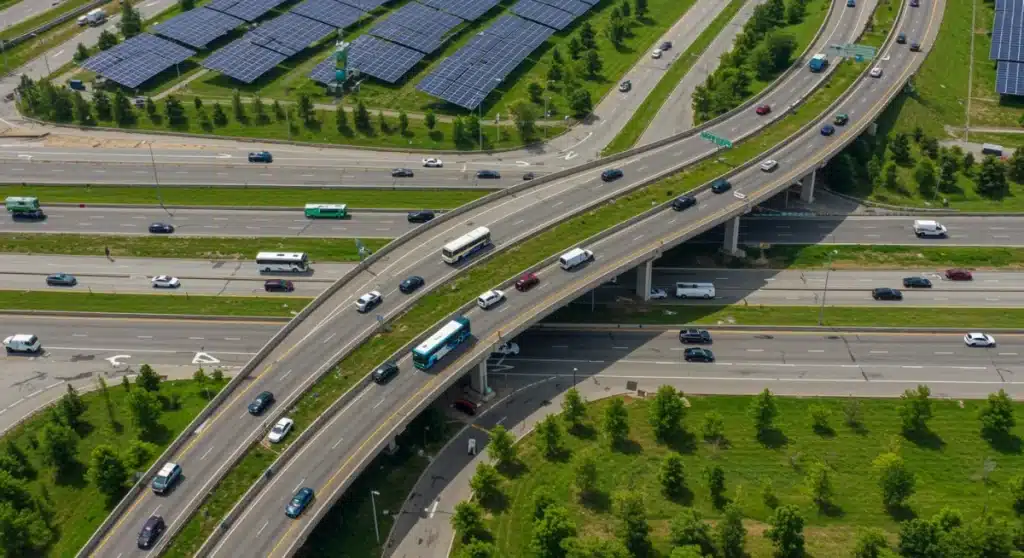
US infrastructure projects are actively spearheading sustainable transportation initiatives, targeting a significant 5% reduction in transportation emissions by 2026 through widespread adoption of electric vehicles, enhanced public transit, and smart urban planning.
The journey towards a greener future is accelerating, and at its core lies the transformation of how we move. US sustainable transportation initiatives are not just conceptual; they are tangible projects with ambitious goals. By 2026, the United States aims to reduce transportation emissions by 5%, a target that underscores a profound commitment to environmental stewardship and innovative infrastructure development. This endeavor impacts everyone, from daily commuters to long-haul freight operators, promising a cleaner, more efficient, and healthier environment for all.
The ambitious goal: reducing emissions by 5% by 2026
The United States has set a clear and ambitious target: reducing transportation emissions by 5% by 2026. This objective is a critical component of broader climate change mitigation strategies, reflecting a national commitment to fostering a more sustainable future. Achieving this goal requires a multifaceted approach, integrating policy, technology, and community engagement.
This reduction is not merely a number; it represents a significant step towards mitigating the impacts of climate change, improving air quality in urban centers, and enhancing public health. The focus is on transitioning away from fossil fuel dependency in the transportation sector, which historically has been a major contributor to greenhouse gas emissions.
Key policy drivers for emissions reduction
- The Infrastructure Investment and Jobs Act (IIJA) provides substantial funding for sustainable transportation projects.
- Federal tax credits and incentives encourage the adoption of electric vehicles (EVs) and charging infrastructure.
- State-level mandates support renewable energy integration into transportation networks.
- Research and development grants foster innovation in low-carbon transportation technologies.
The collective effort behind this 5% reduction involves collaboration between federal, state, and local governments, as well as private sector innovators. It’s a testament to the growing recognition that environmental sustainability and economic prosperity can, and must, go hand in hand.
Investing in electric vehicle infrastructure
A cornerstone of the US strategy for sustainable transportation is the aggressive expansion of electric vehicle infrastructure. The widespread adoption of EVs is pivotal for reducing tailpipe emissions and decarbonizing personal and commercial transport. Significant investments are being channeled into building a robust and accessible charging network across the nation.
This push includes not only public charging stations but also incentives for private entities and homeowners to install charging solutions. The goal is to eliminate range anxiety and make EV ownership a practical and attractive option for a broader segment of the population.
Expanding the national charging network
The federal government, through various programs, is facilitating the deployment of hundreds of thousands of new EV charging ports. These efforts prioritize strategic locations such as major highways, urban centers, and rural communities, ensuring equitable access to charging facilities.
- Development of fast-charging corridors along interstates.
- Grants for community-based charging initiatives.
- Support for workplace and multi-unit dwelling charging installations.
- Standardization of charging technology to ensure interoperability.
Beyond passenger vehicles, there’s a growing emphasis on electrifying public transit fleets and commercial delivery vehicles. This includes electric buses, trucks, and even port equipment, all contributing to a cleaner transportation ecosystem.
Revitalizing public transit for a greener future
Enhancing and expanding public transit systems is another critical pillar in the US sustainable transportation strategy. By providing efficient, accessible, and attractive alternatives to single-occupancy vehicles, public transit plays a vital role in reducing traffic congestion, fuel consumption, and greenhouse gas emissions.
Investments are targeting modernization, expansion, and electrification of bus and rail networks. The aim is to make public transportation a preferred choice for commuters, thereby significantly decreasing the carbon footprint associated with daily travel.
Modernizing and expanding transit networks
Infrastructure projects are focused on improving the reliability, speed, and reach of public transit. This involves upgrading aging infrastructure, introducing new routes, and integrating smart technologies for better service delivery.
Many cities are actively transitioning their bus fleets to electric models, which not only reduce emissions but also offer quieter operation and lower maintenance costs. New rail lines and extensions are also being planned or are under construction to connect more communities and reduce reliance on personal vehicles.
- Electrification of bus fleets in major metropolitan areas.
- Expansion of light rail and subway systems.
- Integration of on-demand micro-transit services.
- Implementation of smart ticketing and real-time information systems.
These initiatives are designed to create a seamless and efficient public transportation experience, encouraging more people to opt for collective transport over individual car use, thus contributing to the 5% emissions reduction target.
Promoting active transportation and smart urban planning
Beyond vehicles and public transit, sustainable transportation encompasses promoting active modes of travel like walking and cycling, alongside smart urban planning principles. These approaches reduce the need for motorized transport, improve public health, and create more livable communities.
Investments in pedestrian and cycling infrastructure, combined with urban planning strategies that prioritize mixed-use development and transit-oriented communities, are integral to achieving the emissions reduction goal.
Creating pedestrian and cyclist-friendly cities
Cities across the US are recognizing the benefits of designing spaces that encourage walking and cycling. This involves developing extensive networks of bike lanes, pedestrian pathways, and safe crossings, making active transportation a viable and enjoyable option.
These projects often include green infrastructure elements, such as tree planting and permeable surfaces, which enhance urban aesthetics and contribute to environmental resilience.
- Construction of dedicated bike lanes and multi-use trails.
- Improvements in pedestrian crossings and sidewalk accessibility.
- Implementation of bike-sharing and e-scooter programs.
- Adoption of ‘complete streets’ policies that accommodate all users.
Smart urban planning efforts are also crucial, focusing on creating communities where daily necessities are within walking or cycling distance. This reduces trip lengths and the overall reliance on cars, directly supporting the broader goal of reducing transportation emissions.
Technological innovations driving emission reductions
Technological innovation is at the forefront of the quest to achieve the 5% emissions reduction target by 2026. Advanced technologies are not only making electric vehicles more efficient but are also optimizing traffic flow, enhancing logistics, and developing alternative fuels. These innovations are critical for transforming the entire transportation ecosystem.
From AI-powered traffic management systems to next-generation battery technologies, the pace of technological advancement is accelerating, offering new solutions to long-standing environmental challenges in transportation.
Advanced vehicle technologies and alternative fuels
Beyond traditional EVs, research and development are pushing the boundaries of vehicle efficiency and fuel alternatives. Hydrogen fuel cell vehicles, for instance, offer another promising avenue for zero-emission transport, particularly for heavy-duty applications.
- Development of more energy-dense and faster-charging EV batteries.
- Advancements in hydrogen fuel cell technology for long-haul transport.
- Integration of autonomous driving systems to optimize vehicle efficiency.
- Research into sustainable aviation fuels (SAFs) and maritime propulsion.
Furthermore, smart logistics and fleet management systems are leveraging data analytics and AI to optimize delivery routes, reduce idling times, and improve fuel efficiency for commercial operations. These technological leaps are instrumental in making the 5% emissions reduction goal achievable.
Challenges and collaborative solutions for 2026
While the goal of reducing US transportation emissions by 5% by 2026 is ambitious and necessary, it is not without its challenges. Overcoming these hurdles requires concerted efforts, innovative solutions, and strong collaboration across various sectors. The complexity of transitioning a vast and diverse transportation system demands a strategic and adaptable approach.
Key challenges include funding constraints, technological integration complexities, public acceptance, and ensuring equitable access to new sustainable transportation options. Addressing these issues effectively is paramount to realizing the 2026 target.
Overcoming obstacles through strategic partnerships
Collaboration between government agencies, private industry, research institutions, and local communities is essential. Public-private partnerships are proving particularly effective in mobilizing resources and expertise for large-scale infrastructure projects.
- Securing sustained funding through federal grants and private investments.
- Developing interoperable charging standards and smart infrastructure.
- Educating the public on the benefits of sustainable transportation options.
- Implementing equitable policies to ensure all communities benefit from green initiatives.
These collaborative solutions aim to create a resilient and inclusive sustainable transportation network. By working together, stakeholders can leverage collective strengths to innovate, implement, and accelerate the transition towards a lower-emission future, ensuring the 2026 target is met and surpassed.
| Key Area | Description of Impact |
|---|---|
| EV Infrastructure | Expansion of charging networks to support widespread electric vehicle adoption. |
| Public Transit | Modernization and electrification of bus and rail systems to reduce individual car reliance. |
| Active Transport | Investment in walking and cycling infrastructure to promote non-motorized travel. |
| Technological Innovation | Development of advanced vehicle technologies and smart city solutions for efficiency. |
Frequently asked questions about sustainable transportation
The main objective is to reduce transportation-related greenhouse gas emissions by 5% by 2026. This target is part of a broader national strategy to combat climate change and improve environmental quality across the United States through strategic infrastructure development and technological adoption.
EV infrastructure projects, such as expanding charging networks, directly support the widespread adoption of electric vehicles. By replacing gasoline-powered cars with EVs, tailpipe emissions are significantly reduced, contributing substantially to the overall 5% national emissions reduction goal.
Public transit is crucial for reducing emissions by offering an alternative to single-occupancy vehicles. Modernizing and electrifying bus and rail systems decrease traffic congestion, fuel consumption, and the carbon footprint per commuter, encouraging more sustainable travel habits.
Yes, significant investments are being made in active transportation. This includes building more bike lanes, pedestrian pathways, and improving urban planning to create walkable communities. These efforts aim to reduce reliance on motorized transport for short distances, promoting healthier lifestyles and cleaner air.
Technological advancements include enhanced EV battery efficiency, development of hydrogen fuel cells, smart traffic management systems, and optimized logistics for commercial fleets. These innovations are vital for creating a more efficient, less polluting transportation network and meeting the 2026 target.
Conclusion
The journey towards US sustainable transportation and the ambitious goal of reducing emissions by 5% by 2026 is a testament to a collective vision for a healthier planet. Through strategic investments in electric vehicle infrastructure, revitalization of public transit, promotion of active transportation, and continuous technological innovation, the United States is laying the groundwork for a future where mobility is both efficient and environmentally responsible. While challenges persist, the collaborative efforts across government, industry, and communities are paving the way for a transformative shift, ensuring cleaner air, reduced carbon footprints, and a more sustainable legacy for generations to come. This commitment underscores a proactive approach to climate action, demonstrating that significant environmental progress is indeed within reach.