Transforming US Urban Transit: 3 Innovative Models for 2027
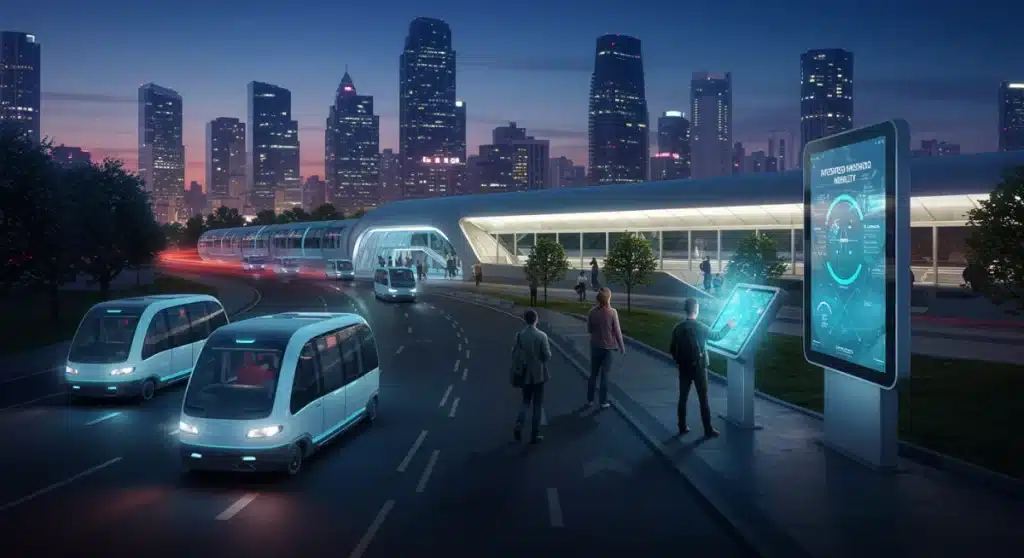
The landscape of urban transportation in the United States is on the precipice of a profound transformation. As cities grapple with increasing populations, persistent traffic congestion, and the urgent need for sustainable solutions, the traditional models of public transit are being challenged and reimagined. We are entering an era where innovation isn’t just a buzzword but a necessity, driving the development of groundbreaking approaches to how people move within and between our urban centers. By 2027, the way Americans commute, travel for leisure, and access essential services will be significantly altered by a new generation of transit models.
This article delves into three pivotal and innovative models poised to lead this Urban Transit Transformation: micro-transit, hyperloop technology, and integrated mobility platforms. Each of these represents a distinct yet complementary approach to addressing the complex challenges of modern urban mobility. From on-demand, flexible services that fill the gaps left by fixed-route systems to ultra-high-speed travel that redefines regional connectivity, and comprehensive platforms that seamlessly blend various transport options, these innovations promise a more efficient, equitable, and environmentally friendly future for US urban travel.
The shift isn’t merely about adopting new technologies; it’s about fundamentally rethinking the user experience, the infrastructure that supports it, and the policy frameworks that enable its success. We will explore the core concepts behind each model, their current progress and pilot programs, the benefits they offer, and the hurdles they must overcome to achieve widespread adoption. Understanding these trends is crucial for policymakers, urban planners, technology developers, and, most importantly, the everyday commuter who stands to benefit immensely from a more advanced and responsive public transit system. Get ready to discover the future of urban mobility.
The Rise of Micro-Transit: On-Demand Flexibility for Urban Transit Transformation
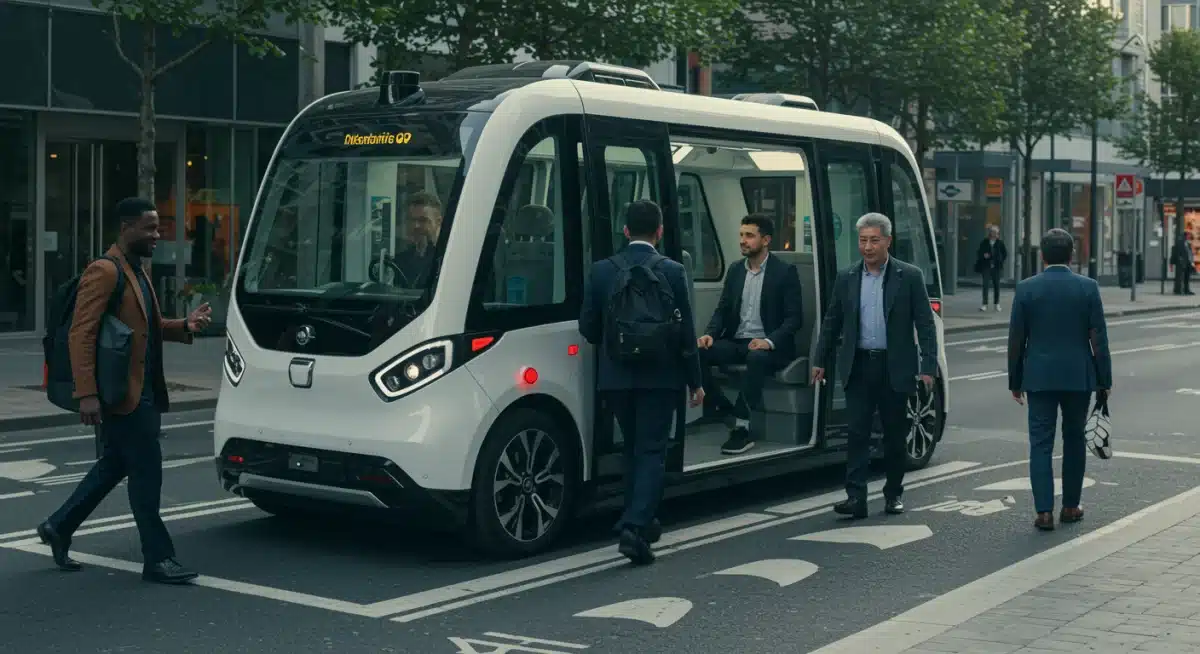
Micro-transit represents a paradigm shift in public transportation, moving away from rigid, fixed routes and schedules towards a more dynamic, on-demand, and flexible service. This model typically involves smaller vehicles, such as vans or shuttles, operating within a defined service area, picking up and dropping off passengers based on real-time requests made via a mobile app. Think of it as a hybrid between traditional public buses and ride-sharing services, but optimized for collective efficiency and public access. The core appeal of micro-transit lies in its ability to offer door-to-door or near door-to-door service, enhancing convenience and accessibility, especially in areas underserved by conventional transit.
Addressing the ‘First Mile, Last Mile’ Challenge
One of the most significant contributions of micro-transit to Urban Transit Transformation is its effectiveness in solving the notorious ‘first mile, last mile’ problem. This refers to the difficulty many commuters face in traveling from their homes to a major transit hub (first mile) and from the transit hub to their final destination (last mile). These short distances are often too far to walk comfortably, too expensive for regular taxi or ride-share use, and not adequately covered by fixed-route buses or trains. Micro-transit fills this critical gap, seamlessly connecting residents to larger transportation networks and making public transit a more viable option for a broader demographic.
By providing a flexible and responsive service, micro-transit can extend the reach of public transportation into suburban areas, low-density neighborhoods, and industrial zones that are traditionally difficult and costly to serve with large buses. This not only increases ridership for the entire transit system but also reduces reliance on private vehicles, leading to less traffic congestion and lower carbon emissions.
Technological Underpinnings and Operational Models
The success of micro-transit is heavily reliant on sophisticated technology. Advanced algorithms are used for route optimization, vehicle dispatch, and demand prediction, ensuring that vehicles are utilized efficiently and wait times are minimized. Passengers use intuitive mobile applications to request rides, track their vehicle’s arrival, and pay for their journeys. This tech-driven approach allows for dynamic routing, where the vehicle’s path can adjust in real-time to accommodate new ride requests, maximizing efficiency and passenger convenience.
Several operational models exist, ranging from fully demand-responsive services with no fixed routes to systems that combine flexible routing within specific zones with scheduled stops at major transit points. Many cities across the US are already piloting micro-transit programs. For instance, cities like Sacramento, California, and Arlington, Texas, have seen positive results, demonstrating increased ridership and improved accessibility in previously underserved areas. These pilot programs are providing invaluable data and insights into how to best integrate micro-transit into existing public transportation ecosystems.
Benefits and Challenges for Urban Transit Transformation
The benefits of micro-transit are numerous. It offers increased convenience and flexibility for riders, particularly those with varying schedules or living in areas with sparse transit options. It can lead to reduced traffic congestion and environmental impact by encouraging a shift away from single-occupancy vehicles. Furthermore, it can be a more cost-effective solution for transit agencies to serve low-demand areas compared to running large, half-empty buses on fixed routes. This cost-efficiency contributes significantly to the overall Urban Transit Transformation.
However, challenges remain. Integrating micro-transit seamlessly with existing transit networks requires careful planning and coordination. Ensuring equitable access for all demographics, including those without smartphones or reliable internet access, is crucial. Funding models also need to be sustainable, balancing public subsidies with farebox recovery. As technology evolves and operational models mature, micro-transit is expected to play an increasingly vital role in shaping the future of US urban travel by 2027, offering a flexible and responsive component to a multi-modal transit network.
Hyperloop: Redefining Inter-City and Regional Urban Transit Transformation
While micro-transit focuses on localized, flexible urban movement, hyperloop technology aims to revolutionize inter-city and regional travel with unprecedented speed and efficiency. Envisioned as a system where specialized pods travel at ultra-high speeds through low-pressure tubes, hyperloop promises to drastically cut travel times between major metropolitan areas, effectively transforming them into extended urban regions. This technology, still largely in its developmental and testing phases, holds the potential to be a monumental leap forward in the ongoing Urban Transit Transformation.
The Core Concept of Hyperloop
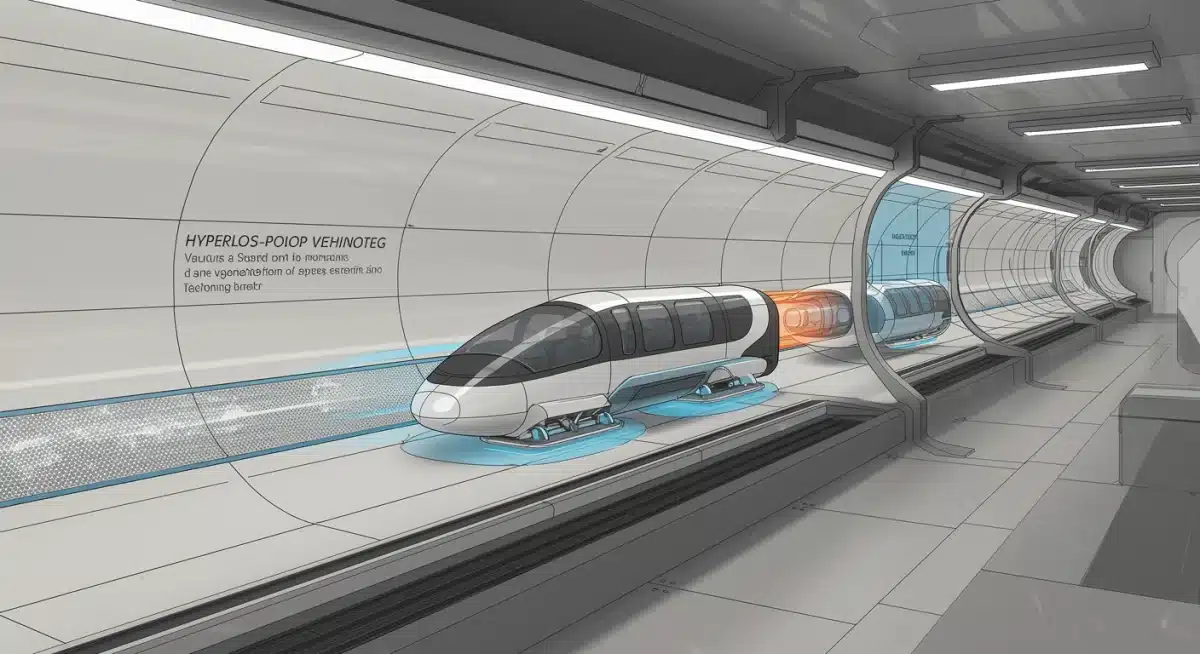
The fundamental principle behind hyperloop involves creating a near-vacuum environment within a sealed tube. By removing most of the air, aerodynamic drag, the primary force limiting the speed of conventional trains and even aircraft at lower altitudes, is virtually eliminated. Within this low-pressure tube, magnetically levitated pods are propelled by electric motors, achieving speeds that could exceed 600 miles per hour (around 1,000 kilometers per hour). This would make it possible to travel from, say, Los Angeles to San Francisco in approximately 30 minutes, a journey that currently takes hours by car or plane.
The technology combines elements of maglev trains, vacuum tubes, and aerospace engineering. The pods float above the track using magnetic levitation, further reducing friction. This combination of minimal air resistance and frictionless movement allows for incredibly high speeds with relatively low energy consumption compared to air travel for similar distances. The vision is not just about speed, but about creating a new mode of transportation that is environmentally friendly, safe, and highly efficient.
Progress and Potential for US Cities
Several companies, including Virgin Hyperloop (now HyperloopTT), have been actively developing and testing hyperloop technology. Test tracks have demonstrated successful operation of pods at significant speeds. While commercial deployment is still some years away, the progress made in recent years is promising. In the US, potential routes are being studied and advocated for, connecting major economic hubs such as the Northeast Corridor, Texas Triangle, and the California corridor. The impact of such a system on Urban Transit Transformation would be immense, blurring the lines between cities and fostering new economic and social connections.
Imagine a scenario where commuting between cities hundreds of miles apart becomes a daily reality for a significant portion of the workforce. This could alleviate housing pressures in expensive urban centers and distribute economic activity more broadly across regions. It also presents a compelling alternative to short-haul flights and long-distance driving, significantly reducing carbon footprints associated with travel.
Overcoming Hurdles to Realize the Vision
Despite its revolutionary potential, hyperloop faces substantial challenges. The most significant hurdles include the immense capital investment required for infrastructure development, the complexities of acquiring land for long tube networks, and the need for rigorous safety testing and regulatory frameworks. Public acceptance and integration into existing transport networks are also critical factors. The engineering feats required to build and maintain such a system on a large scale are unprecedented.
Furthermore, the energy requirements for maintaining a vacuum over hundreds of miles and propelling pods need to be sustainable. However, proponents argue that the long-term benefits in terms of economic growth, reduced travel times, and environmental advantages justify the initial investment. As research and development continue, and as pilot projects mature, hyperloop could indeed emerge as a transformative force in US inter-city and regional Urban Transit Transformation by 2027 and beyond, reshaping the very definition of urban proximity.
Integrated Mobility Platforms: The Seamless Ecosystem of Urban Transit Transformation
The third major model driving Urban Transit Transformation is not a mode of transport itself, but rather a sophisticated digital framework: integrated mobility platforms, often referred to as Mobility as a Service (MaaS). MaaS platforms aim to consolidate all available transportation options – from public buses and trains to ride-sharing, bike-sharing, scooters, taxis, and even micro-transit services – into a single, user-friendly application. The goal is to provide travelers with a seamless, personalized, and efficient way to plan, book, and pay for their journeys, regardless of the modes involved.
The Vision of MaaS: One App, All Journeys
Imagine opening an app on your smartphone and inputting your destination. The app then presents you with a range of optimized travel plans, considering factors like cost, travel time, convenience, and even environmental impact. One option might suggest taking a micro-transit shuttle to the nearest train station, then a high-speed rail, followed by an e-scooter for the final few blocks. Another might recommend a ride-share for the entire trip, or a combination of public bus and bike-share. The platform handles all the bookings, ticketing, and payments, eliminating the need to use multiple apps or purchase separate tickets for each leg of the journey.
This holistic approach simplifies urban travel, making public and shared transportation options far more attractive and accessible than relying solely on a private car. It empowers users to make informed decisions based on their real-time needs and preferences, fostering a more efficient and sustainable use of urban infrastructure. This level of integration is paramount for true Urban Transit Transformation.
Key Components and Benefits
Integrated mobility platforms rely on robust data aggregation, sophisticated algorithms, and strong partnerships between various transport providers. Key components include:
- Journey Planning: Real-time information on all available modes, routes, and schedules.
- Booking and Ticketing: The ability to book and pay for multiple modes within a single transaction.
- Payment Integration: A unified payment system, potentially including subscription models for unlimited travel across various services.
- Personalization: Tailoring recommendations based on user history, preferences, and real-time conditions.
The benefits of MaaS are extensive. For users, it offers unparalleled convenience, reduces travel stress, and potentially lowers transportation costs. For cities, it can lead to reduced traffic congestion, improved air quality, and a more efficient utilization of public and private transport assets. By making public and shared mobility options more appealing, MaaS encourages a shift away from private car ownership, contributing significantly to urban sustainability goals and a comprehensive Urban Transit Transformation.
Challenges and Future Outlook for Integrated Mobility Platforms
Implementing successful MaaS platforms presents several challenges. Data sharing and interoperability between different transport providers are crucial but can be complex due to proprietary systems and competitive concerns. Establishing fair revenue-sharing models among participating operators is another significant hurdle. Regulatory frameworks need to adapt to this new, integrated model of transportation, ensuring fair competition and consumer protection.
Despite these challenges, several cities globally and in the US are experimenting with MaaS-like initiatives. Pilot programs in places like Los Angeles and Denver are exploring integrated ticketing and journey planning. As technology matures and collaboration between public and private sectors strengthens, integrated mobility platforms are set to become the digital backbone of future urban transit. By 2027, we can expect to see more sophisticated and widely adopted MaaS solutions that seamlessly weave together micro-transit, traditional public transport, and other innovative modes, offering a truly interconnected and user-centric experience for Urban Transit Transformation.
The Synergy of Innovation: How These Models Intersect for Urban Transit Transformation
While micro-transit, hyperloop, and integrated mobility platforms each offer distinct solutions, their true transformative power lies in their potential for synergy. Imagine a future where these models don’t just coexist but actively enhance one another, creating a truly interconnected and optimized urban transportation ecosystem. By 2027, the most successful cities will be those that strategically integrate these innovations, leveraging their strengths to address a wider array of mobility challenges.
A Holistic Approach to Urban Mobility
Consider a commuter in a major US metropolitan area. Their journey might begin with a micro-transit ride from their suburban home directly to a hyperloop station. After a swift, inter-city journey, they could then use an integrated mobility platform to seamlessly transition to an electric scooter or a shared autonomous vehicle for the final leg to their office. This multi-modal, demand-responsive journey would be planned, booked, and paid for through a single, intuitive interface, making the experience smooth, efficient, and stress-free.
In this integrated vision of Urban Transit Transformation, micro-transit acts as the flexible feeder system, extending the reach of high-capacity, high-speed networks like hyperloop. The integrated mobility platform acts as the orchestrator, providing the intelligence and user interface to make complex multi-modal journeys simple and accessible. This synergy ensures that every part of a city and its surrounding regions are connected, offering viable alternatives to private vehicle ownership and reducing the environmental impact of transportation.
Furthermore, this integrated approach contributes to the concept of the ’15-minute city,’ where residents can access most of their daily needs within a short walk, bike, or transit ride. By making essential services, employment, and recreation easily reachable without a private car, cities can become more livable, vibrant, and resilient.
The Road Ahead: Collaboration and Vision
Achieving this level of Urban Transit Transformation by 2027 will require unprecedented collaboration between various stakeholders: government agencies, private technology companies, public transit authorities, and urban planning departments. Policy frameworks will need to be flexible and forward-thinking, encouraging innovation while ensuring safety, equity, and sustainability. Investment in research, development, and infrastructure will be critical.
The journey towards a truly transformed urban transit system is complex, but the potential rewards are immense. As we approach 2027, the foundational work in micro-transit, hyperloop, and integrated mobility platforms will have laid the groundwork for a future where urban travel is not a source of frustration but a seamless, enjoyable, and sustainable part of daily life. The US is on the cusp of a mobility revolution, and these three innovative models are at its forefront, promising to redefine how we move, live, and connect.
Conclusion: A New Era of Urban Mobility Dawns for Urban Transit Transformation
The future of US urban travel is not just about incremental improvements to existing systems; it’s about a fundamental Urban Transit Transformation driven by audacious vision and technological prowess. By 2027, the innovative models of micro-transit, hyperloop, and integrated mobility platforms are set to reshape our cities and how we navigate them. Micro-transit will offer unparalleled flexibility and accessibility, solving the ‘first mile, last mile’ dilemma and extending the reach of public transport into every corner of our communities. Hyperloop, though still in its nascent stages, promises to shrink distances between major urban centers, fostering new regional economies and redefining the concept of commuting.
Crucially, integrated mobility platforms will act as the intelligent glue, seamlessly connecting these diverse modes into a cohesive, user-centric ecosystem. They will empower individuals to make informed choices, optimizing for speed, cost, or environmental impact, all from the palm of their hand. This convergence of innovation will not only alleviate traffic congestion and reduce our carbon footprint but also enhance social equity by providing reliable and affordable transportation options for everyone.
The journey to this transformed future will undoubtedly involve challenges, including significant infrastructure investment, regulatory adaptation, and the complex task of fostering collaboration among myriad stakeholders. However, the momentum is building. Pilot programs are yielding promising results, technological advancements are accelerating, and the public demand for more efficient and sustainable transit options is growing. The vision of a seamless, integrated, and high-speed urban travel network is becoming increasingly tangible.
As we look towards 2027, these three models represent more than just new ways to get from point A to point B; they signify a profound shift in our relationship with urban spaces, our environment, and each other. The Urban Transit Transformation is not just coming; it is already underway, promising a future where urban mobility is synonymous with efficiency, sustainability, and accessibility for all.