Beyond the Car: US Micro-Mobility Trends Gaining Traction
Emerging micro-mobility trends are significantly reshaping urban transportation across the US by providing efficient, sustainable, and accessible alternatives to traditional car-centric travel, experiencing substantial growth and adoption.
The urban landscape of the United States is undergoing a profound transformation, driven by an urgent need for sustainable, efficient, and accessible transportation solutions. The era of sole reliance on personal automobiles is slowly giving way to innovative alternatives. We are witnessing a significant shift: Beyond the Car: 4 Emerging Micro-Mobility Trends Gaining 30% Traction Across the US (RECENT UPDATES) are fundamentally altering how Americans move, promising a more connected and environmentally friendly future. These trends are not just fads; they represent a fundamental rethinking of urban transit, with recent updates showing accelerating adoption and integration into daily life.
The Rise of Electric Scooters: A Rapid Urban Takeover
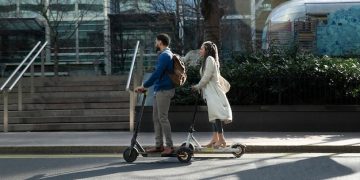
Electric scooters, often seen zipping through city streets, have evolved from a novelty to a cornerstone of urban micro-mobility. Their compact size, ease of use, and eco-friendly nature make them an attractive option for short-distance travel, especially in congested areas. The convenience they offer for first-mile/last-mile connections to public transit is undeniable, proving to be a game-changer for many commuters.
Initially met with skepticism and regulatory challenges, e-scooters have demonstrated remarkable resilience and adaptability. Cities across the US are now working to integrate them more formally into their transportation networks, developing dedicated lanes and clearer parking guidelines. This maturation reflects a growing acceptance and understanding of their role in a multi-modal transit system.
Technological Advancements Fueling Adoption
Recent technological improvements have significantly enhanced the user experience and operational efficiency of electric scooters. These advancements are critical for their continued growth and widespread acceptance.
- Improved Battery Life: Modern e-scooters boast longer ranges, reducing the frequency of charging and extending their usability for riders.
- Enhanced Safety Features: Better braking systems, integrated lighting, and more stable designs contribute to a safer riding experience.
- GPS and App Integration: Advanced GPS tracking allows for efficient deployment and retrieval, while user-friendly apps streamline rental processes and provide real-time availability.
- Durability and Maintenance: Manufacturers are focusing on more robust designs to withstand urban wear and tear, leading to longer lifespans for shared fleets.
The continued innovation in e-scooter technology, coupled with evolving urban planning that accommodates these devices, suggests that their presence in American cities will only grow. Their ability to offer a quick, affordable, and sustainable alternative to short car trips positions them as a key player in the micro-mobility landscape.
Electric Bicycles: Powering Sustainable Commutes
Electric bicycles, or e-bikes, are rapidly gaining ground as a preferred mode of transport for a diverse range of users across the US. They offer the benefits of traditional cycling—exercise, environmental friendliness, and avoiding traffic—with the added advantage of an electric motor assist. This makes longer commutes less strenuous, hills more manageable, and cycling accessible to a broader demographic, including those with varying fitness levels.
The versatility of e-bikes is a major factor in their increasing popularity. They are used for daily commutes, recreational rides, and even delivery services, demonstrating their adaptability to different urban needs. This widespread adoption is supported by a growing infrastructure of bike lanes and charging stations in many American cities.
Diverse E-Bike Categories and Their Impact
The e-bike market is not monolithic; it encompasses several categories, each designed to meet specific user demands. This diversification has broadened their appeal and accelerated their integration into urban mobility.
- Pedal-Assist E-bikes: These provide motor assistance only when the rider is pedaling, offering a natural cycling feel with reduced effort. They are popular for daily commutes and fitness.
- Throttle E-bikes: Equipped with a throttle, these can propel the rider without pedaling, similar to a moped. They offer greater convenience for those who prefer minimal physical exertion.
- Cargo E-bikes: Designed with larger frames and storage capacity, cargo e-bikes are ideal for carrying groceries, children, or packages, making them a sustainable alternative to cars for errands.
The market for e-bikes continues to expand, driven by consumer demand for sustainable and efficient transportation options. As battery technology improves and prices become more competitive, e-bikes are set to become an even more ubiquitous sight in American cities, further reducing reliance on traditional automobiles and promoting healthier lifestyles.
Micro-Mobility as a Service (MaaS): Integrated Urban Journeys
Micro-Mobility as a Service (MaaS) represents a paradigm shift in urban transportation, moving beyond individual modes to offer integrated, on-demand mobility solutions. Instead of owning a car or even a single micro-mobility device, users can access a variety of transport options—from ride-sharing to e-scooters and e-bikes—through a single platform. This holistic approach simplifies urban travel, making it more efficient and user-centric.
The core promise of MaaS is seamless connectivity. By integrating public transit with private micro-mobility services, users can plan, book, and pay for their entire journey through one app. This not only enhances convenience but also encourages the use of sustainable transport options by making them easily accessible and attractive alternatives to private car ownership.
Challenges and Opportunities for MaaS in the US
While the potential of MaaS is immense, its full realization in the US faces certain challenges, alongside significant opportunities for growth and innovation.
- Data Integration: Consolidating data from various transit providers is complex but crucial for a truly integrated service.
- Regulatory Frameworks: Developing consistent regulations across different cities and states is essential for widespread adoption.
- User Education: Promoting awareness and understanding of MaaS benefits among the general public is key to driving demand.
Despite these hurdles, the drive towards MaaS offers a compelling vision for the future of urban mobility. It presents an opportunity to significantly reduce traffic congestion, lower carbon emissions, and create more livable cities. As technology advances and partnerships between public and private sectors strengthen, MaaS platforms are poised to become indispensable tools for urban dwellers seeking flexible and sustainable transportation choices.
The Emergence of Autonomous Micro-Shuttles: Smart City Solutions
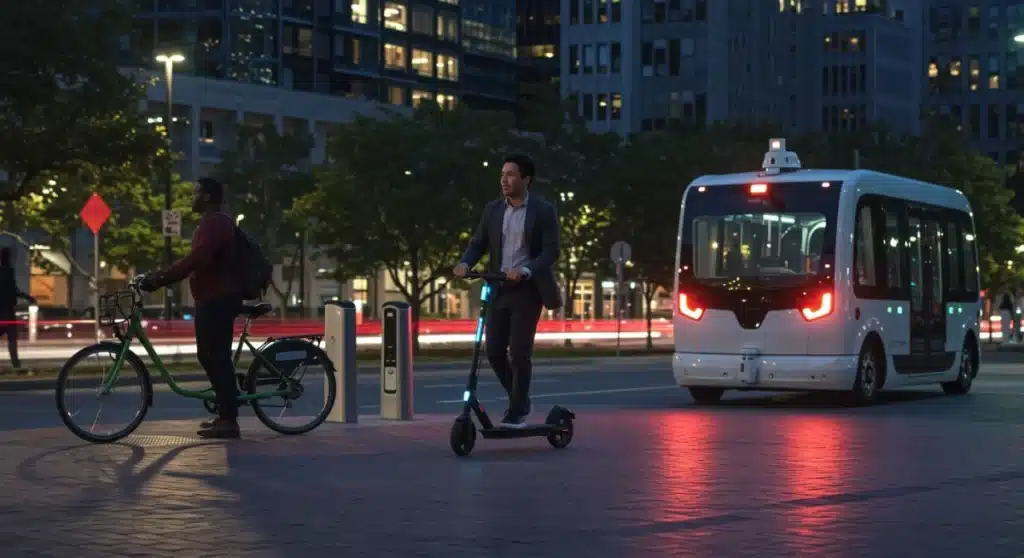
Autonomous micro-shuttles represent the cutting edge of micro-mobility, blending the convenience of on-demand services with the innovation of self-driving technology. These compact, electric vehicles are designed for short to medium distances, typically operating on fixed routes or within designated zones in urban and suburban environments. They offer a shared, efficient, and potentially highly accessible transportation option, particularly for communities seeking to enhance last-mile connectivity.
While still in their pilot phases in many US locations, autonomous micro-shuttles are demonstrating significant potential for improving urban efficiency and reducing the need for personal vehicles. Their ability to operate without a human driver promises lower operational costs and the potential for 24/7 service, contributing to a more dynamic and responsive public transportation system. The integration of these shuttles into smart city infrastructure is a key step towards fully autonomous urban mobility.
Pilot Programs and Future Outlook
Several US cities are actively testing autonomous micro-shuttles, gathering valuable data and insights into their performance, safety, and public acceptance. These pilot programs are crucial for refining the technology and addressing regulatory concerns.
- Jacksonville, Florida: Pioneering an extensive autonomous shuttle network to replace an aging skyway system, aiming for enhanced public transit.
- Lake Nona, Florida: Utilizing autonomous shuttles for community connectivity, linking residential areas with commercial and recreational hubs.
- Detroit, Michigan: Exploring autonomous shuttle services in specific districts to improve accessibility and address mobility gaps.
The data collected from these trials will be instrumental in scaling up autonomous micro-shuttle deployments. As the technology matures and public confidence grows, these vehicles are expected to play a critical role in future urban planning, offering a sustainable, efficient, and innovative solution for public and shared transportation. Their impact on reducing traffic and emissions could be profound, making them a vital component of the evolving micro-mobility ecosystem.
Subscription Models and Ownership Alternatives: Flexible Mobility
In response to changing consumer preferences and the rising costs of car ownership, subscription models and alternative ownership options for micro-mobility devices are gaining significant traction across the US. These models offer unparalleled flexibility and convenience, allowing users to access e-scooters, e-bikes, and even smaller electric vehicles without the long-term commitment and financial burden of outright purchase. This shift reflects a broader trend towards access over ownership, particularly among younger generations and urban dwellers.
Subscription services typically involve a monthly fee that grants users unlimited or a set number of rides, maintenance, and sometimes even insurance. This makes micro-mobility more predictable and hassle-free, eliminating concerns about storage, charging, and repairs. For many, it represents a compelling alternative to traditional car ownership, aligning with sustainable living principles and a desire for simplified urban transit.
Benefits of Subscription and Alternative Ownership
The advantages of these flexible mobility models extend beyond mere convenience, offering tangible benefits for both individuals and the environment.
- Cost-Effectiveness: Eliminates upfront purchase costs, insurance, and maintenance expenses, often leading to lower overall transportation costs.
- Flexibility: Users can easily switch between different types of vehicles or cancel subscriptions as their needs change.
- Reduced Environmental Impact: Encourages the use of shared, electric vehicles, contributing to lower carbon emissions and reduced traffic congestion.
- Access to Premium Devices: Subscribers often gain access to newer, well-maintained, and higher-quality micro-mobility devices.
As urban populations continue to grow and environmental concerns mount, subscription models for micro-mobility are poised to become an increasingly integral part of the transportation landscape. They provide a practical, affordable, and sustainable way for individuals to navigate cities, further diminishing the necessity of personal car ownership and fostering a more dynamic and adaptable urban environment.
Policy, Infrastructure, and the Future of Micro-Mobility
The rapid growth of micro-mobility trends across the US is not solely driven by technological innovation and consumer demand; it is also significantly shaped by evolving urban policies and infrastructure development. As cities grapple with congestion, pollution, and the need for more equitable transportation, they are increasingly recognizing the vital role micro-mobility plays. This includes everything from the allocation of dedicated bike lanes to the implementation of smart parking solutions and comprehensive regulatory frameworks that ensure safety and order.
Effective policy-making is crucial for integrating these new forms of transport seamlessly into existing urban fabrics. Without clear guidelines on speed limits, parking zones, and operational standards, the potential benefits of micro-mobility can be undermined by public safety concerns and urban clutter. Therefore, collaboration between city planners, residents, and micro-mobility operators is essential to create a sustainable and harmonious ecosystem.
Key Areas for Future Development
To fully unlock the potential of micro-mobility, several key areas require continued focus and investment.
- Dedicated Infrastructure: Expanding and improving protected bike lanes and micro-mobility corridors is paramount for safety and rider confidence.
- Smart Charging Networks: Developing accessible and efficient charging stations, especially for shared fleets, is vital for operational sustainability.
- Data-Driven Planning: Utilizing real-time data from micro-mobility services to inform urban planning decisions, optimizing routes and deployment.
- Public-Private Partnerships: Fostering collaboration between municipal governments and private micro-mobility companies to pilot new solutions and share best practices.
The future of micro-mobility in the US hinges on a balanced approach that combines technological advancement with thoughtful urban planning and responsive policy. By investing in robust infrastructure and fostering an environment that embraces innovation, American cities can continue to lead the way in developing sustainable, efficient, and accessible transportation systems, truly moving Beyond the Car: 4 Emerging Micro-Mobility Trends Gaining 30% Traction Across the US (RECENT UPDATES) and into a new era of urban mobility.
| Key Trend | Brief Description |
|---|---|
| Electric Scooters | Compact, eco-friendly devices for short-distance urban travel, enhancing first-mile/last-mile connectivity. |
| Electric Bicycles | Pedal-assist bikes making longer commutes and hills easier, accessible for diverse demographics. |
| Micro-Mobility as a Service (MaaS) | Integrated platform offering various transport options (ride-sharing, e-scooters, e-bikes) via a single app. |
| Autonomous Micro-Shuttles | Self-driving, electric vehicles for short to medium distances, enhancing last-mile public transit. |
Frequently Asked Questions About Micro-Mobility
Micro-mobility refers to small, lightweight vehicles like e-scooters and e-bikes, typically for short distances. Its growth in the US is driven by a need for sustainable urban transport, traffic congestion relief, and environmental concerns, offering efficient and accessible alternatives to cars for daily commutes and errands.
Electric scooters provide a flexible and quick option for short urban trips, effectively solving the “last-mile” problem by connecting commuters from public transit stops to their final destinations. They reduce reliance on cars for short distances, lessening traffic and parking demand in busy city centers.
E-bikes offer electric motor assistance, making cycling less physically demanding, especially for longer distances or hilly terrain. This expands access to cycling for a wider range of people, encourages more regular use for commuting, and can replace car trips more effectively than traditional bikes.
MaaS integrates various transportation modes into a single, on-demand service, accessible via one app. For users, it simplifies urban travel by offering seamless planning, booking, and payment for diverse options like public transit, ride-shares, and micro-mobility, promoting efficient and sustainable journeys.
Yes, autonomous micro-shuttles show strong potential for future urban transport, especially for fixed routes and designated zones. They offer shared, efficient, and potentially 24/7 service without a human driver, contributing to reduced operational costs, improved accessibility, and lower emissions as part of smart city solutions.
Conclusion: Reshaping Urban Mobility for a Sustainable Future
The landscape of urban transportation in the US is undergoing an undeniable transformation, moving decisively Beyond the Car: 4 Emerging Micro-Mobility Trends Gaining 30% Traction Across the US (RECENT UPDATES). From the agile electric scooters and versatile e-bikes to the integrated platforms of Mobility as a Service and the innovative promise of autonomous micro-shuttles, these trends represent a collective push towards more sustainable, efficient, and accessible urban environments. As cities and citizens embrace these alternatives, supported by evolving policies and infrastructure, the vision of a car-optional future becomes increasingly tangible. This shift not only promises to alleviate congestion and reduce environmental impact but also fosters healthier, more connected communities, proving that the future of mobility is diverse, dynamic, and undeniably micro.