EV Adoption US 2026: Mid-Year Review & The Path to 25% Market Growth
The landscape of transportation in the United States is undergoing a profound transformation, with electric vehicles (EVs) at the forefront of this revolution. As we hit the mid-point of 2026, the data paints a compelling picture of rapid acceleration in EV Adoption US, pushing towards an ambitious 25% market share. This review delves into the intricate factors driving this growth, the hurdles overcome, and the challenges that still lie ahead on the road to a fully electrified future.
For years, electric vehicles were considered a niche market, a futuristic curiosity rather than a mainstream option. However, sustained innovation, shifting consumer preferences, and robust policy support have propelled EVs into the automotive mainstream. The 25% market growth target, once seen as optimistic, now appears increasingly attainable, signaling a fundamental shift in how Americans perceive and purchase their vehicles. This article will provide a comprehensive mid-year assessment, examining the key performance indicators, regional variations, and the technological advancements making this growth possible.
The Current State of EV Adoption US: A Mid-Year 2026 Snapshot
Mid-2026 finds the US electric vehicle market in a dynamic state of expansion. Sales figures indicate a significant upward trajectory, with new EV registrations consistently outpacing internal combustion engine (ICE) vehicles in several key segments. While the exact percentage of market share fluctuates, the momentum towards 25% is undeniable, driven by a confluence of factors.
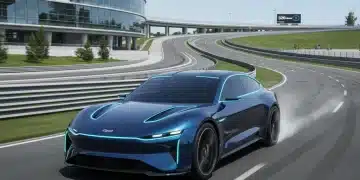
One of the most striking developments has been the diversification of the EV market. No longer dominated by a handful of luxury sedans, consumers now have access to a wide array of electric SUVs, trucks, and more affordable compact models. This expanded choice has been critical in broadening the appeal of EVs beyond early adopters to a more mainstream audience. The introduction of highly anticipated electric pickup trucks, for instance, has resonated deeply with American buyers, traditionally loyal to larger vehicles, and has significantly contributed to the overall EV Adoption US rates.
Geographically, while California continues to lead in EV penetration, other states are rapidly catching up. The Northeast and Pacific Northwest regions show particularly strong growth, supported by progressive state-level policies and increasing charging infrastructure. Even traditionally slower-adopting regions are beginning to see a noticeable uptick, indicating a broader national acceptance of electric transportation.
Furthermore, the used EV market is also maturing, offering more accessible price points for consumers looking to enter the electric vehicle ecosystem. This secondary market is vital for democratizing EV ownership and ensuring that the benefits of electric transportation are not exclusive to new car buyers. The reliability and longevity of EV batteries, coupled with decreasing prices, make used EVs an increasingly attractive proposition.
Key Drivers Behind the 25% EV Market Growth
Achieving a 25% market share for EVs by mid-2026 is not an accidental phenomenon; it’s the result of concerted efforts and significant developments across multiple sectors. Understanding these key drivers is crucial for appreciating the current landscape and projecting future trends in EV Adoption US.
Government Policies and Incentives
Federal and state governments have played an indispensable role in accelerating EV adoption. The continuation and expansion of tax credits, rebates, and other financial incentives have significantly lowered the upfront cost of electric vehicles, making them more competitive with their gasoline-powered counterparts. Policies like the Inflation Reduction Act (IRA) have not only incentivized purchases but also boosted domestic manufacturing of EVs and batteries, creating a virtuous cycle of supply and demand.
Beyond direct financial aid, regulations mandating increased fuel efficiency standards and emissions reductions have pushed automakers to invest heavily in EV research and development. Several states have also adopted ZEV (Zero Emission Vehicle) mandates, further compelling manufacturers to offer a wider range of electric models and ensuring their availability to consumers. These legislative tailwinds provide a stable and predictable environment for the industry to innovate and expand.
Advancements in Battery Technology and Range
Range anxiety was once a major deterrent for potential EV buyers. However, relentless progress in battery technology has largely alleviated these concerns. Modern EVs boast significantly longer ranges, with many models offering over 300 miles on a single charge, comparable to or exceeding the range of many ICE vehicles. This extended range makes EVs viable for longer commutes and road trips, expanding their utility for a broader segment of the population.
Parallel to range improvements, charging speeds have dramatically increased. DC fast chargers can now add hundreds of miles of range in mere minutes, transforming the charging experience. The durability and lifespan of EV batteries have also improved, offering peace of mind to owners regarding long-term performance and resale value. These technological leaps are fundamental to boosting EV Adoption US.
Expanding Charging Infrastructure
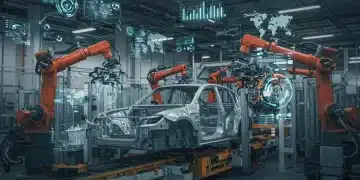
A robust and accessible charging network is the backbone of widespread EV adoption. The US has seen unprecedented growth in its charging infrastructure, both public and private. Government funding, private investments, and partnerships between energy companies and automakers have led to the deployment of thousands of new charging stations across the country. This includes a mix of Level 2 chargers for slower, overnight charging and high-speed DC fast chargers strategically placed along major travel corridors and in urban centers.
While challenges remain in ensuring equitable distribution and reliability, the trajectory of charging infrastructure development is overwhelmingly positive. The standardization of charging ports and payment systems is also simplifying the user experience, making EV ownership more convenient than ever before. The increasing availability of workplace charging and multi-unit dwelling (MUD) charging solutions further supports daily EV use.
Shifting Consumer Preferences and Environmental Awareness
Consumers are increasingly prioritizing sustainability and environmental impact in their purchasing decisions. The growing awareness of climate change and air pollution has made EVs an attractive option for those seeking to reduce their carbon footprint. Beyond environmental concerns, the immediate benefits of EVs, such as lower operating costs (due to cheaper electricity compared to gasoline and reduced maintenance), quieter rides, and instant torque, are proving to be powerful motivators.
The ‘cool’ factor of EVs has also played a role, with sleek designs, advanced technology, and impressive performance characteristics drawing in a younger, tech-savvy demographic. As more people experience EVs firsthand through ride-sharing services or friends’ vehicles, the perception shifts from novelty to practicality and desirability, fueling further EV Adoption US.
Challenges on the Road to Full Electrification
Despite the impressive progress, the journey to full electrification is not without its obstacles. Addressing these challenges effectively will be crucial for sustaining momentum beyond the 25% market share and achieving even higher levels of EV Adoption US.
Infrastructure Gaps and Grid Modernization
While charging infrastructure has expanded rapidly, significant gaps remain, particularly in rural areas and underserved communities. Ensuring equitable access to reliable charging, especially DC fast charging, is paramount. Furthermore, the existing electrical grid needs substantial upgrades to handle the increased demand from a massive influx of EVs. This involves not only generation capacity but also transmission and distribution infrastructure. Smart grid technologies, demand-response programs, and localized energy storage solutions will be vital to manage this transition efficiently.
Affordability and Equity
Despite incentives, the upfront cost of new EVs can still be a barrier for many consumers, especially those in lower-income brackets. While the used EV market is growing, more affordable new models are needed to make electric transportation accessible to everyone. Equity considerations extend to charging access; apartment dwellers and those without dedicated home charging face unique challenges that require innovative solutions, such as curbside charging and expanded public charging networks in urban areas.
Supply Chain Resilience and Raw Material Sourcing
The rapid growth of EV production has put immense pressure on the global supply chain for critical raw materials like lithium, cobalt, and nickel. Ensuring a stable, ethical, and sustainable supply of these materials, along with robust battery manufacturing capabilities, is a continuous challenge. Geopolitical factors, environmental concerns related to mining, and the need for efficient recycling programs all contribute to the complexity of this issue. Diversifying supply sources and investing in alternative battery chemistries are key strategies to mitigate these risks.
Consumer Education and Perception
Despite increased awareness, misconceptions about EVs persist. Range anxiety, charging times, battery degradation, and maintenance costs are still concerns for some potential buyers. Effective public education campaigns are needed to provide accurate information, highlight the benefits of EVs, and address lingering doubts. Test drive programs, peer-to-peer sharing, and positive media coverage can help shift perception and encourage broader acceptance of EV Adoption US.
Regional Variations in EV Adoption US
The national average for EV adoption often masks significant regional variations. Understanding these differences is crucial for tailoring policies and infrastructure development to specific local needs and accelerating EV Adoption US across the board.
West Coast Leadership
States like California, Oregon, and Washington continue to lead the nation in EV adoption. This is largely due to aggressive state-level policies, generous incentives, and a generally environmentally conscious populace. These states have also been proactive in building out extensive charging networks and promoting EV-friendly urban planning. The robust EV market here serves as a proving ground for new technologies and business models.
Northeast Momentum
The Northeast, including states like New York, Massachusetts, and Vermont, is experiencing strong growth. This region benefits from higher population density, shorter average commutes, and a strong commitment to climate goals. The development of regional charging corridors and state-level rebate programs has been instrumental in boosting EV sales. However, the colder climate in some areas presents unique challenges for battery performance and charging efficiency, which manufacturers are continuously working to address.
Emerging Markets in the South and Midwest
While historically slower to adopt, states in the South and Midwest are showing promising signs of increased EV acceptance. The introduction of electric trucks and SUVs, which align with regional vehicle preferences, has been a significant catalyst. Investments in manufacturing facilities by major automakers in these regions are also creating local economic benefits and fostering greater familiarity with EVs. Expanding charging infrastructure beyond urban centers in these regions is a key focus for continued growth.
Rural Adoption Challenges
Rural areas present a unique set of challenges for EV Adoption US. Longer distances between charging stations, lower population density, and sometimes less exposure to EV technology can slow adoption. However, the potential for EVs to offer significant fuel cost savings for farmers and rural businesses, especially with the integration of renewable energy sources, is a strong incentive. Programs focused on community charging hubs and incentivizing the deployment of charging infrastructure in rural corridors are essential.
The Economic and Environmental Impact of Increased EV Adoption
The shift towards electric vehicles carries profound economic and environmental implications for the United States. Reaching 25% market share by mid-2026 is not just a statistical milestone but a testament to these broader impacts.
Economic Benefits
Increased EV adoption stimulates economic growth through various channels. The burgeoning EV manufacturing sector creates jobs in factories, research and development, and related industries like battery production and charging infrastructure deployment. Reduced reliance on imported fossil fuels leads to greater energy independence and keeps more money within the domestic economy. Consumers benefit from lower fuel and maintenance costs, freeing up disposable income. Furthermore, the growth of new businesses specializing in EV service, software, and energy management adds to the economic vitality.
Environmental Advantages
From an environmental perspective, the benefits are substantial. EVs produce zero tailpipe emissions, leading to improved air quality in urban areas and reducing public health issues associated with smog and particulate matter. As the electricity grid increasingly incorporates renewable energy sources like solar and wind, the overall carbon footprint of EVs continues to shrink, contributing significantly to climate change mitigation goals. The shift away from fossil fuels also reduces the environmental impact associated with oil exploration, extraction, and transportation.
Future Outlook: Beyond 25% and Towards a Sustainable Future
The achievement of 25% EV Adoption US by mid-2026 represents a critical inflection point. It demonstrates that EVs are no longer a niche product but a viable and increasingly preferred option for a significant portion of the American populace. Looking ahead, the trajectory suggests continued, perhaps even accelerated, growth.
Technological Innovations on the Horizon
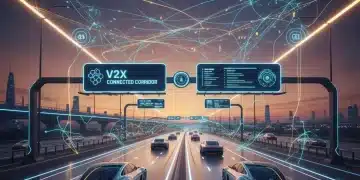
Future innovations in battery technology, such as solid-state batteries, promise even greater energy density, faster charging, and lower costs. Advancements in vehicle-to-grid (V2G) technology will allow EVs to become mobile energy storage units, supporting grid stability and potentially generating revenue for owners. Autonomous driving features, increasingly integrated into EVs, will further enhance convenience and safety. These technological leaps will continue to make EVs more attractive and functional.
Policy Evolution and Global Context
Government policies will likely evolve to support even higher adoption rates, potentially focusing on mandates for fully electric fleets, further incentives for charging infrastructure, and regulations promoting battery recycling. The global push for electrification, with major markets like Europe and China also heavily investing in EVs, creates a competitive environment that drives innovation and efficiency, benefiting the US market.
The Role of Public-Private Partnerships
Continued collaboration between government agencies, private industry, and research institutions will be essential. Public-private partnerships can accelerate the deployment of charging infrastructure, fund critical research, and address supply chain vulnerabilities. These collaborations are key to overcoming complex challenges and ensuring a smooth transition to an electrified transportation system.
Conclusion
The mid-2026 review of EV Adoption US paints a picture of remarkable progress. The journey towards a 25% market share is a testament to the combined efforts of policymakers, automakers, infrastructure providers, and increasingly, an enthusiastic consumer base. While challenges in infrastructure, affordability, and supply chain resilience persist, the momentum is undeniable.
The rapid evolution of battery technology, the expansion of charging networks, and a growing understanding of the economic and environmental benefits are collectively paving the way for an electrified future. As we move beyond this significant milestone, sustained investment, innovative solutions, and continued public engagement will be crucial to realize the full potential of electric vehicles in transforming American transportation and contributing to a more sustainable planet. The road ahead for EVs in the US is long, but the journey thus far has been nothing short of electrifying.