EV Software Updates: The Latest Innovations Explained
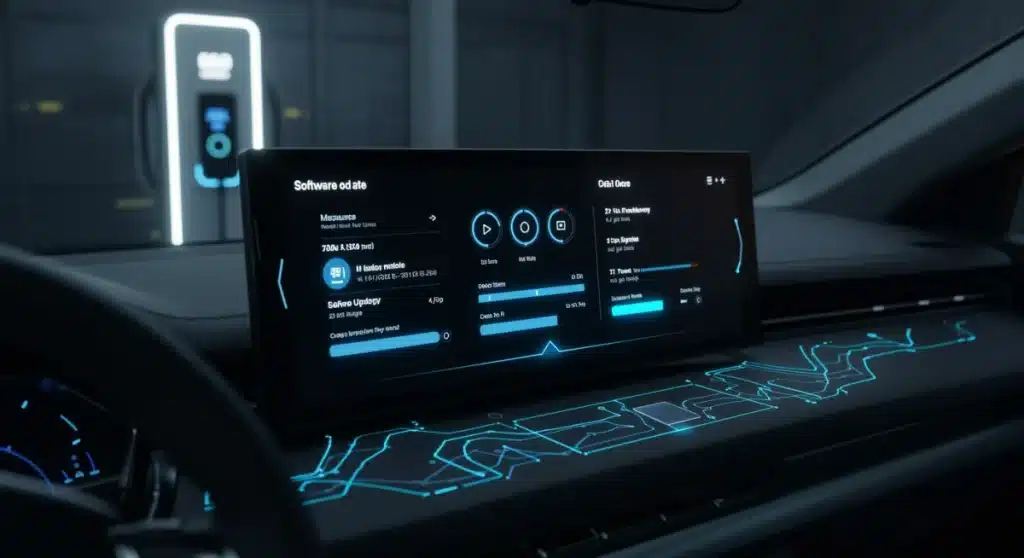
EV Software Updates: The Latest Innovations Explained
The electric vehicle (EV) landscape is evolving at an unprecedented pace, driven not just by hardware advancements but significantly by sophisticated software. Unlike traditional internal combustion engine (ICE) vehicles, EVs are essentially computers on wheels, capable of receiving over-the-air (OTA) updates that can dramatically alter their performance, efficiency, safety features, and user experience. These updates are pivotal in extending the lifespan of an EV, enhancing its capabilities, and even adding entirely new functionalities long after it leaves the factory floor. The past three months have been particularly dynamic, witnessing several major EV Software Updates that are reshaping the ownership experience. This article delves into three of the most impactful software updates, exploring their implications for drivers and the broader automotive industry.
Understanding these updates is crucial for current and prospective EV owners. They represent a commitment from manufacturers to continuous improvement, offering a glimpse into the future of mobility where vehicles become smarter, safer, and more connected with each passing update. From optimizing battery performance to refining advanced driver-assistance systems (ADAS) and revolutionizing infotainment, these recent software enhancements are not merely incremental changes; they are transformative.
The Era of Continuous Improvement: Why EV Software Updates Matter
Before we dive into the specific updates, it’s essential to grasp why EV Software Updates hold such immense significance. In the world of electric vehicles, software is the invisible architect that dictates much of the vehicle’s character and capability. It manages the complex interplay between the battery, motor, and other electronic systems. It orchestrates the charging process, refines regenerative braking, and powers the entire infotainment suite. Moreover, it’s the brain behind advanced safety features and autonomous driving functionalities.
The ability to update software wirelessly means that an EV is not a static product; it’s a dynamic platform that can improve over time. This paradigm shift offers several advantages:
- Enhanced Performance: Software tweaks can unlock more power, improve acceleration, or optimize energy consumption for greater range.
- Improved Efficiency: Refinements in battery management algorithms can lead to more efficient charging and better overall battery health.
- Increased Safety: ADAS features can be enhanced, and new safety protocols can be implemented, often preventing potential accidents.
- New Features and Functionalities: Manufacturers can introduce entirely new features, from advanced navigation options to personalized driving modes, adding value to the vehicle.
- Bug Fixes and Security Patches: Just like any computer, EVs can have software bugs or vulnerabilities. OTA updates provide a quick and efficient way to address these issues.
- Reduced Maintenance Costs: Some issues that would traditionally require a visit to the service center can now be resolved remotely through software.
This continuous improvement model is a stark contrast to the traditional automotive industry, where a vehicle’s features and performance were largely fixed at the point of sale. For consumers, it means their investment in an EV can appreciate in functionality over time, rather than becoming obsolete. For manufacturers, it offers a direct channel to engage with customers and continuously refine their products based on real-world data and feedback.
Major EV Software Update 1: Advanced Battery Management and Range Optimization
One of the most critical aspects of electric vehicle ownership is battery performance and range. Drivers constantly seek ways to maximize their vehicle’s range and ensure the longevity of their battery pack. In the last three months, several manufacturers rolled out significant EV Software Updates focused on advanced battery management systems (BMS) and range optimization.
Deeper Dive into BMS Enhancements
The core of these updates often lies in sophisticated algorithms that govern how the battery charges, discharges, and maintains its health. Modern EVs utilize thousands of individual battery cells, and the BMS is responsible for monitoring each one, ensuring they operate within optimal temperature and voltage parameters. The recent updates have taken this a step further by:
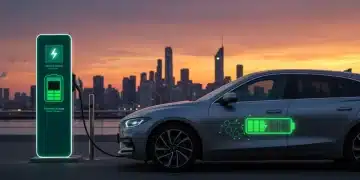
- Predictive Thermal Management: New software allows the BMS to more accurately predict temperature fluctuations based on driving patterns, ambient conditions, and charging schedules. This enables proactive cooling or heating of the battery, maintaining an ideal operating temperature for both performance and longevity. For instance, if the navigation system anticipates a fast-charging stop, the battery can be pre-conditioned to the optimal temperature for rapid charging, reducing charging times and minimizing stress on the battery.
- Refined Cell Balancing: Over time, individual battery cells can drift in their state of charge. Advanced cell balancing algorithms in these updates ensure that all cells are charged and discharged uniformly, preventing premature degradation of weaker cells and maximizing the overall usable capacity of the battery pack. This translates directly into a more consistent range and a longer battery lifespan.
- Improved State-of-Charge (SoC) Accuracy: The accuracy of the displayed range is paramount for driver confidence. Recent updates have incorporated more sophisticated models that consider a wider array of factors – such as driving style, terrain, and ambient temperature – to provide a more precise estimate of the remaining range. This reduces range anxiety and allows drivers to plan their journeys more effectively.
Impact on Range Optimization
Beyond battery health, these updates directly contribute to practical range optimization:
- Smarter Regenerative Braking: Software refinements have led to more intelligent regenerative braking systems. Instead of a fixed level, the system can now dynamically adjust the amount of energy recuperation based on traffic conditions, road incline, and driver input. This means more energy is captured and returned to the battery, extending the effective range, especially in urban environments.
- Enhanced Power Delivery Mapping: Manufacturers have fine-tuned power delivery maps, especially in various driving modes. For example, ‘eco’ modes have become even more efficient, gently curbing acceleration and optimizing accessory usage to squeeze out extra miles without significantly compromising the driving experience.
- Accessory Optimization: Software now plays a role in intelligently managing power draw from ancillary systems like HVAC and infotainment. For instance, a ‘range mode’ might automatically reduce fan speed or screen brightness if the battery level is low, providing subtle yet effective range extension.
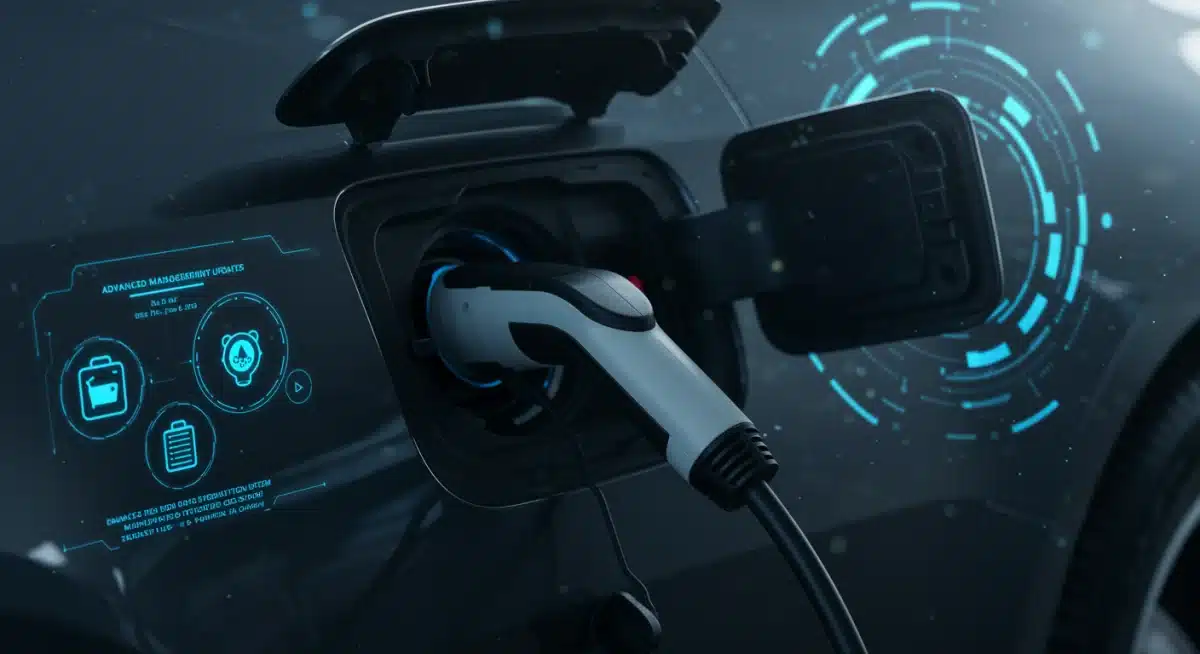
The cumulative effect of these battery management and range optimization updates is significant. Drivers can experience more consistent range, faster and more efficient charging, and the peace of mind that their battery’s health is being meticulously managed by cutting-edge software. These are not just minor tweaks; they represent a continuous effort to push the boundaries of what’s possible with EV technology, directly addressing some of the primary concerns of EV adoption.
Major EV Software Update 2: Advanced Driver-Assistance Systems (ADAS) and Autonomous Driving Features
Safety and convenience are paramount in modern vehicles, and electric vehicles are at the forefront of integrating advanced driver-assistance systems (ADAS) and increasingly sophisticated autonomous driving features. The latest round of EV Software Updates has brought significant enhancements to these critical functionalities, making driving safer, less stressful, and more intuitive.
Refinements in ADAS Performance
ADAS encompasses a wide array of technologies designed to assist the driver and prevent accidents. Recent software updates have primarily focused on improving the reliability, accuracy, and responsiveness of these systems:
- Improved Sensor Fusion: Modern ADAS relies on a combination of cameras, radar, lidar, and ultrasonic sensors. The latest updates feature enhanced sensor fusion algorithms, allowing the vehicle’s computer to process data from multiple sensors more effectively. This leads to a more comprehensive and accurate understanding of the vehicle’s surroundings, reducing false positives and improving the system’s ability to react appropriately to complex situations. For example, lane-keeping assist systems now perform better in challenging weather conditions or when lane markings are faded.
- Predictive Cruise Control: Adaptive Cruise Control (ACC) has seen significant upgrades. New predictive algorithms integrate navigation data, traffic information, and even upcoming road curvature to adjust speed more smoothly and anticipate changes in traffic flow. This results in a more comfortable and fuel-efficient driving experience, especially on highways.
- Enhanced Automatic Emergency Braking (AEB): AEB systems have become more sophisticated, capable of detecting a wider range of obstacles (pedestrians, cyclists, animals) and performing more precise braking maneuvers. Updates have improved the system’s ability to differentiate between threats and non-threats, reducing unnecessary interventions while increasing overall safety.
- Smarter Parking Assistance: Automated parking systems have also received attention. Updates have improved the vehicle’s ability to identify suitable parking spots, navigate complex parking scenarios (like parallel and perpendicular parking), and execute maneuvers more smoothly and quickly.
Steps Towards Greater Autonomy
While full autonomy is still some way off, these software updates are crucial steps on that journey. Manufacturers are progressively rolling out features that inch closer to hands-free driving in specific conditions:
- Highway Driving Assist Enhancements: Many EVs now offer advanced highway driving assist features that combine adaptive cruise control with lane-keeping capabilities. Recent updates have improved the smoothness of lane changes, the accuracy of lane centering, and the system’s ability to handle more complex highway interchanges. Some systems can now even suggest and execute lane changes autonomously when prompted by the driver.
- Over-the-Air Feature Unlocks: Some manufacturers are using software updates to unlock previously dormant hardware capabilities, enabling new autonomous driving functions or expanding the operational design domain (ODD) of existing features. This means that an EV purchased today could gain new semi-autonomous capabilities in the future, purely through a software download.
- Human-Machine Interface (HMI) Improvements: As ADAS becomes more complex, the way the vehicle communicates with the driver is vital. Updates have focused on clearer visual and auditory cues, more intuitive controls, and better feedback mechanisms to ensure the driver remains engaged and informed, especially during periods of semi-autonomous driving.
These ADAS and autonomous driving EV Software Updates are not just about adding features; they are about building trust between the driver and the machine. By making these systems more reliable, intuitive, and effective, manufacturers are paving the way for a future where vehicles can play an even greater role in preventing accidents and making travel more enjoyable. The continuous refinement through software ensures that these cutting-edge safety features are always up-to-date and performing at their peak.
Major EV Software Update 3: Infotainment, Connectivity, and User Experience Enhancements
Beyond core driving dynamics, the in-car experience is a significant differentiator for modern EVs. The third major category of EV Software Updates seen in recent months focuses on enhancing the infotainment system, connectivity options, and overall user experience. These updates are designed to make the time spent in an EV more enjoyable, productive, and seamlessly integrated with the driver’s digital life.
Revolutionizing the Infotainment Hub
The infotainment system is the central nervous system of the cabin, controlling everything from navigation and media to climate and vehicle settings. Recent software updates have brought substantial improvements:
- Personalized User Profiles: Many EVs now offer enhanced multi-user profiles that remember individual preferences for seat position, mirror settings, climate control, media presets, and even driving modes. The latest updates have made these profiles more robust and easier to switch between, ensuring a personalized experience for each driver or passenger.
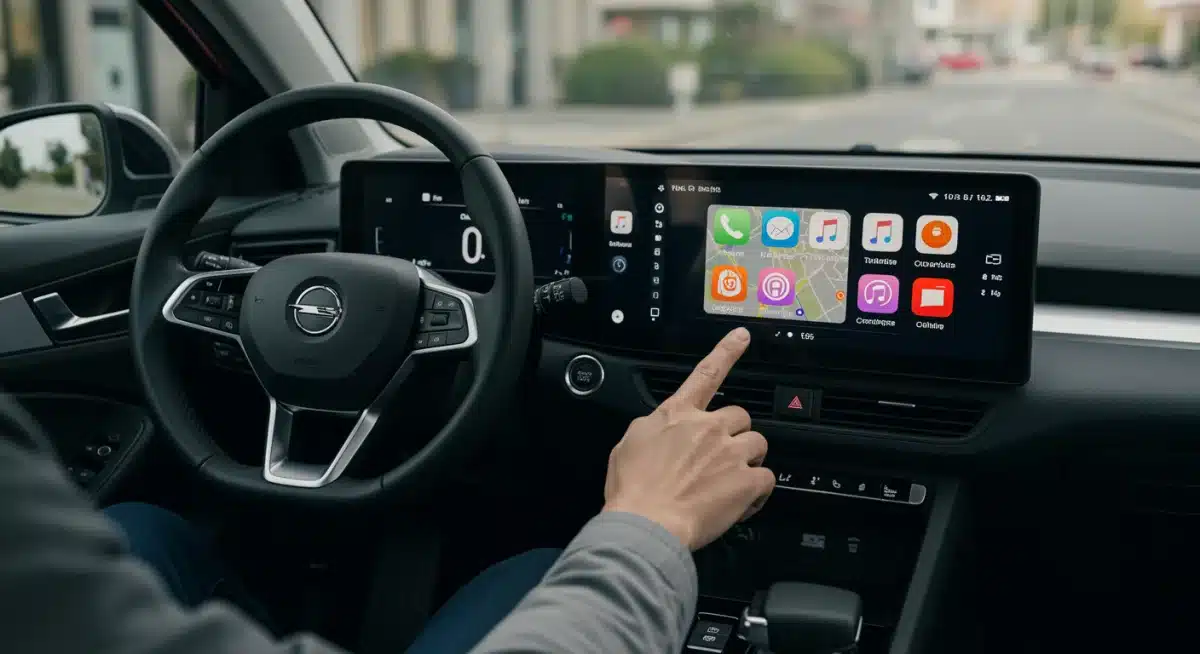
- Expanded App Ecosystem: Manufacturers are increasingly opening their infotainment platforms to third-party applications. Recent updates have introduced new streaming services, productivity apps, and even gaming options directly to the vehicle’s screen, transforming the car into a mobile entertainment and work hub, especially during charging stops.
- Smarter Voice Assistants: In-car voice assistants have become more intelligent and responsive. Updates have improved natural language understanding, allowing for more conversational commands and better integration with vehicle functions and external smart home devices. Drivers can now control more aspects of their car and home simply by speaking.
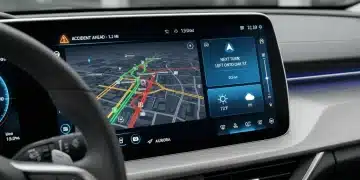
- Improved Navigation and Charging Integration: Navigation systems have received significant overhauls. Updates include real-time traffic prediction, more accurate estimated times of arrival (ETAs) that account for charging stops, and seamless integration with charging network availability and pricing. Some systems can even suggest optimal charging points based on battery level, route, and charger speed.
Seamless Connectivity and Over-the-Air Capabilities
The ability of an EV to stay connected is fundamental to its smart features. Recent EV Software Updates have strengthened this connectivity:
- Faster Data Transfer for OTA Updates: While a background process, improvements in the vehicle’s communication modules and software download protocols mean that future OTA updates can be delivered and installed more quickly and reliably.
- Enhanced Mobile App Integration: Companion mobile apps for EVs have become more powerful. Updates allow for more granular control over vehicle functions (e.g., pre-conditioning, charging schedule, remote lock/unlock), more detailed vehicle status information, and improved remote diagnostics.
- 5G Connectivity Rollouts: Some high-end EVs are beginning to integrate 5G modems through software updates, promising faster data speeds for streaming, navigation, and future vehicle-to-everything (V2X) communication, which is crucial for advanced autonomous features.
Overall User Experience Enhancements
Beyond specific features, these updates contribute to a more polished and enjoyable overall user experience:
- Refined User Interface (UI) and User Experience (UX): Software updates often bring visual refreshes to the infotainment system, with cleaner layouts, more intuitive menus, and improved responsiveness. Animations are smoother, and common tasks require fewer taps, reducing driver distraction.
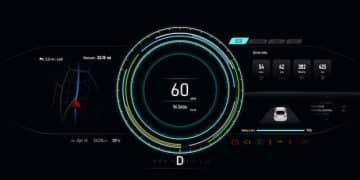
- Customizable Dashboards and Displays: Drivers now have more options to customize their digital instrument clusters and central displays, choosing what information is most relevant to them, from energy consumption graphs to detailed navigation prompts.
- Sound Experience Improvements: Updates can even extend to the audio system, with new sound profiles, improved equalization, and better integration with premium audio hardware, enhancing the acoustic experience within the cabin.
These infotainment and user experience EV Software Updates underscore the idea that an EV is not just a mode of transport but a personal space that can adapt and evolve to meet the owner’s changing needs and preferences. They transform the vehicle into a truly connected, intelligent, and personalized environment.
The Future of EV Software: What’s Next?
The pace of innovation in EV Software Updates shows no signs of slowing down. Looking ahead, we can anticipate even more transformative changes. The trend towards greater connectivity, personalization, and autonomy will undoubtedly continue. We might see:
- Predictive Maintenance: Software that can anticipate component failures before they occur, scheduling service appointments proactively.
- Even More Advanced ADAS: Further refinements in autonomous driving capabilities, pushing towards conditional Level 3 and 4 autonomy in more diverse driving scenarios.
- Vehicle-to-Grid (V2G) and Vehicle-to-Home (V2H) Integration: Software that allows EVs to intelligently interact with the power grid, either returning energy during peak demand or powering a home during outages, turning the EV into a mobile power bank.
- Enhanced Personalization with AI: AI-driven systems that learn driver habits and preferences to proactively adjust vehicle settings, optimize routes, and even suggest media content.
- Augmented Reality (AR) Integration: HUDs (Head-Up Displays) and infotainment systems that incorporate AR to overlay navigation instructions, hazard warnings, and points of interest directly onto the real-world view.
- Subscription-Based Features: While controversial, the model of unlocking certain features or performance boosts through software subscriptions is likely to expand, offering flexibility and new revenue streams for manufacturers.
These future developments highlight the ongoing shift in the automotive industry from hardware-centric design to software-defined vehicles. The continuous evolution of EV Software Updates ensures that electric vehicles will remain at the cutting edge of technology, offering ever-improving performance, safety, and user experiences.
Staying Informed: How to Track EV Software Updates
For EV owners, staying abreast of the latest EV Software Updates is important to fully leverage their vehicle’s capabilities. Here are some tips:
- Manufacturer Notifications: Most EV manufacturers provide notifications directly through the vehicle’s infotainment system, their dedicated mobile app, or via email when a new update is available.
- Official Websites and Forums: Check the official support pages or owner forums of your EV brand. These are often excellent resources for detailed release notes and community discussions on new features.
- Automotive News Outlets: Specialist EV news sites and automotive publications closely follow major software releases and often provide in-depth analyses.
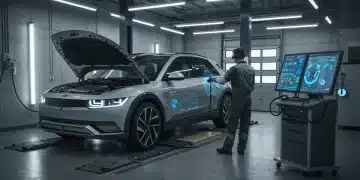
- Dealerships: While OTA updates reduce the need for dealership visits, service centers can still provide information and, in some rare cases, perform updates manually if an OTA update fails.
Regularly checking for updates and understanding their content will allow you to make the most of your electric vehicle, ensuring it remains as capable and enjoyable as the day you bought it, if not more so.
Conclusion: The Dynamic Evolution of Electric Vehicles
The three major EV Software Updates discussed – focusing on advanced battery management, enhanced ADAS, and improved infotainment/user experience – underscore the dynamic nature of electric vehicles. These aren’t just cars; they are sophisticated, connected devices that continuously evolve and improve through the power of software. The past three months have demonstrated a significant leap forward in making EVs more efficient, safer, and more enjoyable to drive.
As the automotive industry continues its rapid transition towards electrification, software will remain the key differentiator. It’s the invisible force that unlocks new potential, extends capabilities, and ensures that your EV experience is always at the forefront of innovation. For current and future EV owners, embracing these software advancements means embracing a future of driving that is perpetually smarter, greener, and more connected.