Next-Gen Logistics: Automated Delivery Systems Reshaping US Supply Chains by 2026
Next-Gen Logistics: Exploring How Automated Delivery Systems Are Reshaping the Supply Chain Across the US in 2026
The year is 2026, and the landscape of logistics in the United States has undergone a seismic shift. What was once the realm of manual labor, complex routing, and human-driven transport is now increasingly dominated by advanced technologies. The driving force behind this transformation? Automated Delivery Systems. These innovative solutions are not just buzzwords; they are tangible, operational elements that are fundamentally reshaping the supply chain from end to end, promising unprecedented levels of efficiency, speed, and adaptability.
The demand for faster, cheaper, and more reliable delivery has never been higher. E-commerce continues its relentless growth, consumer expectations are constantly evolving, and businesses are under immense pressure to optimize their operations. In this high-stakes environment, traditional logistics models are struggling to keep pace. This is where Automated Delivery Systems step in, offering a compelling vision for the future of freight, warehousing, and last-mile delivery.
From the sprawling warehouses of major retailers to the quiet suburban streets, autonomous robots, drones, and self-driving vehicles are no longer futuristic concepts; they are becoming integral components of the daily logistical dance. This article will delve deep into the various facets of these systems, examining their current impact, the challenges they face, and the exciting possibilities they unlock for the US supply chain by 2026 and beyond. We will explore how these technologies are not just improving existing processes but are creating entirely new paradigms for how goods move from producer to consumer.
The Rise of Robotics in Warehouse and Fulfillment Centers
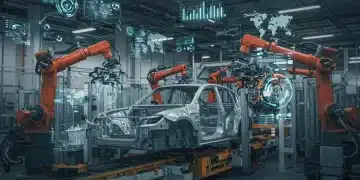
The journey of a product often begins in a warehouse or fulfillment center, and it is here that Automated Delivery Systems have made some of their most significant inroads. Historically, these facilities were labor-intensive, relying heavily on human workers for picking, packing, and sorting. While human ingenuity remains crucial, robotics are now taking on the repetitive, physically demanding, and often dangerous tasks, leading to remarkable improvements in operational efficiency and accuracy.
Automated Guided Vehicles (AGVs) and Autonomous Mobile Robots (AMRs)
AGVs and AMRs are at the forefront of warehouse automation. AGVs follow fixed paths, typically guided by wires, magnetic strips, or sensors, efficiently transporting goods from one point to another. AMRs, on the other hand, are more sophisticated. Equipped with advanced sensors, cameras, and AI-powered navigation, they can interpret their environment, avoid obstacles, and dynamically adjust their routes. This flexibility allows them to work alongside human employees safely and effectively, significantly speeding up the movement of inventory within a facility.
By 2026, it’s common to see fleets of AMRs zipping through warehouses, autonomously picking items for orders, replenishing stock, and moving pallets. This not only reduces the physical strain on human workers but also dramatically increases throughput, allowing companies to process more orders in less time. The precision of these robots also minimizes errors, leading to fewer mispicks and improved customer satisfaction.
Robotic Picking Systems
Beyond simple transportation, robotic arms are becoming increasingly adept at picking individual items. Advances in computer vision and gripping technology mean that robots can now identify, grasp, and place a wide variety of products, from delicate electronics to oddly shaped apparel. These robotic picking systems can operate 24/7, tirelessly fulfilling orders with consistent accuracy, especially beneficial during peak seasons like holidays.
The integration of these systems means that human workers can be reallocated to more complex tasks, such as quality control, exception handling, or strategic planning, elevating their roles within the logistics ecosystem. The synergy between human and robotic labor in warehouses is creating a highly optimized, resilient, and scalable operational environment, a cornerstone of modern Automated Delivery Systems.
Autonomous Vehicles: Revolutionizing Middle-Mile and Long-Haul Transport
While warehouse automation tackles internal logistics, autonomous vehicles are transforming the movement of goods over longer distances. The vision of self-driving trucks traversing highways across the US is rapidly becoming a reality, promising to address critical challenges in the trucking industry, including driver shortages, fuel efficiency, and safety.
Self-Driving Trucks
By 2026, several companies are actively testing and deploying autonomous trucks on designated routes. These vehicles, equipped with an array of sensors, radar, lidar, and sophisticated AI, can navigate highways, maintain safe distances, and react to changing road conditions without human intervention. While fully driverless operations across all routes are still some years away, supervised autonomous trucking is already demonstrating significant benefits.
The primary advantages include the ability to operate for longer hours without the need for mandatory rest breaks, leading to faster transit times and increased efficiency in the middle and long-haul segments of the supply chain. Furthermore, autonomous driving systems are designed to minimize human error, potentially reducing accidents and improving road safety. Fuel efficiency can also be optimized through precise driving patterns and platooning technologies, where multiple autonomous trucks travel closely together to reduce aerodynamic drag.
Autonomous Last-Mile Delivery Vehicles
The final leg of the delivery journey, often the most expensive and complex, is also being reimagined by autonomous technology. Small, electric autonomous vehicles are emerging as a viable solution for last-mile deliveries in urban and suburban areas. These vehicles, ranging from sidewalk robots to larger self-driving vans, can navigate local streets, avoid pedestrians, and deliver packages directly to consumers’ doorsteps.
By alleviating the need for human drivers in congested areas, these Automated Delivery Systems can significantly reduce operational costs, enhance delivery speed, and offer greater flexibility in scheduling. They are particularly well-suited for delivering smaller parcels and groceries, addressing the burgeoning demand for on-demand services. The deployment of these vehicles requires robust infrastructure, regulatory frameworks, and public acceptance, but their potential to revolutionize urban logistics is undeniable.
The Sky’s the Limit: Drones in Delivery and Inventory Management
Perhaps one of the most visually striking examples of Automated Delivery Systems is the widespread adoption of drones. Once a novelty, delivery drones are now carving out a niche in specific logistical applications, particularly in areas where speed and accessibility are paramount.
Last-Mile Drone Delivery
For urgent deliveries, remote locations, or specific types of goods (e.g., medical supplies), drones offer an unparalleled advantage: they bypass ground traffic entirely. By 2026, drone delivery services are operational in various parts of the US, delivering packages directly to homes or designated drop-off points. Companies are continually refining drone technology, improving battery life, payload capacity, and autonomous navigation capabilities.
The regulatory landscape for drone operations is also evolving, with the FAA and other bodies working to establish safe and efficient air traffic management systems for unmanned aerial vehicles. As these regulations mature and public perception becomes more accepting, drone delivery is expected to expand, particularly for lightweight, high-value, or time-sensitive items. Imagine receiving a critical spare part or a prescription medication within minutes of ordering, delivered directly to your backyard by an autonomous drone.
Drones for Warehouse Inventory and Surveillance
Beyond external delivery, drones are also proving invaluable within the confines of large warehouses and industrial facilities. Equipped with cameras and RFID readers, drones can autonomously conduct inventory counts, scan barcodes, and identify misplaced items with incredible speed and accuracy. This significantly reduces the time and labor associated with manual inventory checks, leading to more up-to-date stock information and reduced discrepancies.
Furthermore, drones can be utilized for surveillance and inspection of hard-to-reach areas within warehouses or large industrial sites, ensuring safety and identifying potential maintenance issues without putting human workers at risk. These aerial Automated Delivery Systems are enhancing operational visibility and safety, contributing to a more streamlined and secure supply chain.
Integrated Systems: The Power of AI, IoT, and Big Data
The true power of Automated Delivery Systems lies not just in the individual technologies but in their seamless integration, driven by advanced artificial intelligence (AI), the Internet of Things (IoT), and big data analytics. These underlying technologies provide the intelligence and connectivity that make autonomous operations truly effective.
AI for Optimization and Prediction
AI algorithms are the brains behind autonomous operations. They process vast amounts of data from sensors, cameras, and external sources (like weather and traffic reports) to make real-time decisions, optimize routes, and predict potential disruptions. In warehouses, AI-powered systems can dynamically assign tasks to robots, manage inventory levels, and even forecast demand more accurately.
For autonomous vehicles, AI enables sophisticated navigation, obstacle avoidance, and predictive maintenance, ensuring vehicles operate efficiently and reliably. The continuous learning capabilities of AI mean that these systems become smarter and more efficient over time, constantly refining their performance and adapting to new challenges within the supply chain.
IoT for Real-time Connectivity
The Internet of Things (IoT) provides the crucial connectivity for all components of Automated Delivery Systems. Sensors embedded in vehicles, robots, packages, and infrastructure constantly collect and transmit data. This real-time information allows for complete transparency and visibility across the entire supply chain. Logistics managers can track the location and condition of every item, monitor the performance of autonomous assets, and react instantly to any issues.
IoT-enabled smart warehouses, for instance, can communicate directly with autonomous vehicles, ensuring that goods are ready for pickup precisely when a vehicle arrives, minimizing idle time and maximizing efficiency. This interconnected network is essential for orchestrating complex autonomous operations on a large scale.
Big Data Analytics for Strategic Insights
The sheer volume of data generated by AI and IoT-powered Automated Delivery Systems is a goldmine for big data analytics. By analyzing this data, companies can gain deep insights into operational performance, identify bottlenecks, uncover trends, and make data-driven strategic decisions. This includes optimizing network design, improving demand forecasting, and identifying opportunities for further automation.
For example, analyzing delivery data from autonomous vehicles can reveal optimal delivery windows, preferred routes, and even customer preferences, leading to more personalized and efficient services. Big data is transforming logistics from a reactive process into a proactive, predictive, and continuously improving system.
Challenges and Considerations for Widespread Adoption
While the benefits of Automated Delivery Systems are clear, their widespread adoption across the US supply chain by 2026 is not without its challenges. Addressing these hurdles is crucial for realizing the full potential of these transformative technologies.
Regulatory Frameworks and Legal Issues
One of the most significant challenges is the development of comprehensive and consistent regulatory frameworks. Different states and municipalities may have varying laws regarding autonomous vehicles and drones, creating a patchwork of regulations that can hinder large-scale deployment. Issues such as liability in case of accidents, airspace management for drones, and data privacy all need to be addressed through clear and adaptable legislation.
Infrastructure Requirements
The successful operation of many Automated Delivery Systems requires significant infrastructure upgrades. This includes smart road infrastructure for autonomous trucks, designated drone landing zones, and robust 5G connectivity for seamless data transmission. Investing in and deploying this infrastructure on a national scale is a monumental undertaking.
Cybersecurity Risks
As logistics become more interconnected and reliant on digital systems, cybersecurity becomes an even greater concern. Autonomous vehicles, drones, and warehouse robots are all vulnerable to cyberattacks, which could disrupt operations, compromise data, or even pose safety risks. Robust cybersecurity measures are essential to protect these systems from malicious actors.
Public Acceptance and Ethical Concerns
Gaining public trust and acceptance is vital. Concerns about job displacement, safety, and the potential for surveillance need to be addressed through transparent communication, education, and ethical development practices. The ethical implications of AI-driven decision-making in autonomous systems also require careful consideration.
Cost of Implementation and ROI
The initial investment in Automated Delivery Systems can be substantial. Companies need to carefully evaluate the return on investment (ROI) and develop clear strategies for integrating these technologies into their existing operations. While the long-term benefits in terms of efficiency and cost savings are significant, the upfront capital expenditure can be a barrier for smaller businesses.
The Impact on Employment and the Workforce
A common concern surrounding the rise of Automated Delivery Systems is their impact on employment. While it’s true that some roles may be automated, the overall picture is more nuanced than simple job displacement. Automation is creating new types of jobs and shifting the focus of the human workforce.
Job Transformation, Not Just Elimination
Instead of eliminating jobs entirely, automation often transforms them. For example, truck drivers might transition to roles managing fleets of autonomous vehicles or overseeing remote operations. Warehouse workers may shift from manual picking to supervising robotic systems, performing maintenance, or analyzing performance data.
Creation of New Roles
The development, deployment, and maintenance of Automated Delivery Systems require a skilled workforce. This includes robotics engineers, AI specialists, data scientists, cybersecurity experts, and technicians specializing in autonomous vehicle repair. The logistics industry will see a demand for new skill sets, necessitating investment in education and training programs.
Upskilling and Reskilling Initiatives
To ensure a smooth transition, significant investment in upskilling and reskilling existing workers will be paramount. Companies and governments will need to collaborate on training initiatives that equip the current workforce with the necessary technical and analytical skills to thrive in an automated logistics environment. This approach fosters a symbiotic relationship between humans and technology, where each complements the other’s strengths.
Beyond 2026: The Future Evolution of Automated Delivery Systems
By 2026, Automated Delivery Systems will have firmly established their presence in the US supply chain. However, this is just the beginning. The pace of innovation in robotics, AI, and autonomous technology suggests an even more transformative future.
Hyper-Personalized Delivery
Imagine a future where your delivery preferences are not just about speed but also about precise timing, specific drop-off locations, and even the type of delivery vehicle. AI-powered orchestration platforms will integrate seamlessly with smart home devices, allowing for highly personalized and convenient delivery experiences, perhaps even delivering groceries directly into your smart refrigerator.
Integrated Multimodal Autonomous Networks
The future will likely see a truly integrated multimodal autonomous network. Packages will seamlessly transition between autonomous warehouse robots, self-driving trucks, delivery drones, and sidewalk robots, all orchestrated by a central AI system. This creates a highly resilient and adaptable supply chain capable of responding to disruptions with minimal human intervention.
Sustainable Logistics
The environmental benefits of Automated Delivery Systems will become even more pronounced. Electric autonomous vehicles and drones will significantly reduce carbon emissions associated with transportation. Optimized routing and efficient operations will also minimize fuel consumption and waste, contributing to a greener, more sustainable logistics industry.
Urban Air Mobility for Cargo
Beyond small package delivery, the concept of urban air mobility (UAM) for cargo could see larger drones or even autonomous air taxis transporting significant volumes of goods between urban hubs, further reducing road congestion and speeding up transit times for critical freight.
Conclusion: A New Era for the US Supply Chain
The year 2026 marks a pivotal moment in the evolution of the US supply chain. Automated Delivery Systems are no longer theoretical; they are operational, impactful, and rapidly expanding their footprint across every segment of logistics. From the intricate dance of robots in fulfillment centers to the quiet hum of autonomous trucks on highways and the swift flight of delivery drones, these technologies are redefining what’s possible.
While challenges in regulation, infrastructure, and public acceptance remain, the immense benefits in terms of efficiency, speed, accuracy, and sustainability are driving rapid innovation and adoption. The transformation is not just about replacing human labor but about augmenting human capabilities, creating new opportunities, and building a more resilient, responsive, and intelligent supply chain.
Businesses that embrace these next-gen logistics solutions will be better positioned to meet consumer demands, optimize their operations, and gain a significant competitive advantage. The future of the US supply chain is undeniably automated, and by 2026, we are witnessing the dawn of a new era where intelligent machines and advanced algorithms orchestrate the seamless movement of goods, pushing the boundaries of what was once imaginable.